



Reporter: Welcome back to our program, Mr. Anh Quan. To begin, how would you define mental resilience, and why is it important in today’s context?
Mr. Anh Quan: Mental resilience is your ability to carry yourself through challenges, recover when life knocks you down, and even grow from the experience. It's not about being tough or pretending everything is fine. It's about staying flexible and grounded when things feel uncertain. Resilience weakens when the fundamentals are off, poor sleep or physical health, a lack of supportive relationships, difficulties solving problems, trouble managing emotion, or simply not being aware of what's happening inside of you. And for many of us, a harsh, self-critical inner voice quietly erodes resilience over time.
Reporter: From your perspective, what practical strategies can people adopt to strengthen their resilience in everyday life?
Mr. Anh Quan: One of the strongest foundations of resilience is psychological flexibility. The ability to notice your thoughts and feelings without getting trapped by them, and choosing actions that align with your values. Physical movement also plays a big role. Even the modus of exercise helps regulate stress hormones and increases your capacity to handle difficulties. And of course, resilience is rarely built alone. Having a small circle of supportive friends or confidants gives you emotional stability, the sense that you don't have to face everything by yourself.
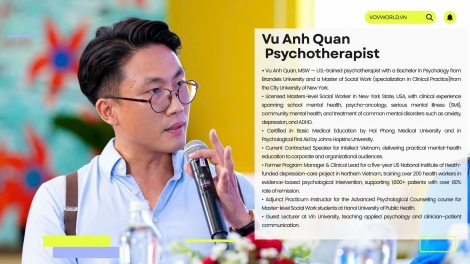
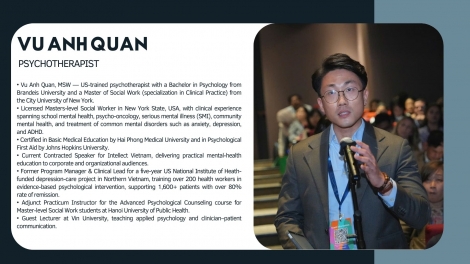
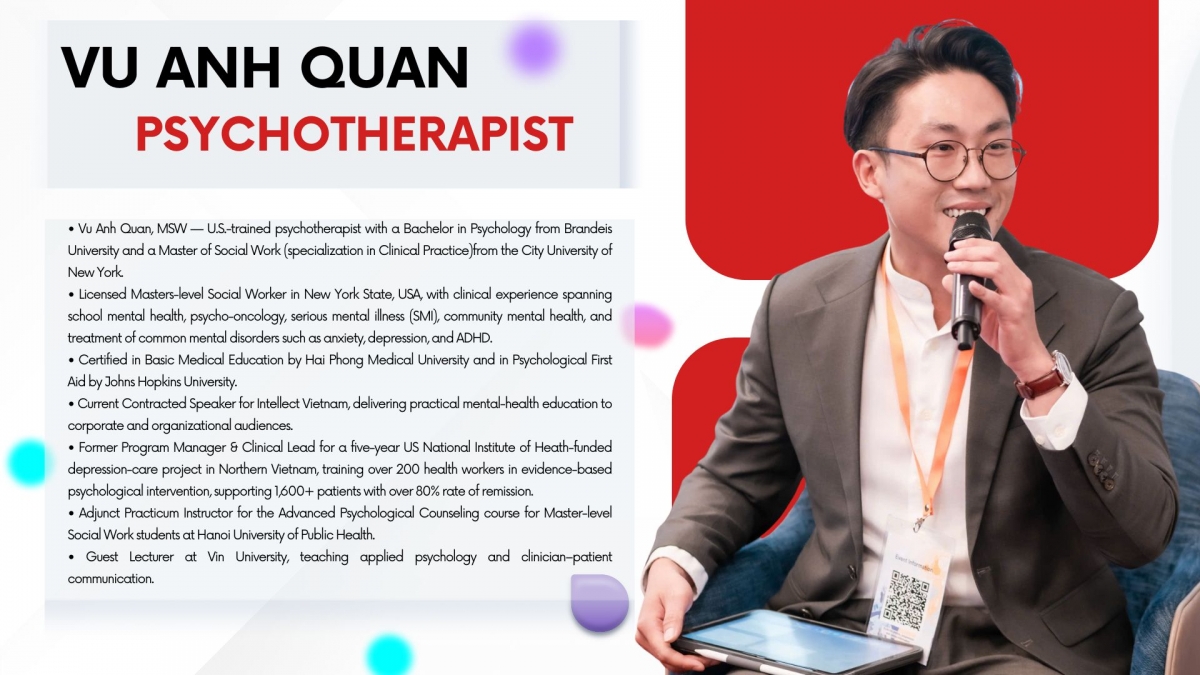
Vu Anh Quan is a licensed social worker in New York State, trained in Clinical Social Work at the City University of New York, with a background in Psychology from Brandeis University. His clinical experience covers community mental health, serious mental illness, psycho-oncology, and common conditions such as anxiety, depression, and ADHD. He previously led a five-year US National Institute of Heath-funded depression-care project in Northern Vietnam, training over 200 health workers and supporting more than 1,600 patients, with an improvement rate of more than 80%. Alongside his clinical work, he serves as an adjunct practicum instructor for Master’s-level Social Work students at the Hanoi University of Public Health, and is a guest lecturer at VinUniversity, where he teaches applied psychology and clinician-patient communication.
Reporter: That was a brief introduction to our guest, psychotherapist Vu Anh Quan. Moving on, how can we stay grounded and maintain stability when facing uncertainty in work, relationships, or personal goals?
Mr. Anh Quan: To stay grounded in uncertain times, people need to feel reliable anchors, some within themselves and some in their relationships. For example, in acceptance and commitment therapy, we often invite people to reconnect with their values, the kind of person they want to be in a difficult moment. When you act according to your values, you create an internal compass that keeps you moving in the right direction, even when the weather of fear, stress, or expectation makes everything feel foggy. For example, when work becomes overwhelming, instead of getting stuck in the mindset of “I have to handle everything myself” you can return to a core value like “bringing value to my clients.” That value might open up healthier options, such as asking colleagues for support, or looping in a supervisor, rather than silently drowning under the workload. It helps you choose effectiveness over the fear of judgment.
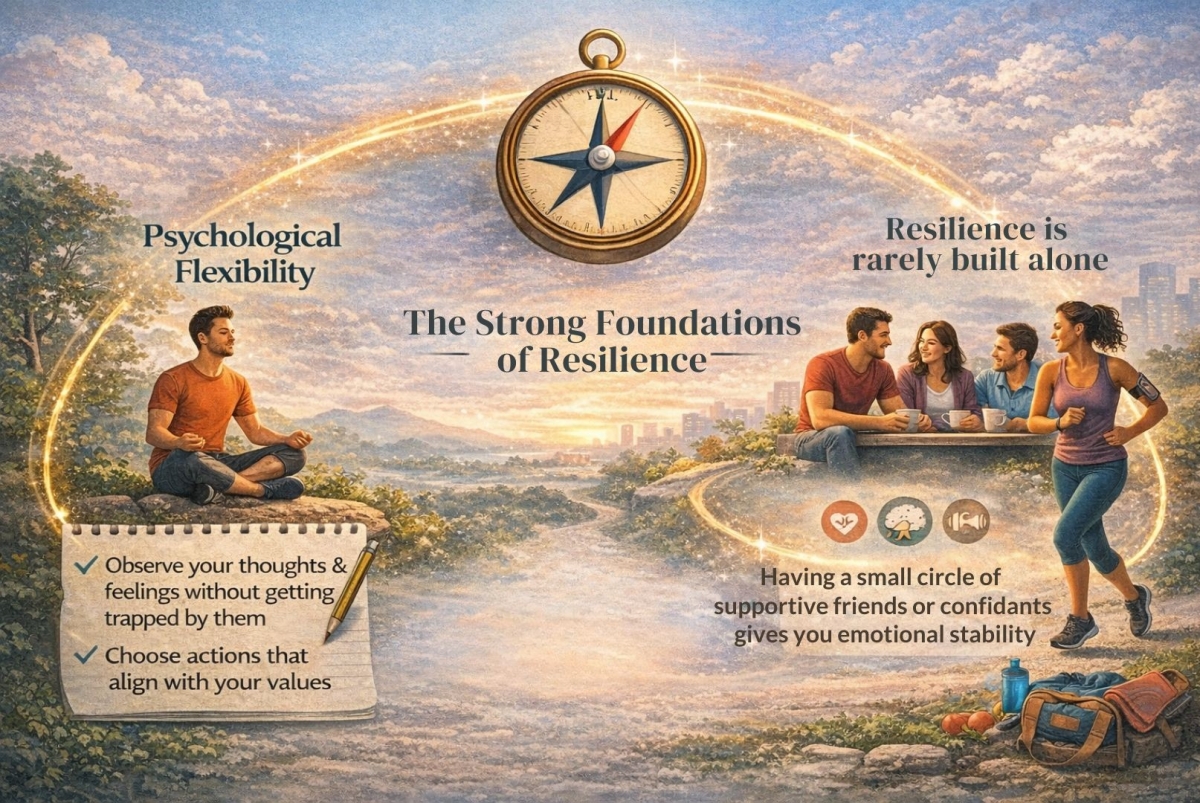
Another anchor is found in supportive relationships. Having healthy outlets like friends, mentors, confidants, gives you a place to release emotional pressure, talk things through, and see problems from a calmer perspective. These relationships help you sort out challenges in your romantic or family life without triangulating or dragging others into the conflict. And finally, one anchor people often overlook is their own body. Simple stabilizers like consistent sleep, regular movement, and steady daily routines give your nervous system something predictable to hold on to when everything else feels uncertain. These anchors work together to keep you steady, centered, and able to navigate whatever comes next.
Reporter: For those who may feel overwhelmed or depleted, what are some effective first steps to begin rebuilding resilience?
Mr. Anh Quan: A simple step is to schedule regular low-pressure moments with people you trust. A weekly coffee, a walk, or even a short call. These small touch points maintain the relationship that carry you through tough times. Another practical tool is keeping a brief daily journal. It doesn't need to be long, just a few lines about how your day felt, what thoughts came up, and what you appreciated. This helps build self-awareness, helps you spot negative patterns, and strengthens gratitude, which is a powerful buffer against stress.
Resilience grows through these small consistent acts of connection and reflection. In closing, resilience isn't something you're born with, it's something you built. One habit and one relationship at a time. When you take care of your body, stay connected to people who matter, and learn to observe your inner world with a bit more kindness, you give yourself the ability to weather challenges without losing your center. Small steps really do add up.
Reporter: Thank you, Mr. Anh Quan, for joining us today and sharing your perspective. Your insights help put resilience into a clearer, more practical context for everyday life. We hope this discussion gives our listeners something to reflect on as they move through work, relationships, and daily challenges.
Mr. Anh Quan: Thank you for spending this time with me, I hope this episode encourages you to build the kind of resilience that supports you through both the ordinary days and the difficult ones. I'm Quan, take a breath, take a pause, and take good care everyone.