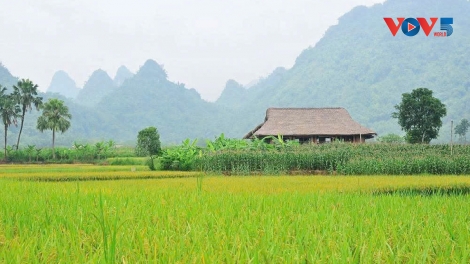




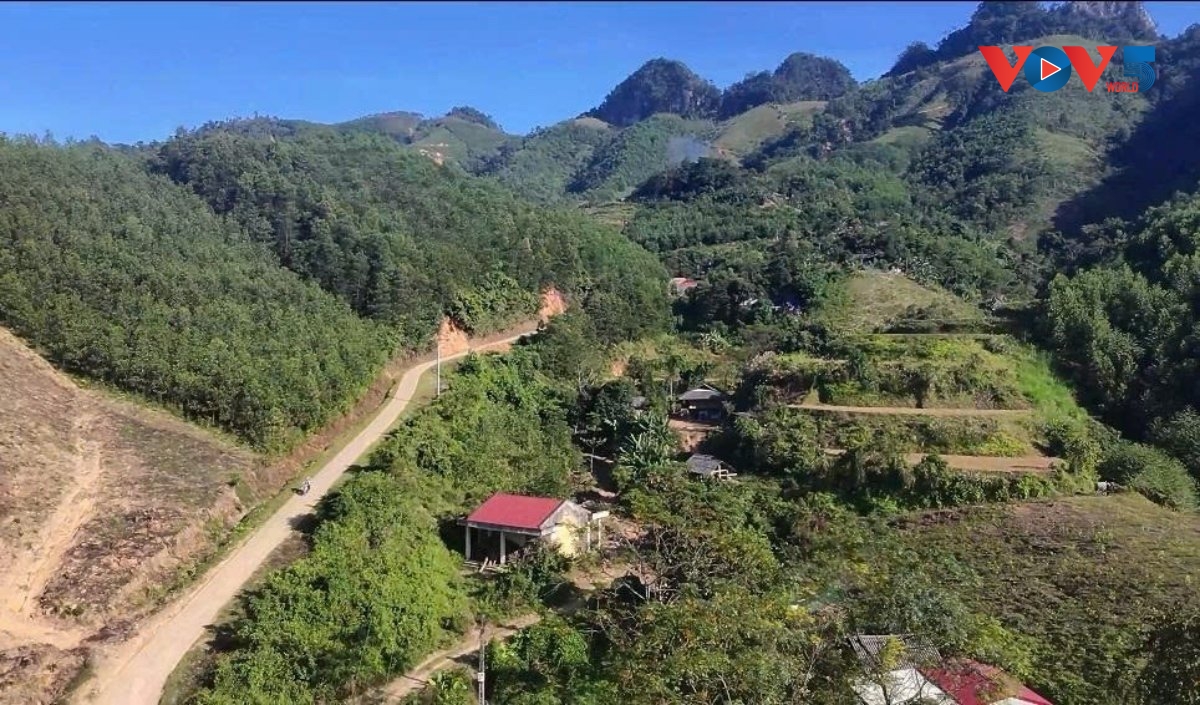
Khuan Bang is home to 60 families, most of them belonging to the Tay ethnic group. Before community-based tourism took root, farming, forestry, and livestock raising were their main sources of income.
But the hamlet had a wealth of untapped assets: 40 traditional stilt houses, Tay cultural traditions, including Then singing, Tinh lute playing, basketry, and fabric weaving, and scenic attractions like Tam Kha lake, Khe Cup waterfall, Nam Tac hill, and Tham Hon cave. These assets are now being developed into tourism products.
Inside the stilt house of Mr. Dat and Mrs. Oanh, rooms that once served purely as private family spaces have been renovated to accommodate overnight guests. Blankets and mattresses are neatly arranged, sanitation facilities have been upgraded, and the courtyard and open space beneath the house have been rearranged for communal meals and activities.
Although the Dat-Oanh household and several other local families began shifting from traditional farming to tourism only this year, the transition has already given them higher and more stable incomes than agriculture alone.
Duong Van Dat, owner of Dat Oanh Homestay, recalled before 2023, he was doing farm work, growing acacia trees and melons. The income was decent, but modest. In 2023, when Khuan Bang was officially recognized by the province as a community tourism destination, he became one of the first five households to transition to tourism.
“I renovated my home, finishing the work last year, and started receiving guests at the beginning of this year. Visitors eat and stay at my house. Tourism brings in significantly better income than my previous work. Farming is physically demanding, while tourism is much less strenuous,” Dat told VOV.
Khuan Bang was selected as a pilot site for community tourism development in 2023. One year later, 20,000 USD was allocated for landscape planning, tourism product development, workforce training, promotional activities, and infrastructure upgrades, including a community house, public restrooms, welcome arches, directional signs, and product showrooms.
In addition to state funding, locals have invested their own money. At the peak of the development drive, 10 households registered to build homestays, with the government paying 100% of the interest on bank loans of up to 20,000 USD per household for constructing or renovating guest accommodations.
Chu Thi Do, Deputy Director in charge of the Thai Nguyen Tourism Promotion and Development Center, said, “A number of households in the hamlet can already meet tourists’ core needs –accommodations, cuisine, cultural performances, and hands-on experiences.”
“But to fully tap the locality’s potential and the enthusiasm of local residents and leaders, we need to diversify our offerings to attract a wider range of visitors. With its landscape and genuine hospitality, Khuan Bang is well suited to domestic and international tourists seeking a tranquil escape and an authentic experience of indigenous culture,” Do added.
From stilt houses and tea fields to home-cooked Tay meals, a new economic direction is taking shape in Khuan Bang. The villagers’ warmth and traditional way of life are proving a strong draw for visitors.
Hong Huong, a tourist from Hanoi, said, “Visiting Khuan Bang let me experience the daily life, culture, customs, and architecture of the local people. Everything feels wonderfully well preserved. The Tay villagers are warm and down-to-earth. That’s the real attraction. The pristine scenery is equally captivating.”
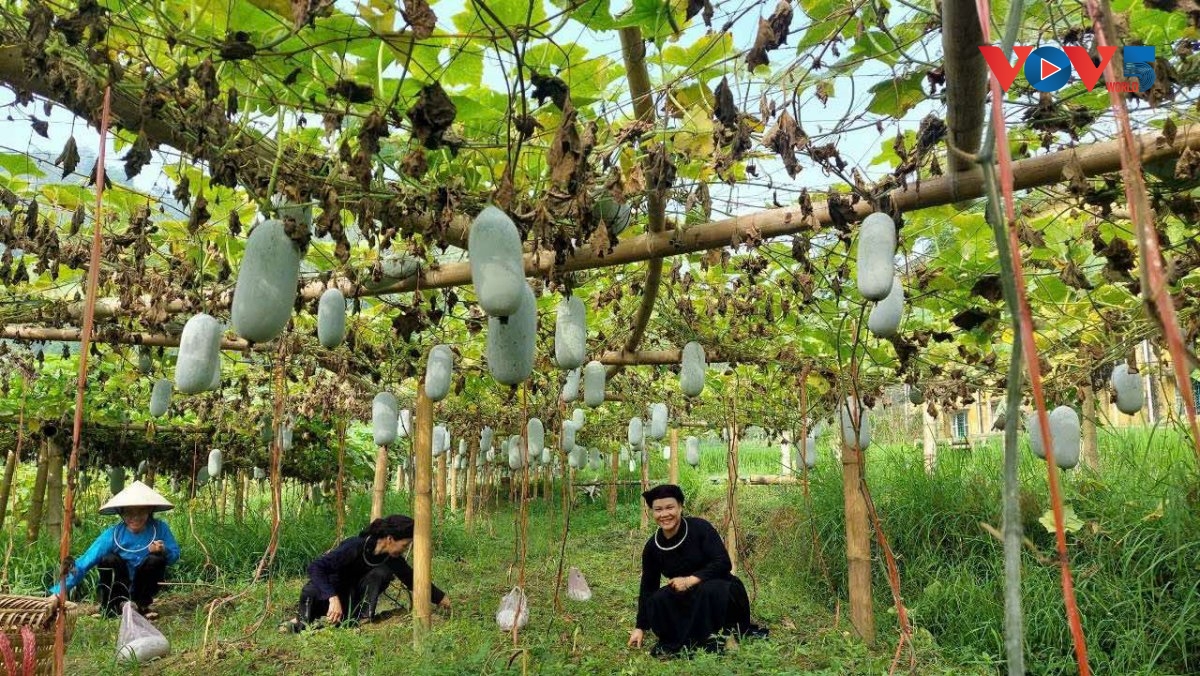
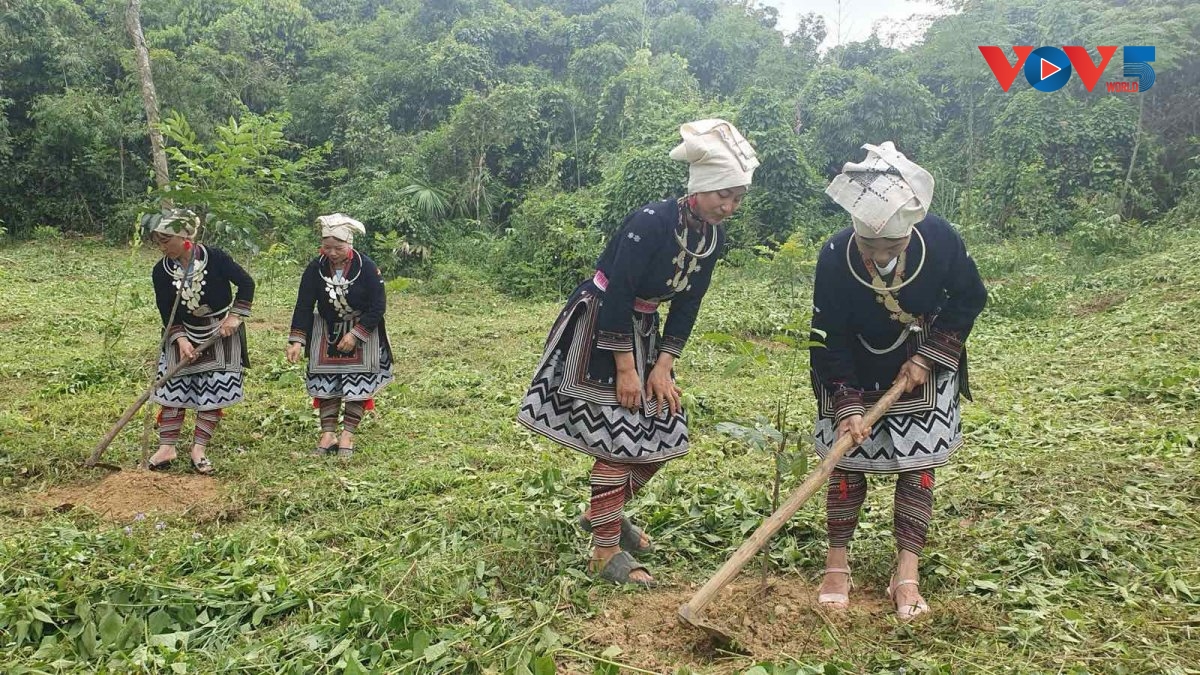
Crucially, Khuan Bang residents don’t have to abandon their traditional livelihoods to embrace tourism. They continue to grow tea, cultivate rice on terraced fields, raise livestock, and preserve their ancestral stilt houses, Then singing, and traditional recipes.
These local assets are being connected to the tourism market to generate additional income. The villagers hope the model will evolve into a self-sustaining micro-economy in which nature and culture provide the attraction, agriculture supplies local products, and tourism creates the market.
As long as the tourists keep coming, subsistence farming will no longer be all that keeps villagers rooted in their homeland. They will be able to build a sustainable livelihood around their home, their heritage, and their native land.