





The 5.6 billion USD railway is being invested by Vingroup’s VinSpeed High-Speed Railway Investment and Development Company. The 120-kilometer line linking major economic hubs Hanoi, Bac Ninh, Haiphong, and Quang Ninh will use modern high-speed trains, with signaling and equipment systems supplied by Germany’s Siemens Mobility. The technology will be transferred to VinSpeed during operation.
Nguyen Viet Quang, Vingroup’s Deputy Chairman and CEO, said the project, scheduled to be completed in 2028, will reduce travel time, create a powerful engine for economic growth, promote inter-regional connectivity, and improve quality of life.
“With its superior travel speed, the project will create an efficient connection axis between the capital city of Hanoi and industrial, logistics, and tourism centers in the northern key economic region, contributing to trade, investment, and high-quality labor mobility. It will also enable localities to strengthen regional linkages,” Quang noted.
Designed for a maximum speed of 350 km per hour, the line will begin at Co Loa Station near Hanoi's Vietnam Exhibition Center and end at Ha Long Station in Quang Ninh. It will pass through three intermediate stations—Gia Binh (Bac Ninh), Ninh Xa (Hai Phong), and Yen Tu (Quang Ninh)—with a depot located at Ha Long Station.
Bui Van Khang, Chairman of the Quang Ninh provincial People's Committee, said the railway is expected to cut travel time between Hanoi and Quang Ninh to about 25 minutes—five to seven times faster than current options. “When the 350-kilometer-per-hour high-speed rail project is completed, travel time could be reduced to just 25 minutes without station stops. This represents a distinct competitive advantage and a new driver for development,” Khang told VOV.
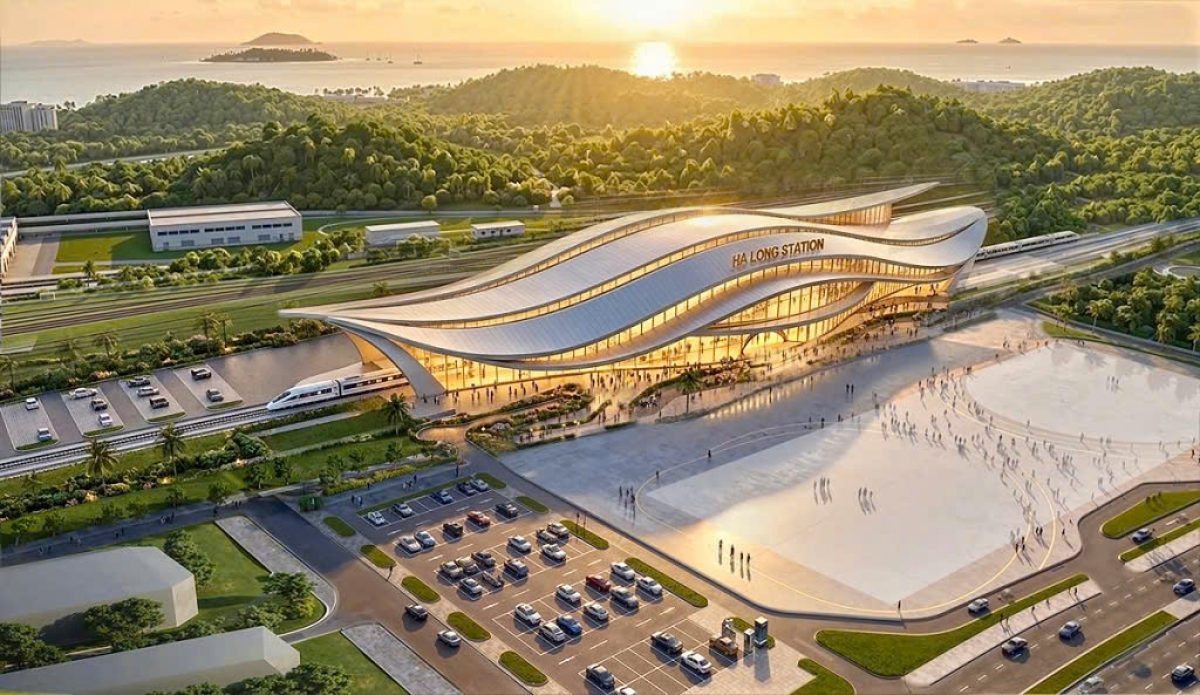
One of the project’s goals is to help Quang Ninh—on track to become a centrally governed city—emerge as a vital link in the northern economic network. With tourism as a major growth pillar, improved connectivity with Hanoi and neighboring localities will help the province tap into the potential of Ha Long Bay, Yen Tu, and its high-end resort system. Khang said that, for Quang Ninh, the project is a catalyst to expand its development space and elevate its role in regional connectivity.
Direct high-speed rail access to Hanoi is expected to position Quang Ninh as the eastern growth pole of the region. It will also support the restructuring of economic zones, urban systems, labor distribution, and tourism development; accelerate high-quality tourism and services; create new growth clusters around station areas; and increase the province’s ability to attract investment and skilled labor.
“We’ve proposed to the central authorities a study on a railway line connecting Hai Phong–Ha Long–Mong Cai–Dongxing (China), which would serve both passenger and cargo transport. This would further strengthen the province’s business and investment environment in the years ahead,” Khanh added.
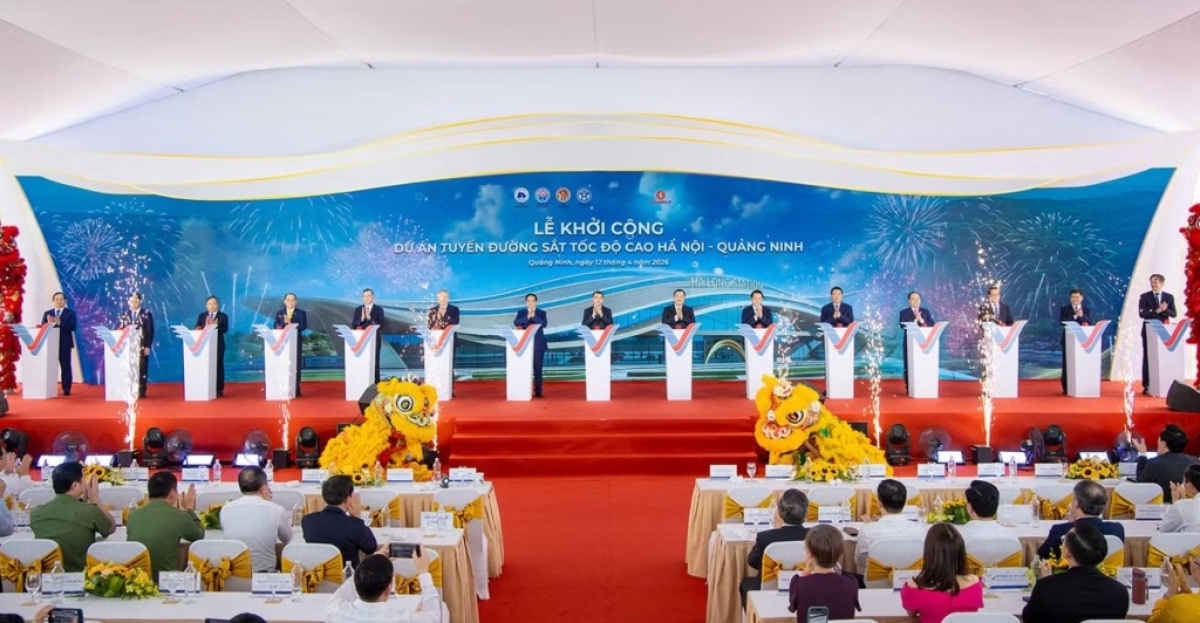
The Hanoi–Quang Ninh high-speed railway will connect localities with a modern transportation system forming a new economic corridor that promotes regional cooperation and shared development across northern Vietnam.
In the long term, the project will open opportunities to develop a modern railway industry in Vietnam encompassing manufacturing, technology transfer, operations, and human resource training. This high value-added sector will have strong spillover potential and play a key role in Vietnam’s industrialization.