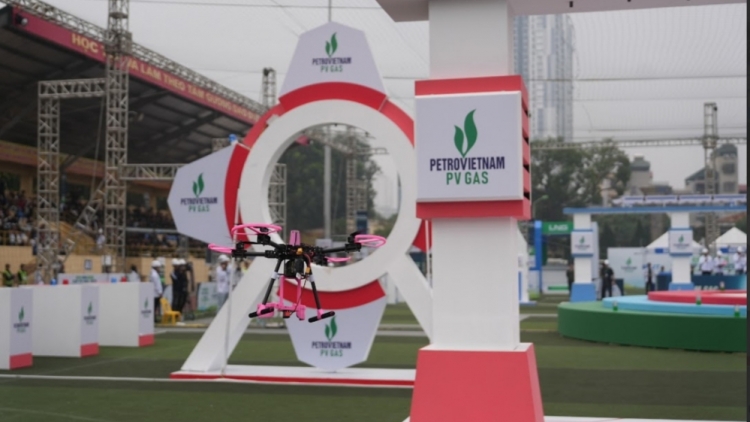




The low-altitude economy, a global trend, harnesses airspace below 1,000 meters as a new growth driver. Market research reports project that the global low-altitude economy could reach 700 billion USD by 2035 and 1.5 trillion USD by 2040.
Tran Anh Tuan, Vice Chairman of the Vietnam Aerospace and UAV Technology Network (AUVS VN), underlined Vietnam’s untapped potential. "Vietnam has enormous potential in the low-altitude economy. First is its geopolitical position. Located at the heart of Southeast Asia, Vietnam has a major competitive advantage in logistics services. Second, Vietnam has consistently pursued its 'Four No's' defense policy and maintained friendly relations with all countries. Political stability gives foreign investors confidence and creates favorable conditions for developing UAV technology,” Tuan said, adding, “In addition, Vietnam has strong hardware manufacturing capabilities and support-industry ecosystem in place."
From helicopter sightseeing and experimental UAV deliveries to autonomous aircraft used for search and rescue, disaster response, smart agriculture, and logistics, low-altitude airspace is moving from concept to reality.
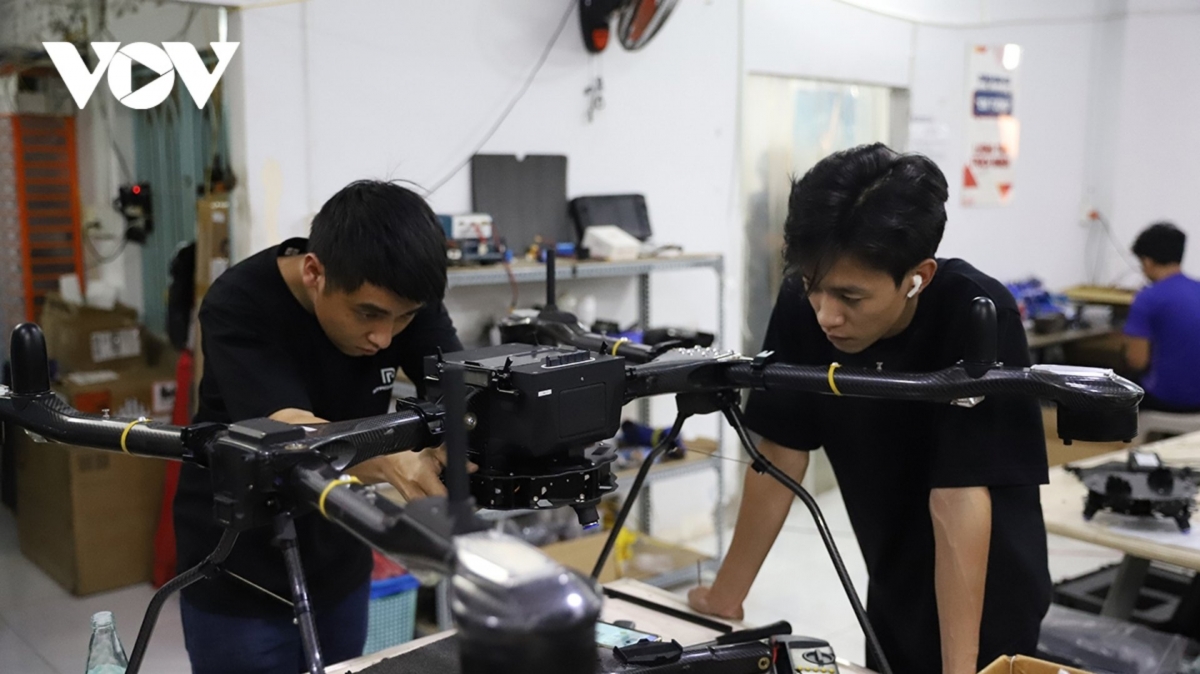
At the heart of this transformation is Vietnam’s growing technological self-reliance. Moving beyond basic contract assembly, Vietnamese tech companies have mastered key stages of the UAV manufacturing value chain. Lieutenant Colonel Vuong Trung Anh of the Air Defense-Air Force Technical Institute, told VOV, "I’m holding a flight controller. We have now mastered the core technology and developed a range of advanced features, including enhanced capabilities that allow aircraft to operate reliably even in environments with high magnetic interference."
The Hera multi-purpose drone series from Realtimes Robustic Vietnam, a product designed entirely by Vietnamese engineers, has been exported to the US and European markets. It has a lifting capacity reportedly ten times greater than that of competitors of similar dimensions.
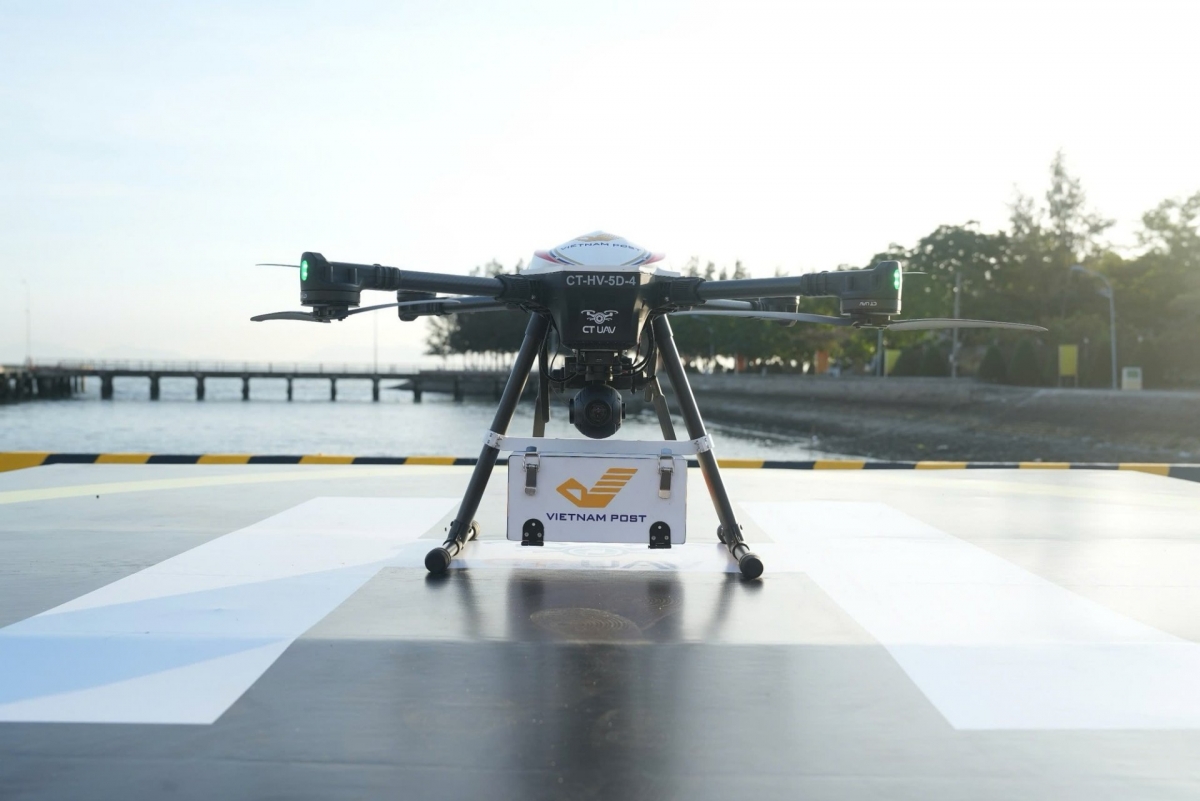
Last year, CT Group signed an agreement to supply 5,000 long-range cargo drones to South Korea. Viettel Group has mastered the design, engineering, and production of dual-use UAVs for both defense and civilian applications. Other support companies are also building international recognition by exporting stabilized industrial camera gimbals to global markets.
An Ngoc Thao, Deputy Secretary-General of the Vietnam Software and IT Services Association (VINASA), said, "We are embedding AI and deep tech into low-altitude economic sectors to accelerate growth. To meet the demands of the digital economy, relying solely on hardware manufacturing or e-commerce will be difficult to sustain that growth over the long term. We need to open up entirely new spaces for development, and that is a paramount mission for the technology industry."
The growth of domestic manufacturing is creating strong synergies with real-world socio-economic needs. Agriculture is being rapidly modernized through drone adoption, and transport and logistics are exploring solutions to high costs and urban congestion.
To support the low-altitude economy, Vietnam is moving to refine its regulatory framework beyond simply managing airspace. The approach treats low-altitude airspace as a new economic frontier, with UAV design and manufacturing technology prioritized on the national list of high-tech investment sectors.
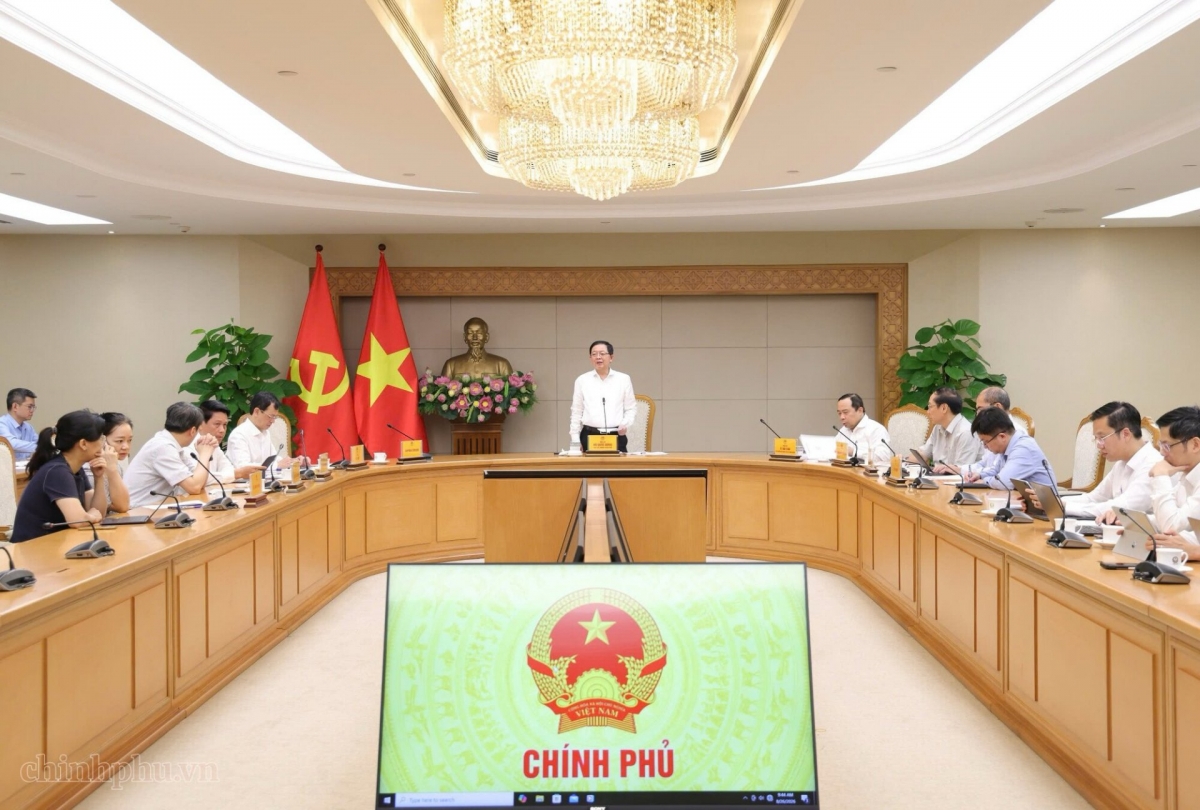
At a working session with the Ministry of Science and Technology in late August, Deputy Prime Minister Ho Quoc Dung underscored the need to continue to review, evaluate, and guide the development of strategic high-tech sectors.
“When potential research topics, inventions, or ideas emerge, they should be registered promptly so that the Ministry of Science and Technology can prepare implementation plans for the coming years. This year, we allocated 103 trillion VND (almost 4 billion USD), and next year's budget will be even higher," said Mr Dung.
The low-altitude economy brings together UAVs, AI, data analytics, telecom, and advanced manufacturing. Vietnam’s opportunity will depend on its ability to master key technologies, develop markets, and fine-tune legal framework. If these factors are put in place, low-altitude airspace could become a new layer of Vietnam’s digital economy, driving innovation and strengthening the nation’s position in global technology.