


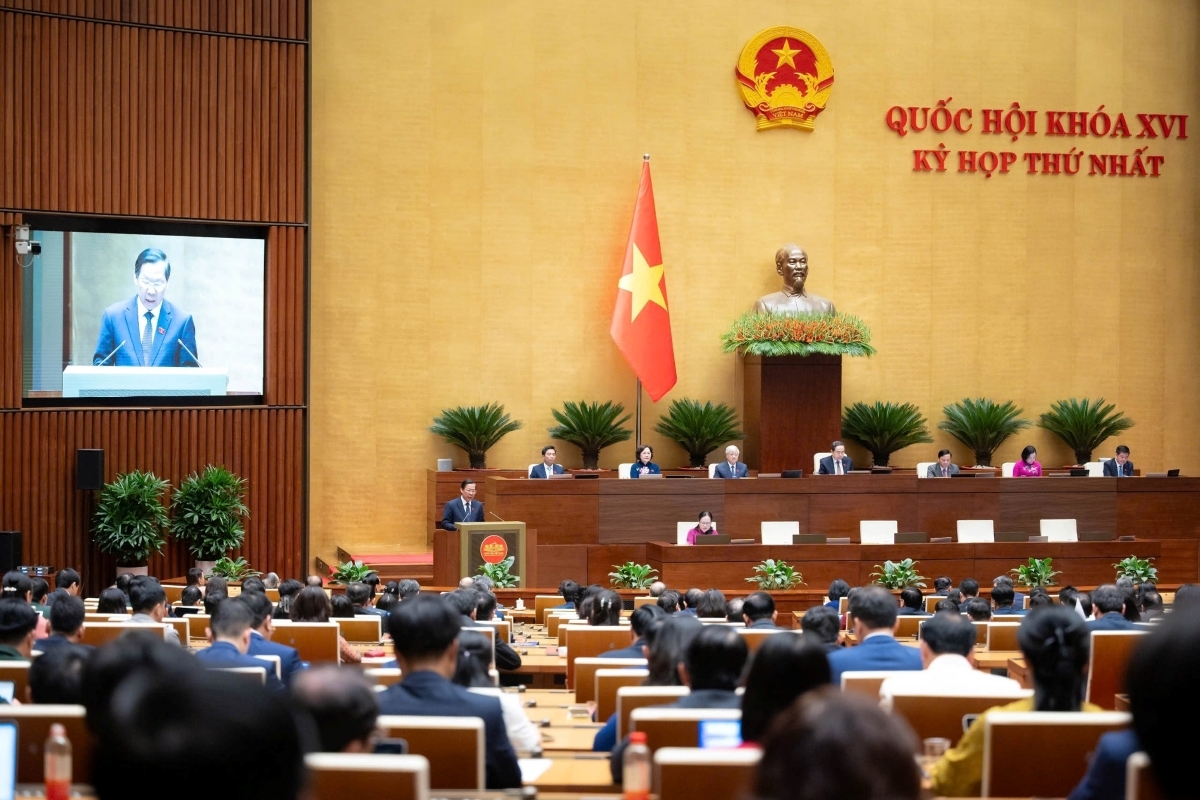
By decentralizing these targets, the government has pivoted toward a high-efficiency governance model. Each province and city is now mandated to identify its roles, unique competitive advantages and growth potential, fostering a culture of taking initiative.
Pham Nam Tien of the National Assembly’s Committee for Culture and Society said, “The direct assignment of growth targets allows provinces and cities to design economic growth scenarios tailored to their specific strengths. This breakthrough solution increases local initiative and raises leadership responsibility.”
As the nation’s economic locomotive, Hanoi has set an ambitious GRDP growth target of 10–10.5% for this year, aiming for 10.5–11% through 2030. To achieve this, the city is working on its own growth model project.
Vu Dai Thang, Chairman of the Hanoi People’s Committee, emphasized the city's resolve in pursuing double-digit growth, viewing it as an order, an honor, and a duty to the capital’s Party Committee and its people. “Our resolution includes clear-cut assignments and responsibilities so that progress can be strictly monitored and controlled,” said Thang.
Hanoi envisions itself as a green, smart, and modern metropolis by 2035. The focus is on strong competitiveness, deep international integration, and becoming a regional hub for finance, healthcare, and innovation.
Ho Chi Minh City, assigned a 10% growth target for 2026 and the entire period until 2030, has launched an aggressive strategy focused on investment, consumption, and exports. The city is also pivoting toward science, technology, and digital transformation, while clearly assigning responsibilities through monthly and quarterly quantitative targets and heads of agencies.
According to Nguyen Loc Ha, Deputy Chairman of the municipal People’s Committee, “Officials must transform their work culture to deliver measurable results. 2026 is a year of acceleration. While the pressure is immense, it is a golden opportunity to affirm our role as the nation’s economic engine and to move closer to the goal of becoming a more livable city with improved quality of life for residents.”
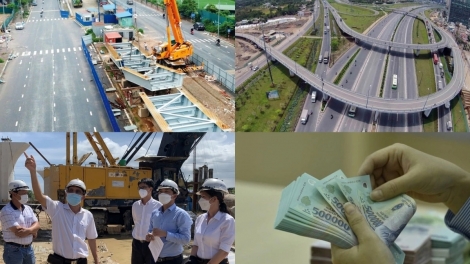
This determination is most visible in the city’s transport sector. HCMC is currently managing 77 transport projects with a combined investment of nearly 70 billion USD, the largest infrastructure push in its history.
The assignment of local targets is creating a spillover effect. Assoc. Prof. Dr. Tran Dinh Thien, former Director of the Central Institute for Economic Management, said, “Growth drivers do not exist in isolation. They reinforce one another. As each factor accelerates, it contributes to a collective momentum that allows the entire economy to move faster and more effectively.”
As traditional growth drivers reach saturation, the new mechanism of “development competition” among localities acts as a catalyst. By encouraging them to "run faster" individually and "run together" through regional linkages, Vietnam is transforming double-digit growth from a policy ambition into a tangible reality.