(VOVWORLD) - The Middle East conflict, which erupted on Feb. 28 when the US and Israel attacked Iran, shows no signs of abating and enters its third week. Efforts to resume dialogue and resolve the conflict through diplomatic means are facing profound obstacles.
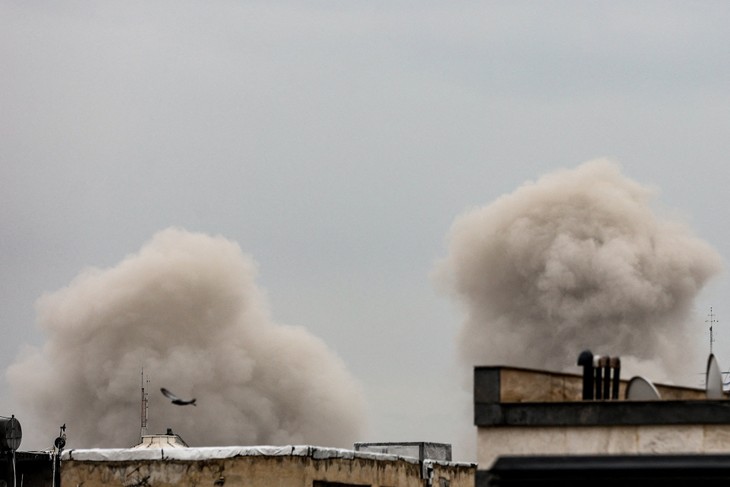 Smoke is seen after an airstrike on Tehran on March 16, 2026. (Photo: Majid Asgaripour/WANA via REUTERS) Smoke is seen after an airstrike on Tehran on March 16, 2026. (Photo: Majid Asgaripour/WANA via REUTERS) |
So far, the parties directly involved in the conflict have not shown any willingness to resume dialogue, even at the most basic level or through mediation channels.
No one is offering any concession
US President Donald Trump said Sunday that Iran was ready to negotiate a ceasefire, but the US was not ready to make a deal. Iran’s Foreign Minister Abbas Araghchi immediately rejected the claim, saying Iran sees no reason to negotiate with the US at this time.
That was the latest “war of words” between the two sides with neither side showing any sign of concession. Israeli Defense Minister Israel Katz said on Mar. 14 that the conflict has entered a decisive phase and "will last as long as necessary."
Lana Nusseibeh, Minister of State at the Ministry of Foreign Affairs of the UAE, said a precondition for restarting dialogue between Gulf countries and Iran is the cessation of Iran’s retaliatory attacks on neighboring territories, even if the targets are US military bases or assets.
Meanwhile, Qatar’s Foreign Ministry spokesperson Majed Al-Ansari is skeptical about mediation efforts: “What you said regarding mediation, I think we have heard both sides say that there is no active mediation that is taking place right now. We haven't seen any official records of this. We are unaware of any official mediation that is taking place right now.”
Torbjorn Soltvedt, chief analyst at the UK’s risk intelligence company Verisk Maplecroft, said diplomacy with Iran had previously acted as a “shield” for Gulf countries to avoid conflict. But that “shield” has been broken, making the resumption of dialogue extremely difficult, even through mediation.
Turkish Foreign Minister Hakan Fidan said the conflict between the US-Israel and Iran broke out while negotiations were going on, which casts doubt over diplomatic plans. “Every two or three days I speak to my Iranian counterparts and my feeling is that, you know, they feel betrayed because the second time they were attacked, you know, during the talks. And so I think there is no reason for them now to openly mention about the discussions. But my guess is, you know, I think they are open to any sensible back-channel diplomacy. At least they should be,” said Fidan.
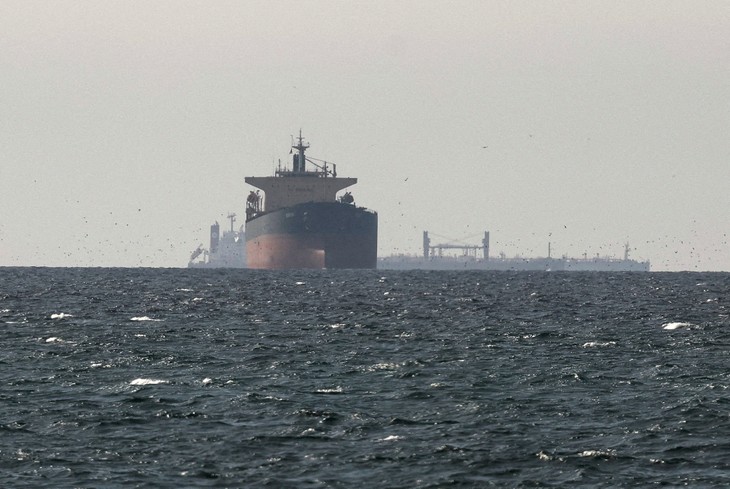 Oil tankers sail in the Persian Gulf, near the Strait of Hormuz, on March 11, 2026. (Photo: Reuters/Stringer) Oil tankers sail in the Persian Gulf, near the Strait of Hormuz, on March 11, 2026. (Photo: Reuters/Stringer) |
Diplomacy remains solution
Military attacks and ship congestion at the Strait of Hormuz is challenging diplomatic efforts. A key US priority is to reopen the Strait of Hormuz to oil tankers wishing to exit the Persian Gulf. In recent days, President Trump has asked France, Japan, the UK, Germany, China, and several other countries to deploy warships to escort oil tankers and other commercial vessels through the Strait. Most have declined, not wanting to be drawn into a wider war.
During a visit to Turkey on Mar. 12, German Foreign Minister Johann Wadephul said that reopening the Strait of Hormuz is essential and must be done soon, but not through military means. “I’m convinced that a reliable and viable solutions can only be reached through diplomatic channels. We should pool the shared interests from the Gulf region and our own neighborhood.”
The UK, the only country so far that has said it’s “considering” sending forces to Hormuz at the request of President Trump (likely limited to sending mine-hunting drones), said its priority is a long-term diplomatic solution. UK Energy Secretary Ed Miliband said: “It's in all of our interest to get the Strait reopened. I will also say that we also need to de-escalate this crisis because the best and most conclusive way to get the Strait reopened is to get this conflict to come to an end. Absolutely it's something we are working with our partners on.”
Beyond the Middle East, the conflict is beginning to affect diplomatic efforts on other global issues. On Monday, President Trump said he has asked China to delay his planned meeting with Chinese President Xi Jinping in Beijing by "a month or so" due to the conflict in Iran. Trump’s visit to China, scheduled for Mar. 31 to Apr. 2, was expected to mark an important milestone in US-China relations, and advance key issues such as global tariffs, the Russia-Ukraine conflict, and tensions on the Korean Peninsula.