(VOVWORLD) - With record revenue of 40 billion USD and more than 20 million international arrivals, Vietnam’s tourism sector in 2025 has rebounded strongly from the challenges of the COVID-19 pandemic.
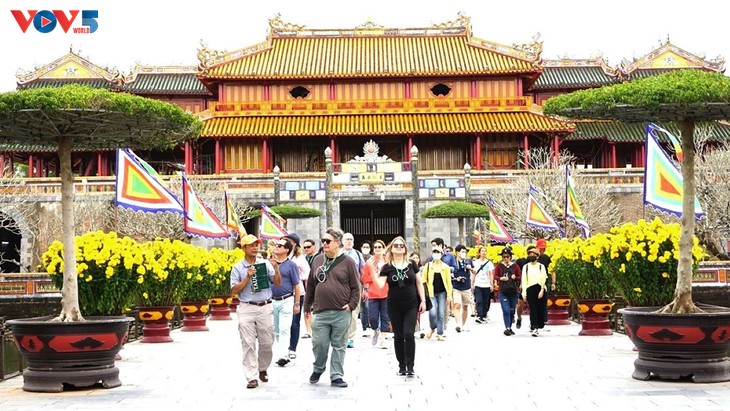 Tourists visit Hue Imperial City (Photo: Le Hieu/VOV-Central Region) Tourists visit Hue Imperial City (Photo: Le Hieu/VOV-Central Region) |
It’s a peaceful afternoon beside the Perfume River in Hue city. British tourist David Wilson has returned to Vietnam’s former imperial capital for the second time since the COVID-19 pandemic.
“This is my second time returning to Hue. I'm truly impressed. After the COVID-19 pandemic, I can clearly feel the tourism here has recovered strongly. Heritage sites are better preserved. Services are increasingly professional and people are incredibly friendly. This shows the growing appeal of Vietnamese tourism,” said David.
Local residents have noted the change, and say the number of international tourists has increased faster than expected. After Hue, visitors often continue on to Da Nang and Hoi An.
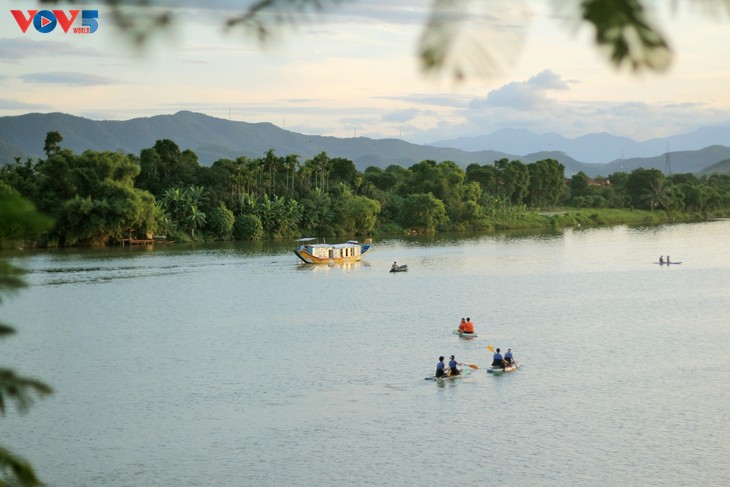 Tourists row boats on the Perfume River (Photo: Le Chi/ VOV5) Tourists row boats on the Perfume River (Photo: Le Chi/ VOV5) |
Tour guide Vuong Quoc Bao said: “The number of tourists from South Korea, Taiwan (China), and Japan continues to grow, along with European visitors, who tend to travel solo, stay longer, and seek local cultural experiences.”
Tourists are beginning to see a visit to Vietnam less as a sightseeing journey than as an experiential exploration of culture, cuisine, art, and community life. Nguyen Le Mai Phuong, Director of the Seni Travel Company, says travelers are increasingly seeking more meaningful experiences. “Forms of tourism such as community-based tourism, ecotourism, and wellness tourism are still at an early stage. It’s necessary to adopt a new approach in developing tourism products, with a strong shift toward tours to explore culture, culinary experiences, traditional arts, and wellness. These are today’s high-quality travel trends.”
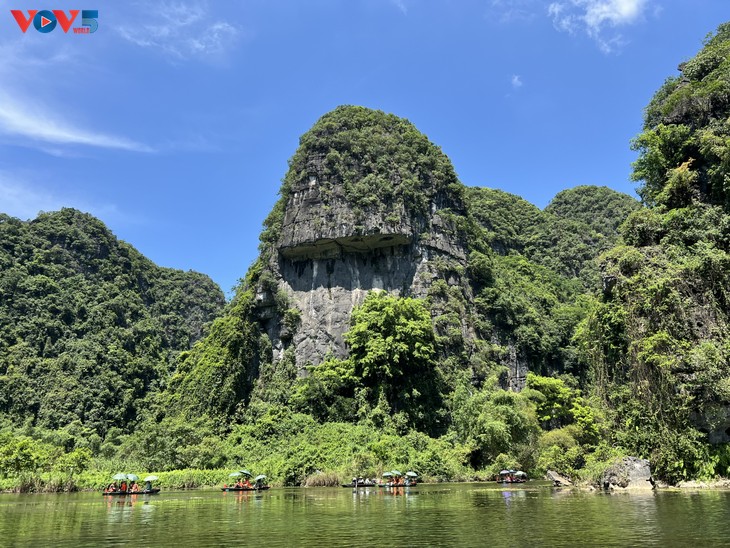 Trang An Landscape Complex in Ninh Binh province (Photo: Le Chi/ VOV5) Trang An Landscape Complex in Ninh Binh province (Photo: Le Chi/ VOV5) |
Many localities have changed their tourism development orientation. Ninh Binh province is developing tourism in tandem with the culture industry, creating a new economic sector.
Nguyen Cao Tan, Deputy Director of the Ninh Binh provincial Department of Tourism, says each region needs to tell its own story, reveal its own part in the kaleidoscopic picture of Vietnam. “We aim to introduce to the world the distinctive values of each of the regions that shape Vietnam. We should select key markets to promote the national brand. We’ll continue to introduce diverse products with local identities to build a colorful tourism map of Vietnam,” said Tan.
2025 marked a milestone as international accolades affirmed Vietnam’s tourism standing. The Yen Tu-Vinh Nghiem-Con Son, Kiep Bac complex was officially recognized by UNESCO as a World Cultural Heritage site, while the Ba Chua Xu of Sam Mountain Festival, and the Dong Ho folk painting craft were inscribed by UNESCO as intangible cultural heritages.
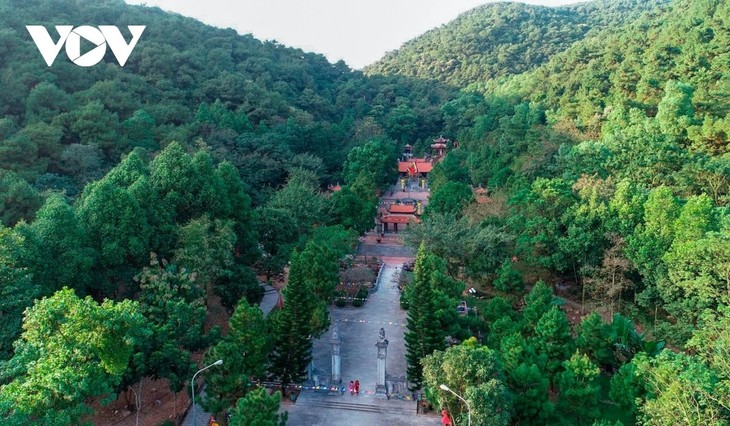 Yen Tu-Vinh Nghiem-Con Son, Kiep Bac complex is officially recognized by UNESCO as a World Cultural Heritage site in 2025. (Photo: Truong Giang/ VOV-Northeast Region) Yen Tu-Vinh Nghiem-Con Son, Kiep Bac complex is officially recognized by UNESCO as a World Cultural Heritage site in 2025. (Photo: Truong Giang/ VOV-Northeast Region) |
In 2025 Vietnam was honored for the 6th time as the "World's Leading Heritage Destination" at the World Travel Awards. The Dong Van Karst Plateau UNESCO Global Geopark in Tuyen Quang province was honored as the “World’s Leading Regional Cultural Destination for 2025”. Moc Chau Plateau in Son La earned its 3rd title as the “World’s Leading Local Nature Destination.” Tam Dao in Phu Tho province was voted the “World’s Leading Tourist Town” for the 4th time.
These accolades are clear evidence of how Vietnam is telling its story through heritage, identity, and persistent efforts toward sustainable development.
Associate Professor Dr. Nguyen Thi Thu Phuong, Director of the Vietnam Institute of Culture, Arts, Sports and Tourism, said: “A destination is a place for tourists to go for sightseeing, to experience the local life, and help create livelihoods for the locals. Integrating tourism with cultural industries helps preserve heritage and improve quality of life, while boosting the economy, creating jobs, and strengthening local communities in their pursuit of sustainable development.”
Accolades for destinations, record-breaking tourism revenues and visitor numbers, and the revival of cultural stories reflect Vietnam’s renewed image and its readiness to enter 2026 with even greater promise.