(VOVWORLD) - The new Vietnam Space Museum opened by the Vietnam National Space Center marks a milestone in Vietnam’s advancement of science, technology, and innovation. The museum was envisioned as a driving force for digital transformation and an inspiration for the next generation of scientists and innovators.
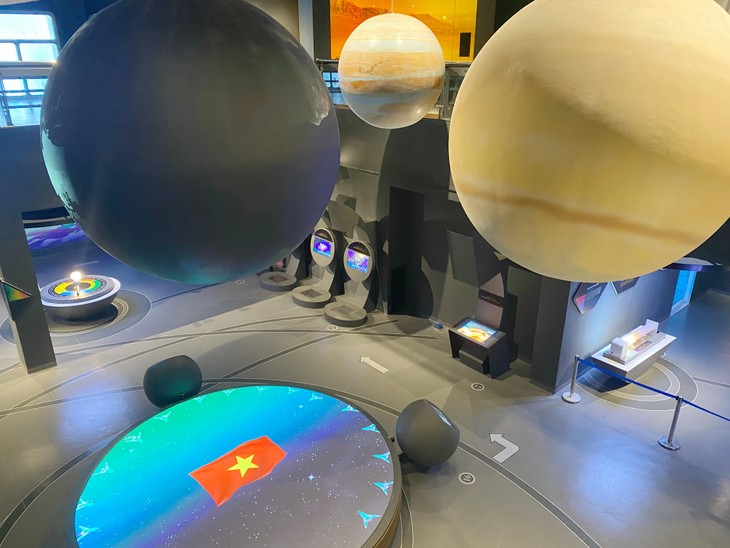 One of the museum’s highlights is large-scale models of the Solar System. (Photo: Bao Tram) One of the museum’s highlights is large-scale models of the Solar System. (Photo: Bao Tram) |
According to Associate Professor Dr. Pham Ngoc Diep, Director of the Center for Astrophysics and Space Exploration, the museum is one of four pillars of Vietnam’s space development.
“We identified four pillars: space science and technology, earth observation, satellite applications, and public education and outreach. The Space Museum belongs to the fourth pillar. Through it, we hope to inform, provoke curiosity, and introduce the achievements of space science and technology to the public.”
Digital transformation in action
The Vietnam Space Museum is a showcase for effectively applying digital technology to learning and discovery, as Museum director Diep said.
“We used many aspects of digital transformation. Many display models and experiments use digital technology. Sensors, for example, allow visitors to interact directly with exhibits, providing a vivid and engaging experience.”
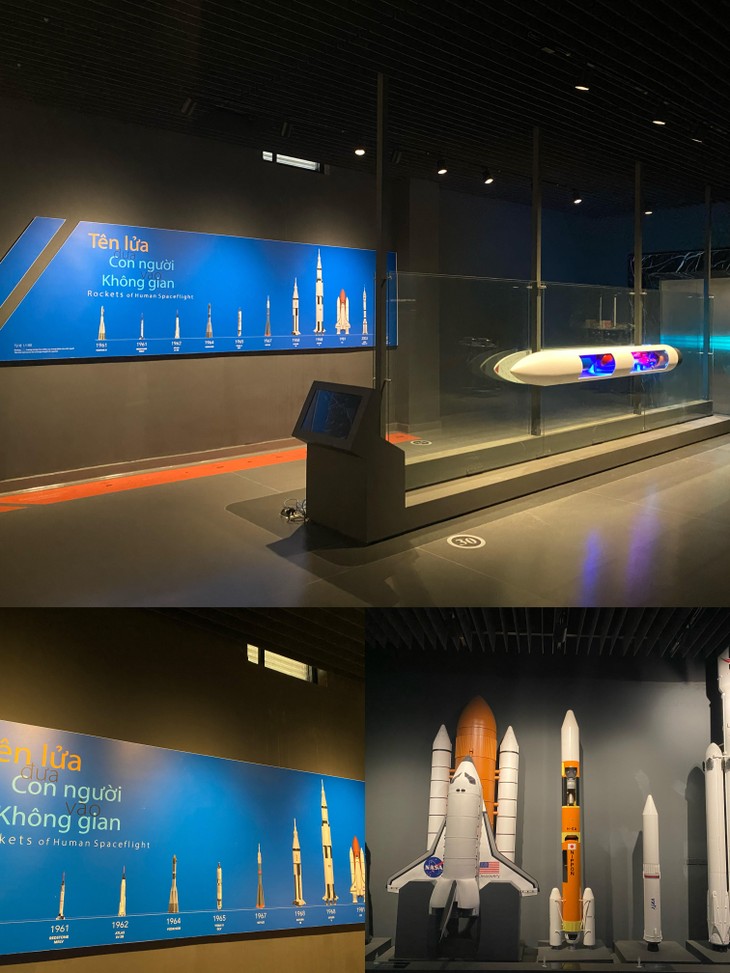 There is one section featuring models of rockets built in the US, Russia, and Europe along with cross-sections showing their structure and how they work. (Photo: Bao Tram) There is one section featuring models of rockets built in the US, Russia, and Europe along with cross-sections showing their structure and how they work. (Photo: Bao Tram) |
|
If you visit the Vietnam Space Museum, in particular the 1,600-square-meter indoor area, don’t miss these 5 zones.
|
Cutting-edge visitor experiences
The Vietnam Space Museum began construction in October 2022, on 3,000 square meters in Hoa Lac Hi-tech Park on the outskirts of Hanoi. It includes an observatory and outdoor and indoor exhibition spaces, and integrates cutting-edge tools like AR/VR, 3D holograms, and interactive sensors to recreate astronomical phenomena. One of the museum’s highlights is its planetarium dome theater, where multiple projectors combine to recreate the night sky and cosmic events.
“In building the museum, scientific accuracy was prioritized. All experiments, models, and information are accurate, but vivid and interactive to make knowledge more appealing. For example, in electronic books we combine traditional reading with animated images,” said Dr Diep.
He noted said the museum is designed to serve as a bridge between scientists and the public through events such as space weeks, scientific talks, and conferences.
Inspiring collaboration and future growth
Space technology has been identified as a strategic sector serving national socio-economic development, boosting defense, and protecting security and sovereignty. The Vietnam Space Museum focuses on cooperation to further those aims, according to Dr. Diep.
“To keep pace with global developments, we must collaborate with other organizations. We’re working with the Center for Scientific Discovery and Innovation (ExploraScience Quy Nhon) in Quy Nhơn city, for example, and discussing joint exhibitions with the Beijing Planetarium. Such collaboration will help us innovate and learn from international experience.”
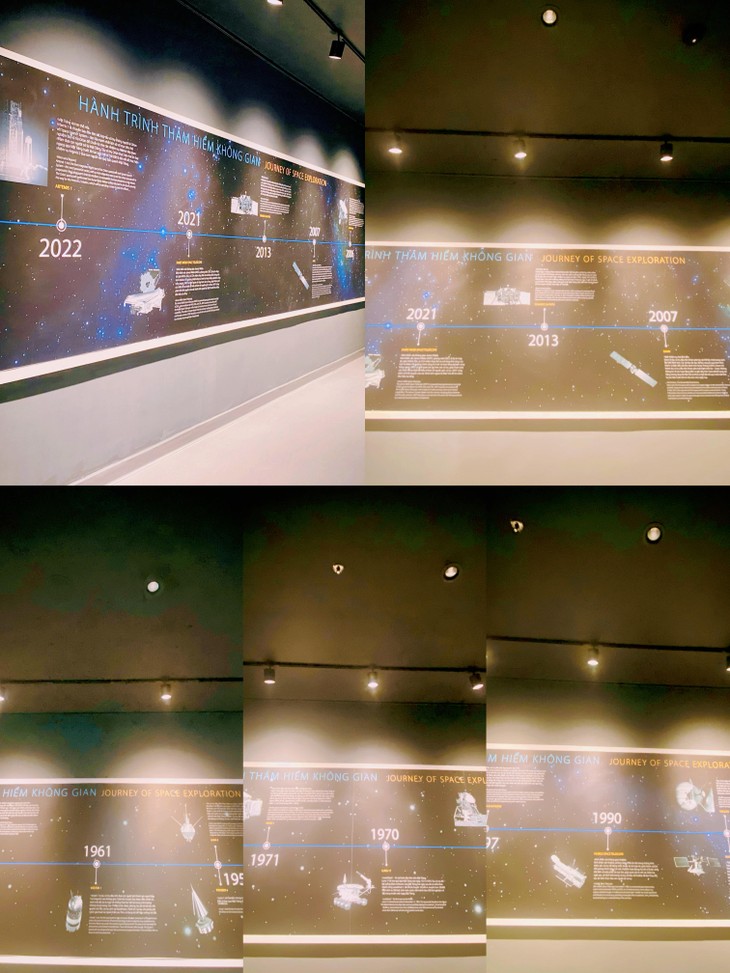 The timeline of space exploration missions from 1957 to 2022 (Photo: Bao Tram) The timeline of space exploration missions from 1957 to 2022 (Photo: Bao Tram) |
Preserving and promoting Vietnam’s space legacy
In addition to disseminating global scientific knowledge, the museum highlights Vietnam’s own contributions, but according to Dr Diep, constant updates will be made to keep the museum relevant.
“We pay great attention to updating achievements and new events. Although Vietnam’s space industry hasn’t yet developed strongly, the museum showcases milestones such as satellites manufactured by Vietnam, telecommunications satellites, historical records of President Ho Chi Minh meeting Soviet astronauts, and national hero Pham Tuan, the first Vietnamese to fly into space. One of the important roles of the museum is to preserve, promote, and connect Vietnam’s space science and technology with the world.”
A hub for innovation and education
The opening of the Vietnam Space Museum sends a powerful message about Vietnam’s vision, but the museum faces the challenge of balancing daily operations with long-term development. Sustaining growth will require engaging programs and stronger institutional support, said Dr. Diep.
“Museum staff spend much of their time welcoming visitors, leaving little time to upgrade their professional expertise. A combination of state support and social contributions, sponsoring of free public events, and better working conditions for the staff will help the museum grow sustainably.”
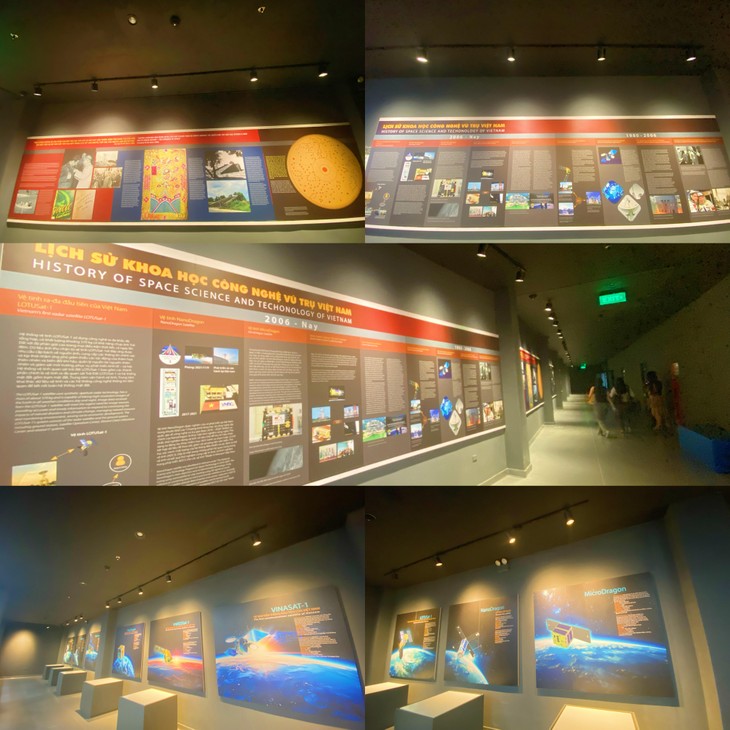 The history of space center and technology of Vietnam (Photo: Bao Tram) The history of space center and technology of Vietnam (Photo: Bao Tram) |
Following the official opening on August 21, the Vietnam Space Museum remains on a trial basis with limited group visits. Official information on opening hours and experiential activities will be updated on the Vietnam Space Center’s website at vnsc.org.vn/vi/ and on its Facebook fanpage.