(VOVWORLD) - For many Vietnamese people, Tet is not just a holiday, but a cherished memory. At the ongoing Tet Viet – Tet Pho 2026 program in Hanoi’s Old Quarter, those memories are gently recalled in a familiar setting. The traditional Lunar New Year-themed space installation and Spring Market at the Hanoi Centre for Cultural and Arts, 22 Hang Buom Street, Hoan Kiem Ward, Hanoi, is open until March 17, expecting large numbers of domestic and international visitors.
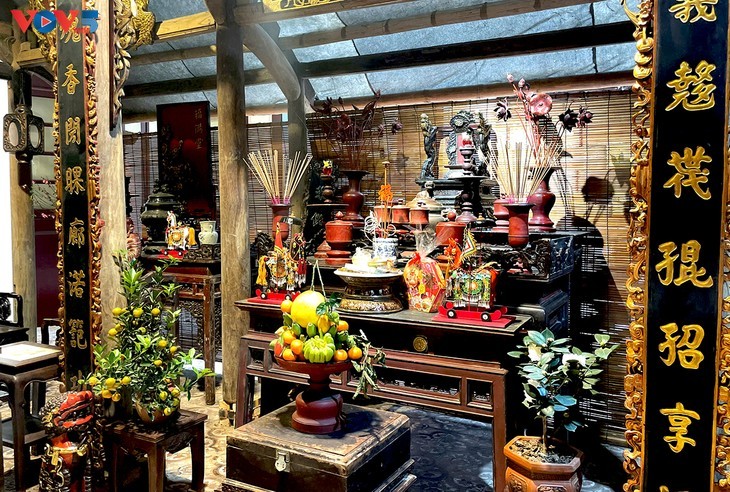 A Tet altar recreated at the Tet Viet – Tet Pho 2026 event A Tet altar recreated at the Tet Viet – Tet Pho 2026 event |
“Here I feel a sense of nostalgia and deep emotion. I value traditional culture and the role of Vietnamese women, so I bring my daughters here as well. Through this experience, they can learn more about traditional craft villages and better understand our traditions.”
Impressed by the colorful atmosphere of traditional Tet in the heart of Hanoi’s Old Quarter, Ms. Tran Thi Hanh from Hong Ha Ward said that from the very first steps into the space, visitors can clearly feel the spirit of traditional Hanoi and the Red River Delta, reflected in a carefully recreated house, spring decorations, and meticulously crafted details.
Inside the main exhibition space, the organizers have reconstructed traditional Vietnamese houses with moss-covered tiled roofs and wooden pillars. Ancestral altars, five-fruit trays, and early-blooming peach blossoms create a setting that reflects the daily life and Tết customs of northern Vietnamese families in the past.
Alongside the traditional houses, the Spring Market brings together calligraphy stalls and products from well-known craft villages. Items such as fans, lacquered horse figurines, and other handcrafted decorations are displayed alongside traditional Hanoi sweets and seasonal treats, adding to the lively atmosphere of the market.
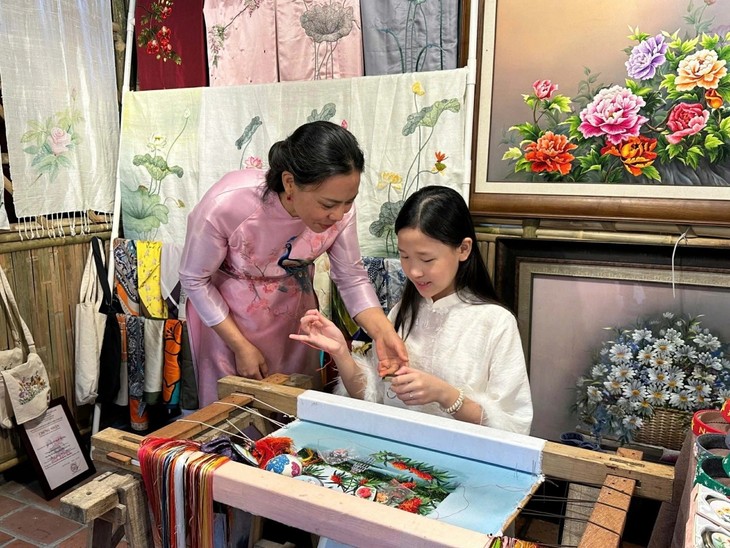 A young visitor enjoys experiencing traditional hand embroidery. A young visitor enjoys experiencing traditional hand embroidery. |
“I brought my traditional hand embroidery here to share it with visitors and to join in the Tet celebrations for the Lunar New Year 2026. I hope more people can get to know our craft so it can be preserved for future generations,” embroidery artisan Nguyen Thi Hang from Hanoi said.
Beyond the display of traditional products, the programme creates a space for artisans to meet visitors and share behind-the-scene stories. Do Thi Bang from Hanoi, whose family has been making fans for three generations, displays hand-painted fans and decorative items featuring familiar Tết images.
“I bring designs with horses, peach blossoms, and apricot branches. I hope visitors from Vietnam and abroad will come to my stall to see and feel the beauty of our traditional craft products,” said Bang.
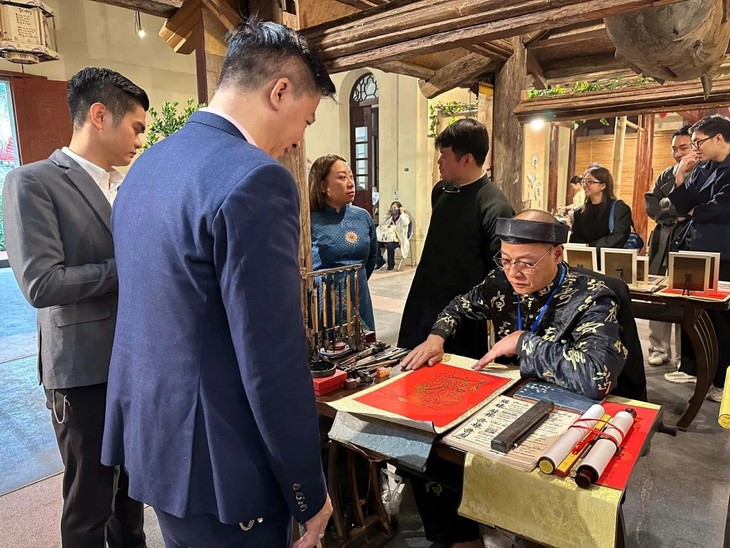 Visitors watch a calligrapher at work Visitors watch a calligrapher at work |
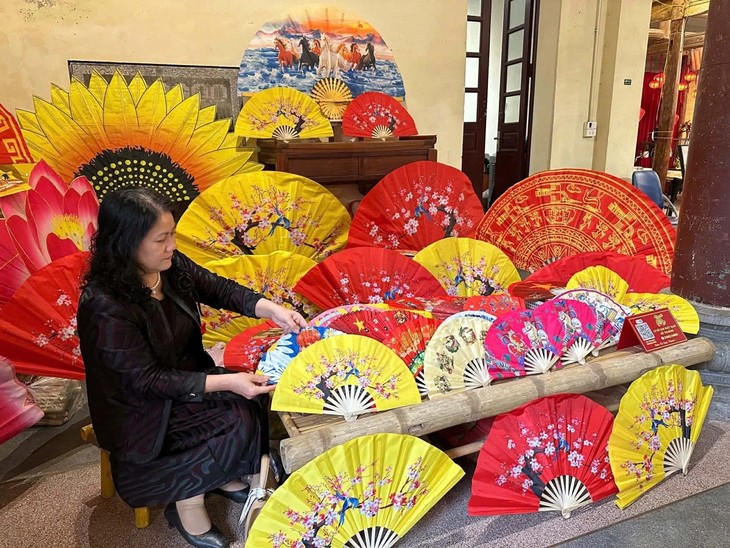 A booth introducing the traditional fan-making village of Chang Son in Thach That, Hanoi A booth introducing the traditional fan-making village of Chang Son in Thach That, Hanoi |
The Spring Market is a place for visitors, including Duc Hieu from Hanoi, to bring a small piece of Tết home. “I decided to buy a lacquered horse figurine. I feel like I’m bringing the atmosphere of Tet and a piece of Hanoi into my family.”
Some visitors return to the Tet Viet – Tet Pho program year after year, drawn by their interest in traditional culture. Luu Thuy Trang from Hanoi, is one of them.
“I love traditional beauty and things from the past. My field of study is related to culture and people, so I choose to take part in Tet Viet – Tet Pho every year. I hope it can help spread the beauty of traditional Tết and Vietnamese culture to more people, not only Hanoians, but also international visitors,” said Trang.
Alongside the activities at 22 Hang Buom Street, several heritage sites in the Old Quarter are also taking part in the programme. The Heritage House at 87 Ma May Street recreates the Tet preparations and daily life of a traditional Hanoi family, while introducing visitors to the art of carving and shaping narcissus flowers.
Meanwhile, Kim Ngan Communal House at 42 Hang Bac Street and the heritage site at 40 Lan Ong Street are decorated with traditional Tết settings and host experiential activities related to herbal tea culture and traditional Lunar New Year customs, offering visitors a deeper look into the seasonal traditions of old Hanoi.