(VOVWORLD) - Hanoi will begin restricting gasoline-powered motorbikes and cars in certain inner-city areas starting July 1, next year. This decision marks a major turning point in efforts to reduce air pollution and improve the quality of life. To the international community, it signals Vietnam’s determination to move toward low-emission targets and sustainable, green urban development.
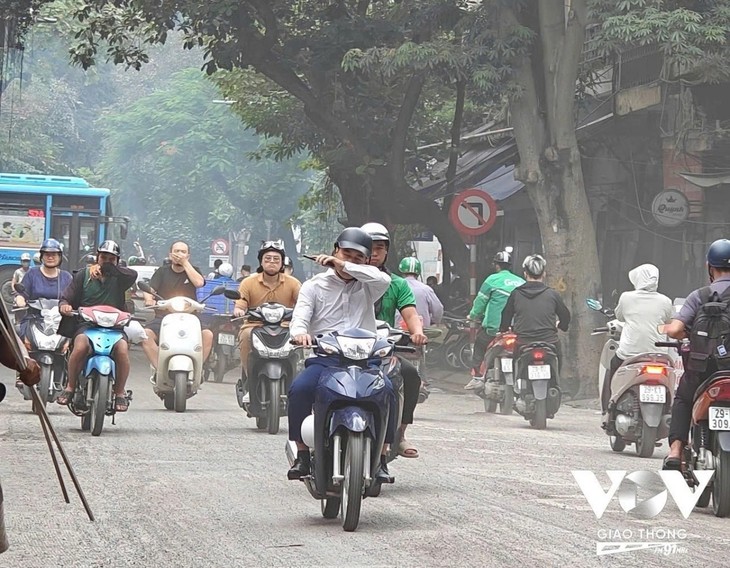 The proportion of electric motorbikes in Vietnam remains quite low. The proportion of electric motorbikes in Vietnam remains quite low. |
In Hanoi, the rapid growth of private vehicles in recent years has resulted in more congested streets, greater emissions from gasoline engines, and severe smog and noise pollution. In 2026, as the capital’s central areas gradually impose restrictions moving toward a total ban on gasoline vehicles, the situation is expected to improve.
It’s estimated that reducing the number of gasoline-powered vehicles in the inner city by 50% could reduce PM2.5 fine-dust levels 20% to 30% and significantly mitigate noise pollution, a source of stress for many people.
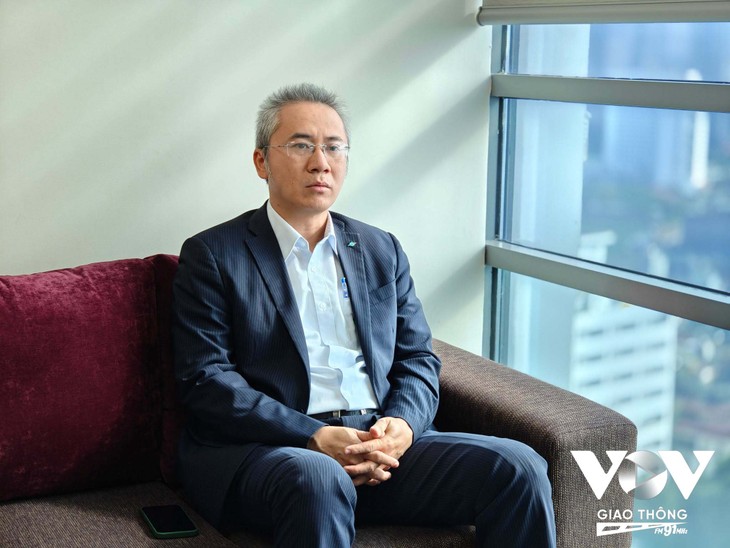 Dr. Phan Le Binh, Chief Representative of the OCG Japan Consulting Office. Dr. Phan Le Binh, Chief Representative of the OCG Japan Consulting Office. |
“Hanoi has set out a clear roadmap with a defined timeline, rather than implementing a policy immediately across the entire city. Initially, the plan will be applied within Ring Road 1, which covers a relatively small area,” said Dr. Phan Le Binh, Chief Representative of the OCG Japan Consulting Office in Vietnam, a consulting firm specializing in construction, feasibility studies, and management of transportation projects.
The municipal authorities are preparing support mechanisms to help residents convert their vehicles, with special attention given to low-income households, who will receive higher levels of assistance than others, he said. “At the same time, Hanoi is reviewing locations for installing public charging stations that will be compatible with all types of vehicles. The city is also accelerating the conversion of its public bus fleet to electric power.”
Along with policies restricting gasoline vehicles, Hanoi is expanding its electric bus network, developing urban railway systems, increasing inter-regional connections, and building green transport corridors. These efforts are creating a clean, integrated transportation ecosystem, offering residents many alternatives to private vehicles.
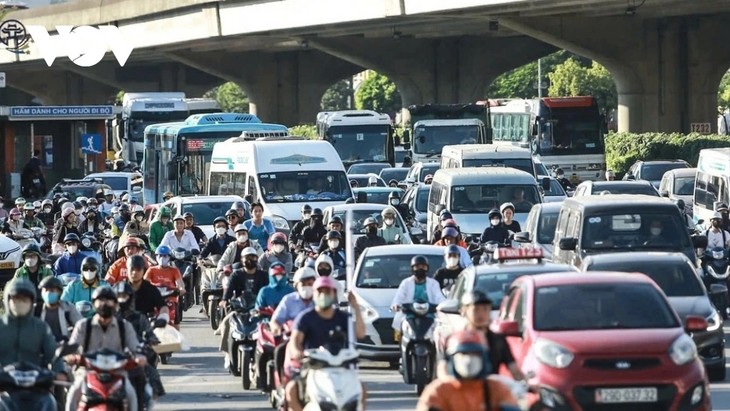 Hanoi is implementing a phased roadmap to restrict gasoline-powered motorbikes within Ring Road 1. Hanoi is implementing a phased roadmap to restrict gasoline-powered motorbikes within Ring Road 1. |
Under the plan, by 2030 electric buses will make up the majority of the capital’s public transportation system, bringing Hanoi closer to ASEAN’s green urban standards.
Residents like Nguyen Ba Vinh have expressed their support, "Electric vehicles have almost zero emissions, which is very good for people's health."
The ban on gasoline vehicles reflects a shift in urban management mindset that places quality of life at the center. The city aims both to reduce traffic congestion and to improve public health. Studies show that particulates from gasoline engines are one of the main causes of respiratory disease among children and the elderly. As emissions decrease, health risks are expected to decline as well.
Hanoi resident Trinh Thi Van said that she prefers an electric vehicle to a gasoline one. EVs are smoother, quieter, and don’t cause environmental pollution.
“I support the policy, but the municipal government needs to set up more charging stations,” Van said.
The transition to EVs will not only create a cleaner environment, it will open up opportunities to develop smart infrastructure like smart parking facilities, fast charging stations, smart buses, and smart taxis. Hanoi is catching up with the trends in advanced cities around the world.
After more than a thousand years, the capital is striving to become modern, green, and deeply integrated with the global community.