(VOVWORLD) - Throughout its development, Vietnam has consistently upheld the principle of aligning economic growth with ensuring social progress, social justice, and social security for the people. This commitment has been reflected in Vietnam’s achievements during the implementation of the 13th National Party Congress Resolution for the 2021-2025 period, which have laid a solid foundation for inclusive, balanced, and sustainable development, placing people at the center of national progress in the new development era.
 (Photo: VGP) (Photo: VGP) |
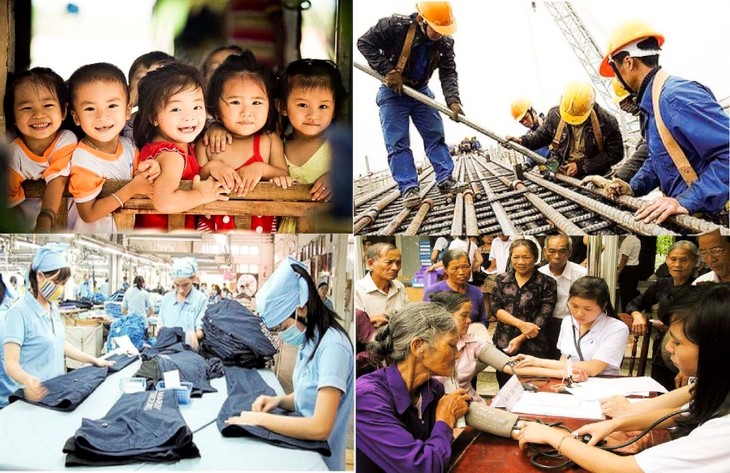
From 2021 to 2025, efforts to ensure social security, improve social welfare, and to sustainably reduce poverty were carried out in a comprehensive and effective manner nationwide. Policies on poverty reduction, social assistance, employment, social insurance, and health insurance continued to be refined in a more holistic and inclusive direction, with people being placed at the center.
Social security policies taking root
The National Target Program on Sustainable Poverty Reduction for 2021-2025 was implemented in a coordinated manner, covering livelihood support, job creation, vocational training, preferential credit and expanded access to basic social services. The multidimensional poverty approach has provided a more comprehensive reflection of living standards, moving beyond a narrow income-based assessment of poverty.
Amid global economic volatility, natural disasters, epidemics, and the prolonged impacts of COVID-19, social security policies continued to serve as a vital safety net, helping people stabilize their lives and restore production.
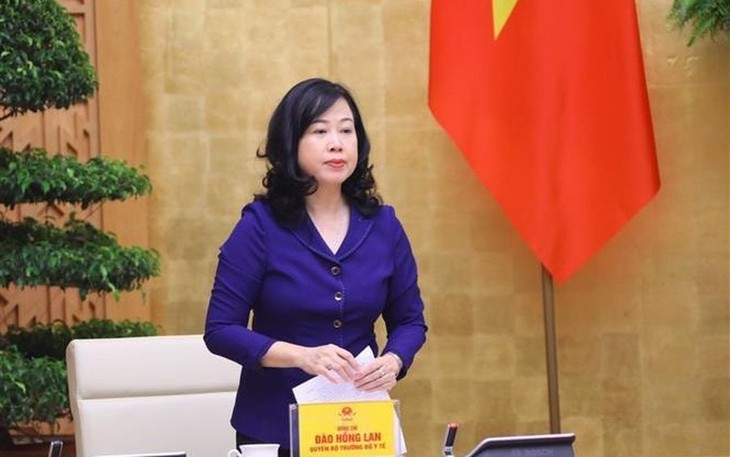 Minister of Health Dao Hong Lan (Photo: VGP) Minister of Health Dao Hong Lan (Photo: VGP) |
Minister of Health Dao Hong Lan said: “Even during the COVID-19 pandemic, the Government rolled out four unprecedented support packages worth more than over 4.5 billion USD, along with 200,000 tons of rice, helping tens of millions of people and businesses overcome difficulties. These were accompanied by employment and social security support policies to help people through the most challenging period. Social security policies have contributed to safeguarding human rights, improving material and spiritual living standards, and strengthening public trust.”
Support policies were implemented fully and in a timely manner, while preferential credit programs for livelihoods proved effective. As a result, the multidimensional poverty rate fell sharply from 4.4% in 2021 to around 1.3% in 2025.
The National Target Program on Sustainable Poverty Reduction also made strong investments in infrastructure, with thousands of transport, irrigation, education, healthcare, and clean water projects built or upgraded. These efforts improved living conditions and enabled many particularly disadvantaged communes to meet new-style rural development standards, exceeding set targets.
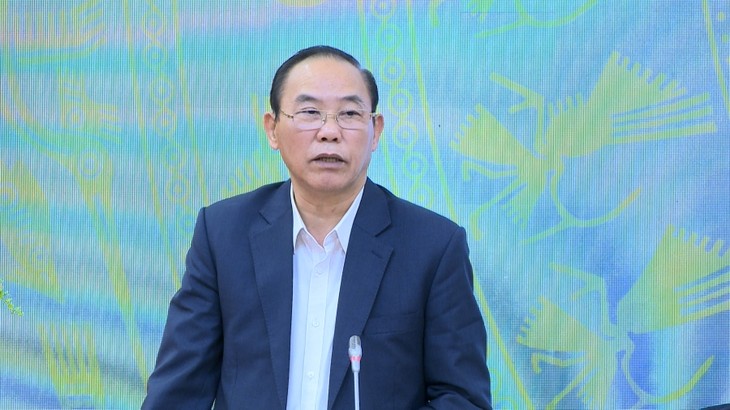 Deputy Minister of Agriculture and Environment Phung Duc Tien (Photo: VGP) Deputy Minister of Agriculture and Environment Phung Duc Tien (Photo: VGP) |
Deputy Minister of Agriculture and Environment Phung Duc Tien said: "People’s incomes and living conditions have continued to improve. Average rural income in 2025 increased 1.4 times compared to 2020. In ethnic minority and mountain areas, income growth reflects strong improvements in livelihoods and living standards. The social security network and basic social services have been expanded and enhanced in quality. By 2025, 92% of communes met healthcare criteria, 95% met education criteria, and 99% of the population had access to hygienic clean water.”
Notably, the nationwide program to eliminate makeshift and dilapidated housing has been implemented with strong determination. This has created a crucial foundation for ensuring stable housing and livelihoods for people, particularly as natural disasters and climate change become increasingly complex.
Promoting sustainable development, leaving no one behind
In the Government’s report outlining development orientations for the next five years, social security continues to be identified as a key priority, with higher requirements in terms of coverage, quality of benefits, and policy sustainability.
Deputy Minister Phung Duc Tien emphasized: “We will accelerate market-linked livelihood development through production support, vocational training, preferential credit, cooperative development, and stronger product value-chain linkages, viewing these as fundamental solutions to stabilize and raise incomes. At the same time, we will strengthen protection and assistance for vulnerable groups, ensuring that all citizens have at least minimum access to social security policies, while enhancing resilience to the increasingly severe impacts of climate change.”
Building on the achievements of the recent period, the social security system will continue to be refined in a more inclusive, multi-layered, flexible, and resilient manner, better equipped to respond to economic and social shocks, natural disasters, epidemics, and climate change.
Policies will go beyond short-term support to focus more strongly on creating sustainable livelihoods and expanding access to employment, education, healthcare, and housing. This approach enhances people’s capacity for self-reliance and upward mobility, clearly reflecting the State’s commitment to ensuring social security for all citizens, leaving no one behind, while laying a solid social foundation for rapid and sustainable development in the years ahead.