





 Vietnamese
 中文
中文
 日本語
日本語
 한국어
한국어
 Français
 Русский
 Deutsch
 Español
 Bahasa Indonesia
 ไทย
ไทย
 ພາສາລາວ
 ខ្មែរ
ខ្មែរ


The Ha Nhi live in the border communes of Ka Lang, Ta Ba, Thu Lu, and Mu Ca, in the watershed area of the Da River. |
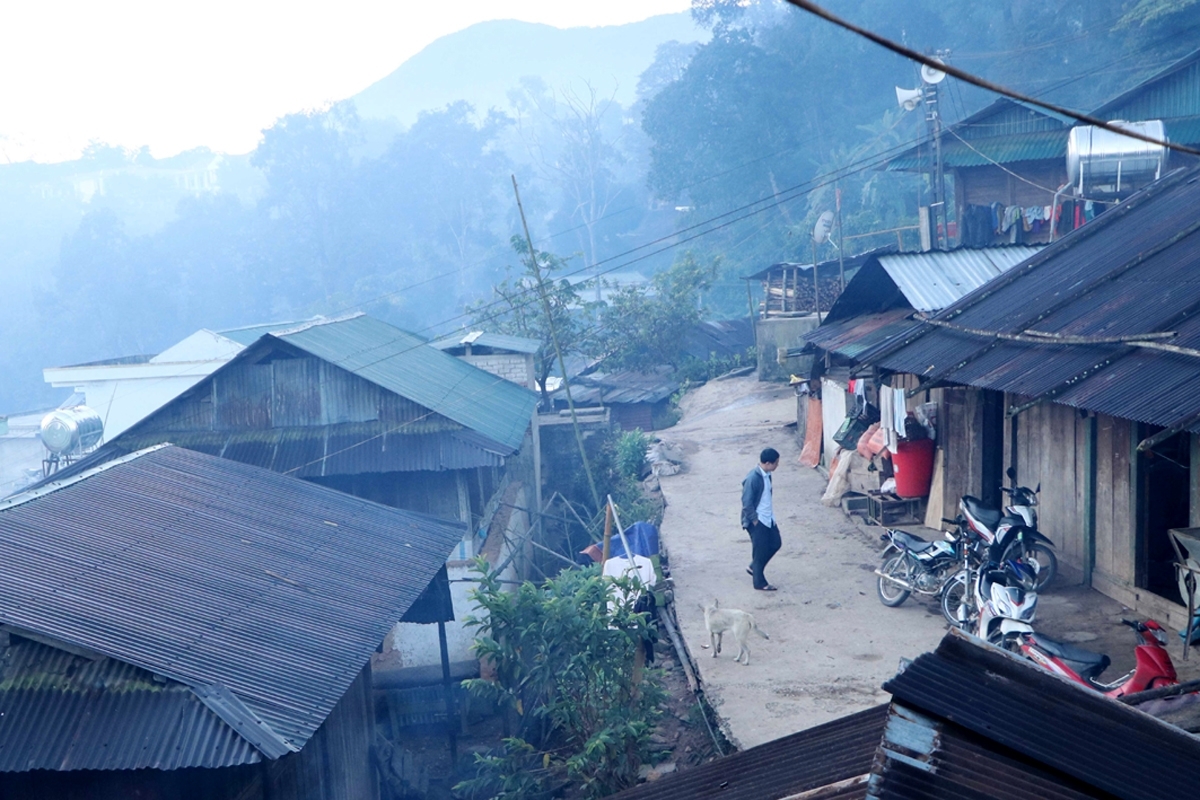
Here in Lai Chau province, they still retain many distinct cultural features, including traditional Tet (New Year) which is usually celebrated in the 10th lunar month. |

Their Tet festival begins on the Thin day (the day of the dragon according to the lunar calendar) and ends on the Thin day in the same month, after people complete their annual crop. |
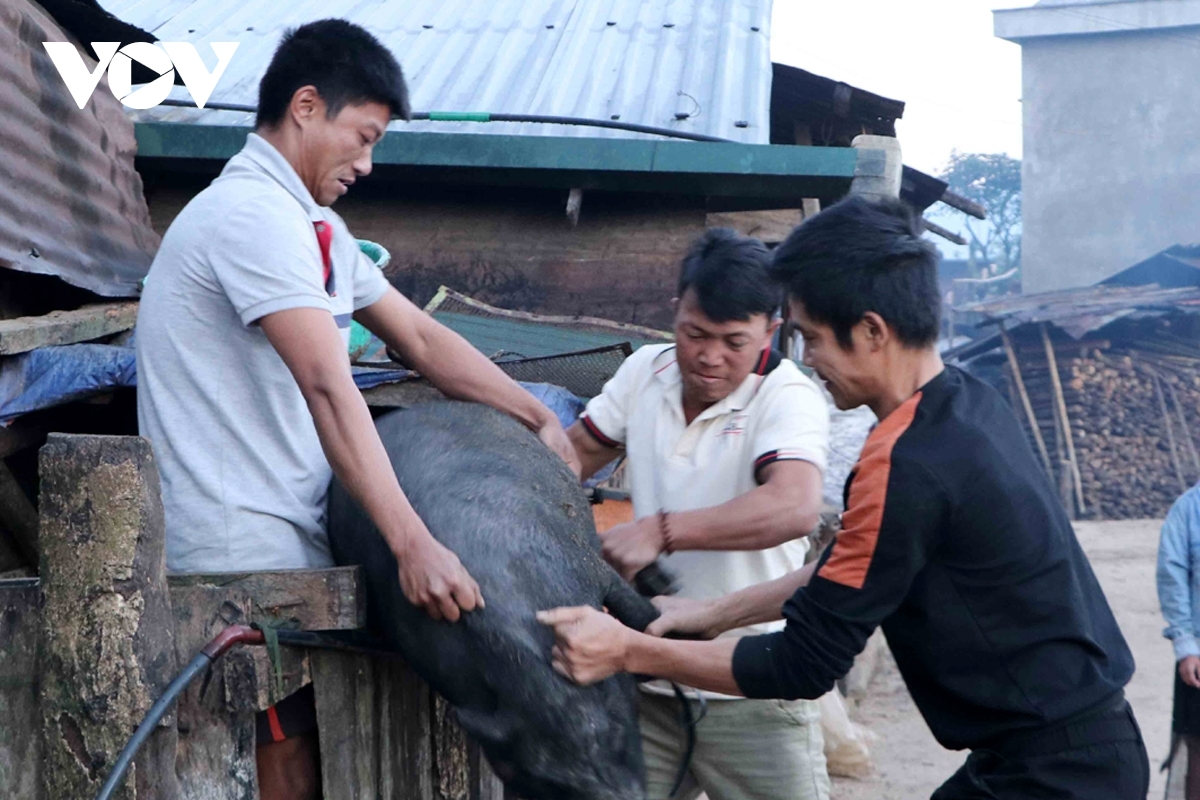
The Ha Nhi often slaughter pigs to celebrate Tet. |
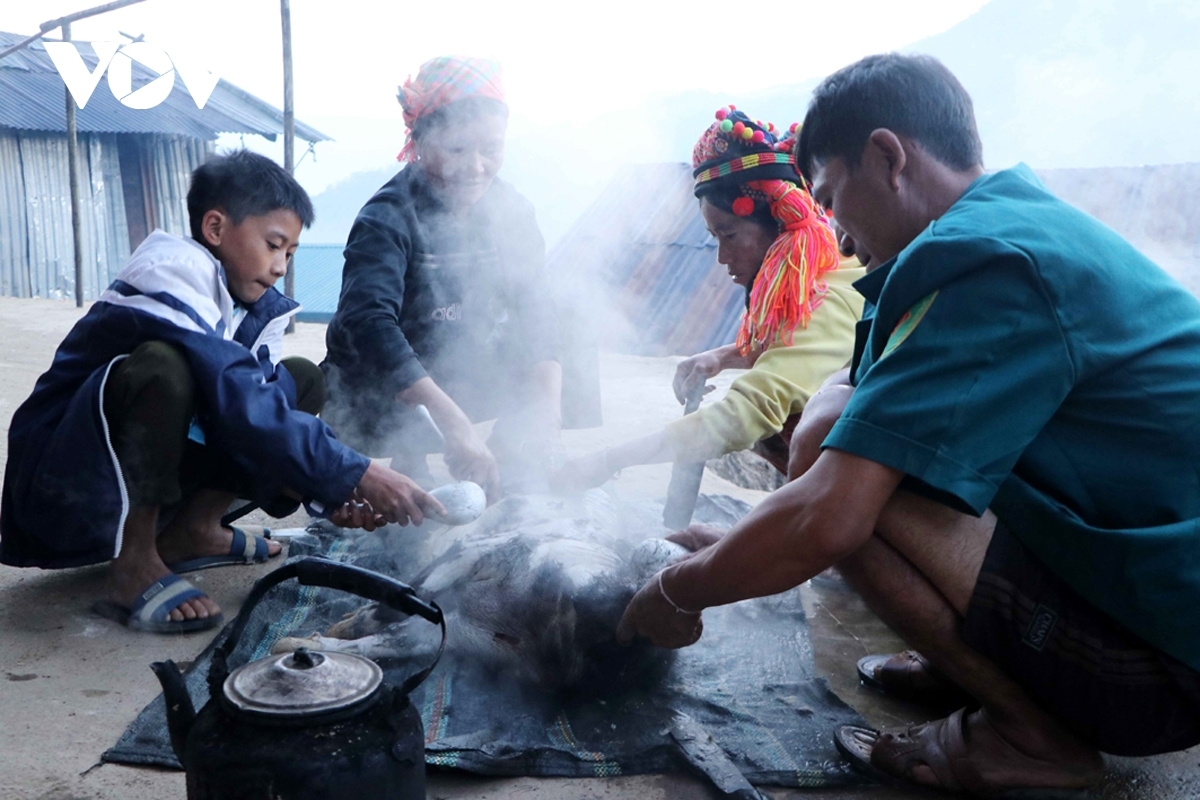 Pig slaughtering usually takes place on the early morning of the first Thin day, involving all family members. Pig slaughtering usually takes place on the early morning of the first Thin day, involving all family members. |

After slaughtering pigs, the Ha Nhi offer the most delicious meat to their ancestors. |
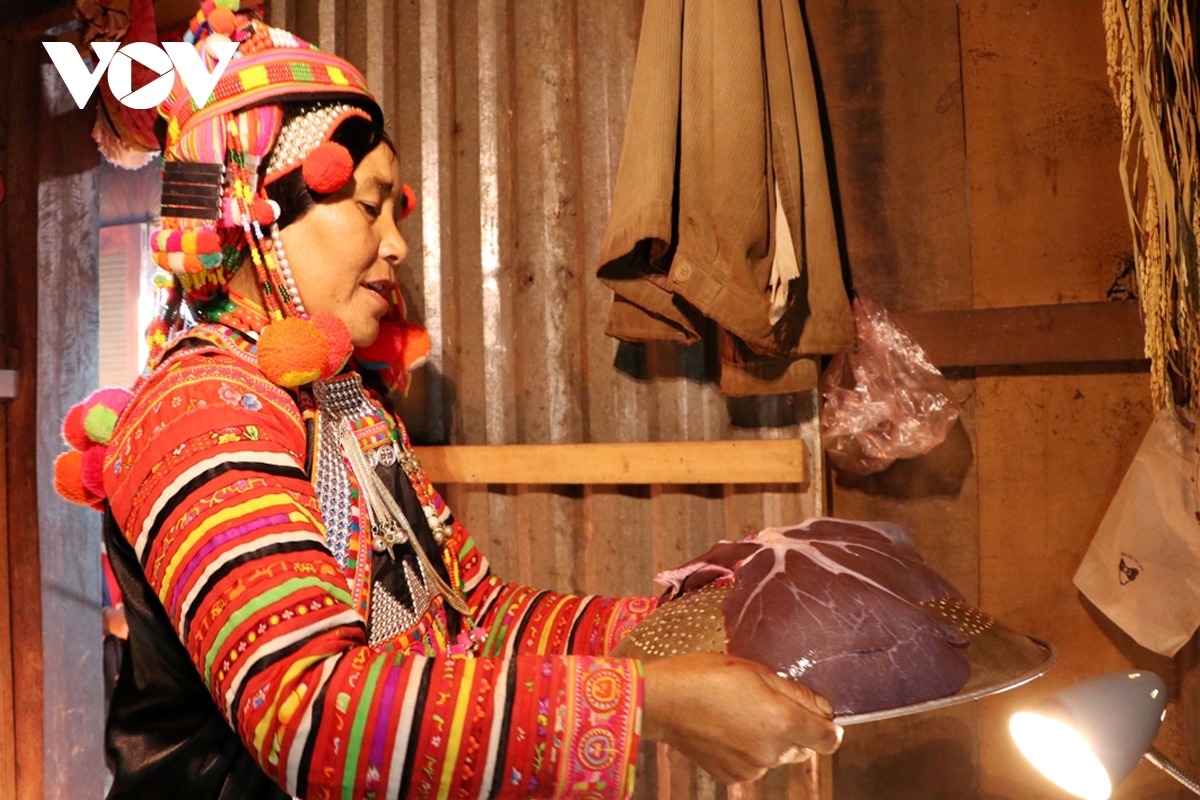 According to the Ha Nhi’s traditional custom, the pig’s liver is kept intact. According to the Ha Nhi’s traditional custom, the pig’s liver is kept intact. |
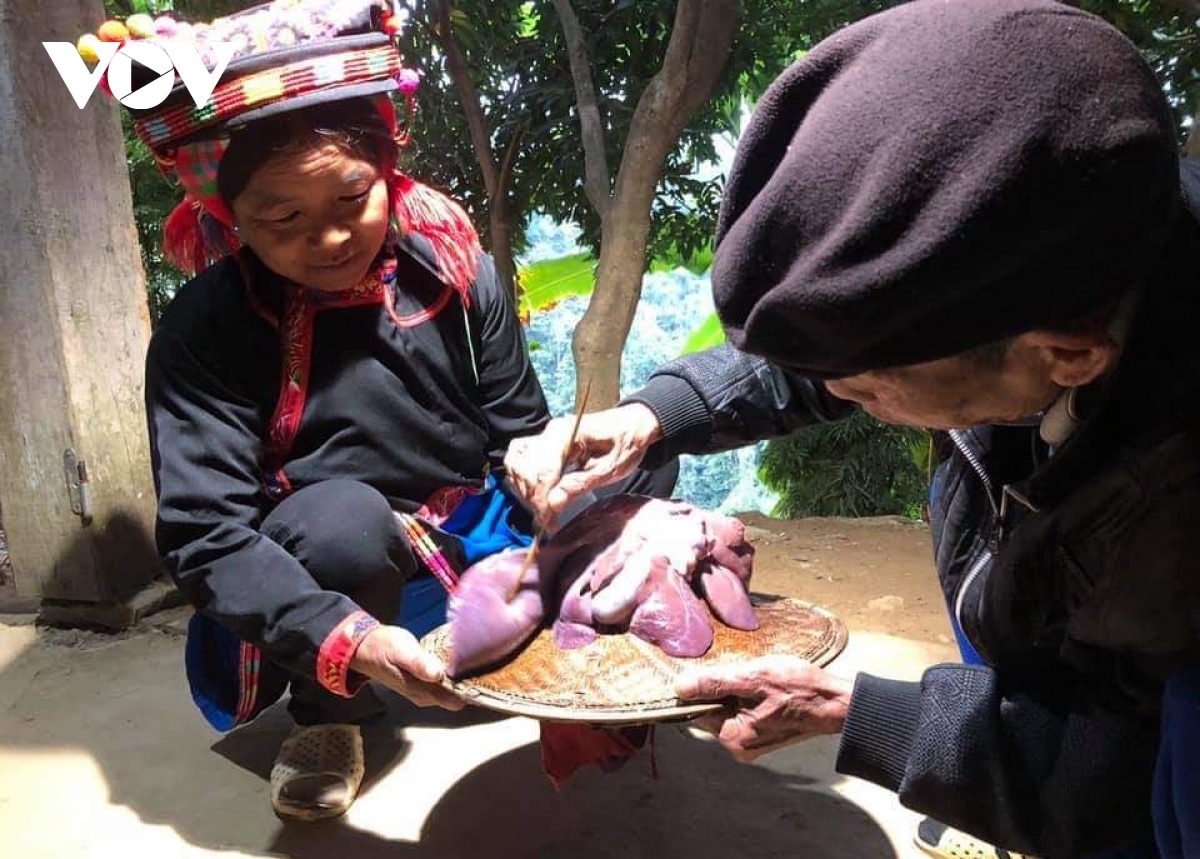
The village patriarch uses the liver to predict what would happen in the new year. |

If the pig liver’s colour is bright and its bile is full, a bumper rice harvest and good breeding season is anticipated in the new year. |
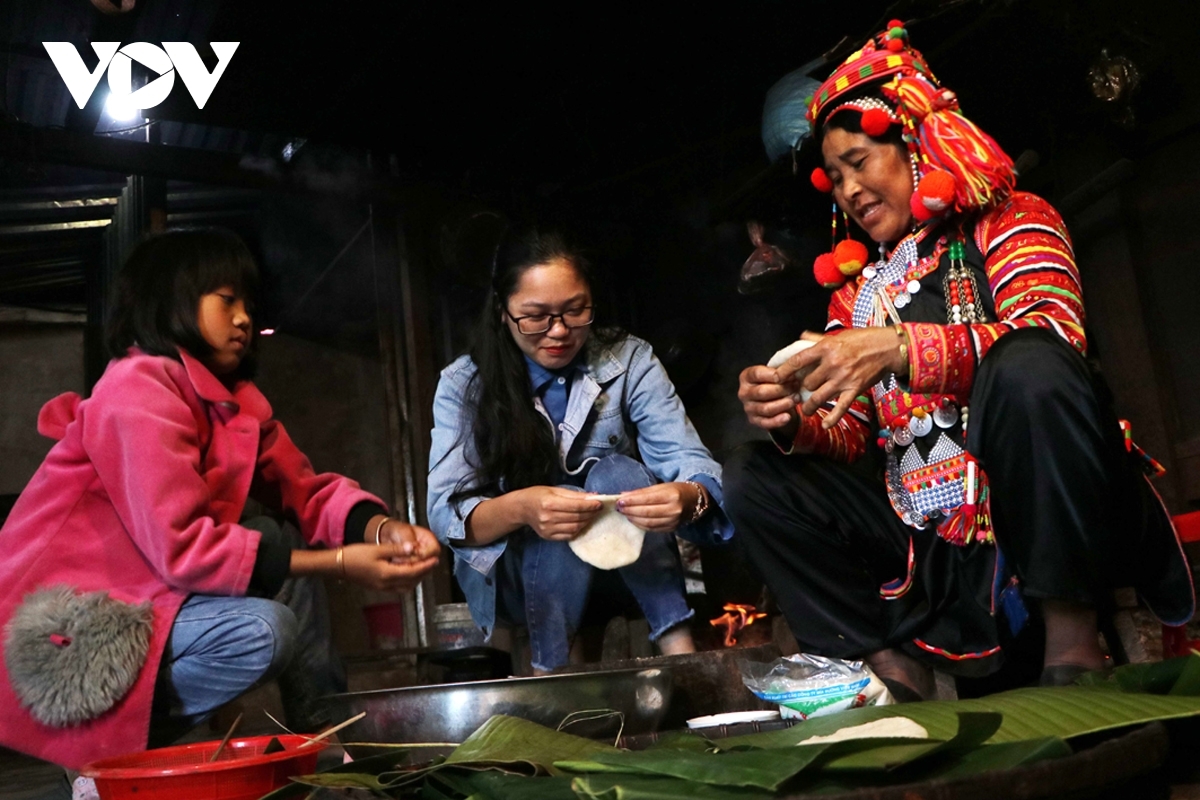
Besides pork, Banh Giay (a type of glutinous rice cake) is an indispensable offering to the ancestors. |

Elderly Ha Nhi people say the cakes are often made big and round, signaling a happy and lucky year ahead. |
 The festival offers a chance for the Ha Nhi to wear new traditional costumes. The festival offers a chance for the Ha Nhi to wear new traditional costumes. |

Like the Kinh, the largest ethnic group in Vietnam, the Ha Nhi hold a big party for family reunion during the Tet festival. |
