



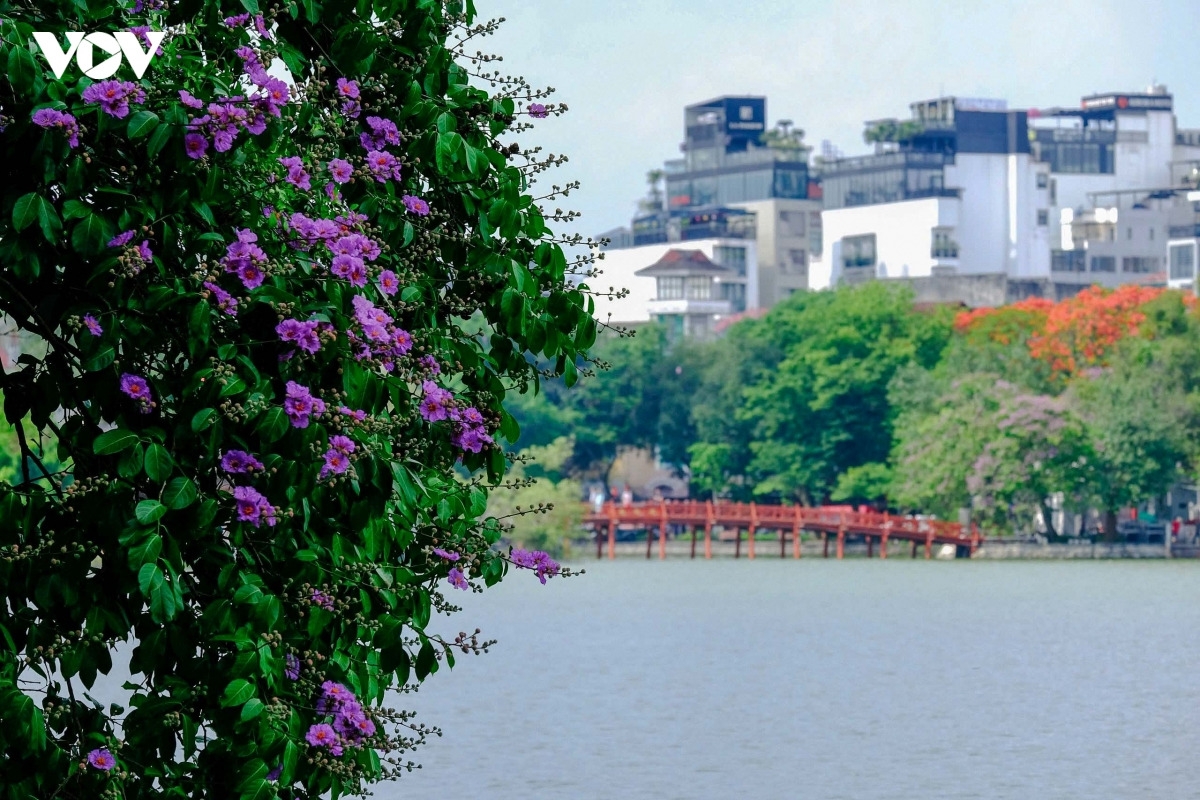
B: French listener Philippe Marsan told us: “A heatwave is sweeping across France. My area has now been placed on red alert. I suppose it's the rainy season in Hanoi now, and probably quite hot as well, isn't it?”
A: It’s now in mid-summer in Hanoi. Mornings are often bright and sunny at around 5 am, with temperatures quickly rising above 30 degrees Celsius. By early afternoon, the heat reaches its peak and can be quite intense, often lasting until around 5 or 6 p.m. Even after sunset, the city doesn't cool down quickly.
B: Afternoon showers or thunderstorms may develop on some days, bringing temporary relief, but the humidity usually stays high.
A: For your information, in Hanoi, we have 4 seasons: Spring, summer, autumn and winter while the rainy and dry seasons are reported in the south.
B: Next, I have an email from Chris Malboeuf of Canada. “How are you all doing? Hopefully everyone is keeping cool from the hot heat in Hanoi. On behalf of listeners in Canada, I would like to convey my greetings for Canada Day, July 1, and may the friendship between Canada and Vietnam continue to flourish and to be strengthened.”
B: Thank you, Chris. We're all doing well. Although Hanoi has been experiencing hot summer weather, we're trying to strike a good balance between staying indoors with air conditioners during the hottest hours of the day and enjoying outdoor activities in the cooler mornings or evenings.
A: On behalf of everyone at VOV, we'd also like to wish you and all our listeners in Canada a very happy Canada Day! We hope you have a wonderful celebration with your family and friends. May the friendship between Vietnam and Canada continue to flourish and grow even stronger in the years to come.
B: And before we move on, we'd also like to congratulate Canada's men's football team on its impressive performance at this year's FIFA World Cup. Reaching the knockout stage and advancing to the Round of 16 is a historic achievement for Canadian football.
A: Canada will next face Morocco in the Round of 16 on July 4. A victory would send the co-hosts into the World Cup quarterfinals for the first time in their history. We wish the team the very best in the matches ahead. Good luck, Canada!
B: Now, let's turn to another message from Europe. Stefan Druschke of Kerpen, Germany, has been listening to VOV for many years and recently shared these encouraging words with us: "I regularly listen to VOV on shortwave and really enjoy your programs. I have learned a great deal about Vietnam. It's wonderful that your programs provide information about the history and traditions of Vietnam's different ethnic groups."
A: Thank you, Stefan, for your kind words. In fact, many of our listeners tell us they especially enjoy stories about Vietnam's 54 ethnic groups and their unique traditions, daily life, colorful festivals, and rich cultural heritage.
B: In Vietnam today, preserving and promoting cultural heritage is considered an important part of the country's sustainable development in the new era. Along with economic growth, the government is placing greater emphasis on safeguarding the cultural identities of all 54 ethnic groups. At the same time, efforts are being made to help local communities improve their livelihoods while ensuring that their cultural traditions continue to thrive.
A: Through our programs, we hope to bring these stories to listeners around the world, offering a closer look at Vietnam's cultural diversity and the people who keep these traditions alive.
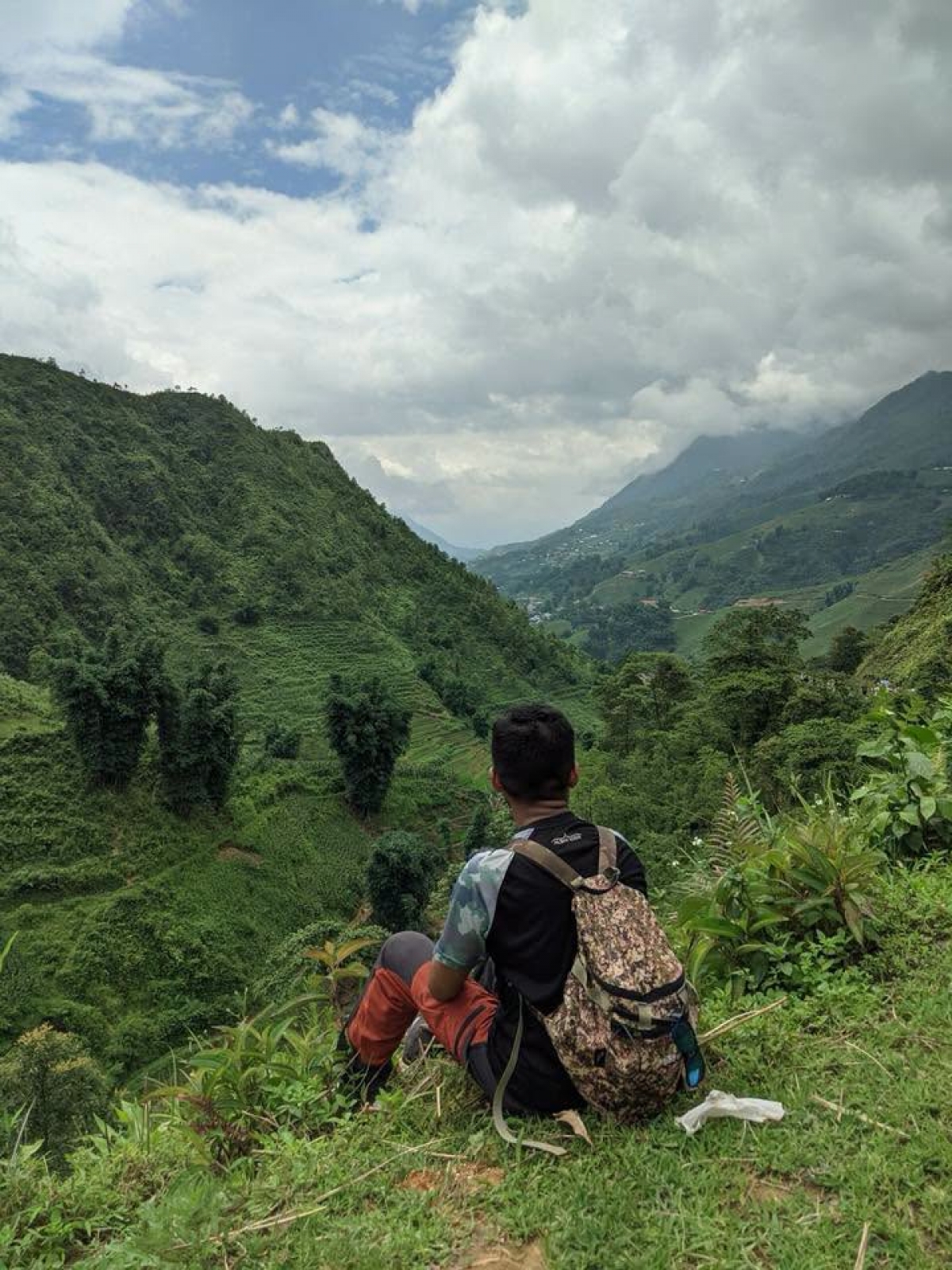
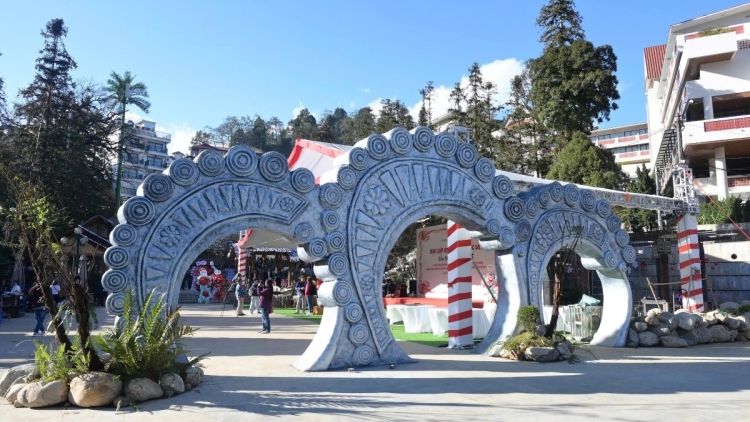
B: Now, we'd like to say hello to Jayanta Chakrabarty, a dedicated listener in India. He shared some wonderful photographs taken by a friend who recently visited the peaceful mountain town of Sa Pa in northern Vietnam. The pictures capture the Sapa cable car station and the breathtaking Muong Hoa Valley, a picturesque destination in Sa Pa.
A: Look, the background is stunning, with vast green mountains stretching into the distance and white clouds drifting across the peaks, gently covering the entire landscape like a soft blanket.
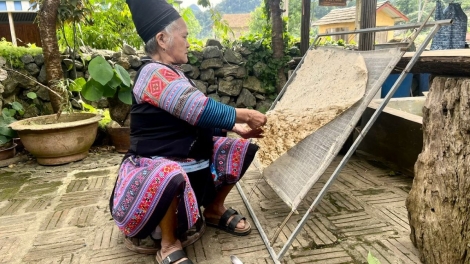
B: This photo is quite interesting, showing a Hmong woman with a gold tooth and a cheerful smile.
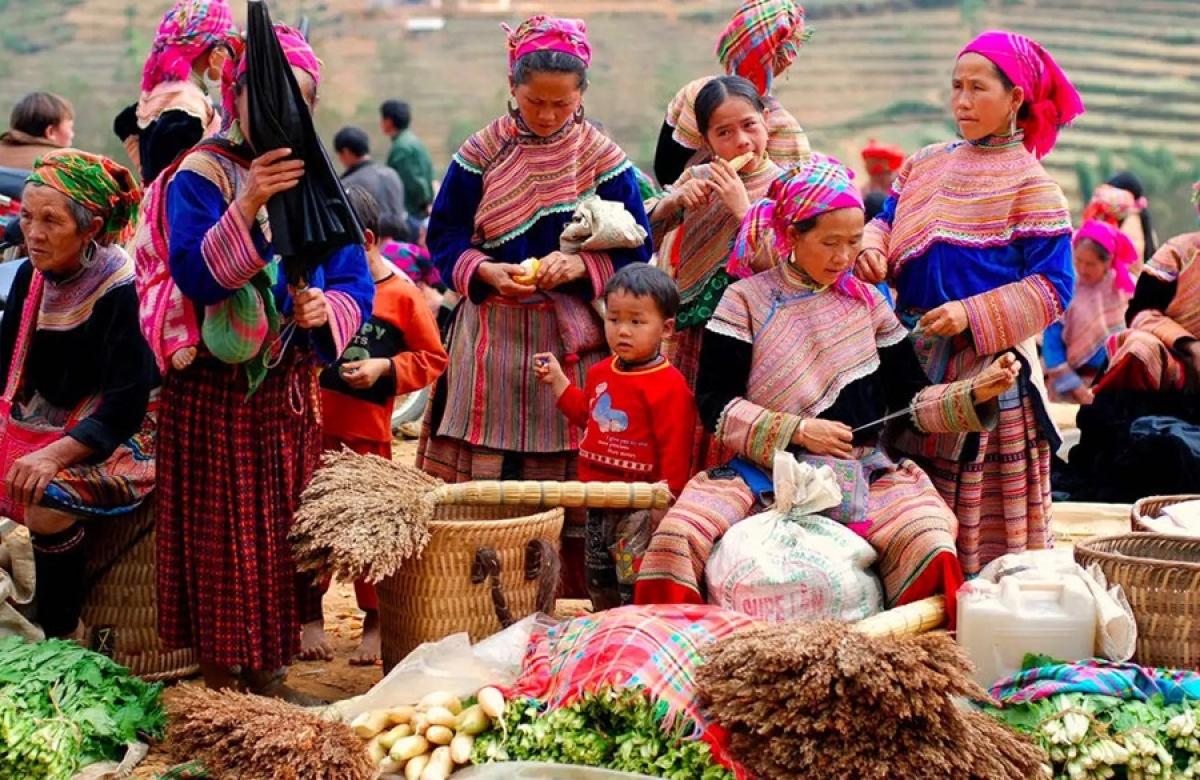
A: I think he must have brought home hundreds of photos. Sa Pa is one of Vietnam's most culturally diverse destinations, as it’s home of the Mong, Red Dao, Tay, Giay, and Xa Pho ethnic groups. If you're visiting Sa Pa, the easiest way to distinguish the major ethnic groups is by their traditional clothing. Although many people wear modern clothes in daily life, traditional attire is still commonly seen in villages, markets, festivals, and cultural events.
B: Yes, one local saying is that "the traditional costume is the identity card of each ethnic group."
A: The Black Mong are best known for their indigo-dyed clothing. Women typically wear dark tunics and skirts or pans decorated with intricate embroidery and batik patterns. The deep blue-black color comes from natural indigo dye, a craft that has been passed down through generations.
B: The Red Dao are easily recognized by the bright red headscarves worn by women, along with beautifully embroidered jackets featuring red, white, and yellow motifs. Their traditional outfits are often complemented by silver necklaces and ornaments.
A: The Tày people favor a simpler style of dress. The entire outfit is dyed in a deep indigo color and has very few decorative patterns. A cloth sash tied around the waist completes the costume, adding both practicality and a touch of elegance.
B: The Giáy people's costumes are also relatively simple but are distinguished by colorful collars, belts, and embroidered details. Women often wear bright headscarves and neatly tailored blouses.
A: The Xa Phó, although fewer in number, wear some of the most eye-catching traditional costumes in Sa Pa. Their outfits are made from indigo-dyed fabric and decorated with delicate hand embroidery and tiny beads. Bright red and white patterns stand out beautifully against the dark fabric, while many of the designs are inspired by flowers, leaves, and other elements of nature.
B: The best time to visit Sa Pa is from March to May and from September to November, when the weather is cool, dry, and clear, making it ideal for trekking and enjoying the terraced rice fields.
A: You’re listening to the Letter Box on VOV. Let’s continue to check the in box. Here we have an email from Malik Allah Bachaya Khokhar of Pakistan, who tuned in to VOV’s program on 12020 kHz on June 30, using a TECSUN PL-380 digital receiver connected to a long wire antenna.
B: He noted: “The overall reception quality was very good. Audio quality was clear, and speech was easy to understand. Background noise was minimal, and there was no significant interference from adjacent stations. I rate the reception as SINPO 55544, indicating an excellent listening experience with minor fluctuations in propagation.”
A: Malik shared his special interest in our Current Affairs segment: “I particularly enjoyed the feature discussing Vietnam's ongoing efforts to promote sustainable development and preserve its rich cultural heritage while encouraging international cooperation. Such reports provide valuable insight into the country's progress and traditions.”
B: “As an international shortwave listener, I appreciate the continued commitment of Voice of Vietnam to serving audiences worldwide through English language broadcasting.”
A: Thank you, Malik for your detailed remarks and your support for VOV. Meanwhile Jawahar Almeida of India reported that the broadcast on the frequency of 12020 kHz on June 24th was fair with slight interference. SINPO rating 34333. The frequency was a bit noisy due to interference on adjacent channels.
B: We’ll forward your remark to our technicians, hoping that they can do something to improve the broadcast signal. Jawahar told us that he lives in the state of Goa which is located on the western coast of India 500miles south of Mumbai. He has read a lot about Vietnam and he plans to visit in the future.
A: Before we conclude, we'd like to thank our many listeners for sending reception reports, including Goran Encminger of Germany, Victor Guzhov of Russia, Mrs. Anchal Yadav of India, Carlos Gamarra Moscoso of Peru, and Japanese listeners Fumito Hokamura and Hayato Furukawa.
B: One again, thank you for listening and writing to us.