



B: Let’s take a look at some of the messages we’ve received over the past week.
A: We have an email from Paul Simmonds in Australia, who shares a glimpse of his life.
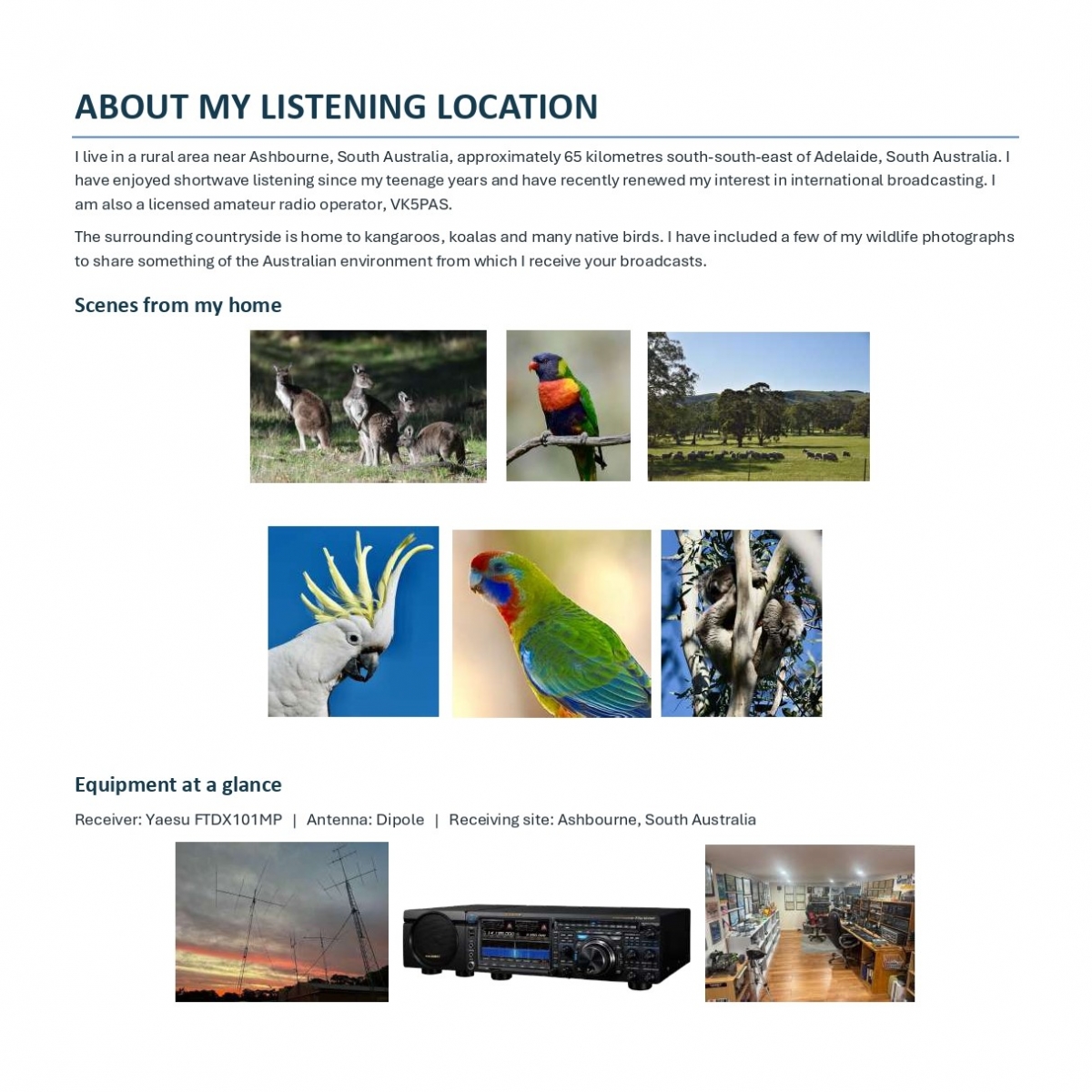
in a rural area near Ashbourne,
about 65 km south-southeast of Adelaide.
B: Mr. Simmonds lives in a rural area near Ashbourne, about 65 km south-southeast of Adelaide. He has enjoyed shortwave listening since his teenage years and has recently renewed his interest in international broadcasting. He’s also a licensed amateur radio operator, with the call sign VK5PAS.
A: Well, Mr. Simmonds, your photos and messages really bring your hometown to us. The area is home to kangaroos, koalas, and many native birds. Thank you for sending these wildlife photographs and showing us a little of the place where you tune in to VOV.
B: Now, let’s take a look at his reception report for VOV’s English program on 9835 kHz on October 14. Reception was generally good, with a strong signal, no interference from other stations, and only slight fading. However, at around 19:14 UTC, he heard an over-the-horizon radar signal on the same frequency for about two minutes.
A: Mr. Simmonds found our news bulletins and Current Affairs segment comprehensive and informative. He particularly enjoyed Letter Box and the messages we receive from listeners around the world. Our coverage of Vietnamese cuisine also caught his attention.
B: He said Australia has a large Vietnamese community that helps preserve and promote Vietnamese culture. Vietnamese cuisine is popular among foreign cuisines in Australia, and he particularly enjoys banh mi (Vietnamese baguette) and bun cha (vermicelli served with grilled pork)
A: We’re glad these Vietnamese favourites have made it onto your list! We hope you’ll have the chance to visit Vietnam one day and discover many more delicious dishes. We’re also pleased to confirm your detailed reception report with a QSL card.
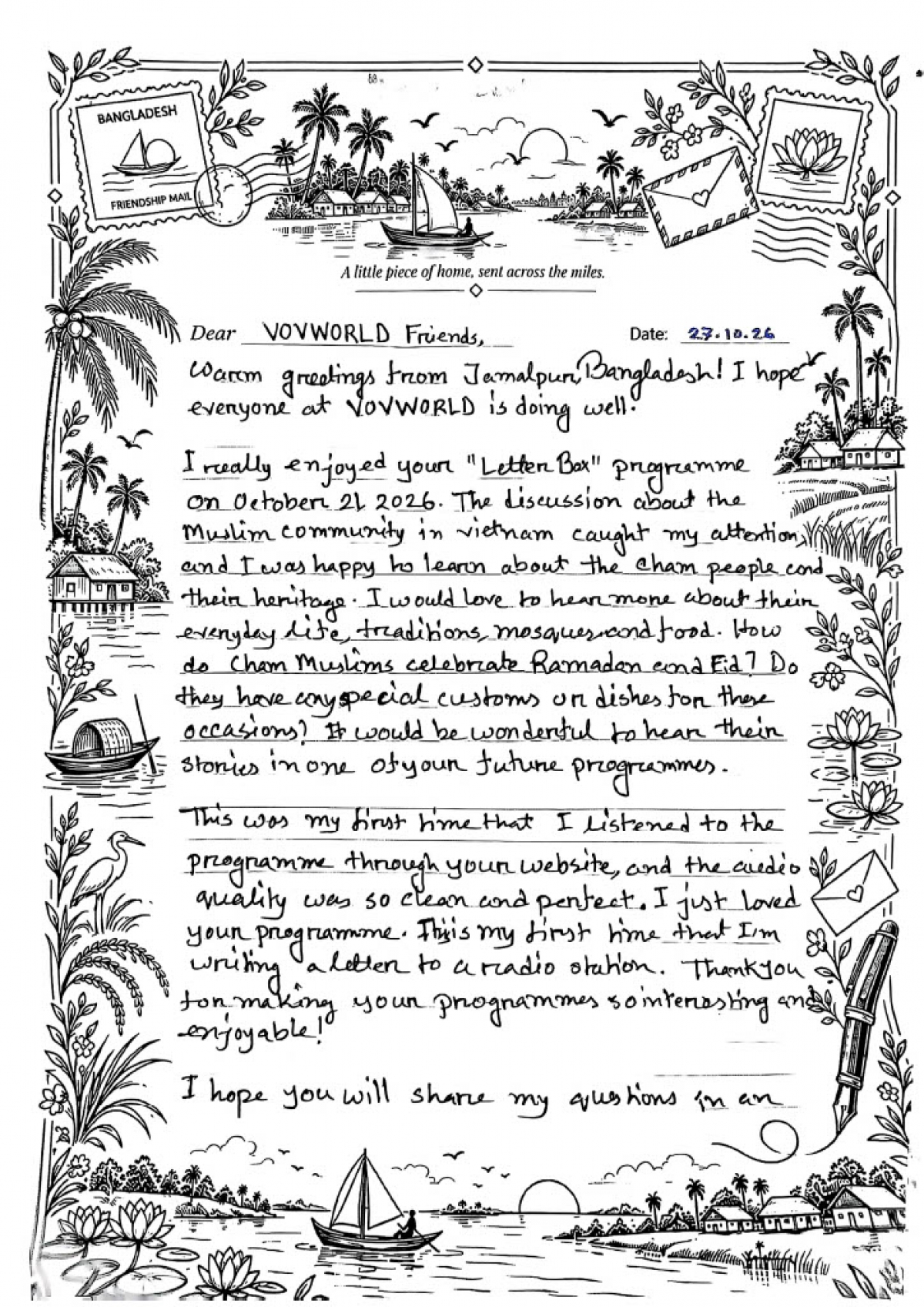
a carefully handwritten letter via email.
A: Now a warm greeting to Sadman Sharar Shopan in Bangladesh! He sent us an email along with a carefully handwritten letter. It was his first time listening to VOV’s English Service on our website, and he was pleased with the clear audio quality. It was also his first time writing to a radio station.
B: Mr. Shopan wrote: “I really enjoyed your Letter Box on October 21. The discussion about the Muslim community in Vietnam caught my attention. I was happy to learn about the Cham people and their heritage. I’d love to hear more about their everyday life, traditions, mosques and food.”
A: He’s also curious about how Muslims in Vietnam celebrate Ramadan and Eid festivals, and whether they have any special customs or traditional dishes for these occasions.
B: We’re delighted that our program has sparked your interest in Muslim life in Vietnam, Mr. Shopan. Ramadan is a special time for Muslims here, just as it is for Muslims around the world. Vietnamese Cham Muslims fast from dawn to sunset, devote more time to prayer, and gather with family and fellow worshippers to share meals after sunset. It’s a time for spiritual reflection, family bonding, and community solidarity.
A: And when Ramadan comes to an end, Eid al-Fitr brings further joy, with communal prayers, festive meals, and gatherings with family and friends.
B: If you’d like to learn more about the different Cham communities in Vietnam, including Cham Muslims, you can find more stories on our website, vovworld.vn. Just visit the Culture, Society, or Vietnam’s 54 Ethnic Groups sections. You’ll discover fascinating stories about their religious practices, cultural traditions, daily lives, and contributions to Vietnam’s rich cultural diversity.
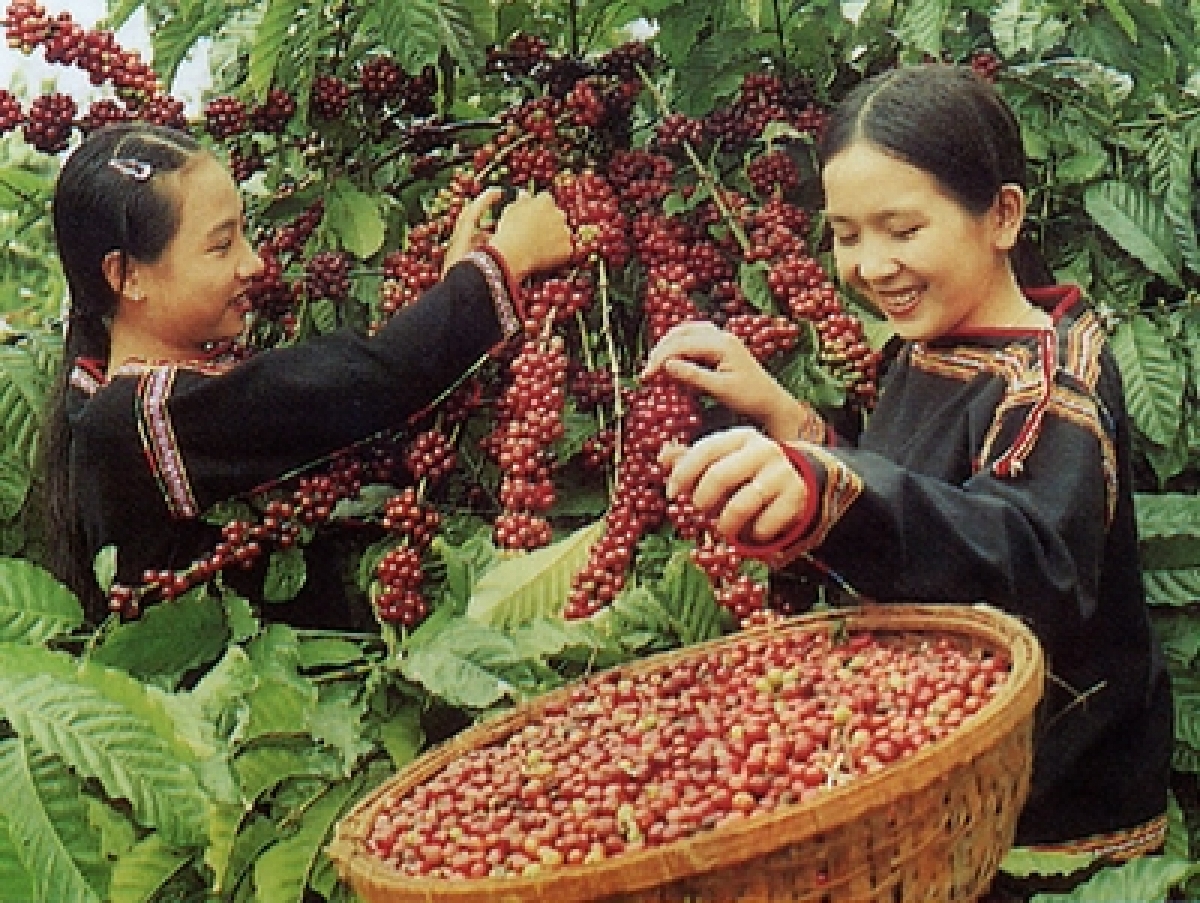
B: From Colombia, Diego Echeverri told us that it’s the coffee harvest season in his country now. He said: “As the world’s third-largest coffee exporter, after Brazil and Vietnam, Colombia has a strong coffee-growing tradition. I have picked coffee myself several times and it’s demanding work, with workers exposed to both rain and sunshine.”
A: That’s right! It’s truly hard work. Here in Vietnam, coffee harvesting is also an important seasonal activity, especially in the Central Highlands, the country’s main coffee-growing region. The harvest usually takes place from around October to January, depending on the area and weather conditions.
B: During this time, coffee farms in Dak Lak, Lam Dong, and Gia Lai provinces become busy with farmers picking ripe coffee cherries. They often work long hours to bring in the crop, while local businesses and traders prepare to buy, process and transport the beans.
A: The work can be physically demanding. Coffee cherries ripen in their own time, so the season cannot be rushed. Harvesting faster may save labor and allow farmers to collect more cherries in less time, but speed can come at the expense of quality. Green cherries have not had enough time to develop their full sugar content. The beans remain immature, producing a thin taste and weak aroma, with none of the lingering aftertaste of ripe beans.
B: Vietnam is a major player in the global coffee market, especially when it comes to Robusta. From October 2025 to September 2026, Vietnam’s coffee exports reached approximately 1.8 million tonnes, worth 8.5 billion USD, as shipment volumes surged despite weaker prices, according to the Vietnam Coffee-Cocoa Association.
A: The EU remained Vietnam’s largest coffee market, accounting for more than 38% of export volume. The US and Japan continued to be major importers, while demand from China expanded, particularly for instant coffee.
B: So, dear listeners, we’d love to hear from you! Is Vietnamese coffee available in your country? Have you tried it? Send us your stories and experiences at englishsection@vov.vn or through our Facebook page, VOV5 English Service.
B: Before we wrap up, let’s take a moment to acknowledge a few more listeners who have been in touch with us. Thank you, Junhyeok from South Korea, for your kind words about VOV’s informative and engaging programs and the way they explore culture, arts, and society.
A: We’ve also received reception reports from Abid Hussain Sajid and Muhammad Aqeel Bashir in Pakistan, Ding Lu in China, Paul G. Williams in the US, and Srđan Ačanski in Serbia. We’re grateful to all of you for listening and taking the time to write to us.
B: Thank you for being part of the VOVWorld listening community! And that brings us to the end of this week’s Letter Box. Until next Wednesday, goodbye!