

English Vietnamese Chinese French German Indonesian Japanese Khmer Korean Lao Russian Spanish Thai
VOV5 World

Đa phương tiện tiếng Anh

Radio Podcast Media
Listen on
English
en-US English
VN Vietnamese
CN Chinese
FR French
DE German
ID Indonesian
JP Japanese
KH Khmer
KR Korean
LA Lao
RU Russian
ES Spanish
TH Thai

Menu mobile tiếng Anh

  • News
  • About Us
  • Vietnam Rising Era
  • Programs of the Week
  • Spotlight
  • 500-Day Search to Identify Fallen Soldiers
  • Media
  • Digital Life
  • Discovery Vietnam
  • Culture
  • Personality of the Week
  • Sport
  • Society
  • Village life
  • Food delight
  • Vietnam's Maritime Sovereignty

Mạng xã hội

Follow VOV World

Contact

(084) 24 38266809
(084) 38266707
45 Ba Trieu, Hanoi, Vietnam
vovworld@vov.vn
  • Close
  • EN English
  • VN Vietnamese
  • CN Chinese
  • FR French
  • DE German
  • ID Indonesian
  • JP Japanese
  • KH Khmer
  • KR Korean
  • LA Lao
  • RU Russian
  • ES Spanish
  • TH Thai
English English
English Vietnamese Chinese French German Indonesian Japanese Khmer Korean Lao Russian Spanish Thai

Menu trang chủ tiếng anh

  • About Us
  • News
  • 500-Day Search to Identify Fallen Soldiers
  • Current Affairs
  • Discovery Vietnam
  • Doctor at Home
  • Food Delight
  • Letter Box
  • Sport
  • Urban Rhythms
  • Vietnam Rising Era

menu phụ tiếng anh

Actions against IUU fishing
Beat The Rush
Colorful Vietnam-Vietnam’s 54 ethnic groups
Culture Rendezvous
Culture
Digital life
Economy
Personality of the week
Saturday Report
Sunday Show
Vietnam's Maritime Sovereignty
Village Life
  1. Media

Emperor Khai Dinh’s tomb: An East-West fusion in Hue's imperial heritage

Facebook Share Facebook
Sunday, 23:59, 19/07/2026
VOV5

[VOVWORLD] - The tomb of Khai Dinh is not only the final resting place of the 12th Nguyen emperor, but also a striking example of early 20th-century cultural exchange, blending traditional Vietnamese artistry with European and Asian architectural influences.

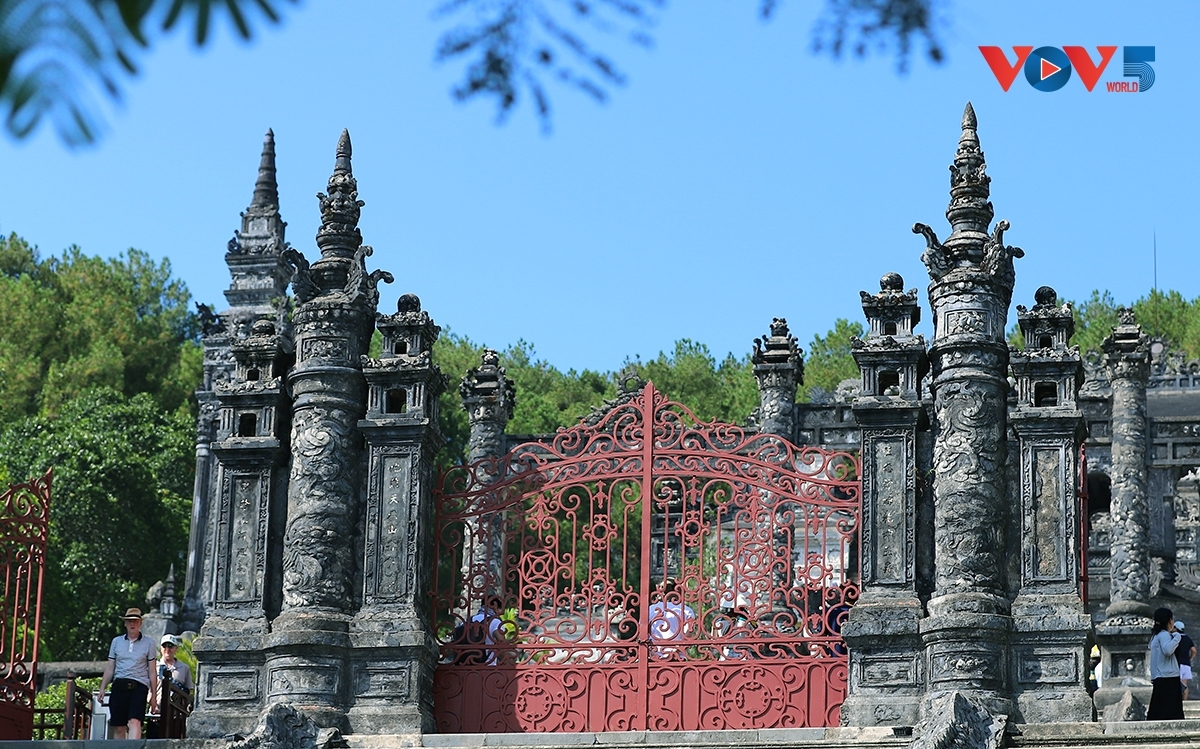
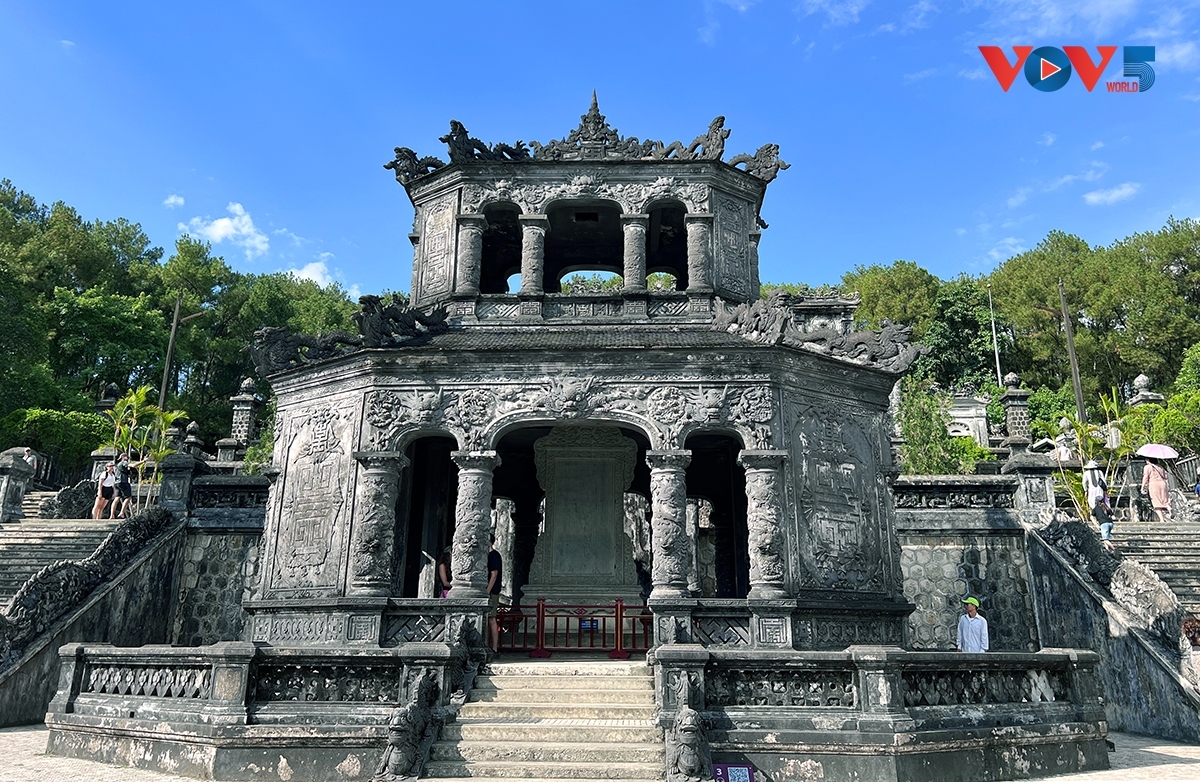
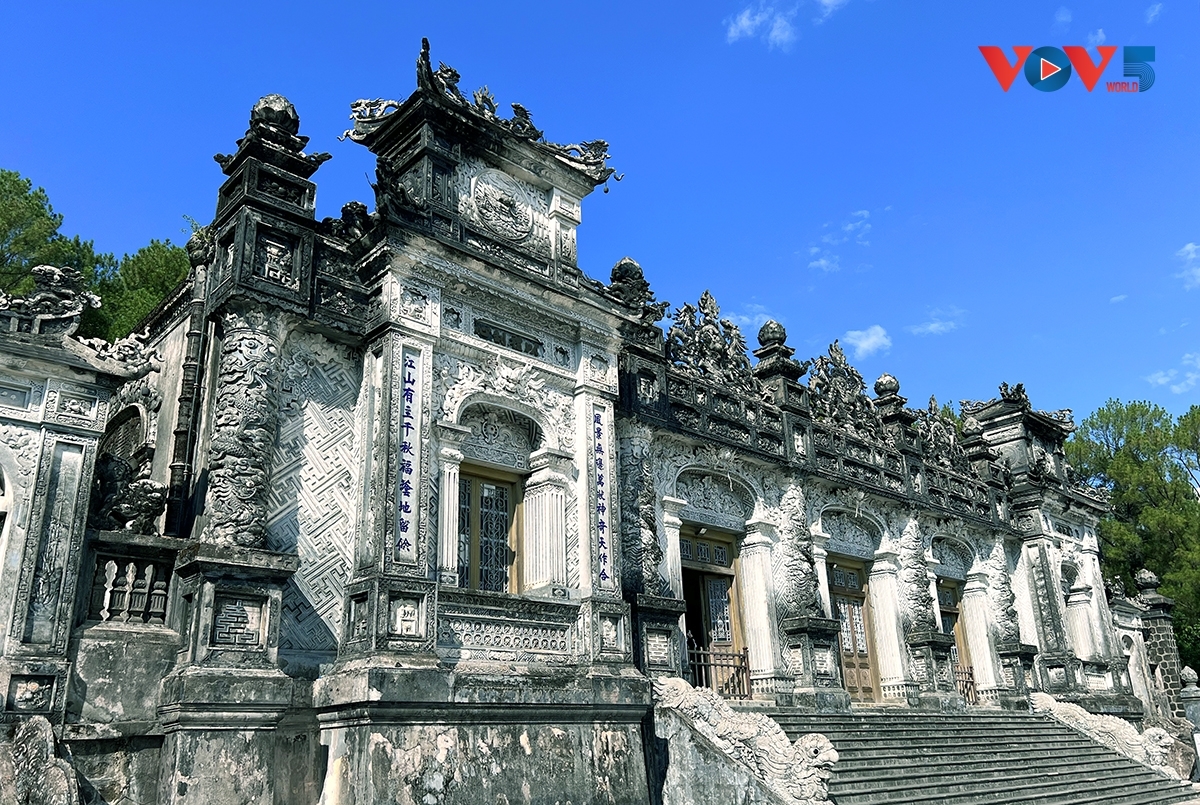
Nestled on Chau Chu Mountain, 10 kilometers from central Hue, the Tomb of Emperor Khai Dinh (Ung Mausoleum) is one of the most distinctive royal tombs of the Nguyen Dynasty. Built between 1920 and 1931, it is the only royal tomb in Vietnam constructed entirely with imported materials, including cement, steel, stained glass, and ardoise - a traditional roofing material in Europe
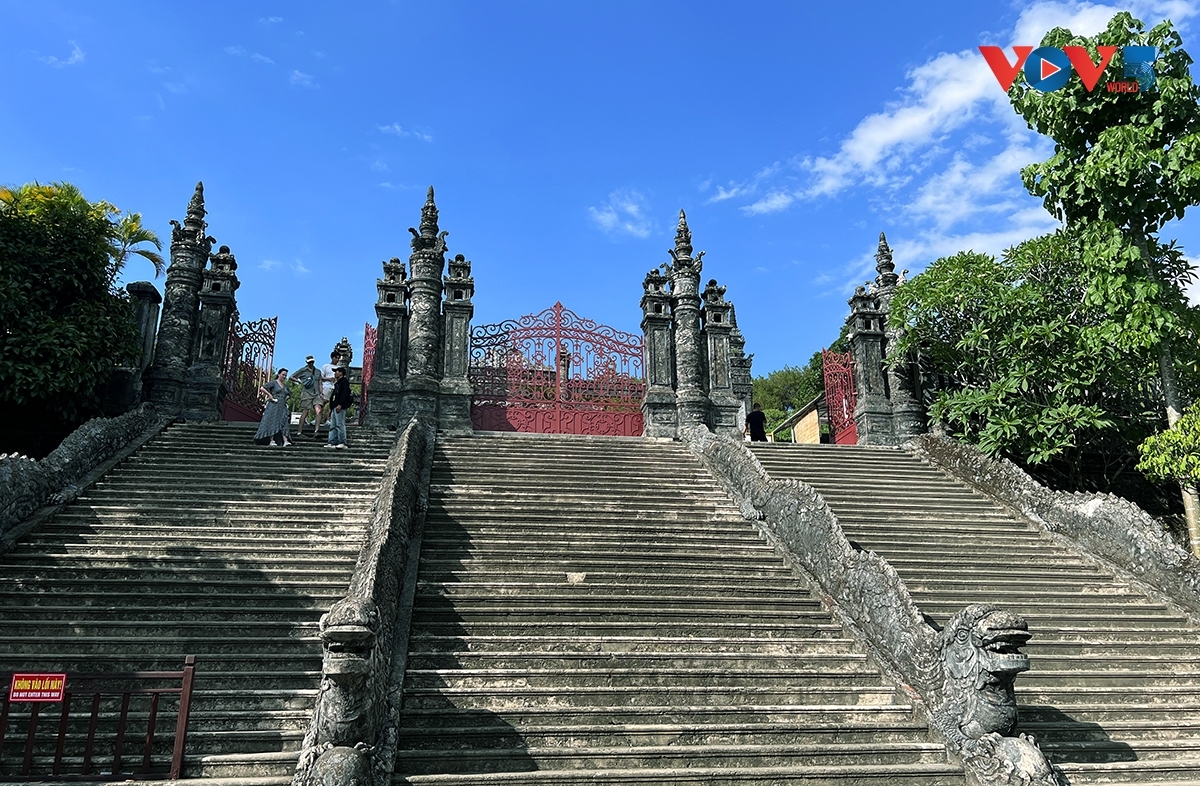
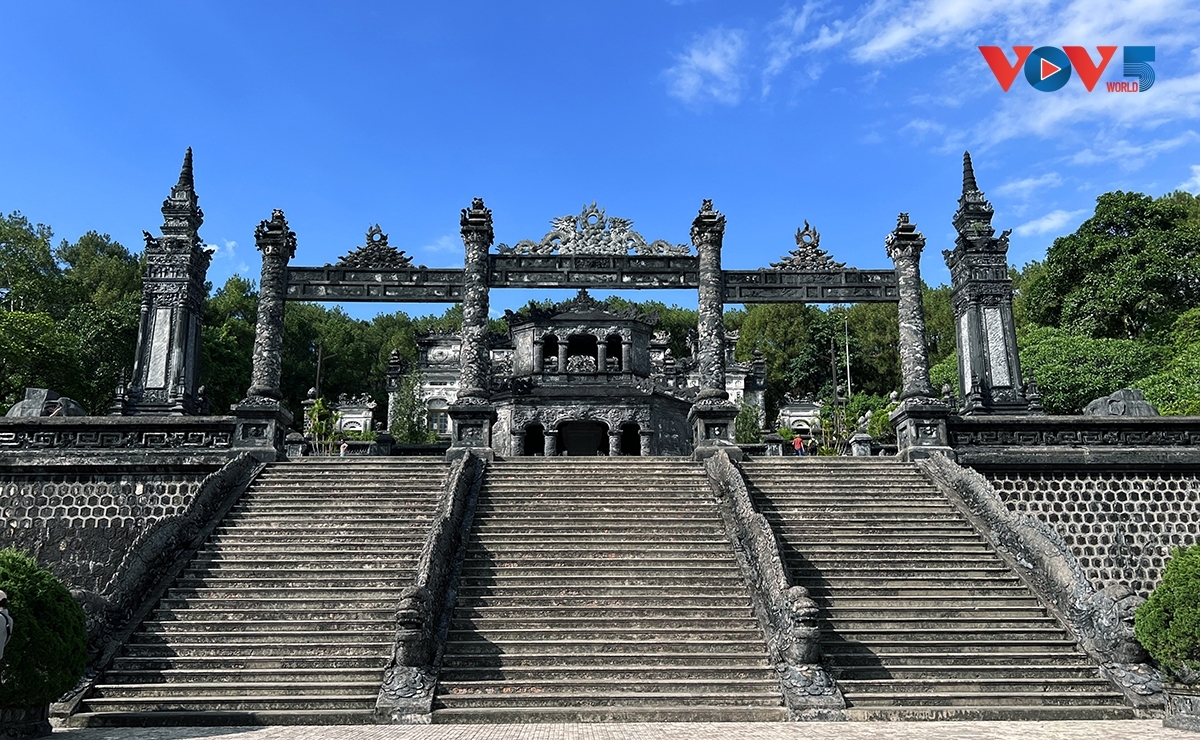
​​​​Unlike earlier royal tombs built with wood and stone, the Tomb of Emperor Khai Dinh features stairways and dragon-shaped railings made entirely of reinforced concrete, a modern building material introduced from Europe at the time.
Visitors must climb 127 steep steps to reach the emperor's final resting place.
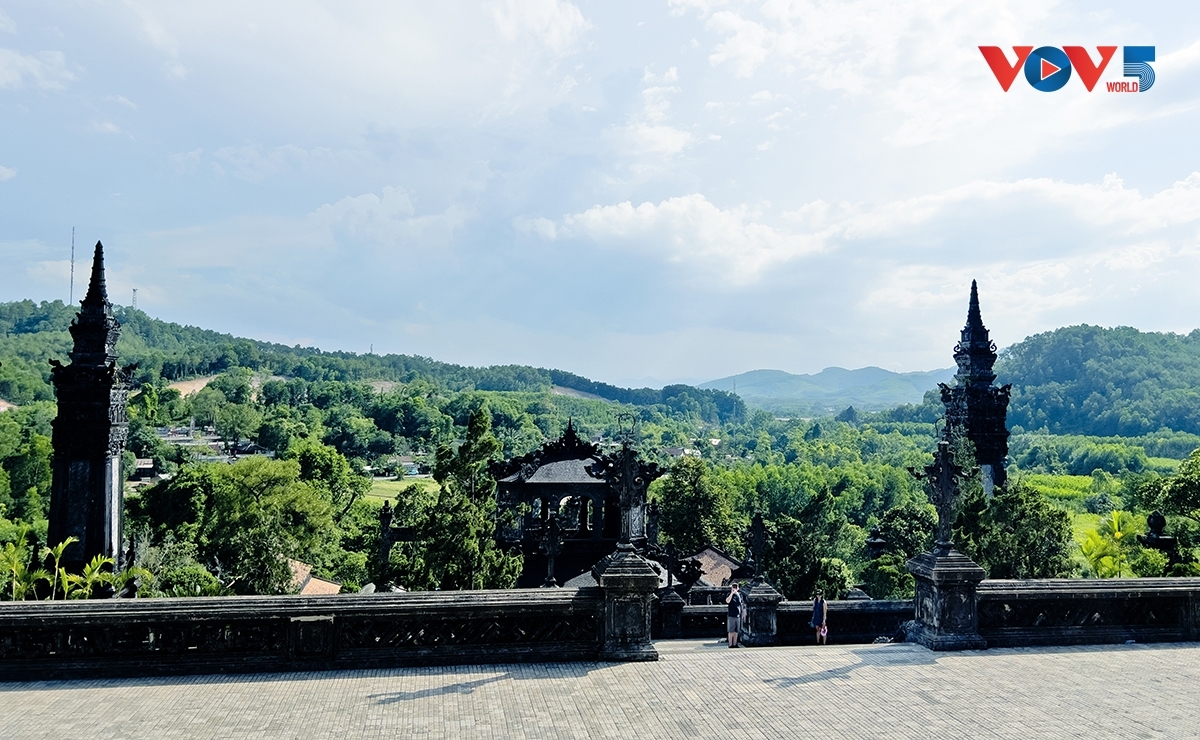
The Ung Mausoleum stands in a scenic mountain setting, combining natural beauty with a grand and imposing design, just as Emperor Khai Dinh envisioned.
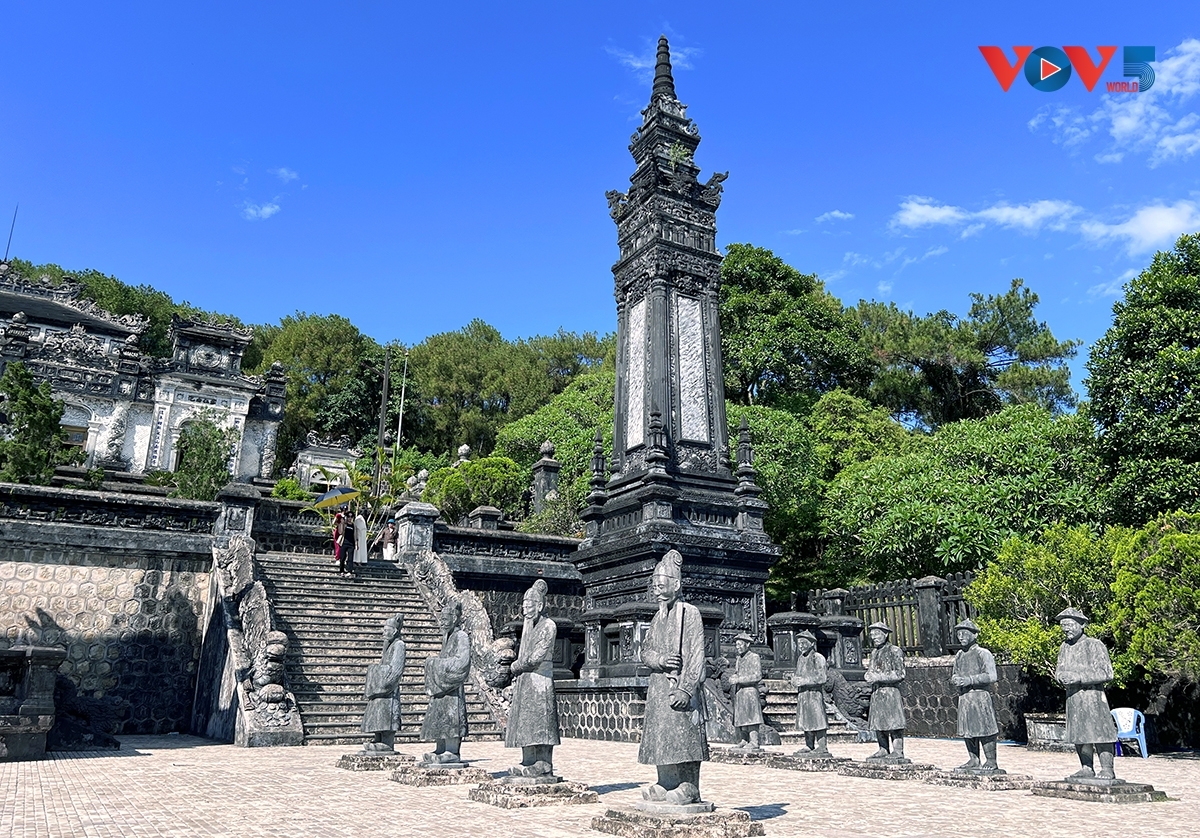
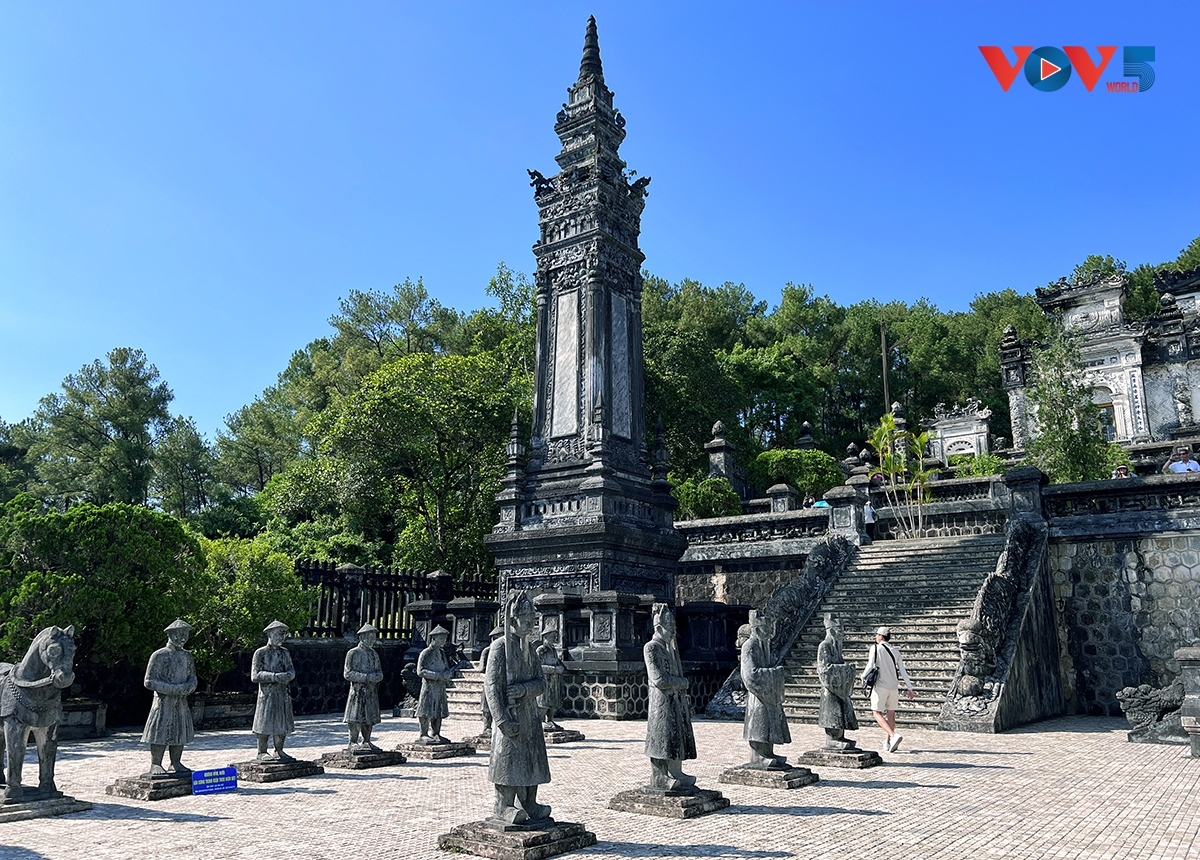
At Bai Dinh Courtyard, two rows of stone statues stand in silent guard.
Two rows of life-sized stone statues of mandarins, soldiers, elephants, and horses reflect the Nguyen Dynasty's refined craftsmanship and royal traditions.
Although smaller than the other royal tombs in Hue, the Tomb of Khai Dinh takes the longest to build - 11 years - and is the most expensive to construct.
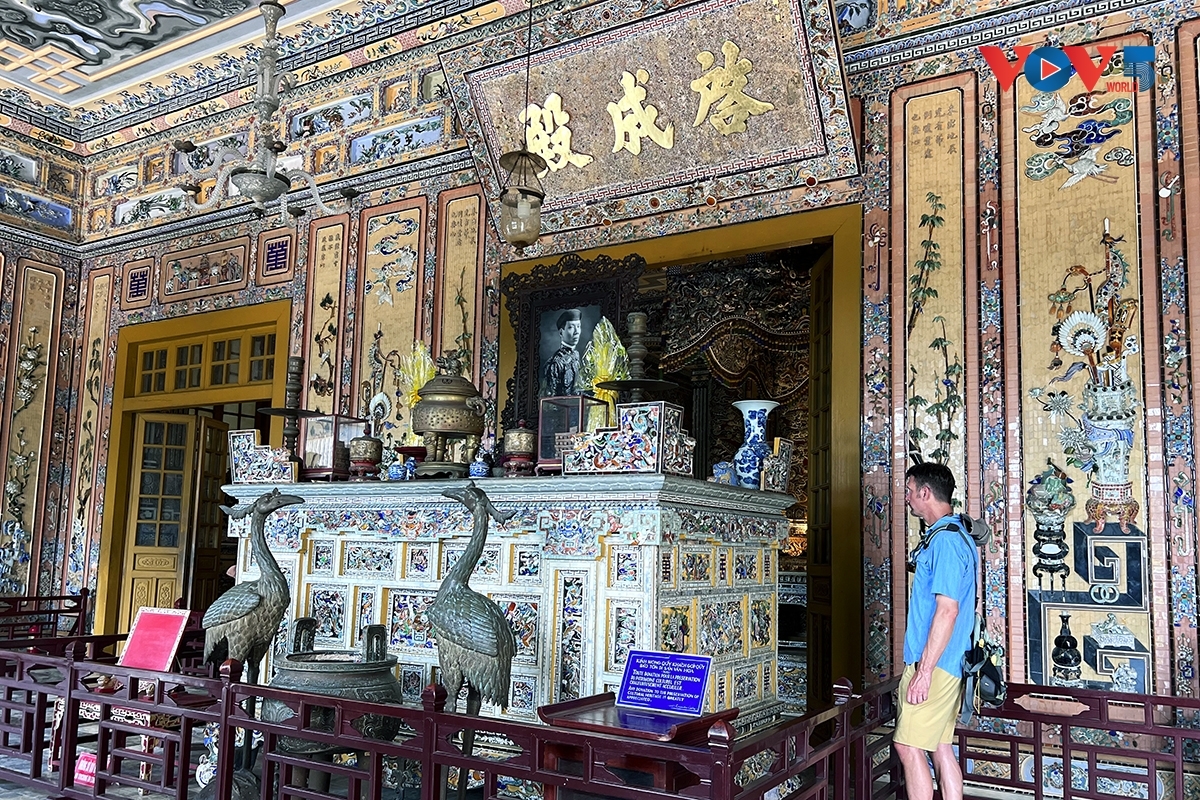
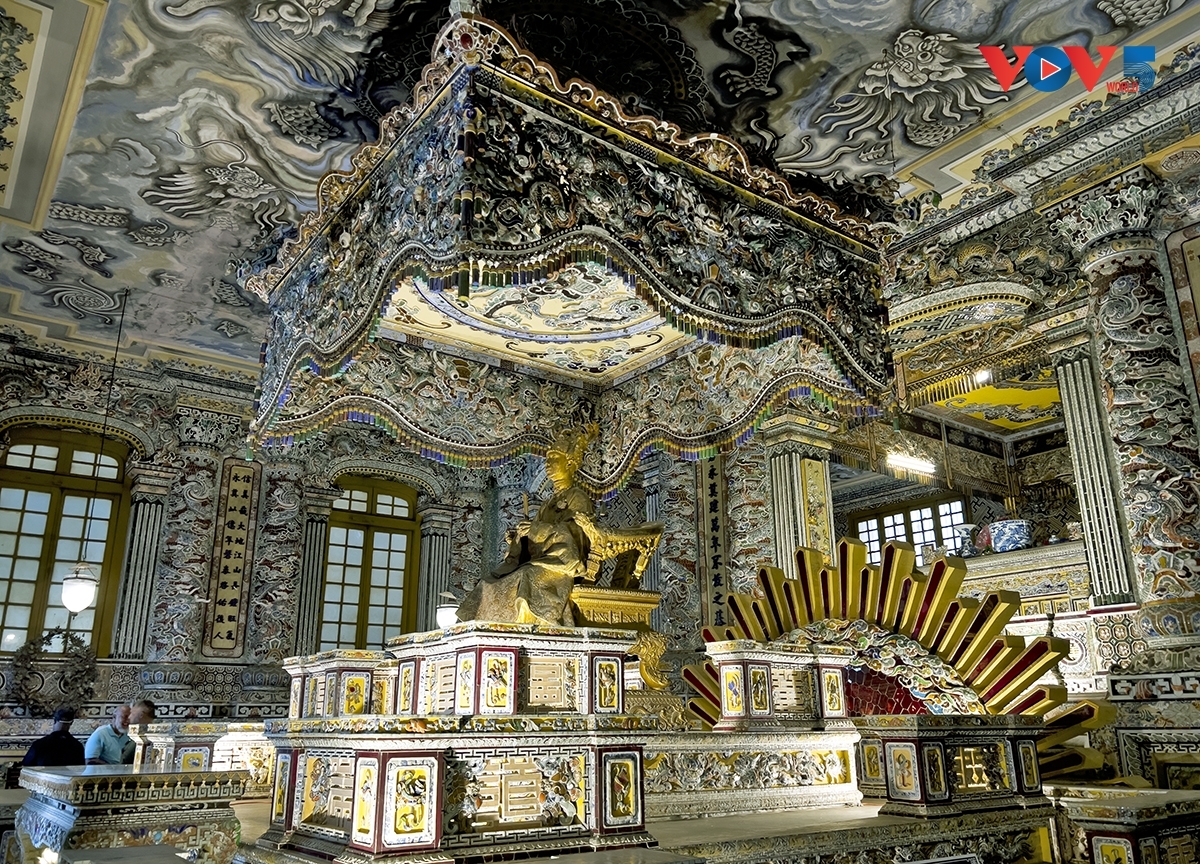
Located at the highest level of the mausoleum, Thien Dinh Palace showcases some of the finest ceramic mosaic art in Vietnam.
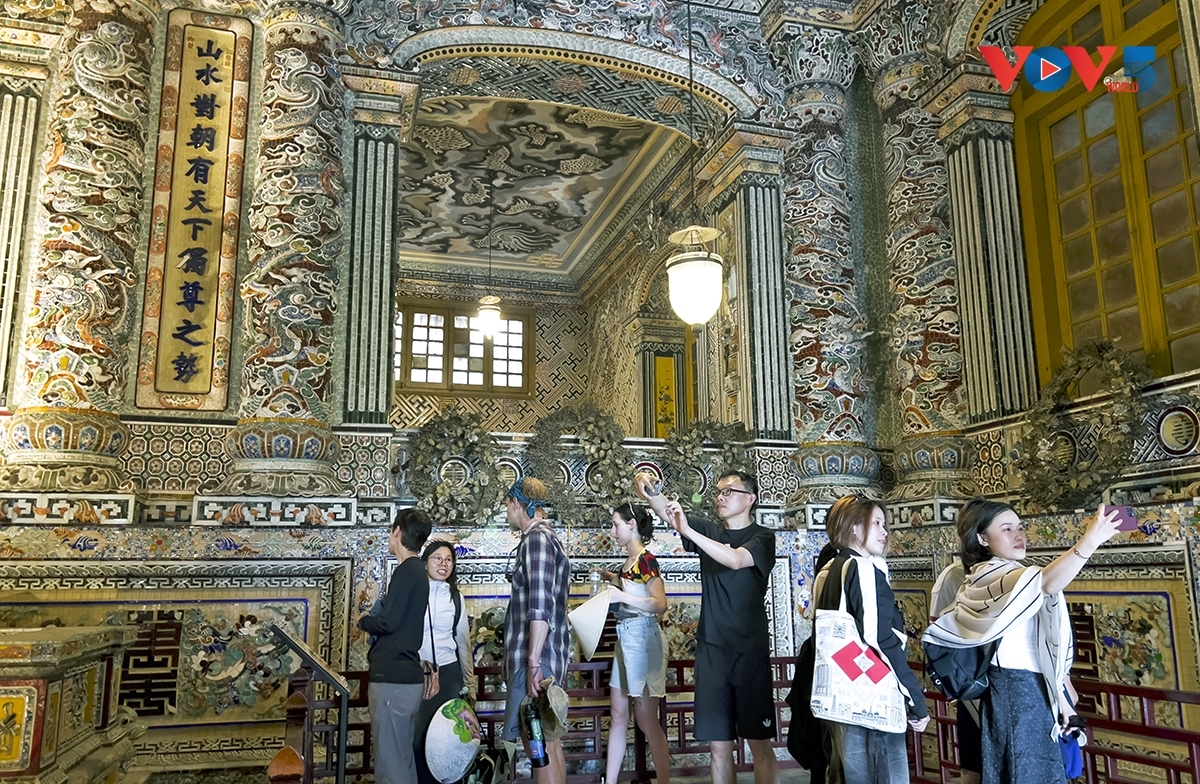
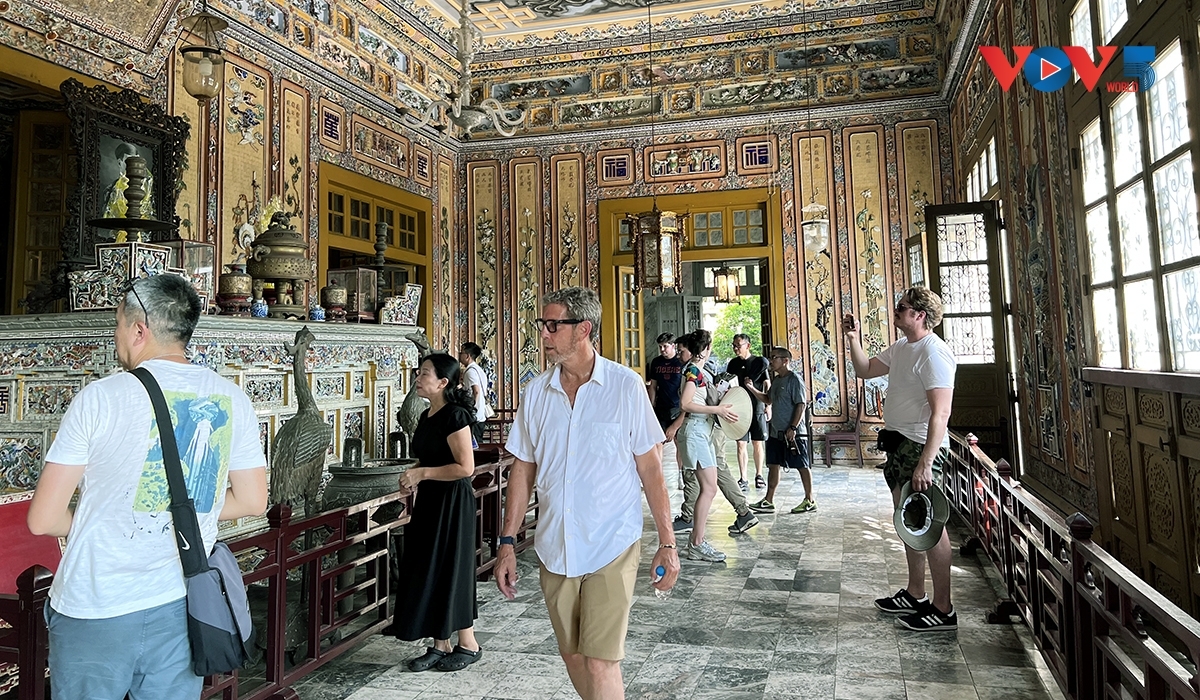
The interior of Thien Dinh Palace is adorned with intricate ceramic mosaics.
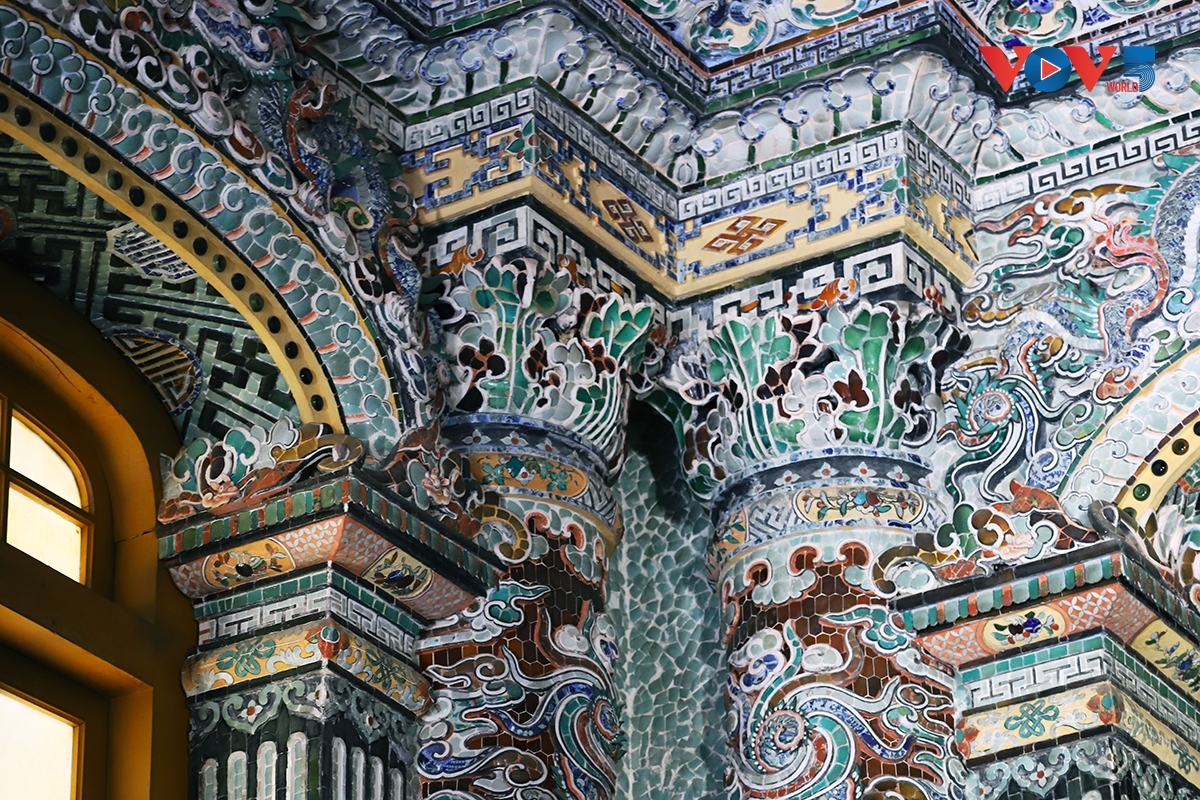
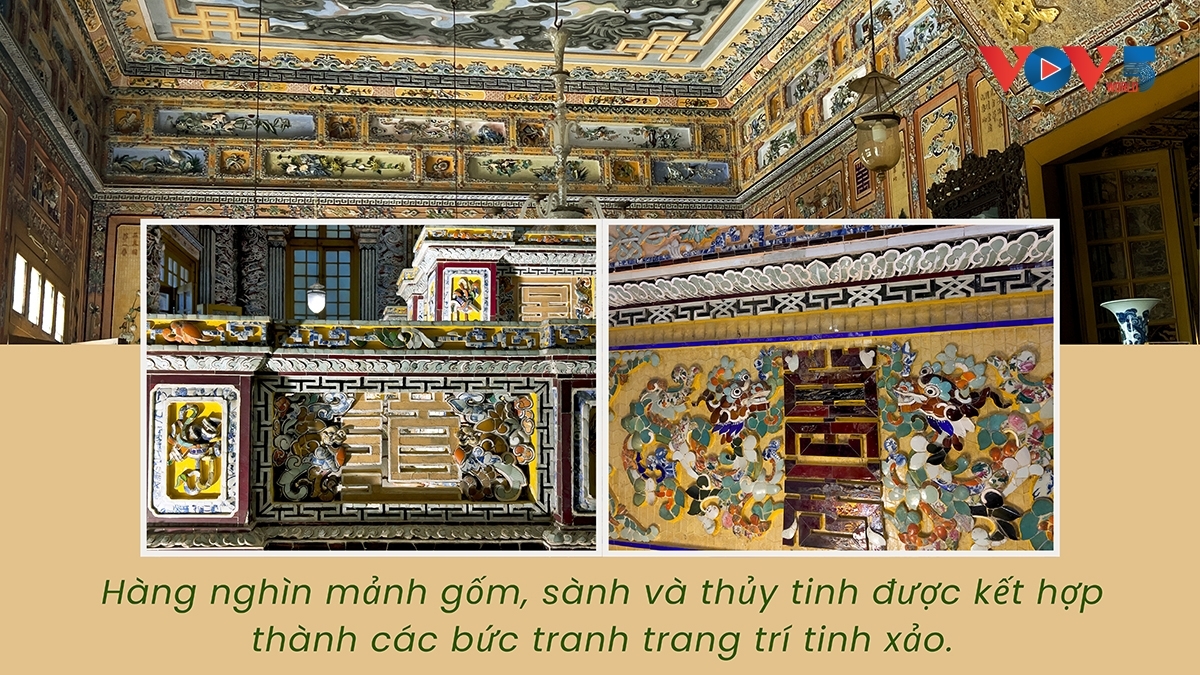
Handcrafted ceramic and glass mosaics decorate the walls, showcasing the craftsmanship of early 20th-century Vietnam.
Thousands of pieces of ceramic, porcelain, and glass form intricate mosaic artworks.
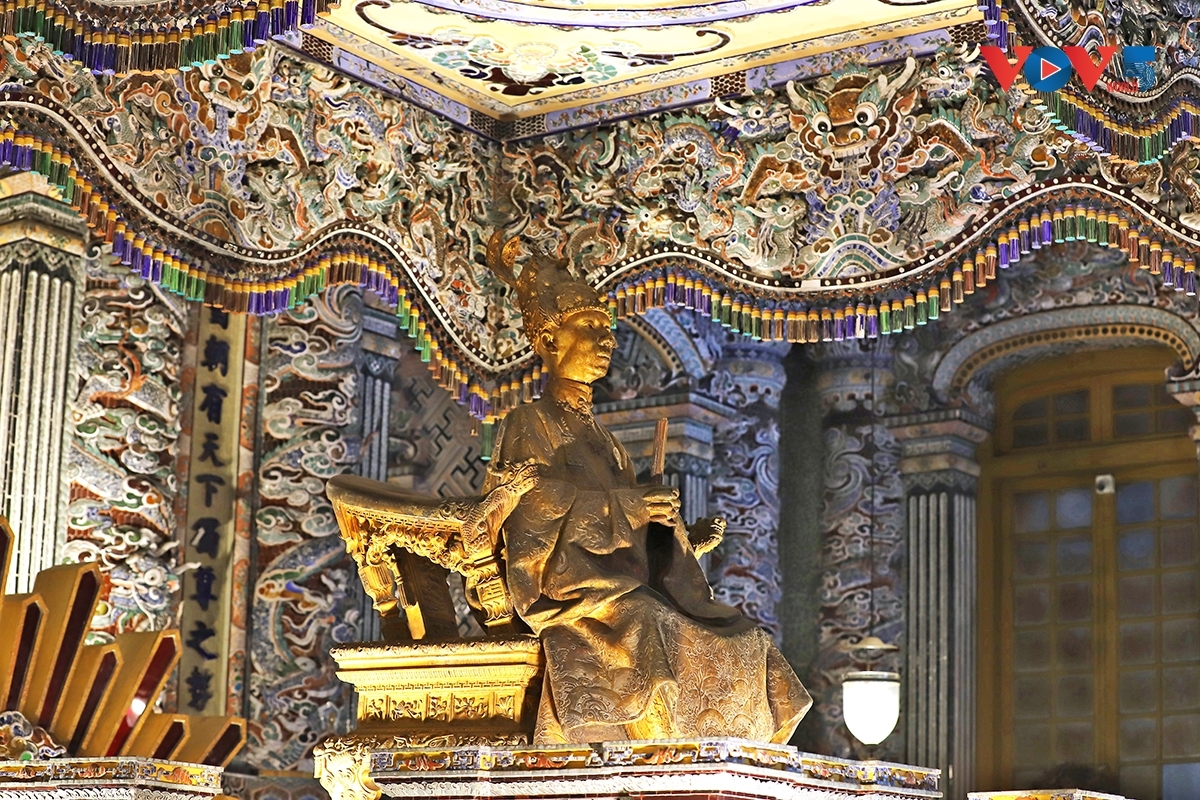
Emperor Khai Dinh (1916-1925), the 12th ruler of the Nguyen Dynasty (1802-1945), was the last Vietnamese emperor to build his own royal tomb. The photo shows a life-sized, gold-plated bronze statue of Emperor Khai Dinh, seated on his throne and cast in France in 1922.
Unlike most Nguyen royal tombs, where the emperor's burial chamber is hidden, the Tomb of Khai Dinh places the burial site directly beneath the bronze statue of the emperor inside Thien Dinh Palace.
Today, the site remains open to visitors, offering a rare look at one of the most unique features of Nguyen Dynasty architecture and royal burial traditions.
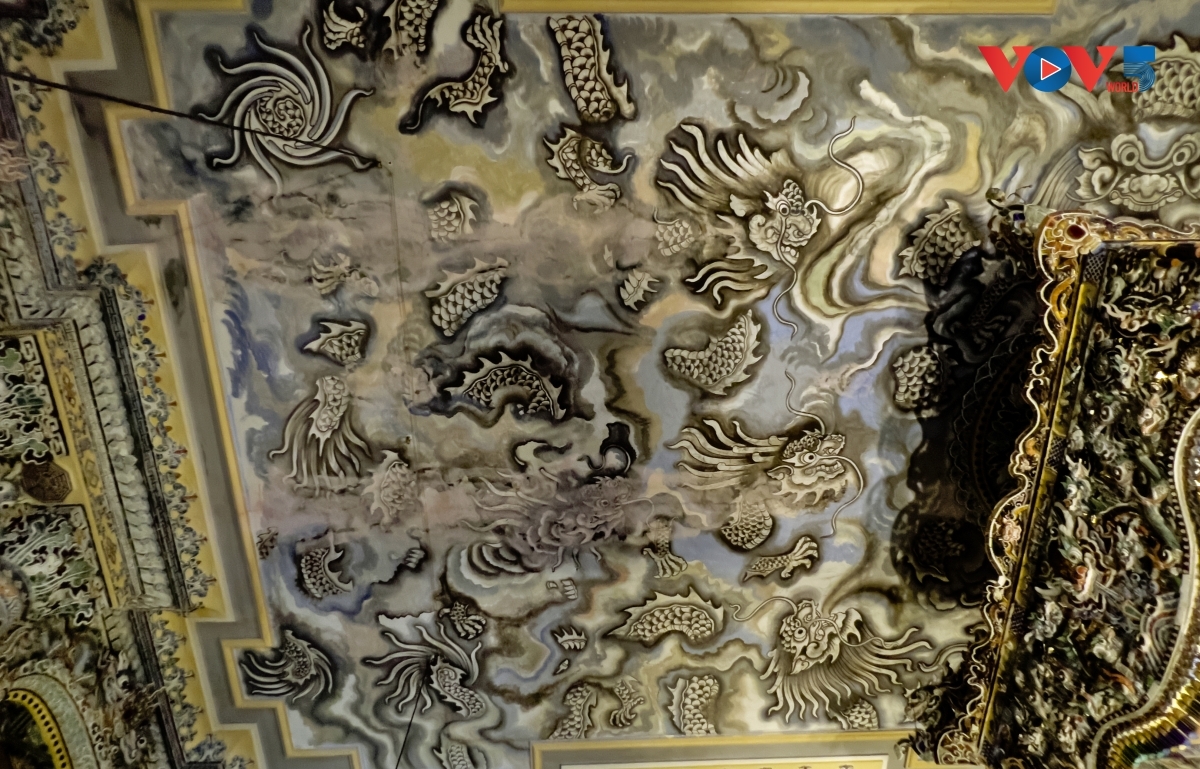
The ceiling features the "Nine Dragons Hidden in the Clouds" mural by artisan Phan Van Tanh. It is said that he paints it using both his hands and feet. Nearly a century later, its colors remain vivid.
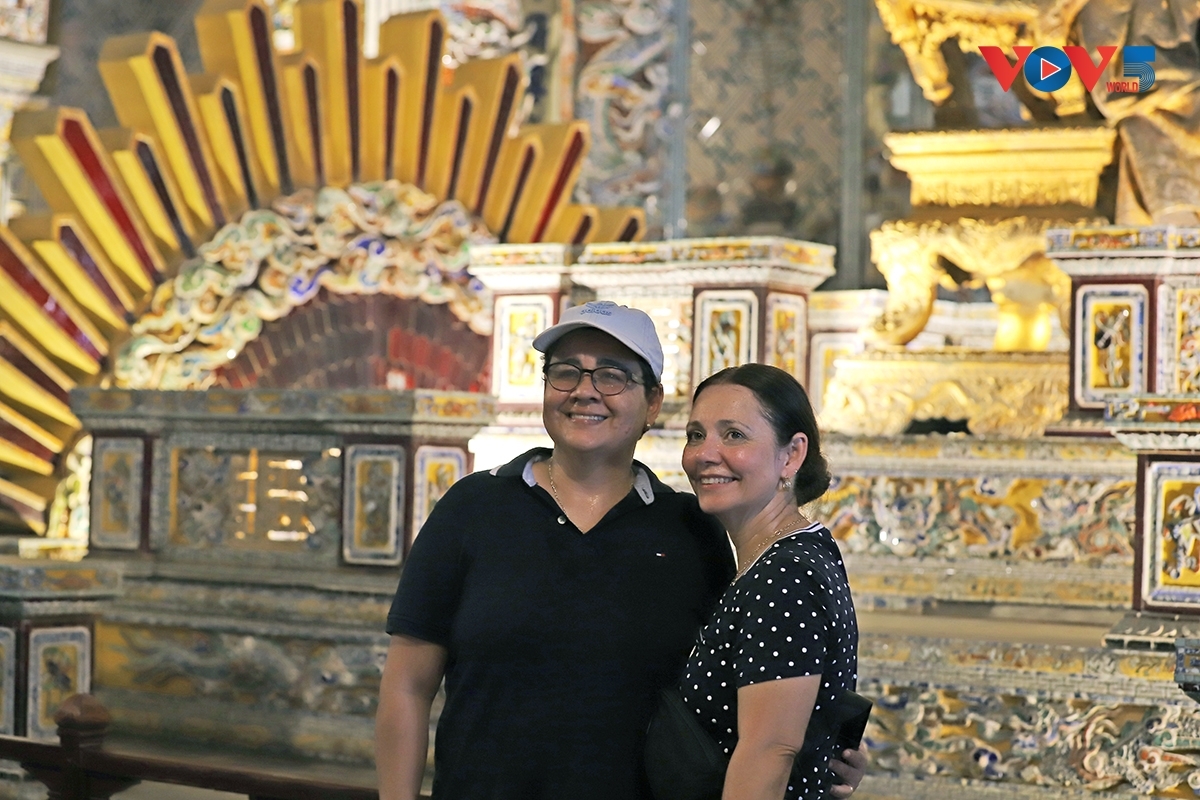
Many visitors capture memories at the Tomb of Emperor Khai Dinh.
Today, the Tomb of Emperor Khai Dinh remains one of Hue's most remarkable heritage sites.

Tag: VOV / VOVWORLD / Khai Dinh / Hue / heritage / Nguyen dynasty / tourism / tomb / Ung Mausoleum
Latest
Popular
English Vietnamese Chinese French German Indonesian Japanese Khmer Korean Lao Russian Spanish Thai
VOVWORLD
Director: Pho Cam Hoa
Deputy Director: Nguyen Thu Hoa
Deputy Director: Bui Manh Hung
Deputy Director: Cao Dinh Trung

Contact

(084) 24 38266809
(084) 38266707
45 Ba Trieu, Hanoi, Vietnam
vovworld@vov.vn

Mạng xã hội

Follow VOV World:
BÁO ĐIỆN TỬ TIẾNG NÓI VIỆT NAM
Follow VOV World:
BÁO ĐIỆN TỬ TIẾNG NÓI VIỆT NAM

Menu footer tiếng Anh

About Us
Beat The Rush
Current Affairs
Digital life
Discovery Vietnam
Letter Box
Media
News
Public Bulletin Board
Sport
Spotlight
That's life
Urban Rhythms
Vietnam rising era
Village life
Copyright © VOV5. All rights reserved. Developed and operated by SolidTech Online service permit: 2113/GP-BTTTT issued on December 6, 2011
