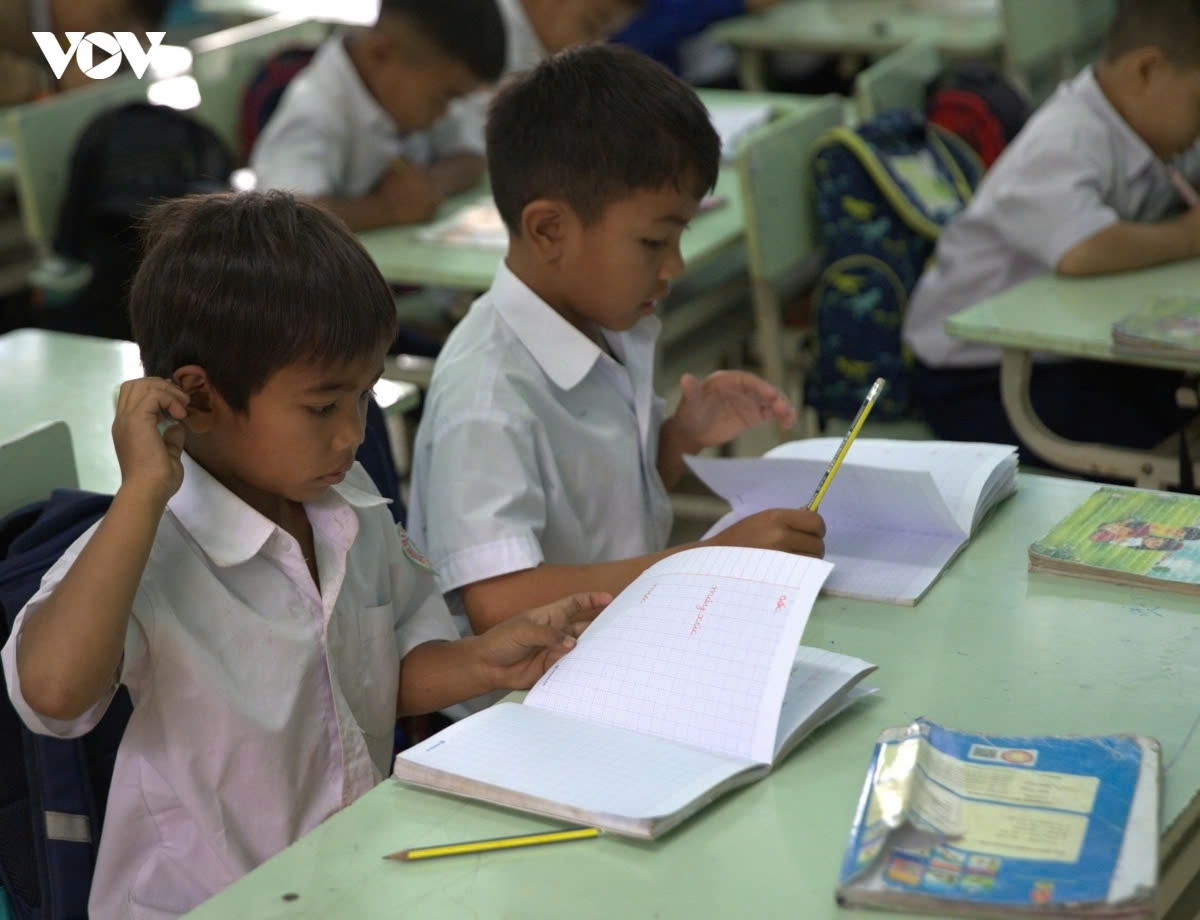




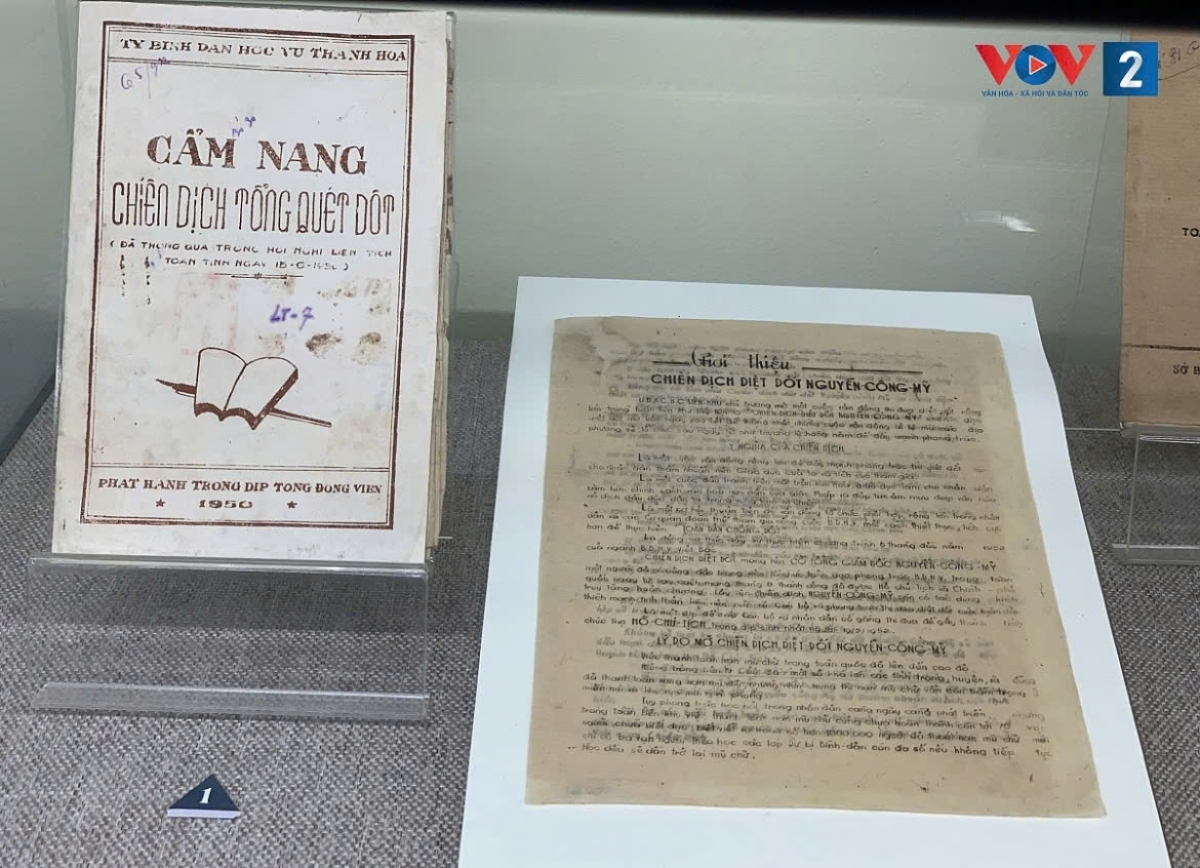
On September 8, 1945, the Provisional Government of the Democratic Republic of Vietnam announced the mass education movement, a nationwide literacy campaign that involved millions of people.
From 2020 to 2023, 79,280 people took literacy classes across Vietnam, many in mountainous and ethnic minority areas. Today, the literacy rate stands at 99.39% for the 15–35 age group and 99.10% for the 15–60 age group. Following the reorganization of administrative units, all provinces and cities have met the standard for Level 1 literacy, while 76.5% have achieved Level 2.
At Phuc Son Primary School in Lao Cai province, 99% of local people are from ethnic minority groups, mainly Thai and Muong. Some students are 56 years old, while others left school more than 40 years ago. So, classes are held at different times, depending on the farming season. The class started with 40 students. By the end, there were 45, and all of them completed the course.
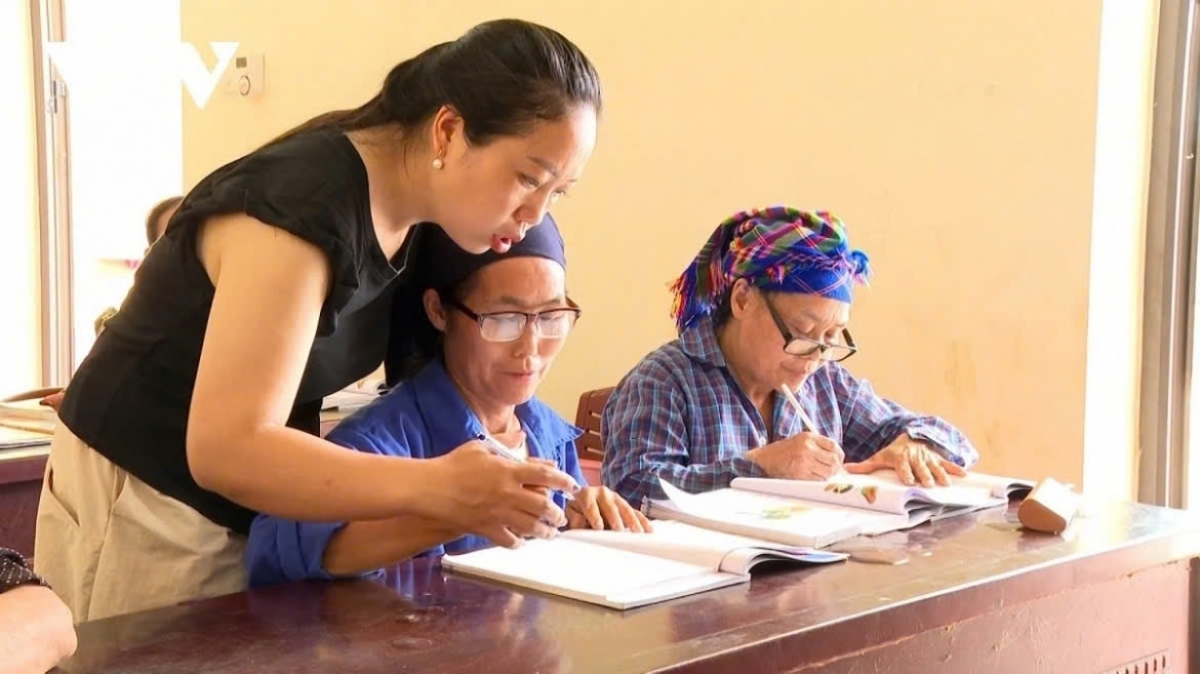
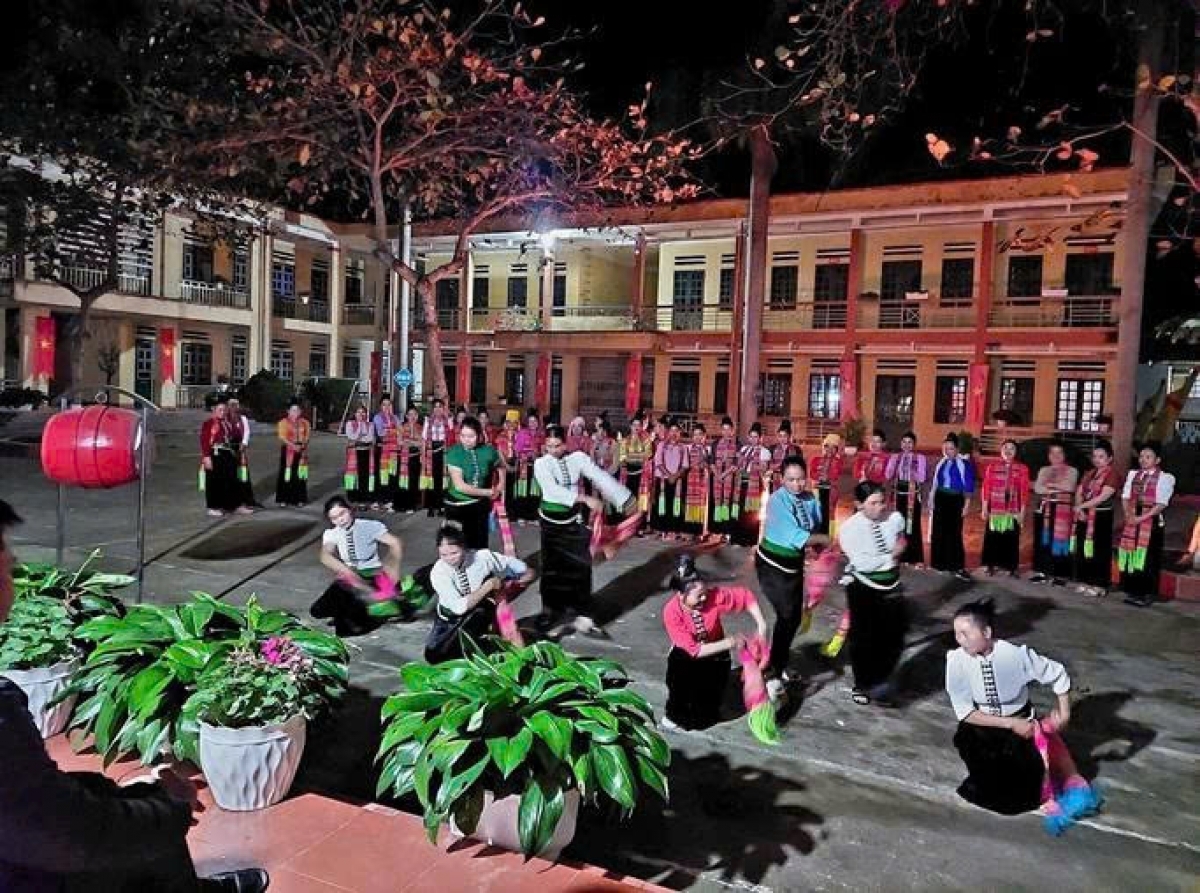
At Phuc Son, students also read books and newspapers and share ideas on improving their family’s income. Between classes, they dance, make con (a colourful fabric ball), and play volleyball. For them, learning to read and write is now part of their daily life and culture.
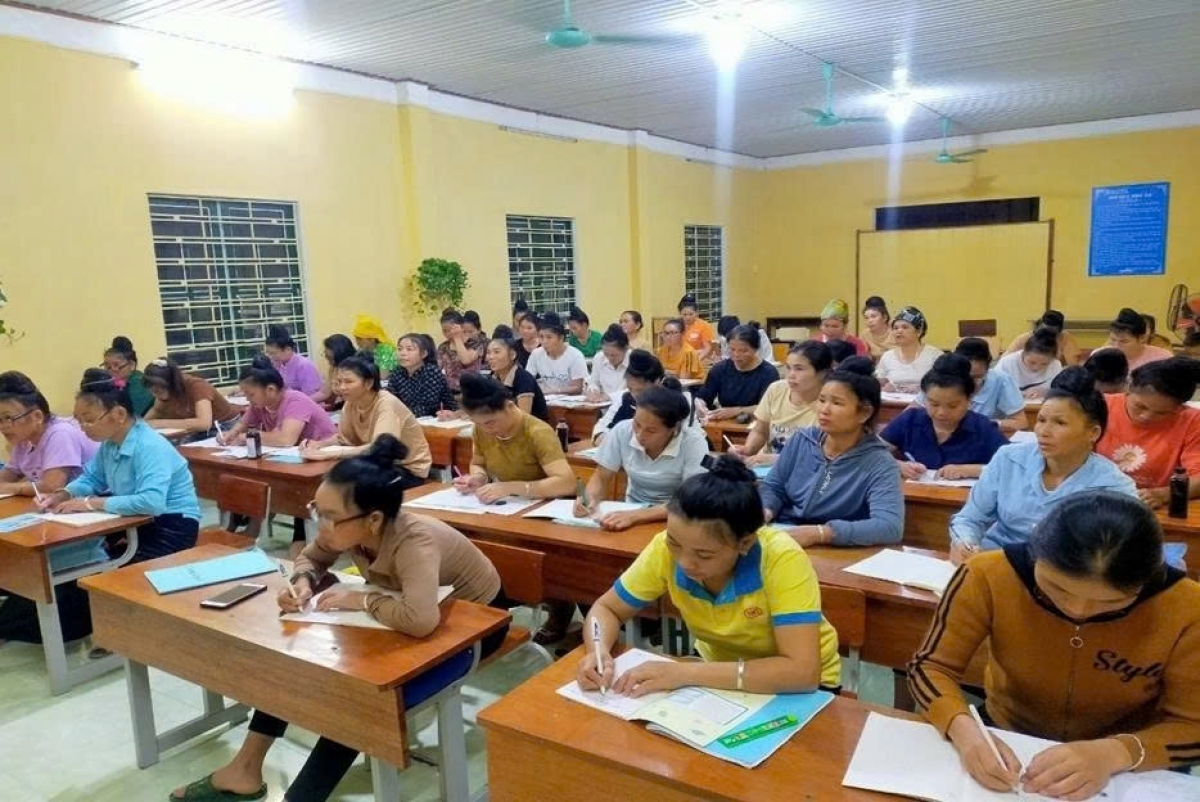
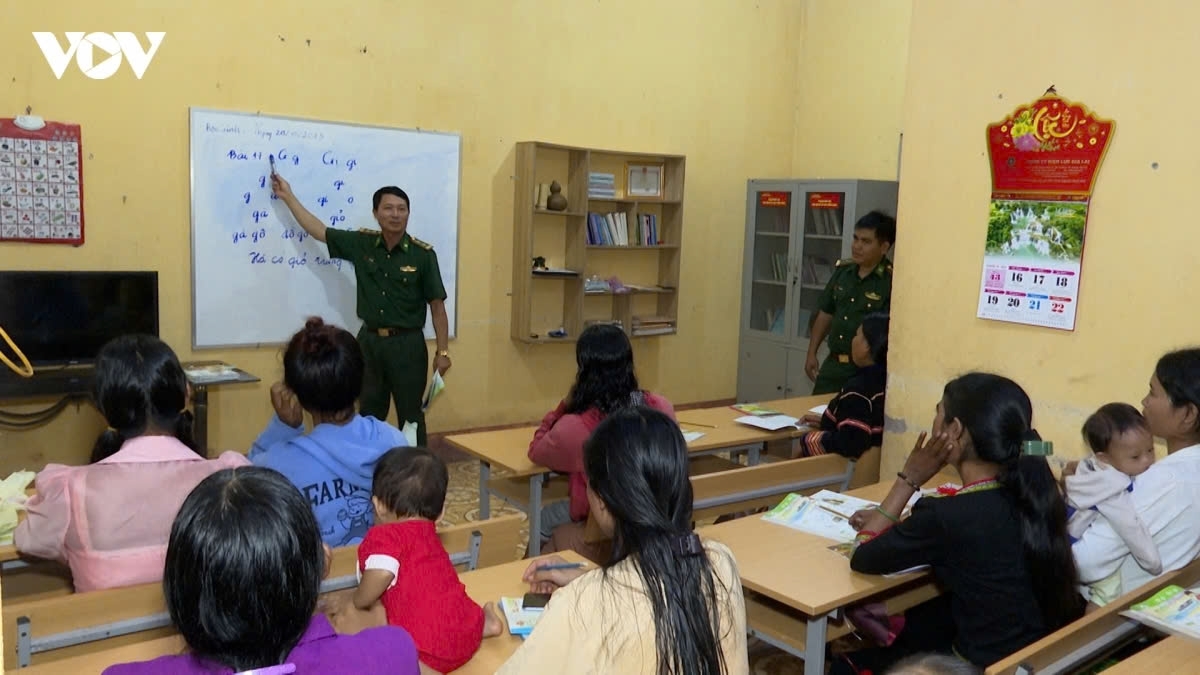
In the former Duc Co border district in Gia Lai, 20 literacy classes were held from 2022 to 2025, with more than 600 students. The Gia Lai Border Guard also runs literacy classes for people in border areas. Parents can bring their young children to class and still continue their studies.
In these classes, students learn more than reading and writing. They also learn basic math, how to read documents and how to use what they learn in daily life. They also become more confident outside their villages.
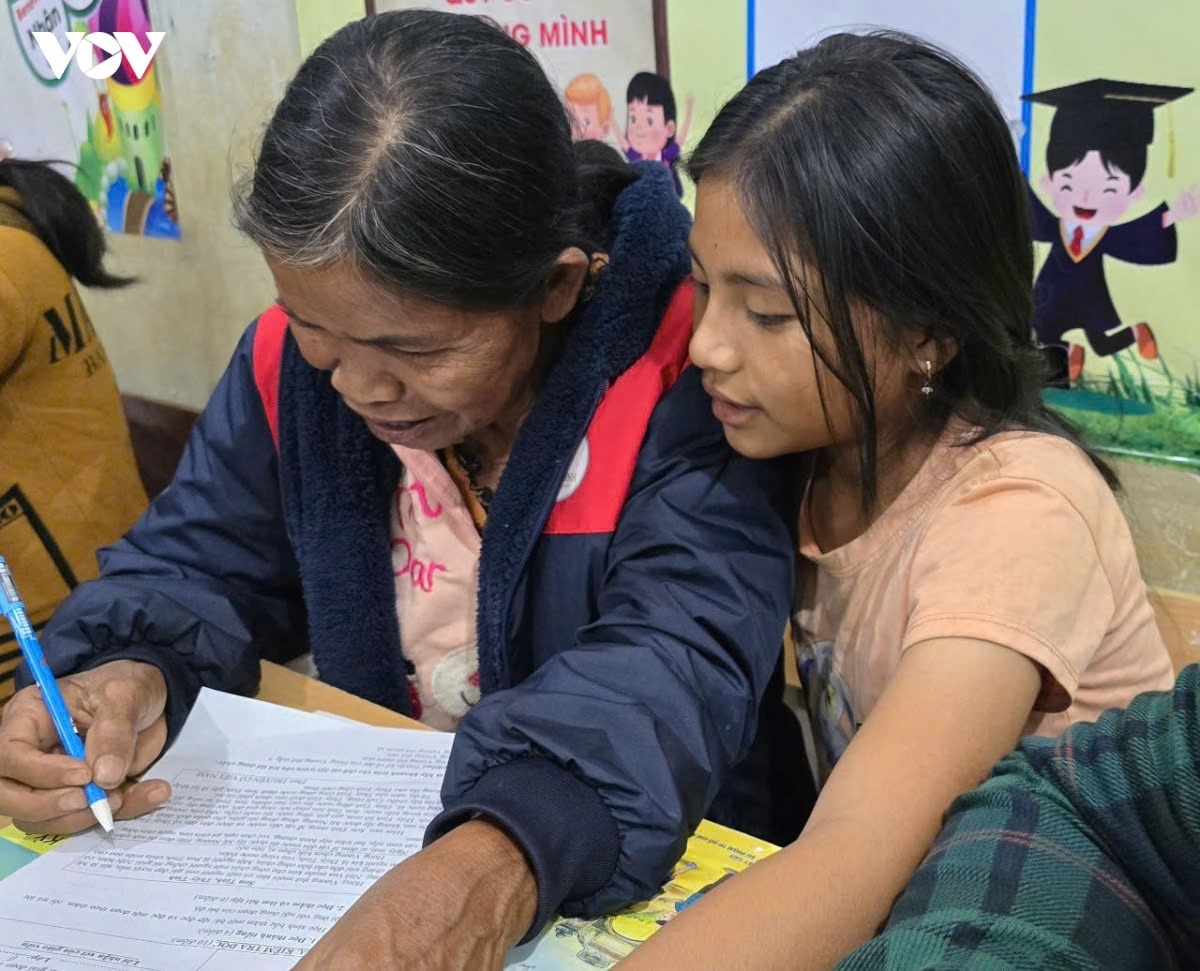
Students learn useful things like counting money, filling out forms, using public services and applying what they learn to their work. This helps them use their skills in daily life and avoid becoming illiterate again.
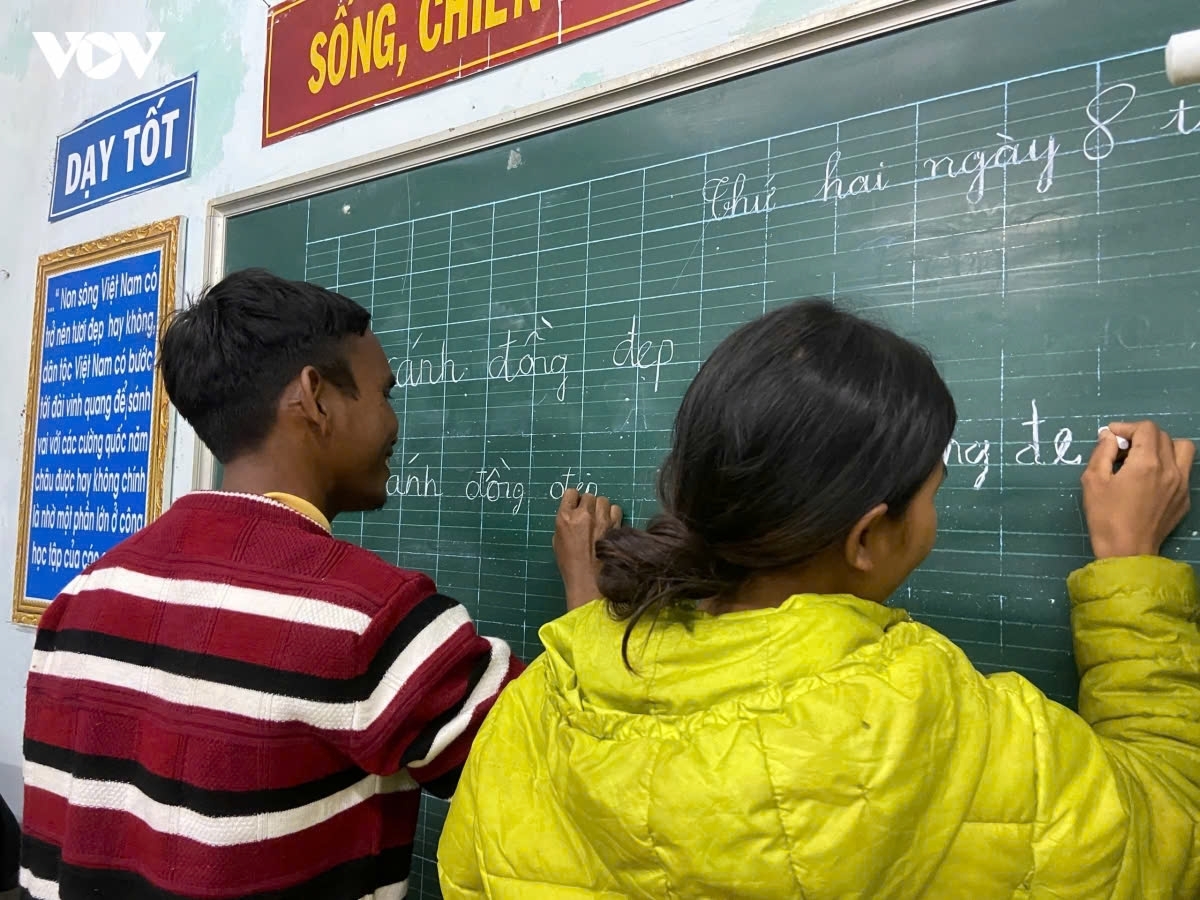
In many ethnic minority areas, policies of supporting meals, accommodation, education, and transportation—alongside systems of semi-boarding and boarding schools—are helping children access better schooling conditions. At Chu Dang Ya Primary and Secondary School in Gia Lai, nearly 90% of the 500 students are ethnic minorities, mainly Jarai. More children are staying in school, fewer are dropping out, and education is improving.
80 years ago, the goal was simple: to help everyone read and write. Today, it is also about giving people access to knowledge, technology and new opportunities. From literacy classes to night classes in remote villages and now digital literacy, the goal remains the same: to make sure everyone has a chance to learn, no matter where they live, how old they are or what their living conditions are.