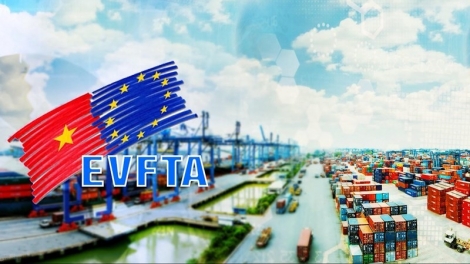





Since entering into force six years ago, the bilateral trade between Vietnam and the EU reached 900 billion USD between January 1995 and June 2026. Notably, 383.8 billion USD, or 42.6% of that three-decade total, was generated in just the six years following the EVFTA’s implementation in August 2020.
Official records from Vietnam’s Customs Department and the National Statistics Office (NSO) highlight the scale of this integration. According to Chairman Jaspaert, the agreement has boosted the investment of European businesses in Vietnam. According to EuroCham’s Q2 2026 Business Confidence Index (BCI), 55% of surveyed European enterprises now regard Vietnam as a core operational base or major growth location, while a further 22% identify it as an important component of their regional footprint.
Vietnam has matured into a competitive regional platform for long-term expansion across Asia. It has reshaped trade flows, deepened business confidence, and established Vietnam as one of Europe’s most vital economic anchors in Asia.
As the EVFTA enters its seventh year when the EU completes its tariff liberalisation schedule, the agreement will grant duty-free access to 99% of Vietnamese exports. Meanwhile, Vietnam will continue its phased tariff reductions on EU imports over the next four years, with its commitments concluding in 2030.
EuroCham Vice-Chair Jean-Jacques Bouflet said there is much room for both sides to make further progress. He encouraged Vietnam to expand imports of high-value European technologies that support its industrial upgrading and manufacturing value chains, thus creating a more balanced trade relationship and strengthening Vietnam’s long-term competitiveness while moving its industries further up the global value chain.