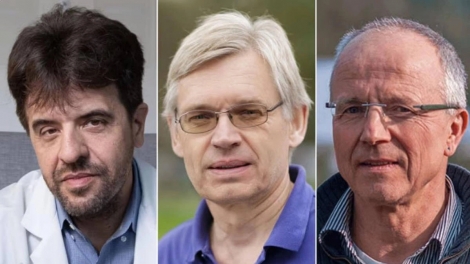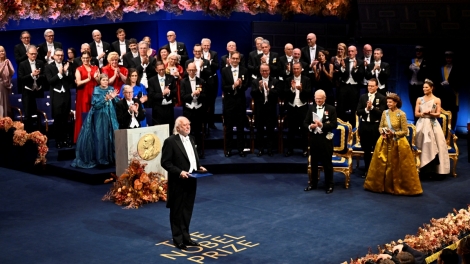




These tiny, high-energy particles from space, known as neutrinos, carry information that allows scientists to better understand distant galaxies and exploding stars, a Nobel Committee member said at the award presentation on Tuesday at the Royal Swedish Academy of Sciences in Stockholm.
Francis Halzen realised that ice at the South Pole could be used to track particles known as neutrinos. His vision and scientific leadership have been fundamental for the IceCube Neutrino Observatory – a cubic kilometre of ice that is equipped with light sensors. Using IceCube, researchers can capture neutrinos from extremely energy-rich processes in the distant universe, according to the Nobel Prize press release.
Professor Francis Halzen, 82, is based at the University of Wisconsin–Madison in the US. Plans are underway for IceCube-Gen2, a much larger successor to the original observatory.