





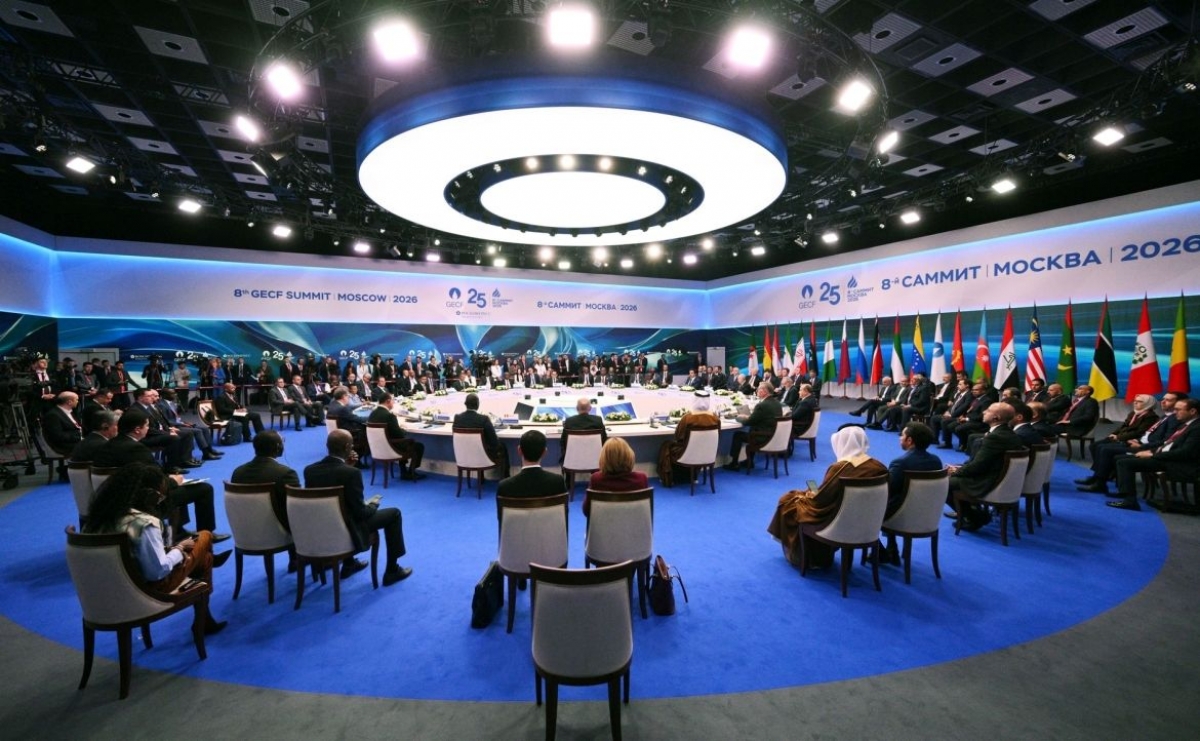
Following the summit, GECF members signed a Moscow Declaration setting out measures to mitigate crises, stressing on high-level consultations, coordinated action to protect gas production facilities, pipelines, and liquefied natural gas (LNG) carriers from threats, diversifying gas trade routes, developing regional gas hubs, and improving cross-border infrastructure.
GECF members reaffirmed their commitment to promoting natural gas as a key long-term energy source, highlighting its role in transitioning to a lower-carbon energy system, supporting industrial activity, and meeting the rising energy demand from data centers.
They pledged to reduce methane emissions, deploy carbon capture and storage technologies, and expand the production of green hydrogen.
12 full members of the GECF are Russia, Iran, Algeria, Bolivia, Egypt, Equatorial Guinea, Libya, Nigeria, Qatar, Trinidad and Tobago, the United Arab Emirates (UAE), and Venezuela. Its eight observer countries are Angola, Azerbaijan, Iraq, Malaysia, Mauritania, Mozambique, Peru, and Senegal. GECF member countries collectively own 70% of the world's proven natural gas reserves. They account for 38% of global gas production, 42% of global gas exports, and 47% of global liquefied natural gas (LNG) exports.




