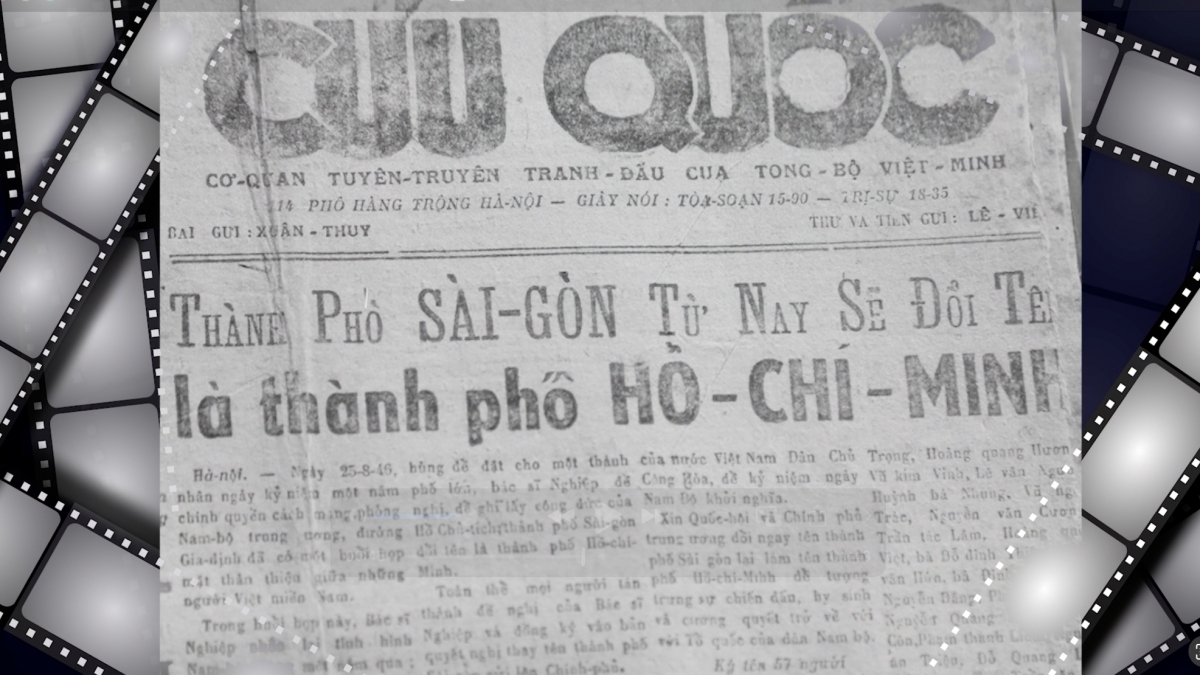
The proposal was not the initiative of a single individual. Behind the signatures of Dr. Tran Huu Nghiep and 57 southern intellectuals was the shared aspiration of millions of people in Saigon-Gia Dinh and across southern Vietnam at a time when Vietnam remained divided and war continued.
The petition read: "We ask the National Assembly and the central government to rename Saigon as Ho Chi Minh City to symbolize the struggle, sacrifice, and determination of the people of southern Vietnam to reunite with the motherland."
Associate Professor Dr. Ha Minh Hong, Vice Chairman of the Ho Chi Minh City Historical Science Association, said: “Lawyers, journalists, and prominent figures, including Hoang Quoc Viet and Ton Duc Thang, who were in Hanoi at the time, all signed the petition. It was one of the earliest proposals to rename Saigon after President Ho Chi Minh. The proposal came from people who knew southern Vietnam well and had taken part in the fighting there during the 1945–1946 period”
30 years after the historic proposal was made, southern Vietnam was liberated on April 30, 1975, marking the end of the war and the reunification of Vietnam.
On July 2, 1976, the 6th National Assembly officially passed a resolution to rename Saigon-Gia Dinh as Ho Chi Minh City. The decision marked a historic moment, symbolizing the country's reunification in both political and national terms and fulfilling the aspiration first expressed in the 1946 petition.
Associate Professor Dr. Ha Minh Hong said: “On July 2, 1976, the National Assembly spent a full day making important decisions after the country's reunification. These included the country's name, the national flag, and the national anthem. The National Assembly also decided to name Saigon-Gia Dinh as Ho Chi Minh City. It was more than a simple name change. It was the first time a place in Vietnam had been named after a national leader. From the first to the sixth National Assembly, no other locality had been given the name of a national leader.”
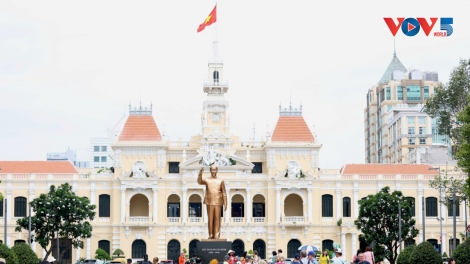
Fifty years after officially taking the name of President Ho Chi Minh, the city continues to strengthen its role as one of Vietnam's leading economic and cultural centers.
As Vietnam enters a new stage of development, Ho Chi Minh City is expected to remain at the forefront of the country's growth, serving not only as its economic engine but also as a symbol of its ambition for the future.