







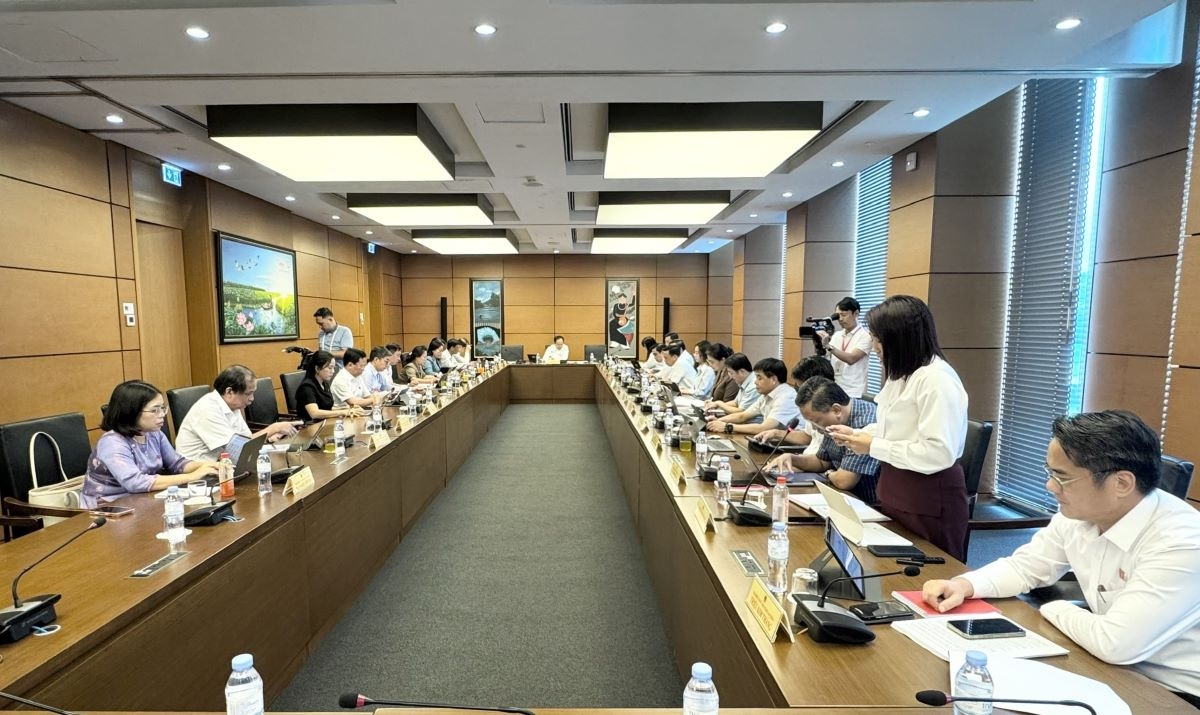
National Assembly deputy Nguyen Vu Trung of Ho Chi Minh City said that the most important aspect of this law is not how many additional incentives Ho Chi Minh City receives, but whether it is empowered to create its own mechanisms and be held accountable for the results.
“If the law achieves that, it will truly be an urban development law rather than merely a collection of additional legal exceptions,” he said.
Meanwhile, deputy Nguyen Thanh Phuong of Can Tho City urged careful consideration of policies aimed at attracting talent and investment to major urban centers, warning that overly generous incentives could draw resources away from neighboring provinces and regions.
“The draft includes numerous mechanisms to attract investors and talented individuals. However, if incentives are offered at any cost, what impact will that have on surrounding localities? We need to clearly define which incentives should be provided and to what extent,” he said.
Ho Chi Minh City is designated as a special-grade provincial-level administrative unit. Following the merger of three localities, the city now has a population of more than 14 million, making it a megacity and the country’s leading economic center. It contributes over 23% of Vietnam’s GDP and approximately 31% of state budget revenue.


