



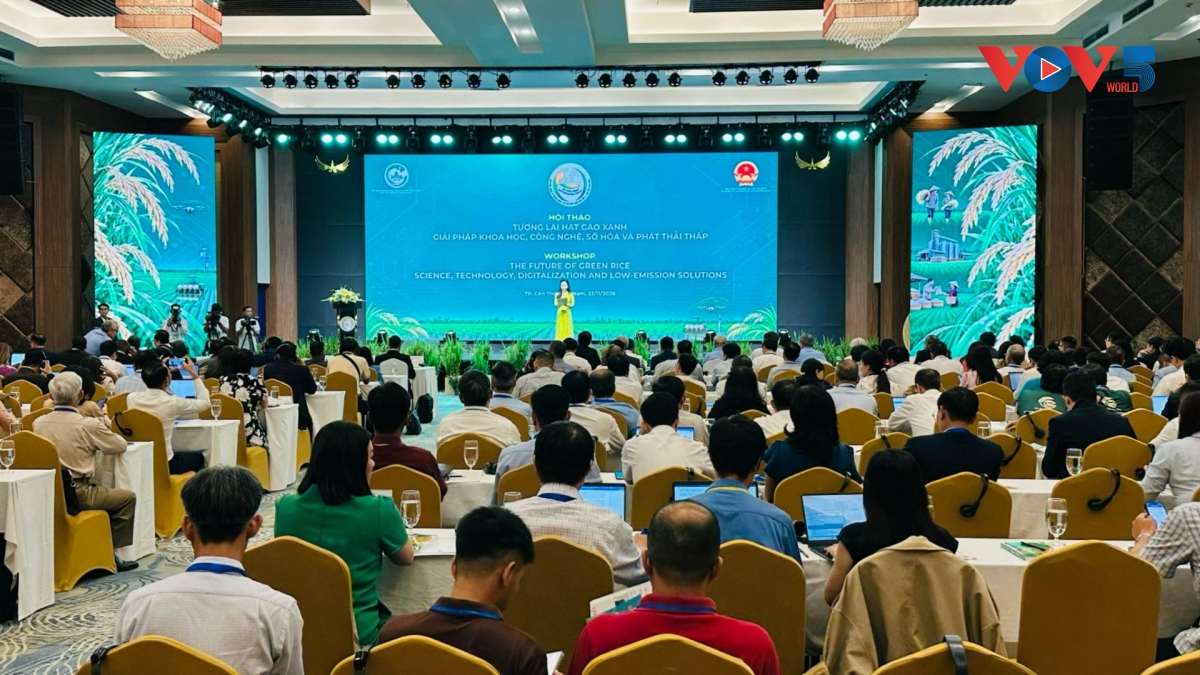
The seminar featured four panel discussions focusing on reshaping the rice industry for sustainability and climate resilience; science and technology for green rice; digitalization and AI in the rice value chain; and cooperation and action for the future of green rice.
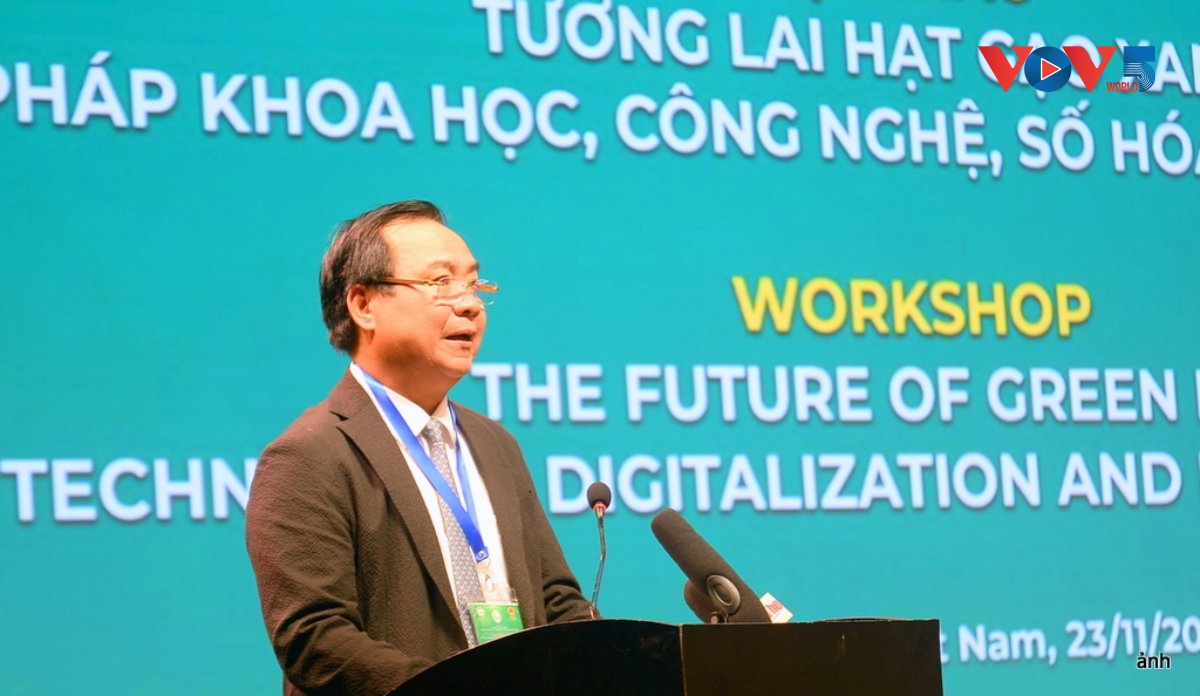
Deputy Minister of Agriculture and Environment Vo Van Hung highlighted the project to develop one million hectares of high-quality, low-emission rice cultivation in the Mekong Delta by 2030 as an important step towards advancing Vietnam’s rice industry.
According to Hung, the future of Vietnam’s green rice should be viewed through three core values.
First is economic value, which means improving the quality and competitiveness of Vietnamese rice while ensuring real income gains for rice farmers. Second is environmental value, reflected in the efficient use of resources, climate change adaptation, emissions reduction and a circular agricultural economy. Third is brand value of Vietnamese rice as high-quality, green, transparent and responsible to the international community.
“The three values must be integrated into a modern ecosystem for production, processing and trade, driven by science and technology, innovation and value-chain linkages,” said Hung.