







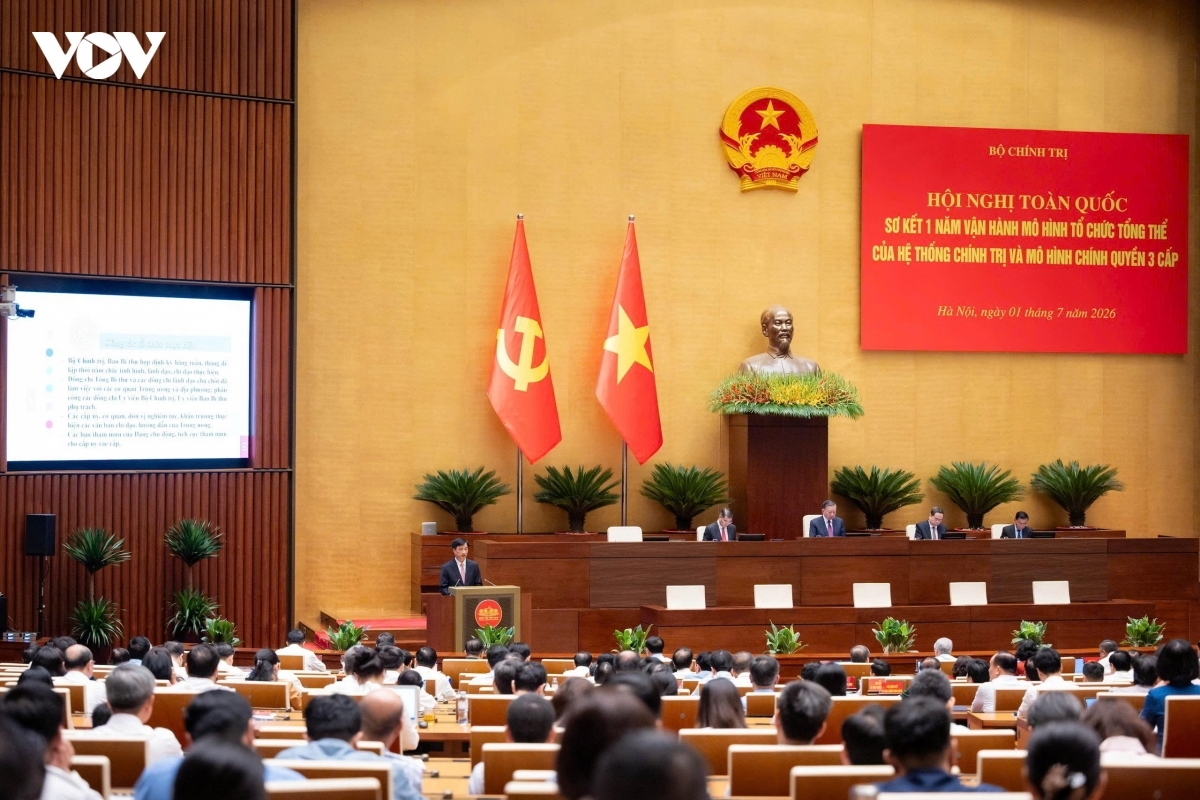
In his remarks, Chairman of Party Central Committee’s Organization Commission Nguyen Duy Ngoc said the revolution in reorganizing the political system's apparatus has succeeded and has been supported by cadres, Party members, and the people, and applauded by international public opinion.
The apparatus of the political system, Party agencies, the National Assembly, the Government, and others have been lean and mean with less intermediate levels, oriented towards the grassroots, and linked with strong innovation and improved execution capacity at the commune level.
“The current requirement is no longer just about "finishing the reorganization," but moving on to the refinement phase to make the system operate more efficiently and smoothly, clearly defining powers and responsibilities, and better serving the people and businesses. The focus is on the decentralization and delegation of power mechanisms according to the three-tier model. The central level focuses on institution building, digital platforms, and oversight; the provincial level manages and coordinates resources and regional linkages; and the commune level directly implements, manages data, and serves the people and businesses,” Mr. Ngoc said.
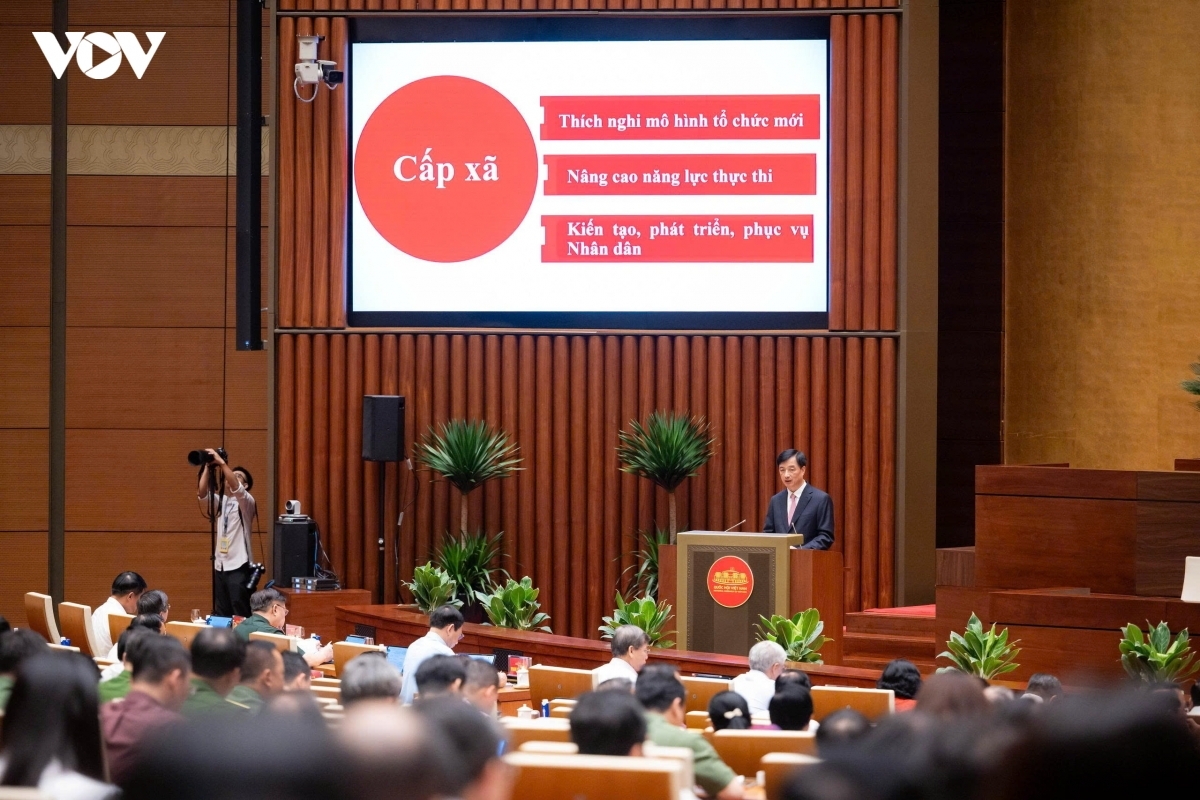
According to Deputy Prime Minister Pham Thi Thanh Tra, the Government will require a continued review and reorganization of commune-level administrative units that do not meet the standards. If the three factors—the quality of commune-level government, the staff of officials and civil servants, and data-driven digital governance capacity—are well implemented, the two-tier local government model will operate more effectively.

In his address to the conference, Party General Secretary and State President To Lam underlined the correctness of the policy of reforming and reorganizing the political system's organizational structure. The next task is to shift the focus to improving the operational quality, service capacity, and development-enabling capacity of the new apparatus.
“Continue to comprehensively improve the legal and organizational structures of the political system. Law amendments must stem from practical bottlenecks. Continue to innovate the Party's leadership methods over the political system and society. Improve the organizational model and operational mechanisms of the two-tiered local government. The provincial level should focus on strategic roles, planning, coordinating, allocating resources, organizing development space, inspection, oversight, and regional linkages. Communes must be organized as the frontline of public administration, receiving, processing, and responding promptly to the needs of citizens and businesses.”
General Secretary and President Lam requested the acceleration of decentralization and delegation of power while ensuring resources and controlling power. He stressed the need to build a team of officials that meets the requirements of the new model; and boost digital transformation throughout the political system.


