







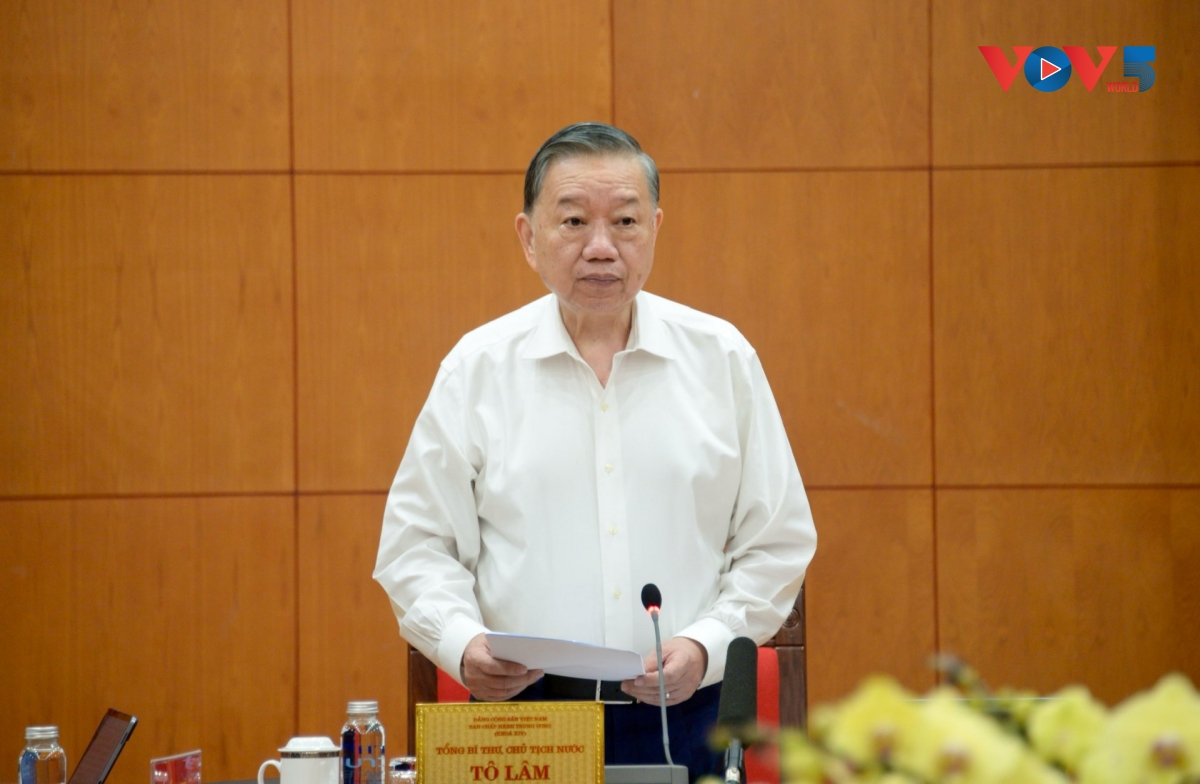
At a meeting with the Comission for Organization Commission of the Party Central Committee in Hanoi on Thursday to review five years’ implemention of Resolution No. 28 on continuing to renew the Party’s leadership and governance methods over the political system in the new period, Mr. Lam said any new document approved by the Party Central Committee must inherit, supplement and further develop Resolution 28, ensuring continuity in the reform process built up through considerable efforts over different periods.
Regarding the major orientations for the next period, Mr. Lam endorsed proposals of the Commission for Organization. He stressed that renewing the Party’s leadership and governance methods does not alter the Party’s nature, principles or fundamental leadership approach. Instead, it aims to make Party leadership more accurate, targeted, scientific, democratic, responsive and effective.
Mr. Lam said: “We must remain steadfast while embracing innovation, provide comprehensive leadership while respecting clearly defined roles and authority, maintain unified leadership while promoting initiative, strengthen decentralization alongside power controls, and recognize that technology cannot replace political responsibility or human decision-making. The consistent focus must be on turning sound decisions into tangible results."
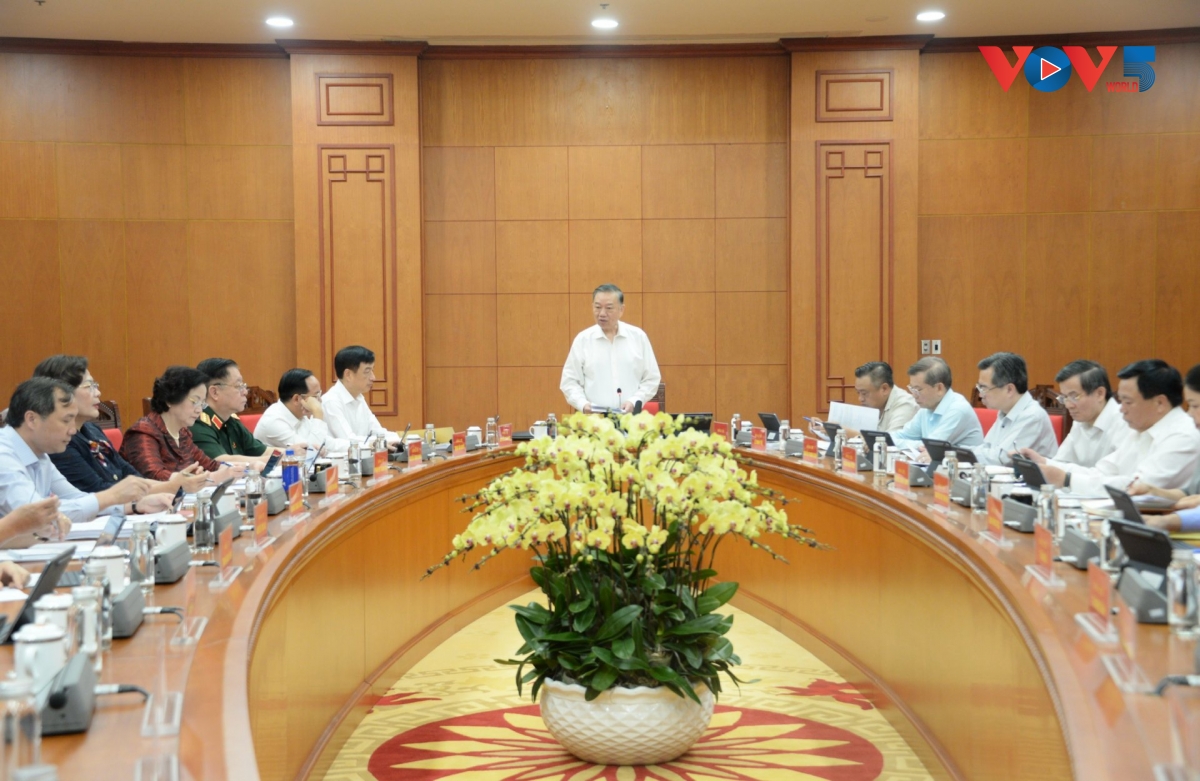
"Implementation is an integral part of the quality of leadership and governance. By 2030, we must firmly establish leadership practices linked to objectives, outputs, results and accountability. By 2045, we must develop the Party’s leadership and governance methods to a high level — scientific, democratic, law-based, modern and highly adaptable,” added the Vietnamese top leader.
Based on the viewpoints, objectives, proposed additions and key tasks and solutions put forward by the Organization Commission, the Vietnamese top leader called for further research and clarification of seven issues.
These include developing a unified understanding and approach to leadership and governance; ensuring the effective operation of the principle that “the Party leads, the State manages and the people exercise mastery”; and standardizing the processes for formulating, issuing, institutionalizing, implementing and adjusting Party policies.


