







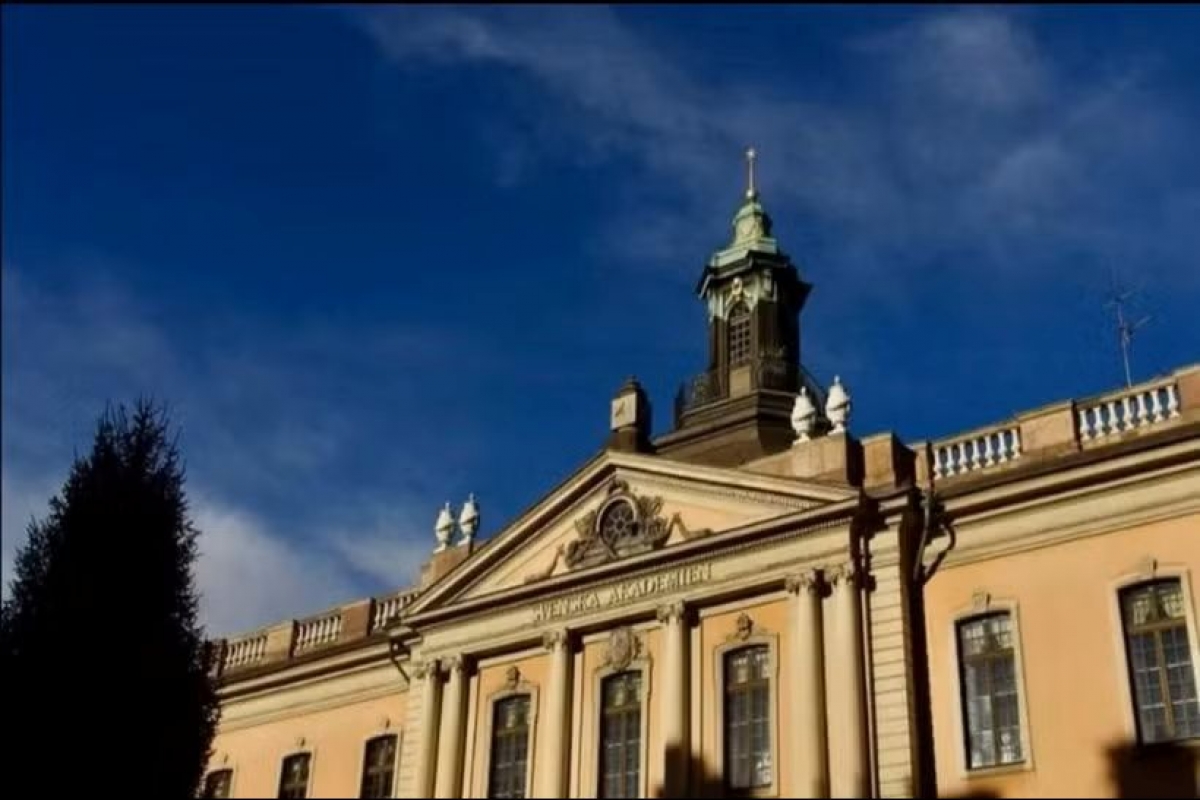
The Royal Swedish Academy of Sciences announced the winners in Stockholm, saying the two were being honored for work that has helped policymakers deal with economic fluctuations.
“With them, we are better equipped to deal with shocks in the economy, such as energy crises or sudden changes in how much households consume," John Hassler, chair of the Committee for the Prize in Economic Sciences, said in a news release.
The two developed new macroeconomic models that improved the ability to implement effective stabilization policy, enabling well-timed fiscal and monetary policy measures that can reduce the intensity of damaging swings in the economy.
The Nobel Prize in Economics marks the conclusion of this year's Nobel Prize announcements and is also the only prize not included among the five original awards established in Alfred Nobel's will. The prize consists of a diploma, a gold medal and a cash award worth approximately 1.2 million USD.
Last year, Nobel economics prize went to 3 researchers American-Israeli Joel Mokyr, France's Philippe Aghion and Canada's Peter Howitfor explaining innovation-driven economic growth.


