







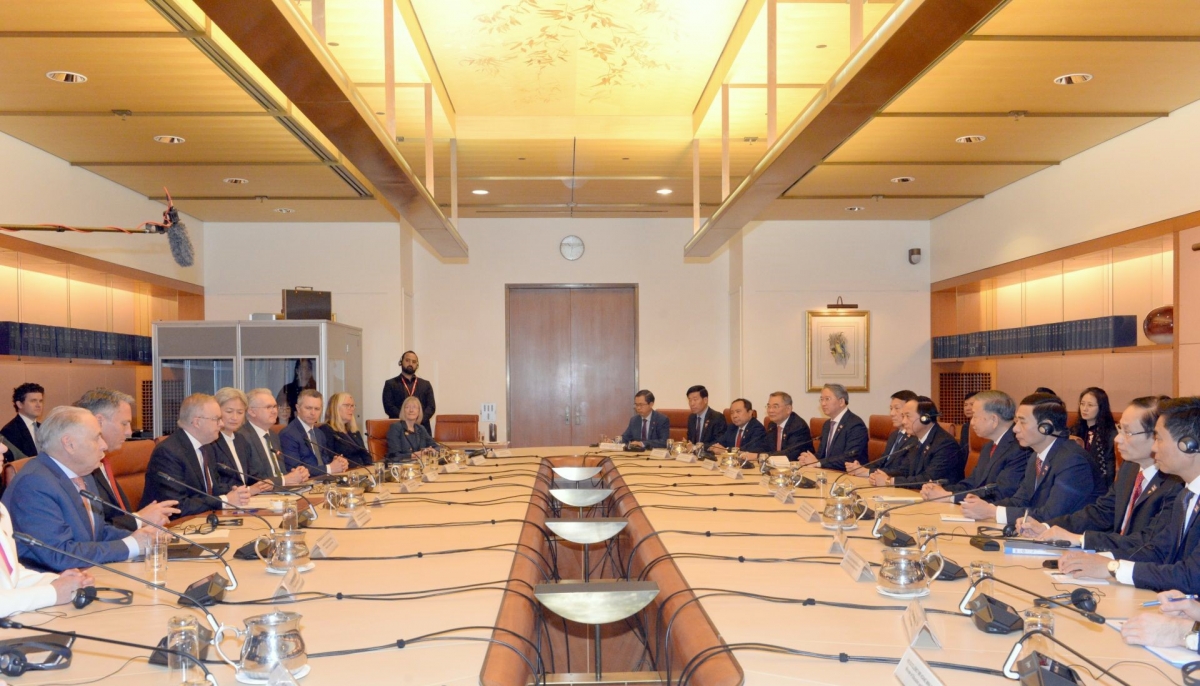
During talks in Canberra on Tuesday, the two leaders underscored the need to fully leverage the complementary strengths of their economies, maximize the benefits of the free trade agreements to which both countries are parties, remove trade barriers, and create more favorable conditions for businesses.
The two sides reaffirmed their goal of raising bilateral trade to 20 billion USD, while promoting supply chain connectivity, high-quality investment, and cooperation in the green and digital economies, new energy, and future industries.
The leaders agreed to make science and technology, innovation, and digital transformation new drivers of bilateral relations. They pledged to expand cooperation in strategic sectors, including artificial intelligence (AI), semiconductors, quantum technology, biotechnology, biomedicine, marine research, critical minerals, and green hydrogen.
Both sides also agreed to promote joint research projects, strengthen links among universities, research institutes, and businesses, work toward establishing a Vietnam-Australia technology connectivity network, and develop a highly skilled workforce.
They committed to enhancing cooperation on green and sustainable transition, climate change adaptation, and efforts to achieve net-zero emissions goals. The two countries will continue fostering partnerships among universities, research institutions, educational establishments, and vocational training centers, with a view to expanding knowledge-sharing initiatives and high-quality human resource development programs.
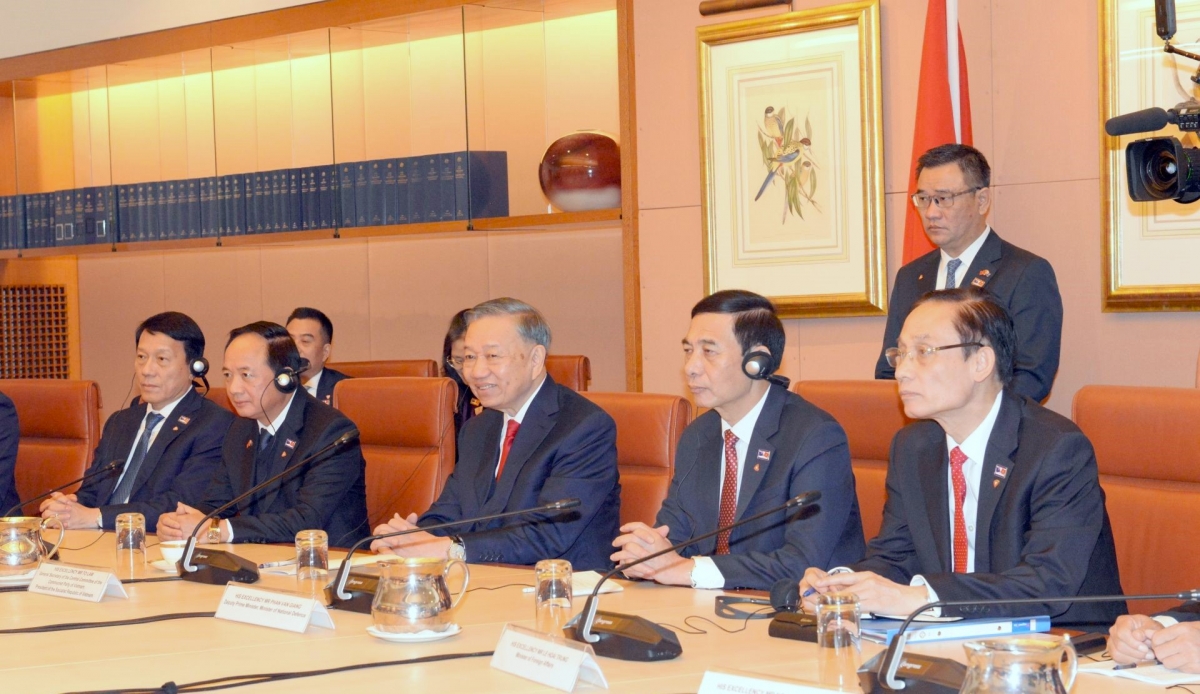
The Vietnamese leader also called on Australia to continue supporting the Vietnamese community in Australia.
Mr. Lam said at a joint press conference following the talks that the two countries will further strengthen cooperation in artificial intelligence, semiconductors, digital technology, cybersecurity, green technology, and other emerging technologies.
“We will support deeper participation in regional and global supply chains, particularly in strategic minerals, clean energy, energy transition, and high-tech industries. We also agreed to continue viewing education and training, along with people-to-people exchanges, as the long-term foundation and one of the most important pillars of bilateral relations,” he noted.


