







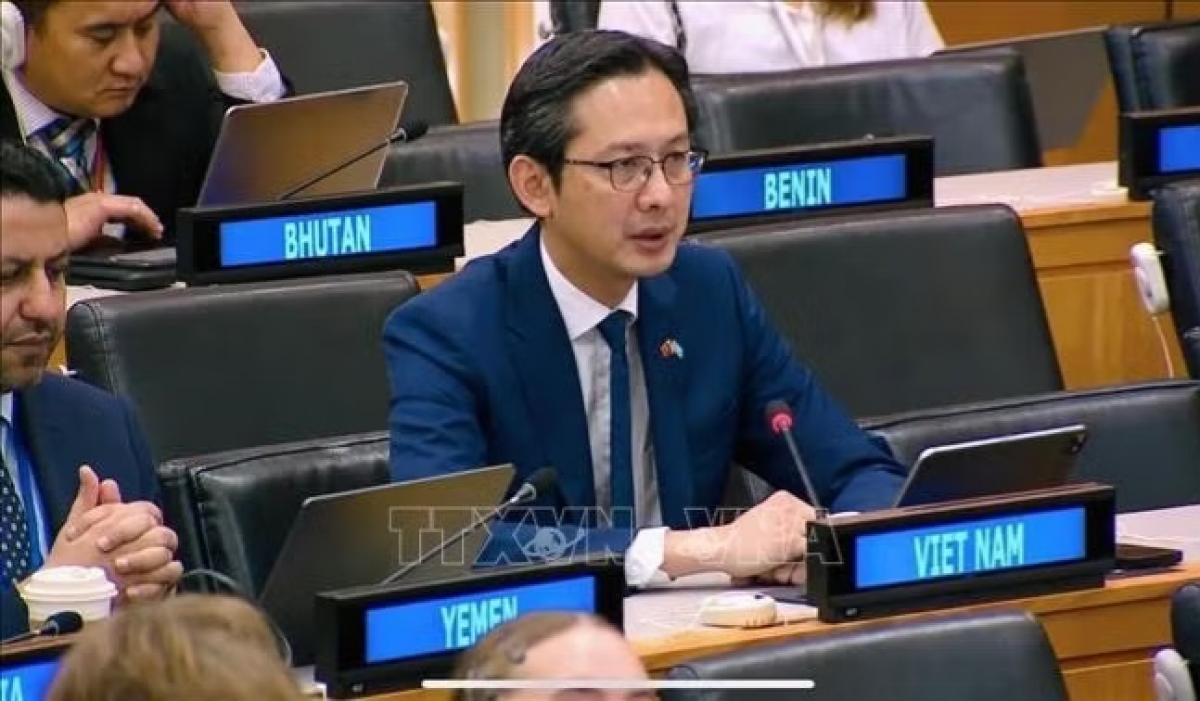
He stressed that international law’s effectiveness and credibility hinge on states interpreting and applying it in good faith, consistently and without selectivity. That applies in particular to the core principles of the UN Charter, including sovereign equality, respect for territorial integrity, non-interference in internal affairs, the ban on the threat or use of force, peaceful settlement of disputes, and good-faith fulfillment of international obligations through concrete action.
Ambassador Viet affirmed that the 1982 UN Convention on the Law of the Sea (UNCLOS) provides the legal framework for all activities at sea. All maritime claims and conduct, as well as the settlement of maritime disputes, including those in the East Sea (known internationally as the South China Sea), must comply with UNCLOS. Until disputes are finally settled, the parties involved should exercise restraint, manage differences responsibly and avoid actions that could escalate or further complicate the situation.
He outlined Vietnam’s efforts to overhaul law-making and enforcement, including reviewing thousands of legal documents for amendment, replacement or repeal to address overlaps and inconsistencies and clear barriers to development; continued improvements to criminal and fisheries legislation, stronger copyright and intellectual property protection, and wider legal outreach to citizens and enterprises.
Vietnam has also put in place rules governing digital technologies, personal data protection, cybersecurity, artificial intelligence and digital transformation. The country upgraded its National Legal Database and expanded digital platforms to broaden access to legal information, education and aid, Mr. Viet said.
He noted Vietnam was the third country in the world to ratify the UN Convention against Cybercrime (Hanoi Convention). It is also preparing for full and effective implementation of the Agreement on the Conservation and Sustainable Use of Marine Biological Diversity of Areas beyond National Jurisdiction (BBNJ Agreement), and continues to contribute actively to international legal forums and bodies.
The Legal Committee is one of six main committees of the UN General Assembly, comprising all 193 member states. It considers legal matters and promotes the codification and progressive development of international law.


