







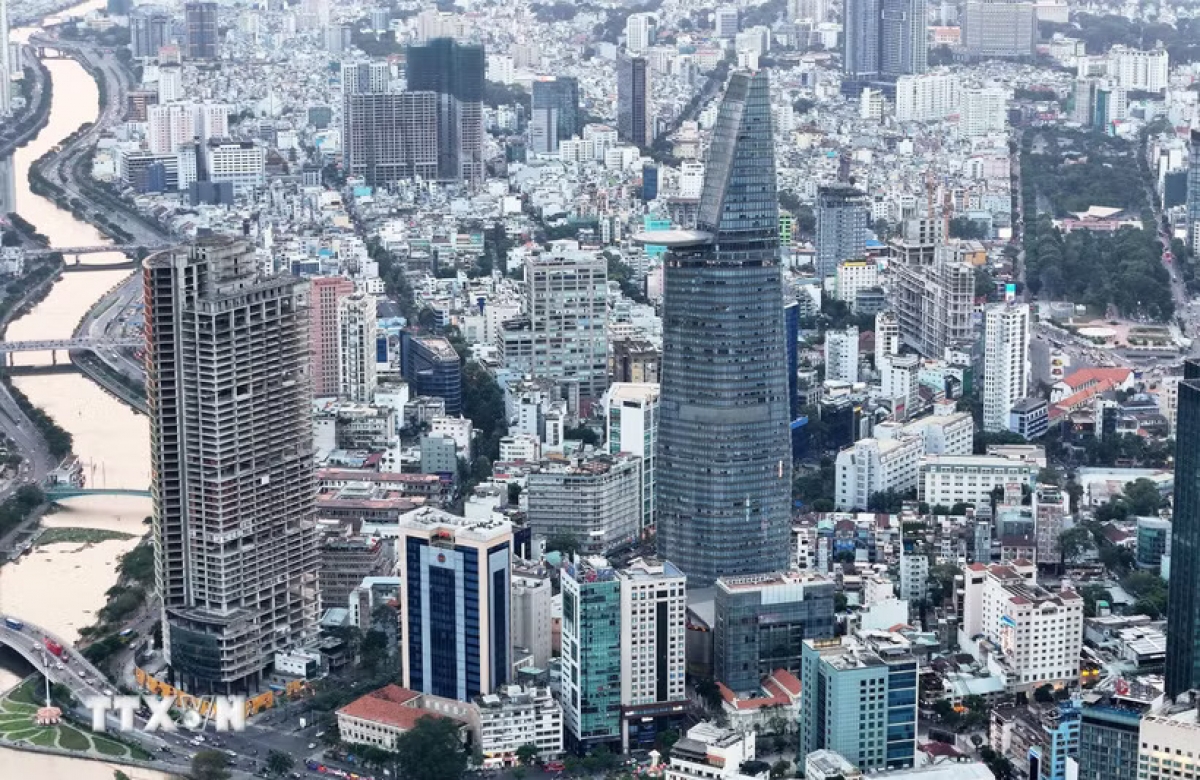
Accelerating industrialization and modernization, with science, technology, innovation, and digital transformation as the main drivers, coupled with macroeconomic stability, improving productivity, quality, efficiency, added value, and economy competitiveness is considered the "guiding principle" to realize the goal of double-digit GDP growth in the next 5 years.
“In the past, Vietnam mainly focused on raw mining and preliminary processing. Now, if we want to increase value, we must concentrate on investing in sci-tech for deep processing of minerals, because minerals contribute very quickly and directly to double-digit growth. Mastering technology will directly contribute to GDP and solve the second problem of autonomy in raw materials and input equipment. That is also one of the realities regarding the transformation of the growth model,” said Pham Van Quan, Deputy Director of the Industry Department at the Ministry of Industry and Trade.
The foreign direct investment (FDI) sector contributes over 85% of the Vietnam's total export turnover, focusing on processed industrial goods and high-tech products, but the supply chain remains limited as Dr. Le Duy Binh, Director of Economica Vietnam, put it.
“We mainly import technology, and technological innovation is still quite limited. The Party's resolution on scientific and technological innovation has accurately addressed the limitations of our current economy and has spurred efforts from the business community and management agencies so that we can work together to make science and technology truly the key to technology absorption, technology dissemination, and ultimately, technological innovation,” according to Dr. Binh.
Vietnam aims to become a developing country with a modern industry and upper-middle income by 2030; its vision is to become a developed country with a high income by 2045.


