







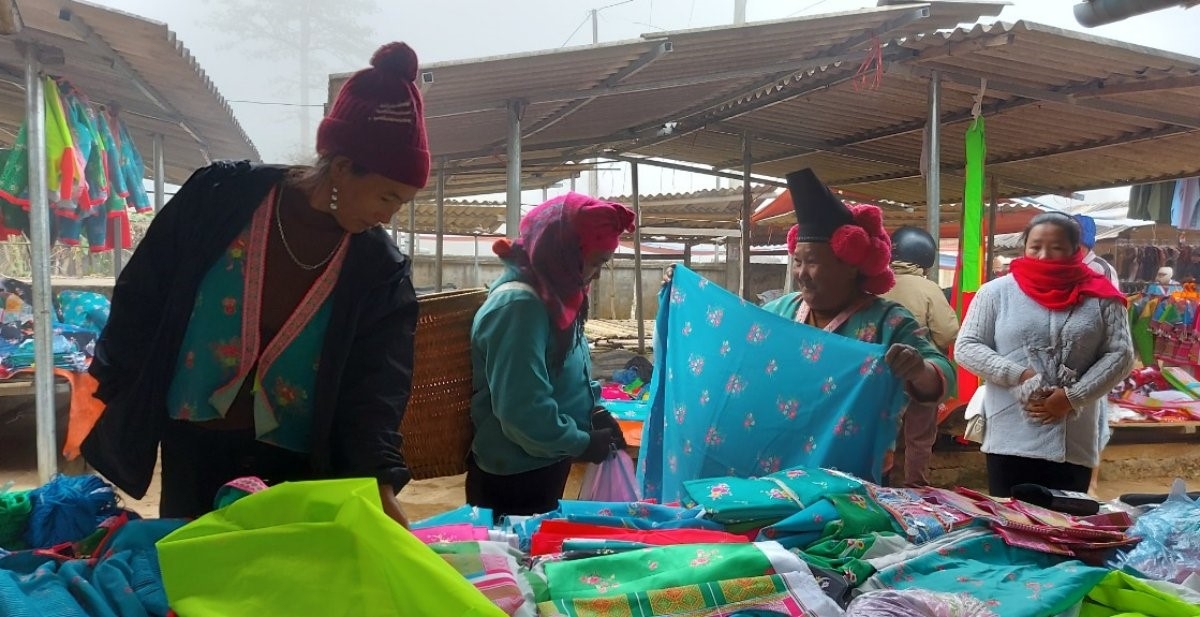
Ia learned embroidery techniques and traditional costume making from her mother and grandmother. Although the craft involves many painstaking stages, from carefully cutting and hand-sewing intricate patterns to investing a great deal of time and effort in every detail, she has remained committed to the trade.
At first, Ia only made clothes for her family. But as she saw demand for traditional outfits growing, she decided to produce more.
“Sales were slow at first because local people didn’t have much money. As their financial conditions improved, they started buying more. Thus, I’ve continued until today,” said Ia.
A traditional White Mong women's outfit is an elaborate work of art, comprising a blouse, trousers, sash, bib and headscarf. The blouse usually features a wide neckline and is fastened with a single button at the waist, so women often wear a white undershirt underneath. The back bib is adorned with colorful embroidered patterns, while the sleeves are skillfully assembled from 25 pieces of blue fabric against a black background. Layered together, they resemble terraced rice fields in the rainy season. Paired with an embroidered sash featuring continuous patterns, each outfit has a distinctive beauty of its own.
It takes two skilled seamstresses nearly four days and nights to complete a full White Hmong outfit. Keeping pace with changing tastes, Ia has also experimented with industrial fabrics to create youthful, colorful designs that retain traditional features while appealing to younger generations.
Ia not only takes orders from people in her village but also brings her products to highland markets in neighboring Dien Bien Province. She also uses social media platforms such as Zalo, Facebook and TikTok to reach customers farther afield. White Mong costumes made in Co Ma have traveled as far as the Central Highlands and beyond.
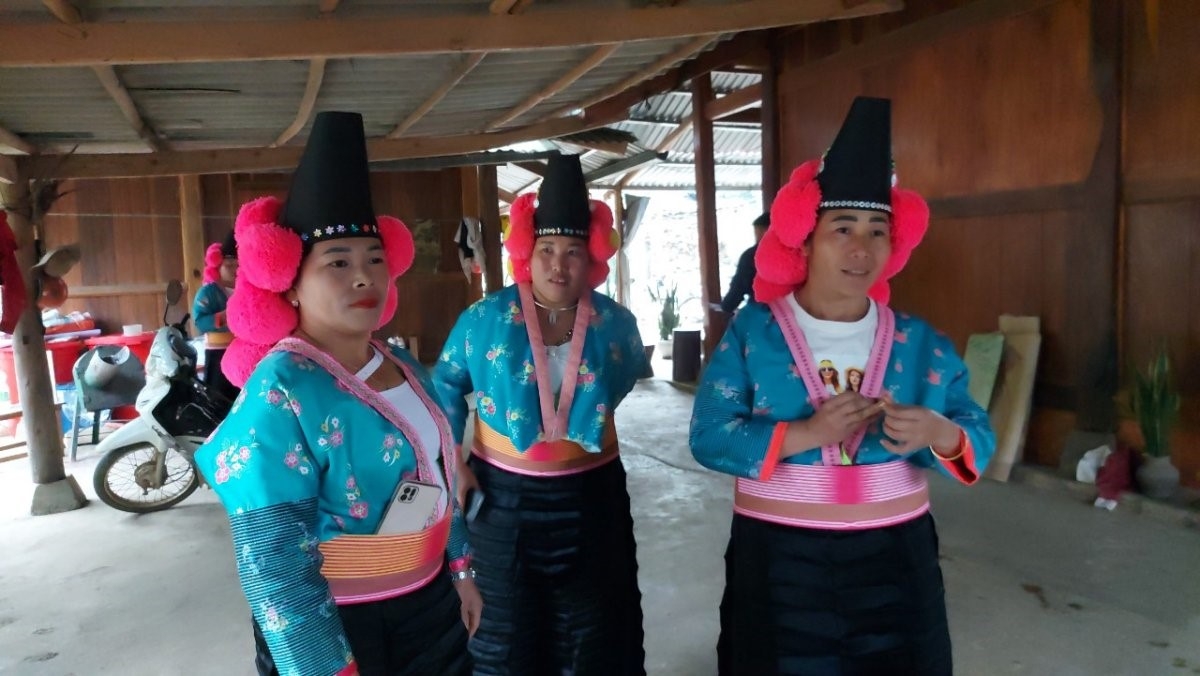
A regular customer from Lai Chau Province, Sung Thi Chia, said, “Many people and I really like the costumes made by Ia because of their distinctive style. So, besides buying them for myself, I also order more to sell to people in my area.”
Ia now sells an average of 120 to 160 traditional costumes a year, earning more than 5,000 USD in profit. This steady income helps support her family and provides capital for reinvestment, allowing her to continue pursuing her passion for the craft.
Ia also shares her skills with others, teaching women and young people in the village. She hopes to help preserve and pass on the cultural identity of the White Mong people to future generations.
Thao A Cua, Vice Chairman of the Co Ma Commune People's Committee, said, “Vi Thi Ia has helped preserve the cultural beauty and traditions of the White Mong people. At the same time, the work provides additional income and creates jobs for other family members.”


