



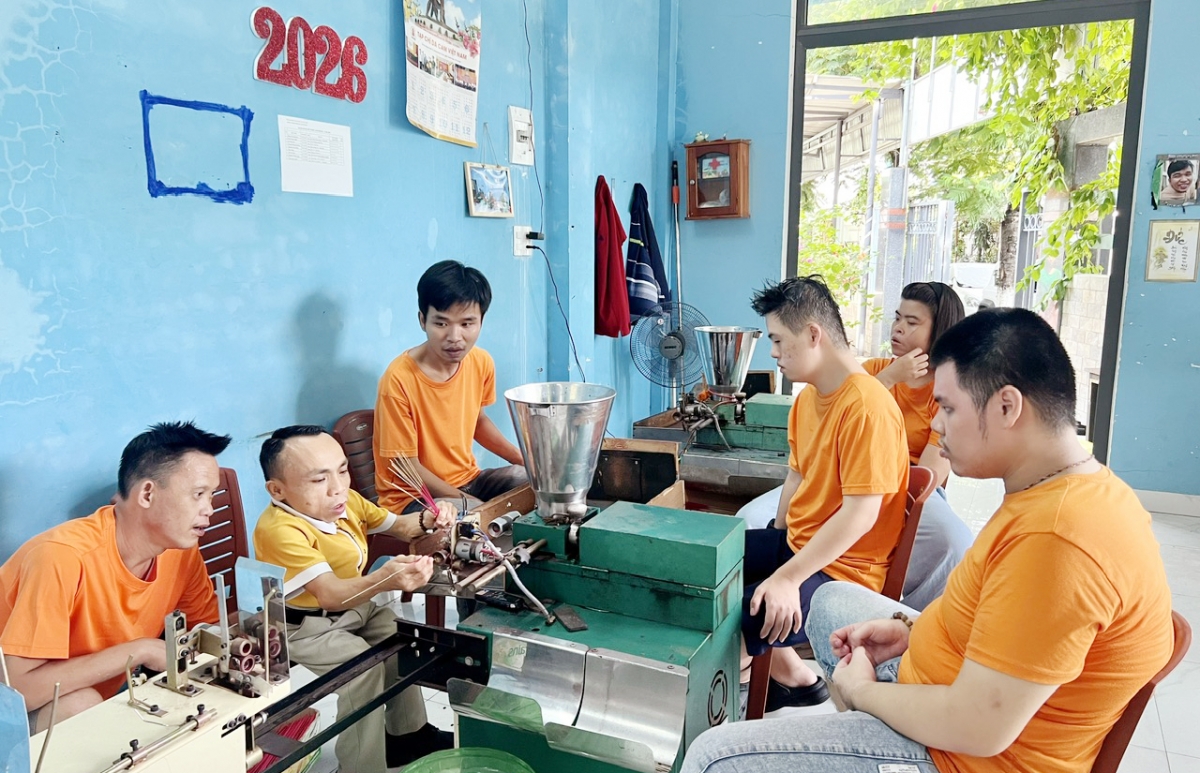
For many victims of Agent Orange/dioxin, even saying "Hello, Teacher" takes tremendous effort. Their words may be slow or slurred, but those simple greetings mark the beginning of another day at Facility 1 of the Da Nang City Center for the Protection of Agent Orange Victims and Disadvantaged Children.
Each morning, teachers pay close attention to every child's expression and mood. Many of the children are emotionally vulnerable, and even small changes can affect them throughout the day. Teacher Phan Thi Thanh said she tries to understand how each child is feeling when they arrive at school.
“They tell me what's bothering them, and I put myself in their place. If something upsets them, they can carry that feeling all day. Sometimes all they need is a hug to know someone understands them,” Thanh said.
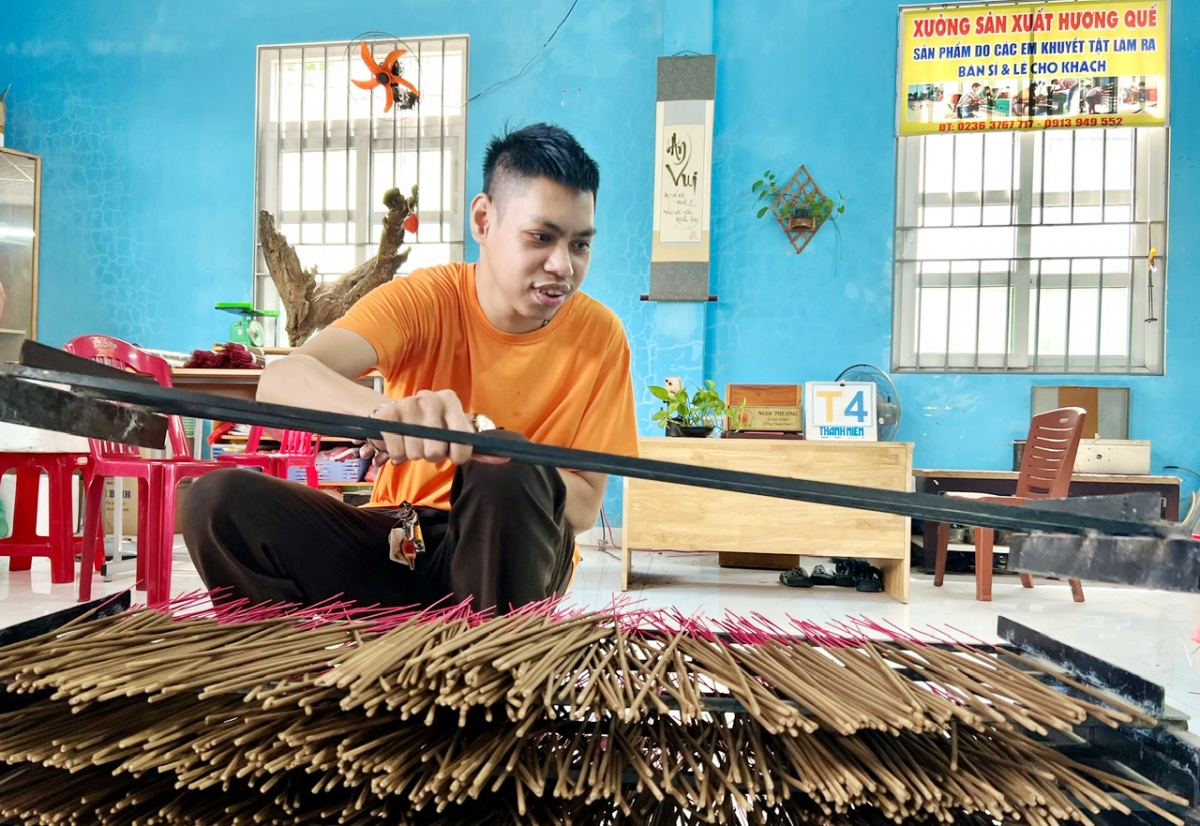
The sound of the school bell breaks the morning silence. One of three care facilities for Agent Orange/dioxin victims in Da Nang, the center currently provides daytime care for 43 children. Most have intellectual disabilities or Down syndrome, while others live with physical disabilities. Besides receiving rehabilitation therapy, they also learn reading and writing, make fabric flowers, roll incense sticks and practice sewing and other handicrafts.
Teaching literacy and vocational skills is a long and demanding process. Many of the children struggle to concentrate because of the lasting effects of Agent Orange/dioxin. They learn slowly, retain little information and often forget what they learned by the following day. Even the simplest task may require repeated instruction, with teachers patiently starting over again and again. Yet every small achievement is celebrated.
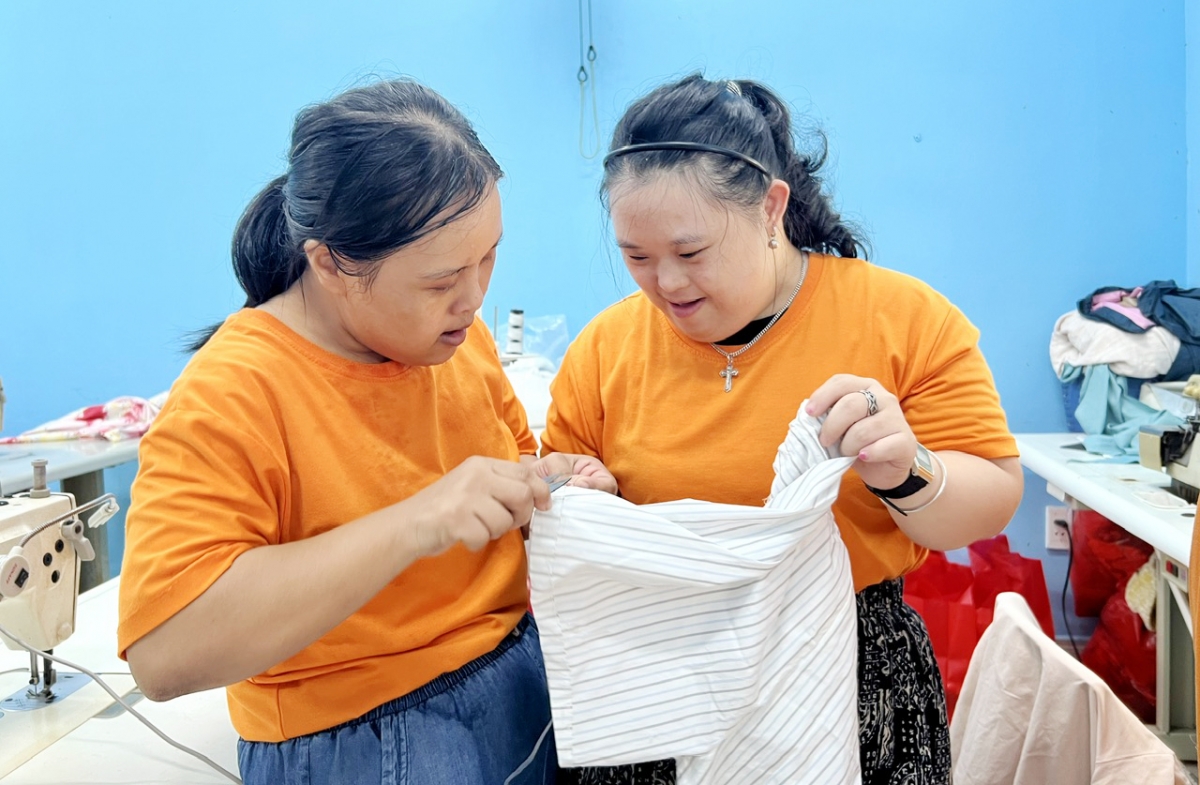
33-year-old Ho Thi Trieu, one of the few students at the center who can communicate verbally, proudly shows off a pair of shorts she has just sewn. “Coming to class is fun. I like sewing pants. In two months I finished one pair of shorts. Made them for my friend, and for Ngan too. Teacher taught Duyen and Trieu to sew,” Trieu said.
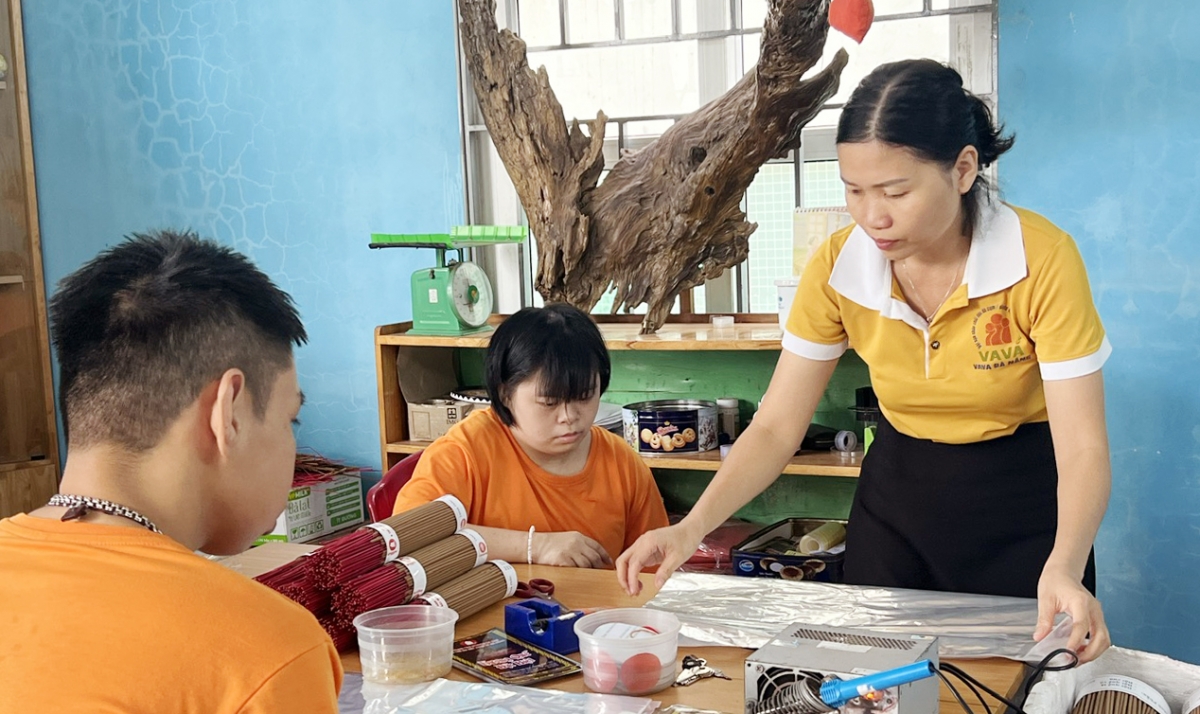
Just a few steps away from the sewing workshop, another class is busy making herbal incense. Leading the lesson is Nguyen Ngoc Phuong, who is also an Agent Orange/dioxin victim.
“I always encourage the trainees to believe in themselves," Phuong told VOV, "When they finish making something and a customer buys it, they're so happy and proud. That's why I tell them to stay confident. Things may not be perfect today, but tomorrow they can be better. Even if you don't get it right now, you'll improve with time.”
The handmade flower arrangements and herbal sachets produced by the students are sold to help raise funds for the center. More importantly, vocational training has helped some students gain the confidence to return to their communities.
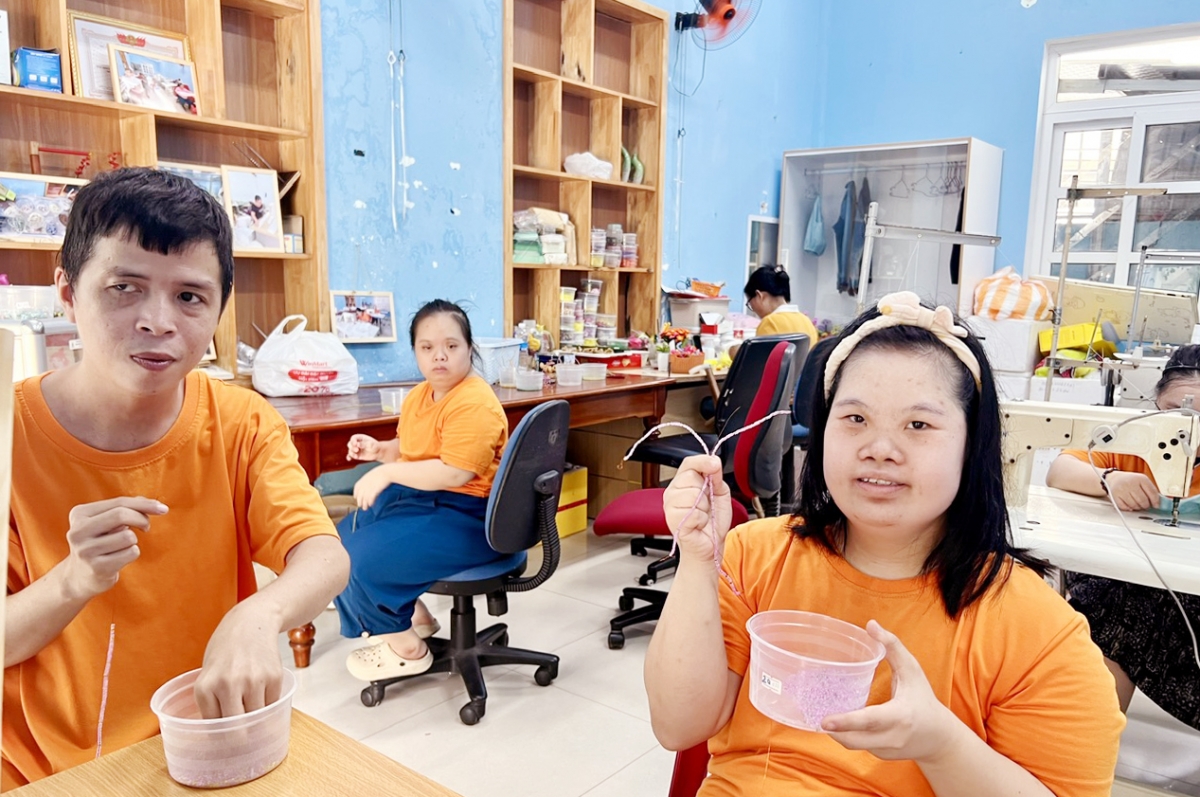
“Many of them don't fully understand or control what they do," said Vo Thi Thu, deputy director of the center. "Our first goal is to help them stay healthy and learn to take care of themselves. We also want them to have a vocational skill so they can become part of the community. It's extremely challenging because most of the people here have severe disabilities. But recently, one of our trainees found a job as a seamstress at a company. That's one of our biggest achievements,” Thu noted.
Attendance is rarely complete at the center. Chronic pain and fragile health often prevent students from coming to class. Even so, teachers carefully record every sign of progress, no matter how small. Their patience and compassion help ease the burdens carried by the students, whose bright, innocent smiles offer hope that, despite the lasting scars of war, a better future is still possible.