







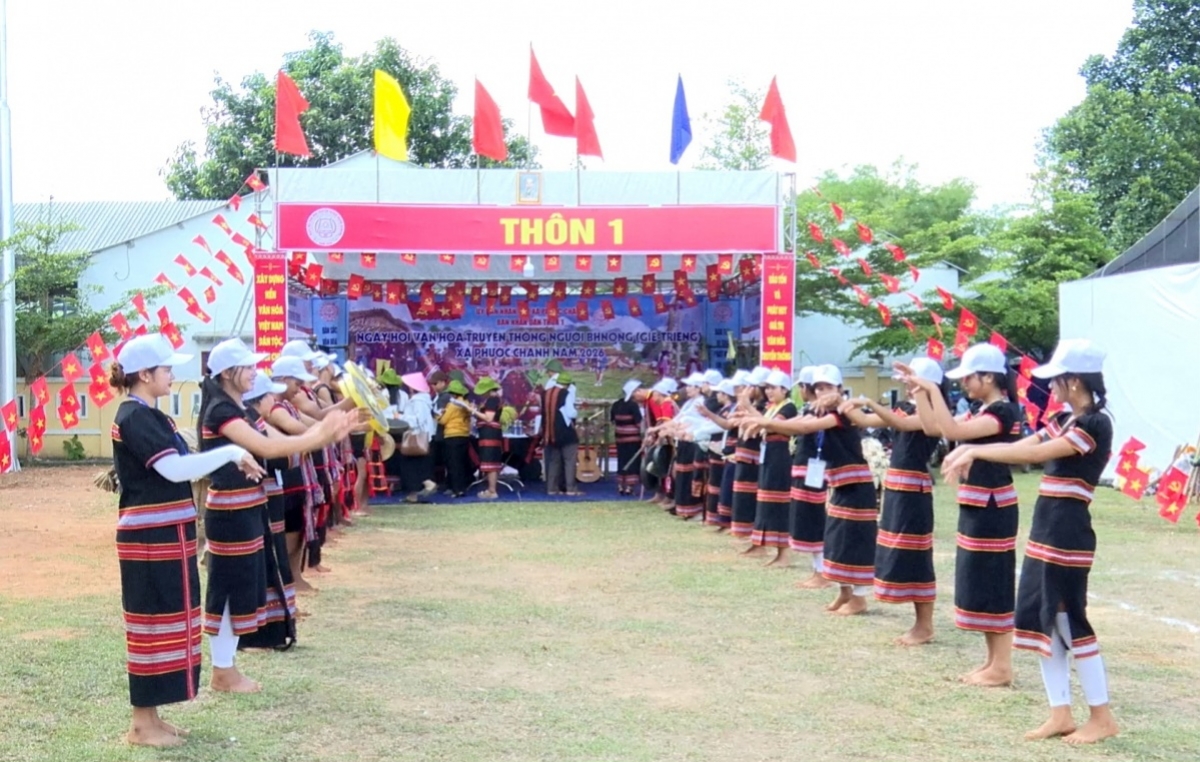
As soon as the upland rice harvest ends, more than 4,000 Bhnong people gather at the Phuoc Chanh Commune Center to take part in a cultural festival. There was no elaborate stage or performance venue. Instead, the festival brings together the everyday sights and activities of Bhnong life: stilt houses, granaries and kitchens rebuilt just as they appear in the villages, a blacksmith’s forge glowing with fire, and looms clacking beside the houses. It is as if an entire Bhnong village has been recreated in the heart of the commune.
“The festival offers an opportunity for us to promote our culture, including gongs, drums and brocade. These are distinctive cultural features of the Bhnong people,” said artisan Le Thi Oanh.
The Bhnong people have a rich cultural heritage closely connected with the forest, from blacksmithing and stilt houses to traditional farming practices such as planting rice in the uplands. All these traditions are recreated at the festival in a vivid and authentic way.
“As a young person, I am very happy and proud to take part in the festival and contribute to preserving my local culture,” artisan Ho Thi Trang said.
Since the two-tier local administration system began operating in July 2025, Phuoc Chanh authorities have paid greater attention to preserving traditional culture. Traditional stone instruments, gongs and antique jars located among local households have been reviewed and inventoried. For them, culture is an asset shared by the entire community.
“We have identified culture as a driving force for development. We are allocating resources to organize traditional cultural festivals,” said Le Dinh Tai, Chairman of the People’s Committee of Phuoc Chanh Commune.
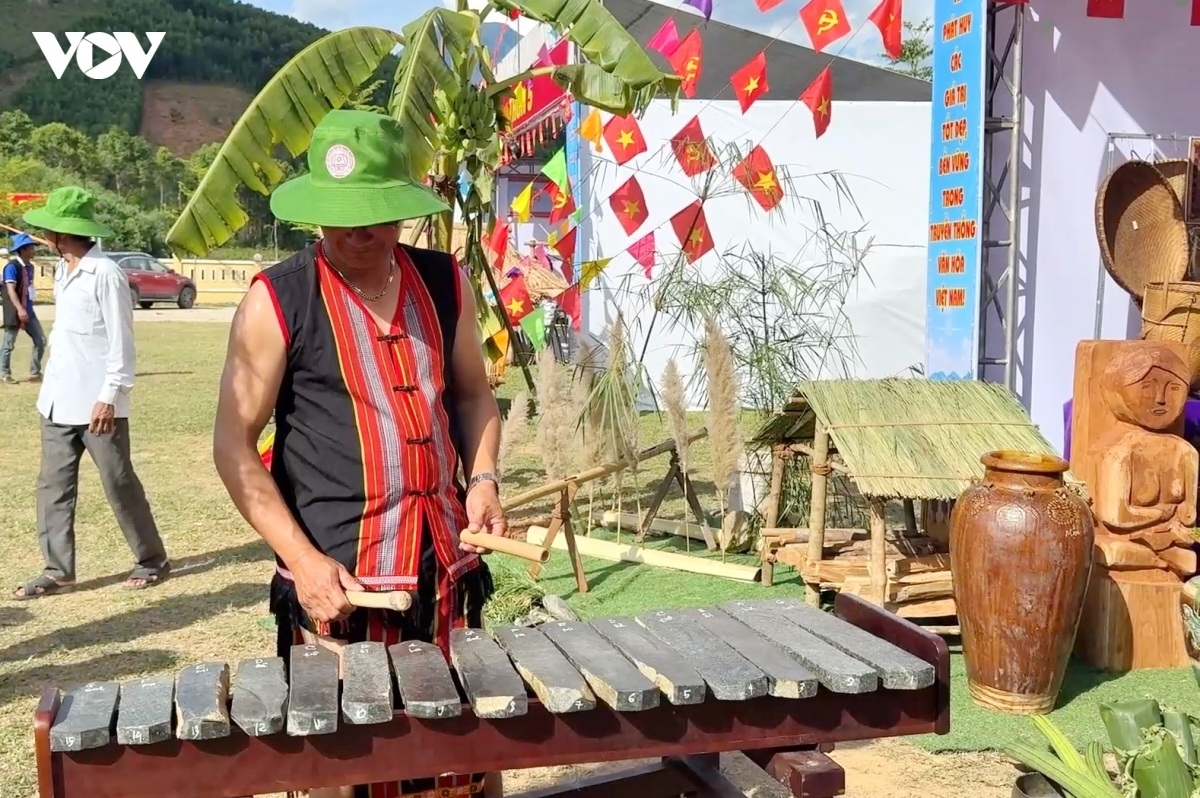
Once at risk of disappearing, the traditional culture of the Cor people in Da Nang’s mountainous communities is experiencing a vibrant revival. Today, festivals and New Year celebrations come alive as Cor men and women proudly don their traditional attire and compete in the resounding rhythms of gong performances. This revival owes much to Meritorious Artisan Duong Lai in Tra Lien Commune. For more than 30 years, he has traveled to villages collecting and restoring folk songs and musical instruments that were thought to have been lost.
“Our cultural identity belongs to us, I have gone from village to village, encouraging people to preserve their distinct cultural identity,” said Lai.
Following the merger of Da Nang City and Quang Nam Province, many traditional festivals have been revived in local communities, with local people serving as both the custodians and beneficiaries of their cultural heritage. This is also the spirit of Politburo Resolution 80 on cultural development.
Nguyen Manh Ha, Director of the Department of Ethnic and Religious Affairs of Da Nang City, said, “We attach great importance to culture and ensure serious implementation of Politburo Resolution 80. In recent years, many communes have put the resolution into practice in very concrete ways.”
From small villages in the highlands, a greater aspiration is taking shape: to transform Da Nang into a city of heritage and creativity, rich in cultural identity, a place where every resident plays an active role in cultural life and feels a true sense of ownership of the heritage they help preserve.


