







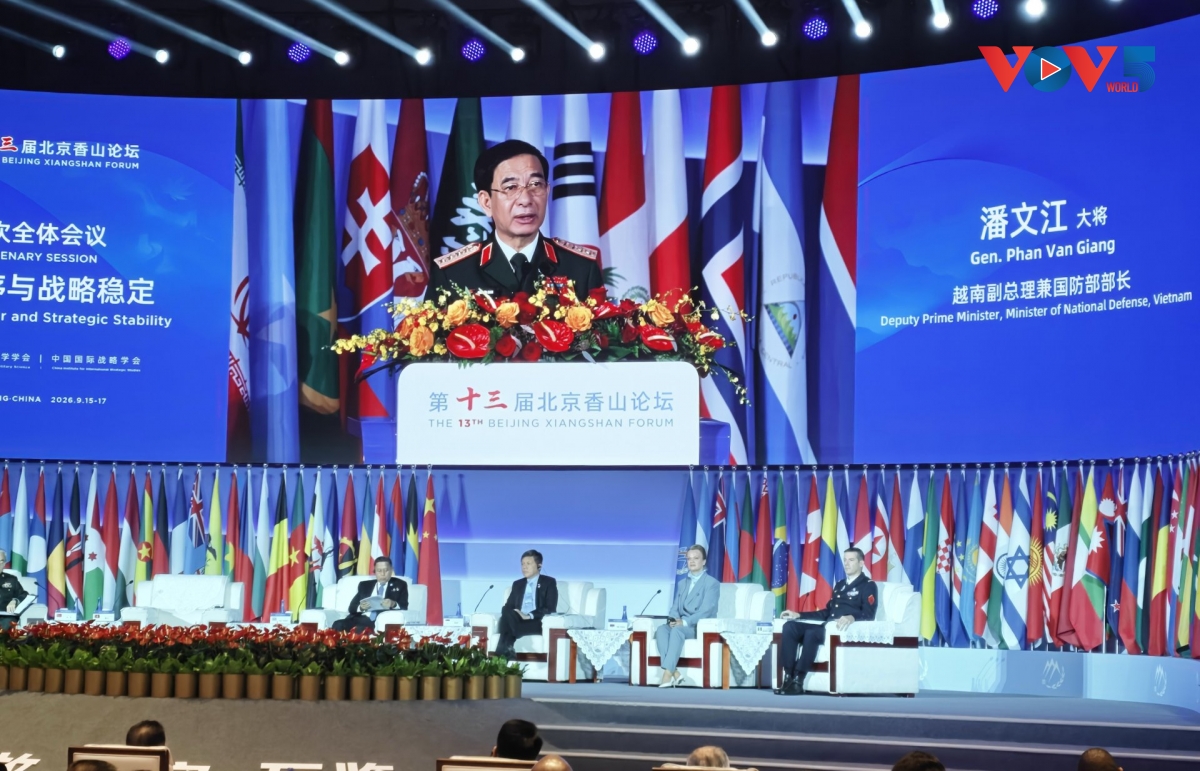
Speaking at Plenary Session 1 themed "International Order and Strategic Stability", General Giang said the world is experiencing landmark changes that are complex and unpredictable, adding peace and stability are the common aspirations of the international community.
“Our commitment to and desire to promote multilateralism also reflect a wish to build a fair and inclusive international order grounded in international law and institutions. Achieving such a fair and inclusive international order requires strategic stability—an environment where peace is guaranteed, nations treat each other as equals with mutual respect and engage in mutually beneficial cooperation, and issues are resolved through dialogue based on respect for international law and institutions, the UN Charter, and regional commitments,” General Giang said.
To consolidate the foundations of the international order and build strategic stability, the Vietnamese Deputy Prime Minister and Minister of National Defense emphasized the need to address four fundamental issues. First, nations must demonstrate goodwill, sincerity, strategic trust, and shared responsibility. Second, international law, including the UN Charter, must be respected as the basis for governing relations between states. Third, the role of multilateral mechanisms must be upheld, with the UN at the center of global security governance. And fourth, there must be solidarity, consensus, mutual assistance, and sharing.
“Vietnam unwaveringly respects and fully implements the Declaration on the Conduct of Parties in the East Sea (DOC), while also seeking to accelerate negotiations toward a Code of Conduct in the East Sea (COC) that is substantive, effective, and feasible. Regarding the East Sea issue, Vietnam remains committed to peaceful resolution based on respect for international law, including the 1982 UN Convention on the Law of the Sea (UNCLOS 1982),” General Giang added.
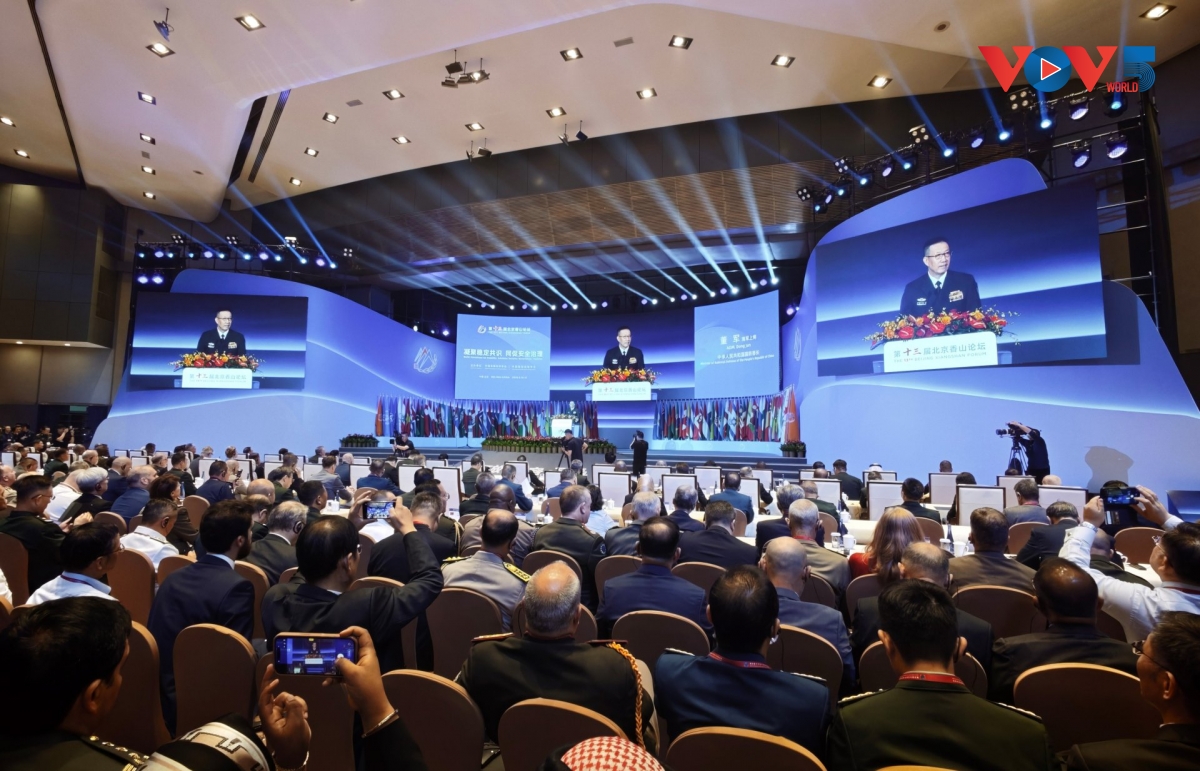
The 13th Beijing Xiangshan Forum, held from September 15 to 17 under the theme “Build Consensus On Stability, Advance Security Governance Together” was attended by nearly 100 official delegations, as well as experts and scholars from various countries, regions, and international organizations.


