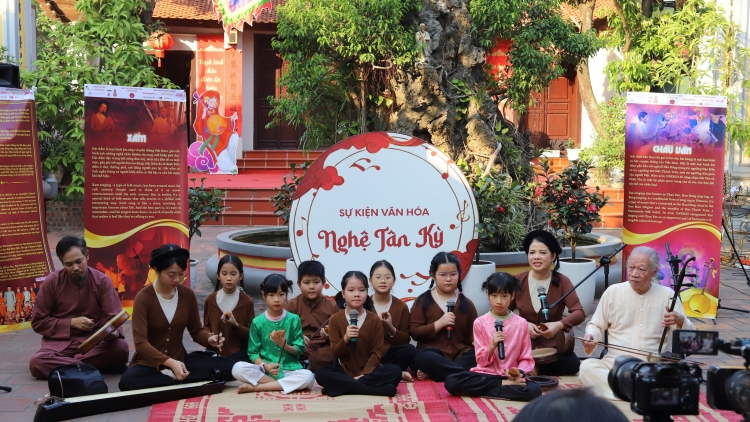




“After 60 years, I can finally hold the lute again. But many of my peers have passed away. Who is left to truly listen? I play, but for whom? It’s a great pity that the instrumentalists and connoisseurs of the past who understood the drumbeats are nearly all gone,” said master dan daymusician Nguyen Phu De.
The life story of the master musician mirrors the rise, decline, and revival of Ca Tru, a traditional Vietnamese performing art that has closely linked to the rural regions of northern and north-central Vietnam.
Origins and the sacred sanctuaries of Ca Tru
The name Ca Tru, which appeared in around 15th century- during the Later Le Dynasty, according to folklore researchers, originated from the use of bamboo tokens (called Tru) to reward singers during competitions at the Thang Long imperial citadel.
Associate Professor Dr. Nguyen Thuy Loan, a leading Vietnamese musicologist and researcher, said for decades, there have been two perspectives about when Ca Tru came to exist.
“The first suggests that Ca Tru appeared during the Ly Dynasty (11th to 13th century), while the second, which I support, argues it emerged in around 15th century- during the Later Le Dynasty. Ancient art provides us with definitive data through drawings and sculptures of musical instruments. Based on these artistic records and the legends of the Ca Tru artists, we can determine the period when communal houses, the primary venues for this art, were first built,” Dr. Loan explained.
Co Dam in Ha Tinh province is considered the ancestral home of Ca Tru. Legend has it that a talented man named Dinh Le met two fairies who gave him a piece of wootung wood and a pattern to create the dan day (three-stringed lute). His music cured the muteness of Bach Hoa, a mandarin's daughter, and their union, combining his lute with her chopsticks’ rhythmic beat, gave birth to the art form. To this day, Co Dam preserves the strongest royal imprints of Ca Tru.
From Co Dam, Ca Tru spread to Lo Khe in Hanoi’s outskirts. According to annals from 1476, Dinh Du, the son of Dinh Le, and his wife Duong Hoa came here to teach the villagers to sing.
The Lo Khe music guild is famous for its strict organization and its tradition of “co dau noi”, singers born into the profession who possess masterful skills.
Dr. Nguyen Xuan Dien, a Ca Tru researcher, said: “The Dong Ngac communal house is an ancient site closely associated with Ca Tru. The Sino-Nom Studies Institute archives the Le family annals (A1855), which contain an article by Dr. Le Duc Mao written before 1500. This is the oldest known document to mention the words Ca Tru.”
“During the village festival on the 9th, 10th and 11th of February of the lunar calendar, music guilds gather here to perform. Following the show, the ‘quan vien’ (praise drummers) representing the eight hamlets take turns reciting poems to reward the singers. Dong Ngac communal house is perhaps the most famous spot associated with Ca Tru,” Dr. Dien noted.
Van Dinh, in the suburbs of Hanoi, is another sanctuary for Ca Tru singing. Over 300 years ago, Ca Tru was very popular here, led by the Duong family, which included writers Duong Khue and Duong Lam, who elevated the hat noi (recitative) style to a pinnacle of national literature.
A 17th-century relief carving of a person playing the dan day (three-stringed lute) at Hoang Xa communal house in Van Dinh is proof of the popularity of Ca Tru here.
The essence of the craft, courtly evolution, and decline
Ca Tru entered the royal court as Chuc Ho singing. During the Nguyen Dynasty, it was performed on commemorative occasions in the palaces of the king and his lords. In those performances, there was more dancing than singing, and elaborate costumes and props to distinguish it from folk dancing. This art is inseparable from literary figures like Nguyen Cong Tru and Cao Ba Quat, who perfected hat noi as a unique national poetry form.
Ca Tru is a sophisticated synthesis of music and poetry. Its instruments are simple yet contain deep secrets.
Hoang Khoa, an artist of the dan day, said: “In any discussion of Ca Tru, the three-stringed lute is unavoidable. Elders taught instrumentalists to play a traditional prelude which gives the singer time to adjust her costume and prepare her mind for the performance.”
Meritorious artist Nguyen Van Khue said: “The dan day has no bottom, which creates a deep, resonant accent. Because it is bottomless, each player must manually create that depth of sound. It was the ‘quan vien’ who supported both the player and the singer. Their drumbeats were effectively measured in currency. We must play with such precision that we touch the heart of the drummer, earning the tokens that serve as our livelihood.”
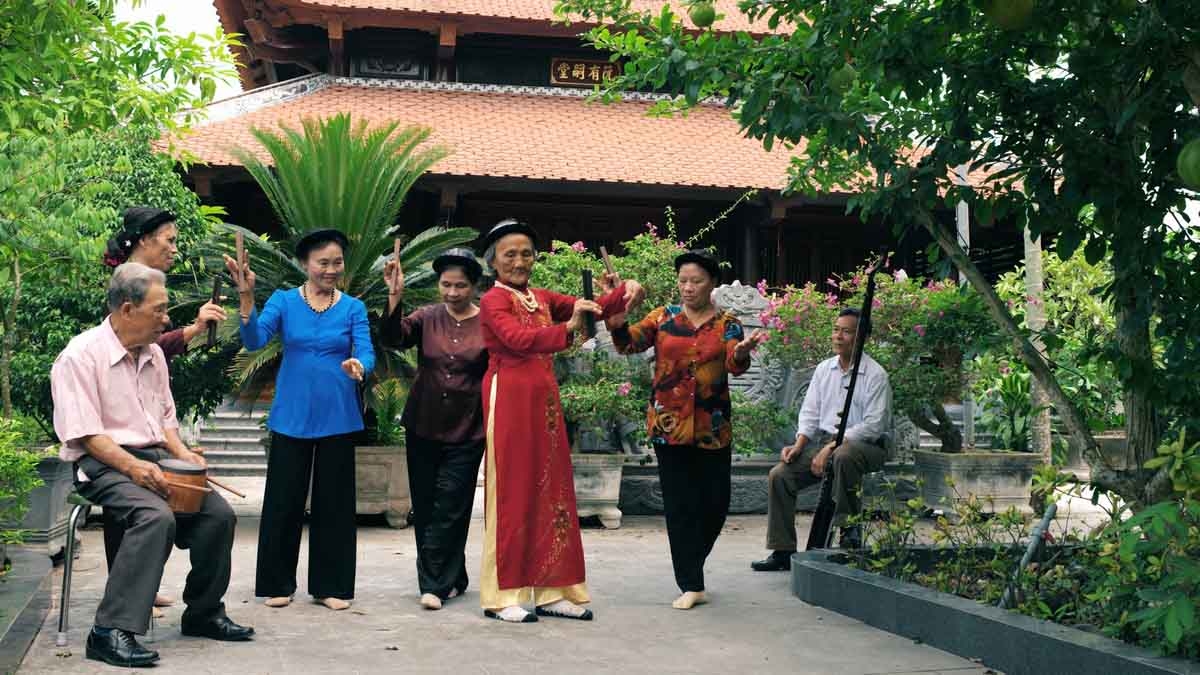
The phach (clappers), consisting of two sticks representing yin and yang, create an ethereal, flickering rhythm. While northern styles use horizontal clappers, the Ca Tru of Quang Binh (now Quang Tri province) features a vertical "shaking" style, famously performed by the late artist Le Thi Lieu.
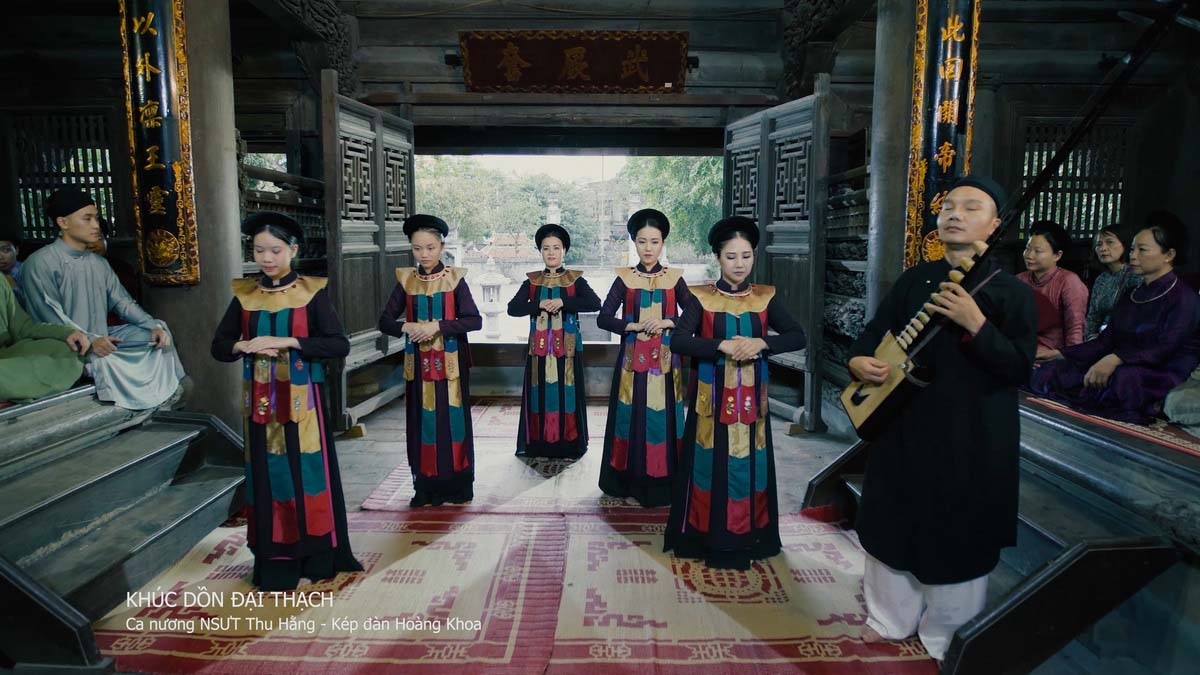
A standard Ca Tru performance involves three performers: the Dao (singer and clapper player), the Kep (lute player), and the Quan vien, the audience member who holds the ‘praise drum’ to critique and reward the artists.
In the early 20th century, Ca Tru moved from rural communal houses to urban theaters in Hanoi, several on Kham Thien street with renowned cultural venues where scholars, poets, intellectuals and affluent patrons gathered to appreciate refined performances of poetry and music. At its height, dozens of singing houses operated in the area, making Kham Thien the artistic center of urban Ca Tru.
Yet this flourishing period also marked the beginning of the genre's decline. As commercial entertainment expanded, many singing houses increasingly emphasized social companionship over artistic excellence.
The image of the co dau once a highly trained female artist, became blurred with that of entertainment hostesses, giving rise to the derogatory term co dau ruou or wine-house singing girls.
It was only when Professor Tran Van Khe returned and reunited with masters like Quach Thi Ho that the clappers began to resound once more.
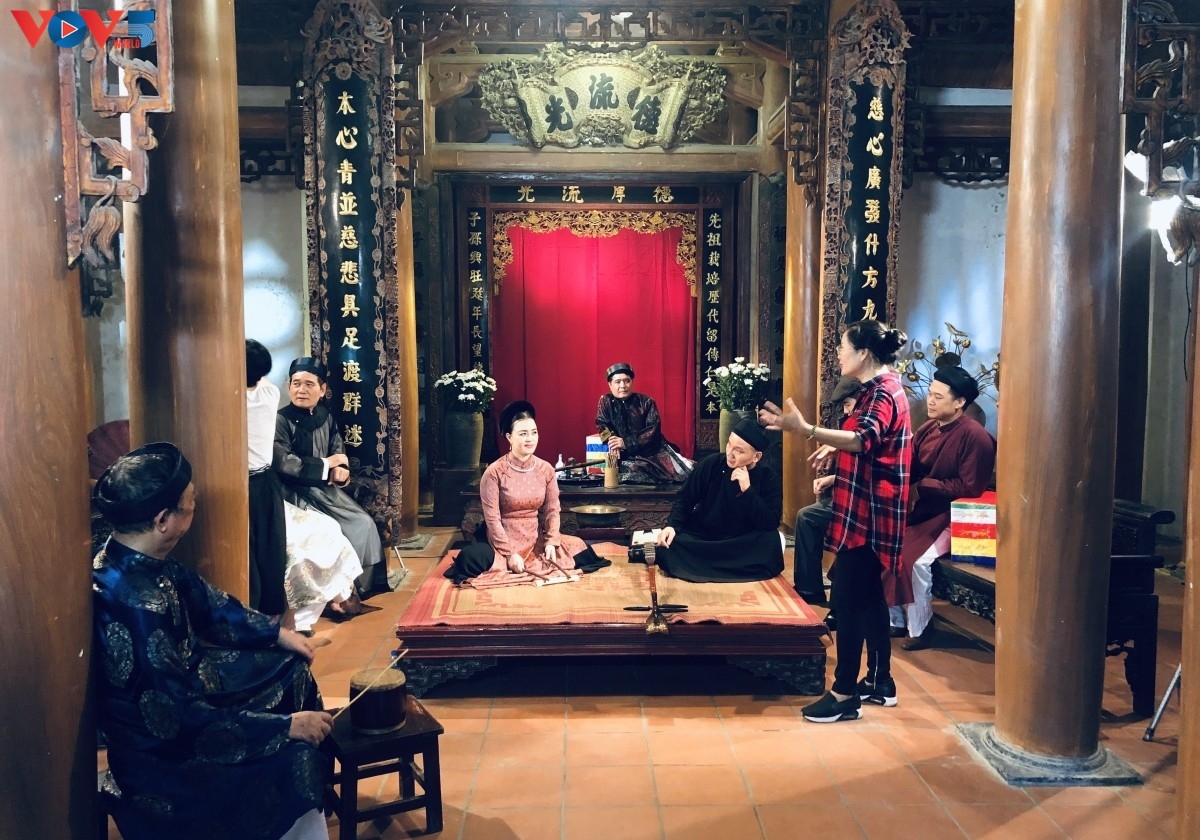
"A millennium of castanet rhythms", documenting the revival
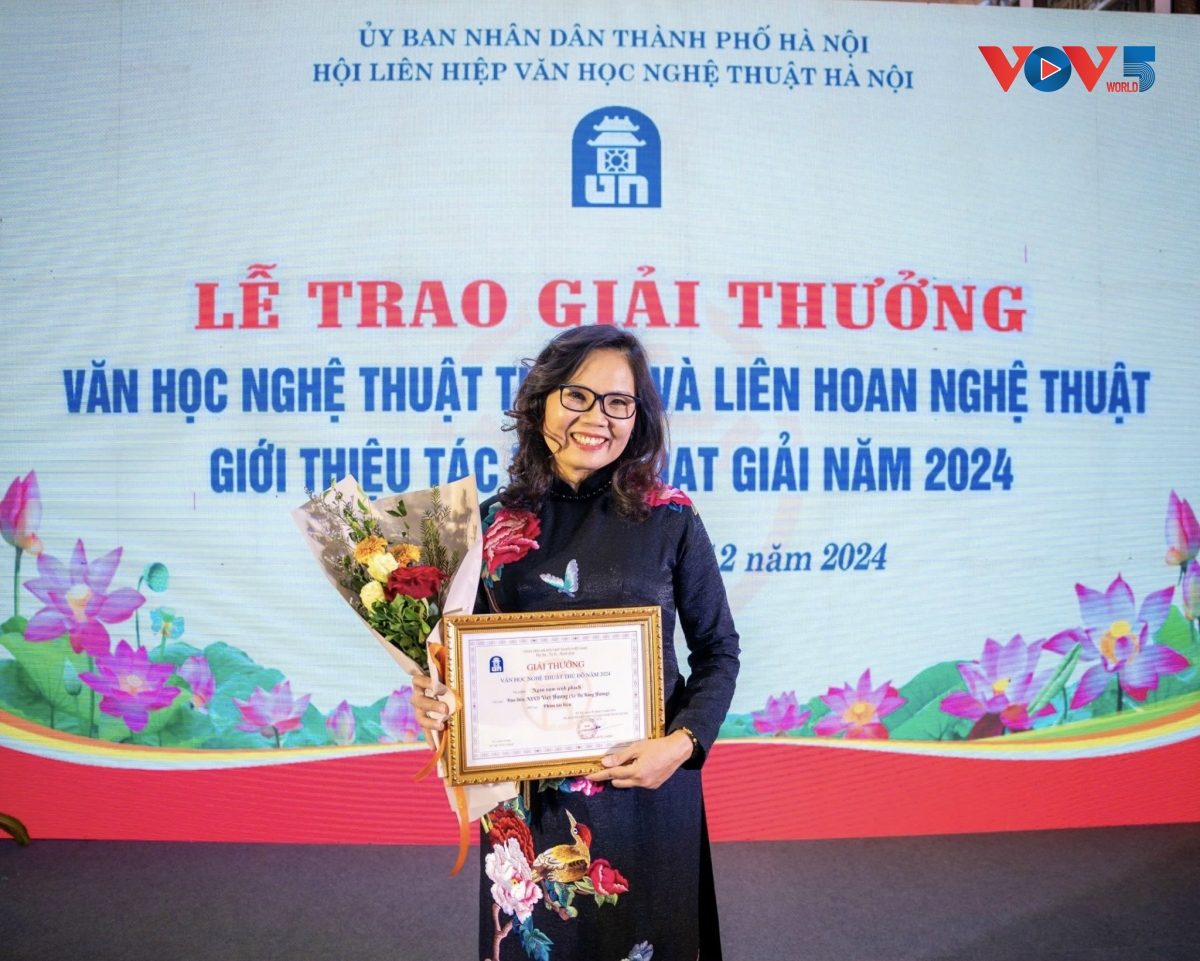
The documentary “A millennium of castanet rhythms”, directed by People’s artist Viet Huong, was born as a tribute and an effort to rescue Ca Tru.
For Huong, this was a unique challenge. Her biggest contribution is insisting on authenticity. She reconstructed early 20th-century Ca Tru singing sessions according to strict standards. Her film takes viewers through the ups and downs of Ca Tru, from its golden age to periods of decline to modern efforts at revival, while analyzing the key elements of Ca Tru artistry.
“This is a documentary film, but it includes reconstructed elements, such as the story of the origin of Ca Tru,” said Huong, added, “I was able to recreate the story of how the ‘dan day’, a long-necked lute with three silk strings and 10 frets, came into being, which is part of the film’s artistic reconstruction. As for the elements that reflect historical reality, I relied on the cultural heritage left by our ancestors, including ancient manuscripts and carvings found in temples and communal houses.”
She took Dong Ngac communal house and Van Dinh communal house in Hanoi as an example that there are still carvings dating back 300 years that depict people playing the dan day.
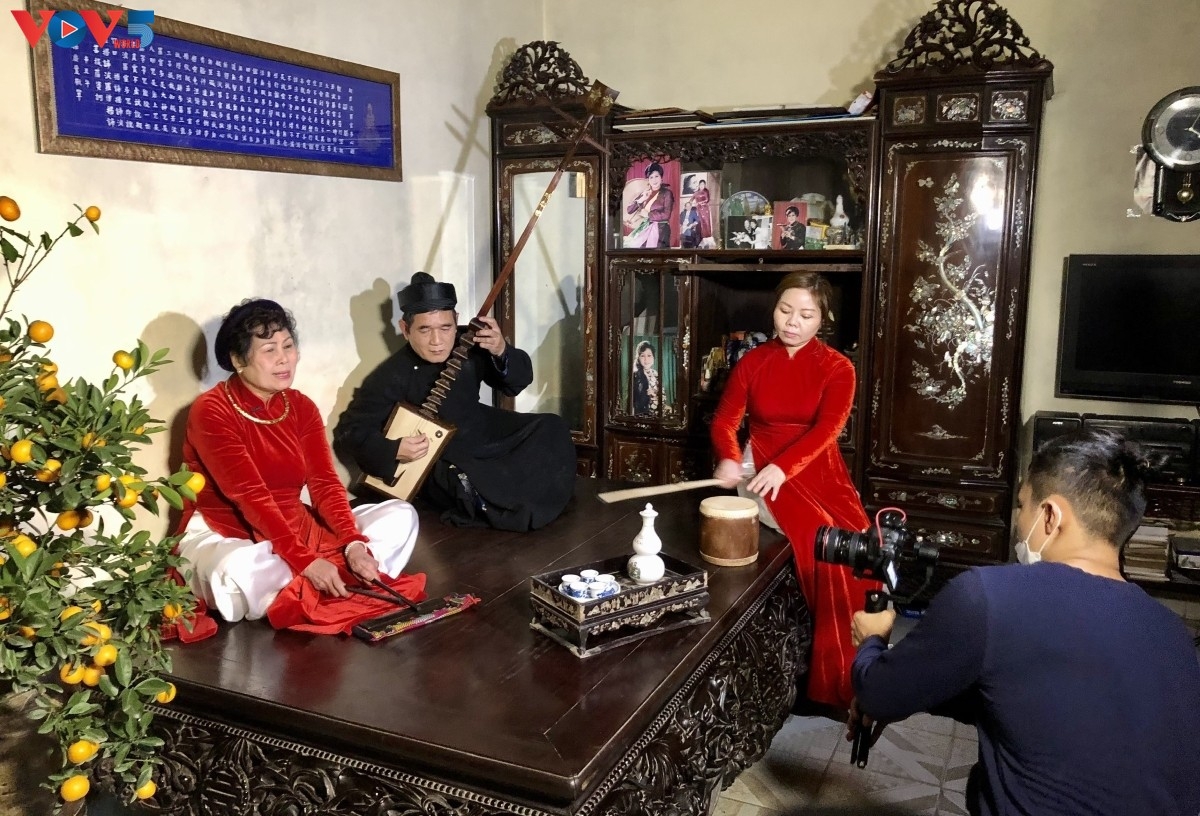
Through the stories of Ca Tru masters such as Quach Thi Ho, Le Thi Lieu, Meritorious Artist Bach Van, and dan day player Nguyen Phu De featured in the film, audiences gain a deeper understanding of the lives and dedication of those who have devoted their lives to this art form.
Huong explained: “After renowned Vietnamese-French Professor Tran Van Khe returned to Vietnam, he met with veteran Ca Tru singer Quach Thi Ho, recorded her performances, and presented them to the International Music Council. It was only after Ca Tru was officially recognized as an intangible cultural heritage that efforts to revive it truly began.”
“However, by then master artists had already grown very old. A veteran musician once said that 60 years had passed, and now he could play the musical instrument again, which really moved me. I truly hope people will join hands to preserve and develop Ca Tru, a precious art form that our ancestors have passed down to us,” Huong told VOV.
Huong’s meticulous attention to detail moved Mai Tuyet Hoa, Director of the Center for Preservation and Development of Traditional Arts. Ms Hoa said: “In the documentary ‘A millennium of castanet rhythms’, Ca Tru is viewed across different dimensions of space and time.
“By placing Ca Tru in a multicultural context, and especially through the stories of the people involved, the director tells the story of the art form in an engaging way. As someone who works to preserve this heritage, I realize that no single person can fully encompass it all. But through this film, I feel as if we are truly living the experiences that our ancestors once lived,” said Hoa.
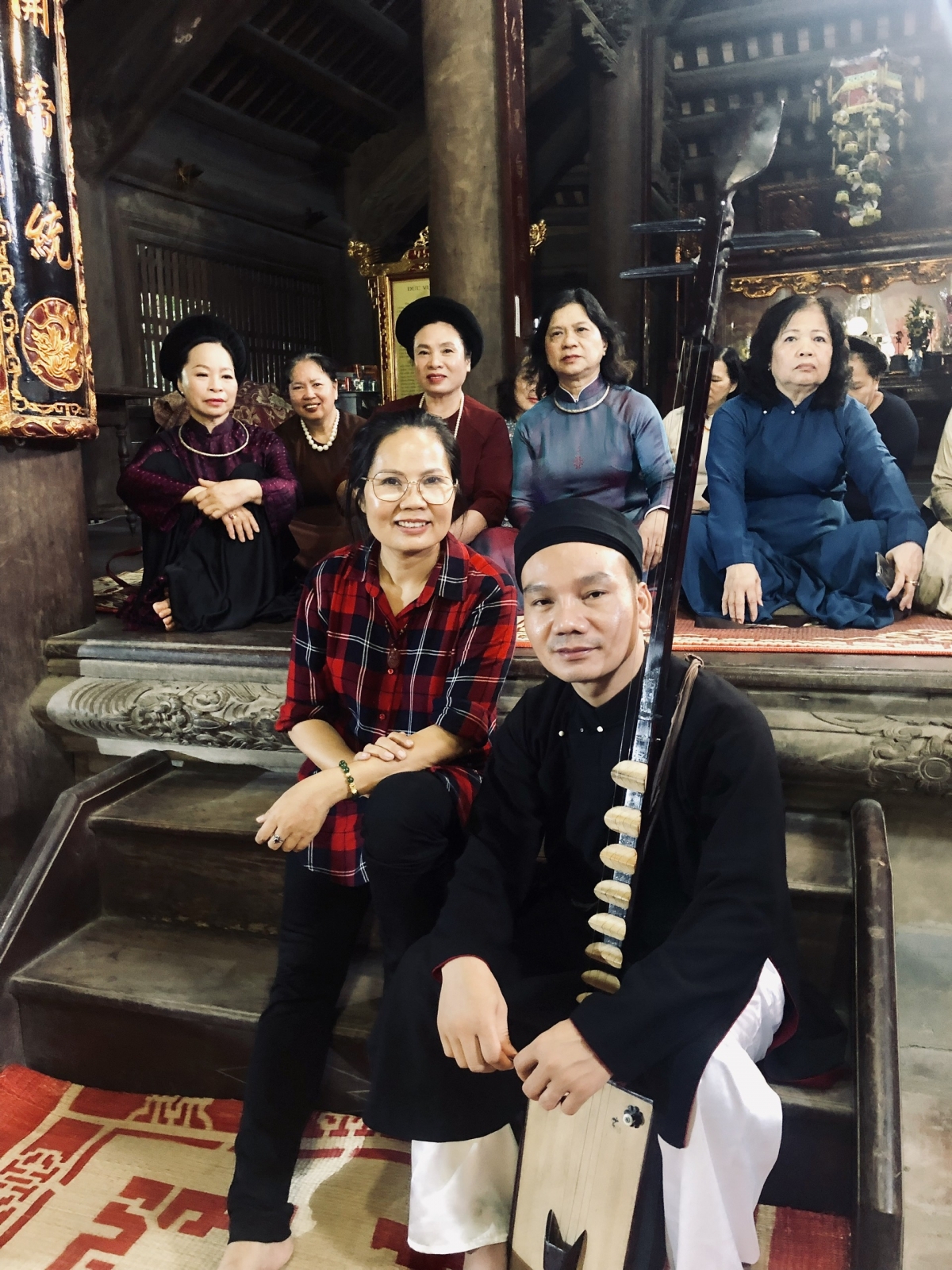
Huong said she believes that for the youth to accept Ca Tru, it must be presented in its most attractive and sophisticated form.
She recalled: “To help younger generations appreciate Ca Tru, we needed to present it in an engaging and appealing way. We recreated a traditional singing session from the early twentieth century, in which female singers performed Ca Tru live.”
“The only staged element was the audience, officials and scholars from the past, whose nods and expressions of appreciation became the highlight of the performance,” Huong noted.
The journey of Ca Tru, from royal court to folk village, and now to the silver screen thanks to People’s Artist Viet Huong, shows the enduring vitality of this heritage. The clappers are now supported by dedicated artists and a community that’s learning to better appreciate the ancient soul of the nation.