



Each of these changes may look very different on the surface. But together, they point to a deeper transformation: a shift in how agriculture in Vietnam is produced, managed, and connected to the market.
In an urban environment like HCM City, where land is limited, agriculture is being redefined. For engineer Nguyen Ngoc Thanh, Director of MEGA Biotechnology Company, farming is no longer about adapting to nature, but about managing it. Inside a compact aquaponics system, fish and vegetables grow together in a closed loop, where water, nutrients, and waste are continuously recycled. Even on a very small scale, the efficiency is striking.
Thanh said: "This is a closed-loop system that doesn’t discharge waste and makes full use of nutrients. Nitrogen moves through the system, from fish to plants, and continues circulating without polluting the environment. Productivity is also quite high. Just one cubic meter of water can produce 58 kilograms of fish or more. At a larger scale, the economic value can be very significant."
From that foundation, the model is expanding beyond freshwater systems. Using artificial seawater and salt-tolerant plants, Thanh and his team are now experimenting with raising squid, a species typically found in open seas, inside land-based tanks. What used to depend on natural conditions is now controlled, monitored, and reproduced. This marks the first shift: agriculture is no longer left to chance, but increasingly designed as a system.
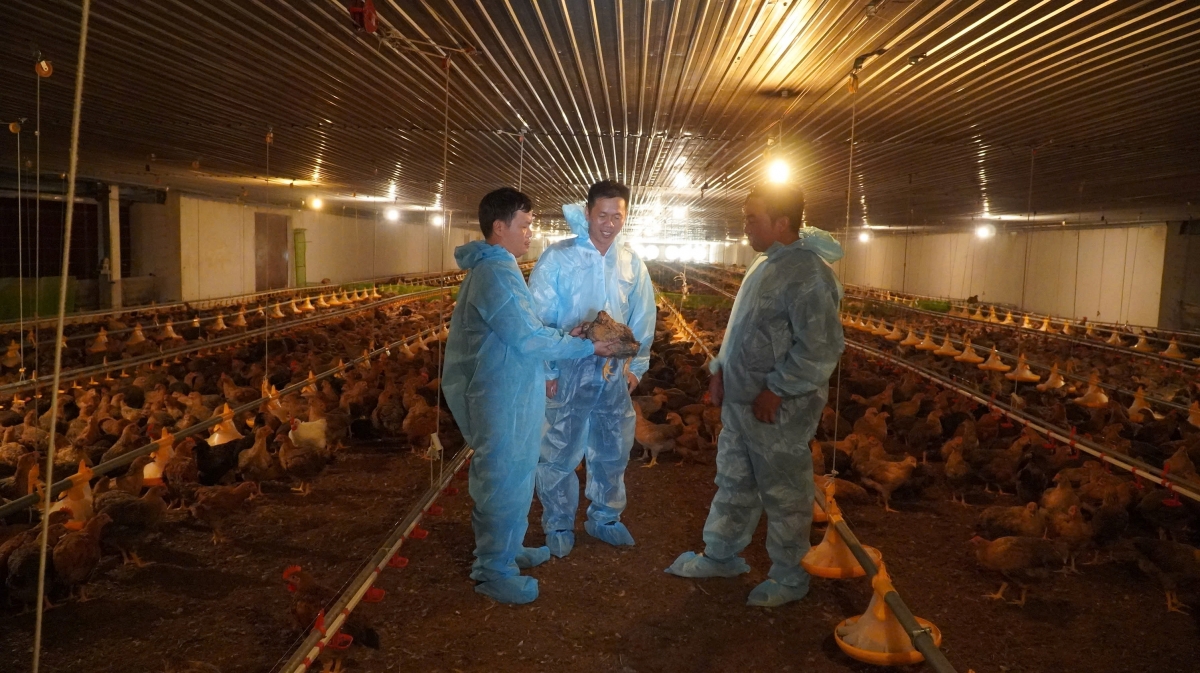
In Phuoc Hoa commune, on the outskirts of Ho Chi Minh City, a large poultry farm is applying technology to maintain stability across hundreds of thousands of domesticated fowls. Every stage of production, from feeding to temperature and humidity, is automated and continuously monitored.
Farm staff Nguyen Thanh Tung explains how technology has changed their daily work: "In the past, we had to do everything manually, from feeding to cleaning and monitoring. Now, with automated systems, we just operate through a control panel. It reduces a lot of physical work and allows us to spend more time focusing on the health of the flocks."
Each production cycle can raise around 400,000 chickens, with loss rates kept at just 3 to 5 percent. Strict biosecurity measures are applied at every stage, from disinfecting vehicles to monitoring animal health, ensuring stable production even in the face of disease risks.
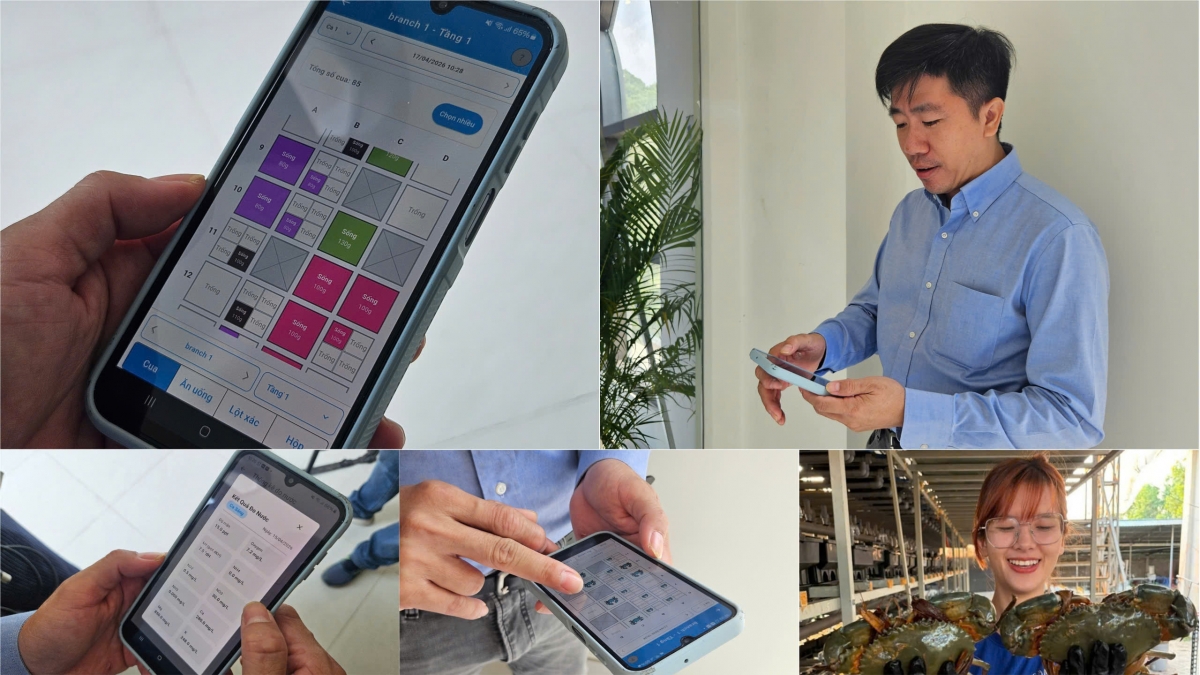
In Dong Nai province, soft-shell crab farming is no longer left to timing and intuition. At a farm operated by Seamorny Company, the entire process, from water quality to feeding cycles, is monitored through sensors and software, creating a closed and controlled environment for each individual crab.
For Le Mai Tung, Director of the company, the most critical change is the ability to control the exact moment that determines the product’s value. Tung said: "If crabs are raised in natural ponds, when they molt, they hide, and it’s almost impossible to harvest them at the right time. In open systems, there are also risks of contamination and antibiotic residues. Only with a fully controlled process can we meet strict export standards, and that’s when the product value increases significantly."
Thus, in traditional conditions, soft-shell crabs are difficult to harvest at the precise moment they shed their shells, a window that may last only a few hours. Missing that moment means losing most of the product’s value. But with AI-supported systems, farmers can track growth cycles in real time and identify that “golden window” with far greater accuracy.
Labor efficiency has also changed significantly. Where traditional farming might require three workers to manage a thousand crabs, automated systems now allow a single operator to oversee around two thousand. More importantly, survival rates have increased dramatically, from about 10 percent in natural conditions to over 90 percent in controlled systems. What used to be uncertain is now measurable, predictable, and scalable. And this is where data begins to transform agriculture, not just by increasing output, but by capturing value at the right moment.
This is the Sunday Show. Today we are telling you how technology is reshaping Vietnam’s agriculture.
In southern Vietnam, banana plantations are beginning to move away from handwritten logs toward digital management systems. Each batch of bananas is now tracked, from fertilizer use to labor costs, creating a detailed record of production that can be analyzed and improved over time. For Nguyen Quan Huy, Director of Huy Long An Company, this is a very promising direction. Huy said: "Now we can clearly track the cost of each batch, from fertilizers to labor. In the next few years, when we have enough data, we expect to optimize production and better control costs."
Here, data is no longer just a tool for monitoring. It becomes the basis for management, helping farmers understand not only how to produce, but how to operate more efficiently. What is emerging is not just a set of individual models, but a more connected system of agriculture. Nguyen Thanh Hien, Deputy Head of the Management Board of Ho Chi Minh City High-Tech Agriculture Zone, says this shift is gradually linking different stages of production into a broader value chain.
“We have transferred high-tech agricultural solutions to more than 70 organizations and individual farmers, helping them apply advanced technologies in production and improve efficiency. At the same time, these technologies have been introduced to provinces in the Central Highlands, the South-Central Coast, the Mekong Delta, and the Southeast Region. This has helped strengthen regional linkages and foster the development of high-tech farming zones, as well as integrated agricultural value chains – from production to processing and distribution,” said Hien.
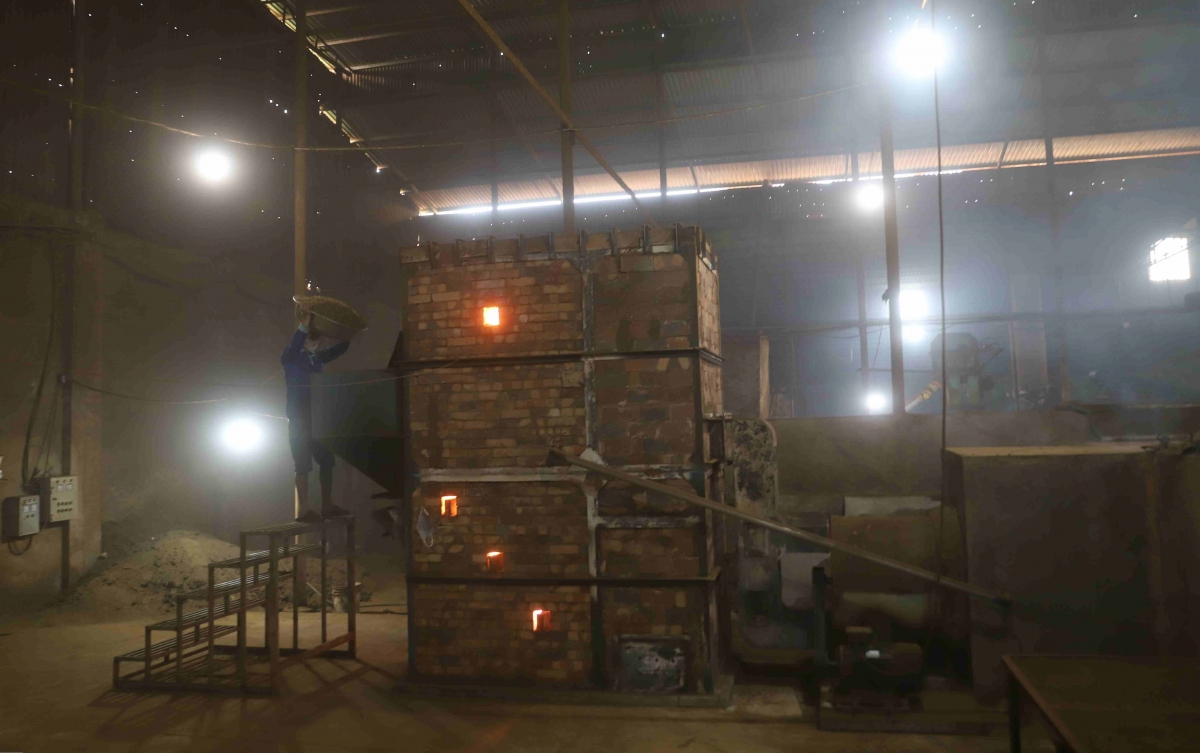
That connection becomes most visible after harvest, where value must be protected. In Dak Lak, Vietnam’s largest coffee-growing region, the challenge is no longer just production, but preserving quality—especially during long periods of rain. Traditional sun-drying methods are becoming less reliable, increasing the risk of uneven quality.
In response, farmers and processors are turning to modern drying systems that use controlled heat and airflow. For farmers like Huynh Dinh Cuong, the new method has made production more predictable. "In the past, we depended on the weather. If it rained, the coffee could be affected. Now, with drying systems, the beans are more uniform, less likely to develop mold, and the quality is more stable," said Cuong.
If production is where value is created, then processing is where that value is protected. Agriculture in Vietnam is no longer driven only by experience, but increasingly shaped by systems, where production is controlled, decisions are based on measurable data, and value is managed across the entire process. From the farm to the market, that system is taking shape.