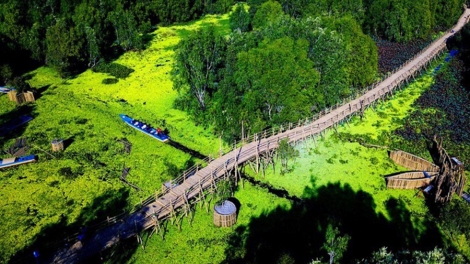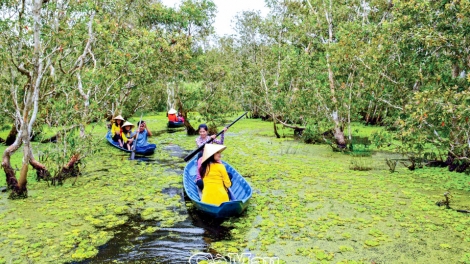




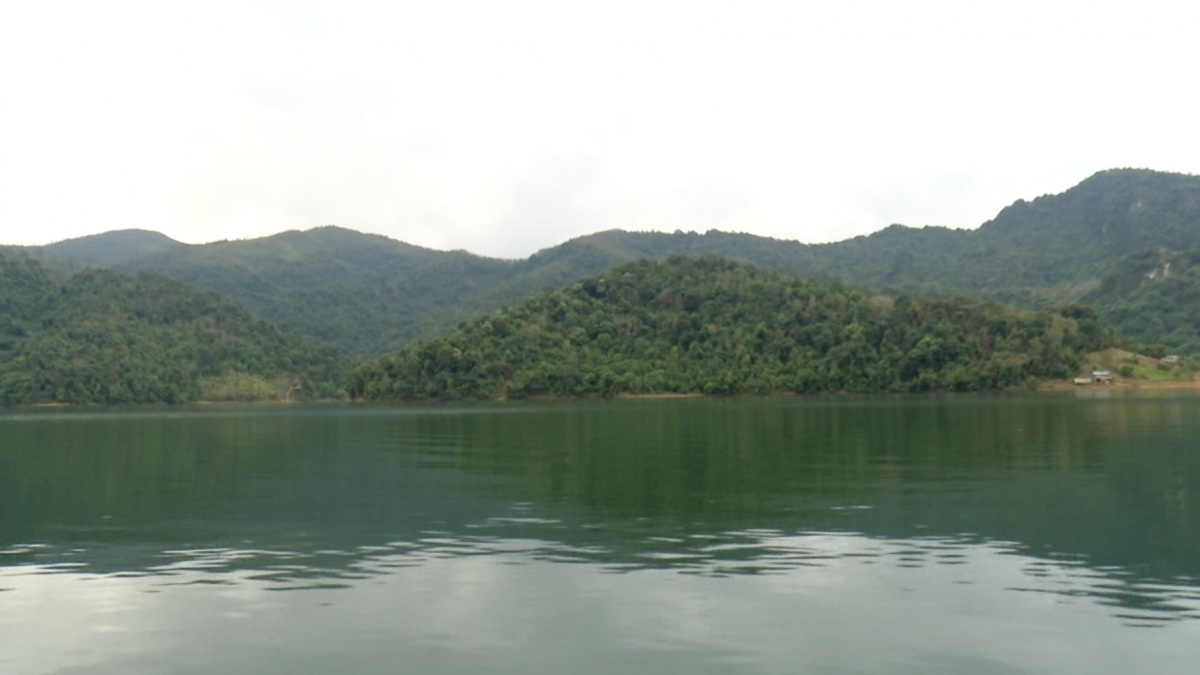
VOV explores the persistent “fire watch” by forest rangers and local communities during the dry season and the quiet yet steadfast journeys of those who patrol day and night to protect forest ecosystems and natural resources. These stories give us a clearer understanding of the role of communities and authorities in protecting forests for future generations.
In Son La, the dry season raises the risk of forest fires. The inaccessibility of mountain terrain poses a significant challenge for forest management. Forest rangers, local authorities, and residents have worked closely and coordinated solutions to preserve the forests.
More than 1,000 hectares of forest in Dong Tam village, Quynh Nhai commune, have been contracted to the community for care and protection. The locals regularly conduct patrols, clear undergrowth, and create firebreaks during the dry season. Being well aware that protecting forests means protecting livelihoods, local people are motivated to take voluntary actions.
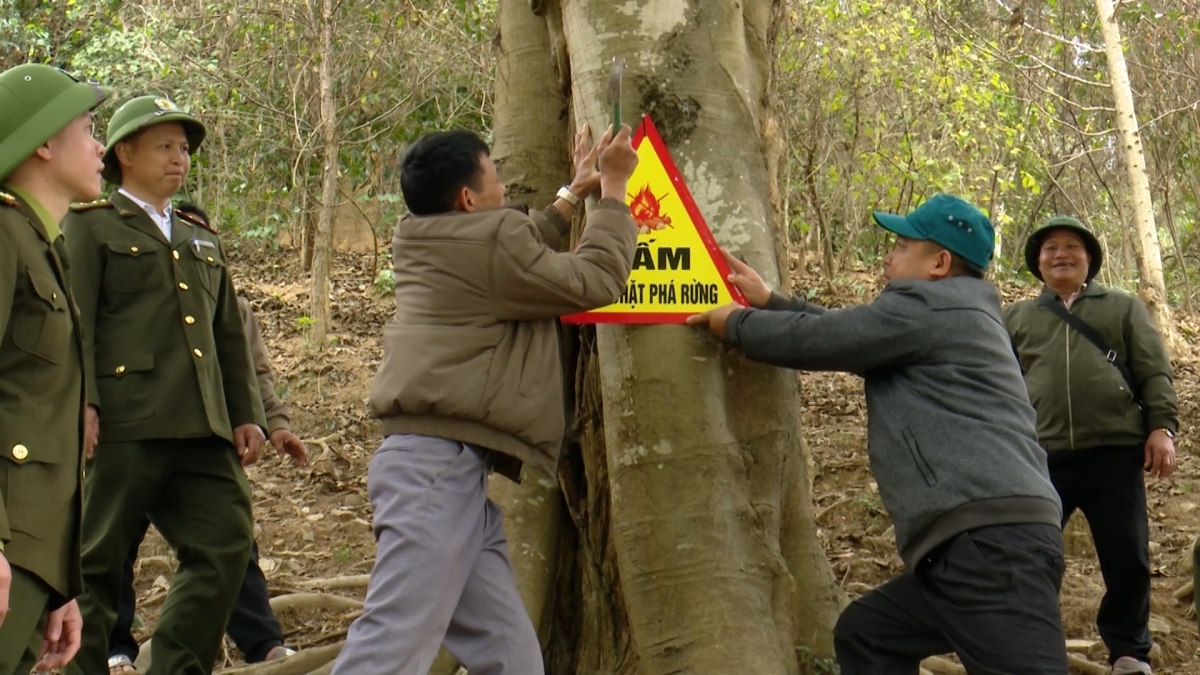
Lo Van Hoan, Secretary of the Party cell and head of Dong Tam village, says each household clearly understands that protecting forests means protecting water sources, the living environment, and their long-term livelihood. “When people prepare the fields for cultivation, we instruct them to burn only in the morning and watch closely to prevent forest fires. They work with forest rangers to create firebreaks to separate their fields from the forest.”
Forest Ranger Unit No. 1 of the Son La Forest Protection Department is now managing more than 53,000 hectares of forest in the communes of Quynh Nhai, Muong Gion, Muong Chien, and Muong Sai, about half of which lies in the reservoir area. These forests serve as ecological shields against erosion and landslides.
Dau Quang Trung, a ranger in charge of Quynh Nhai commune, said: “We visit every household, especially those living near forests, to guide them on proper fire use. When burning fields, they must ensure proper timing and fire prevention measures, including creating firebreaks and dividing areas into small sections, with close supervision while burning. If they detect a violation, they should immediately report it to local rangers and village authorities for prompt handling.”
Forest Ranger Unit No. 1 has worked closely with local authorities and residents to raise their awareness and link forest protection responsibilities with tangible benefits. According to Luong Van Cuong, Deputy Head of Forest Ranger Unit No. 1, since early this year, they have held 12 communication meetings with about 1,000 people, who suggested 160 forest fire prevention ideas and signed forest protection commitments. Mr. Cuong said: “We have applied 3 communication methods including mobile outreach, village loudspeakers, and direct communication in communes and hamlets. In hard-to-access areas like the reservoir, we use flycams, remote sensing imagery, and specialized forestry software. We also improve the skills of the rangers and officers, and conduct both regular and ad hoc inspections and patrols.”
With the authorities’ strong determination and the locals’ engagement, forest fire prevention in Son La has been effective, especially during the peak dry months.
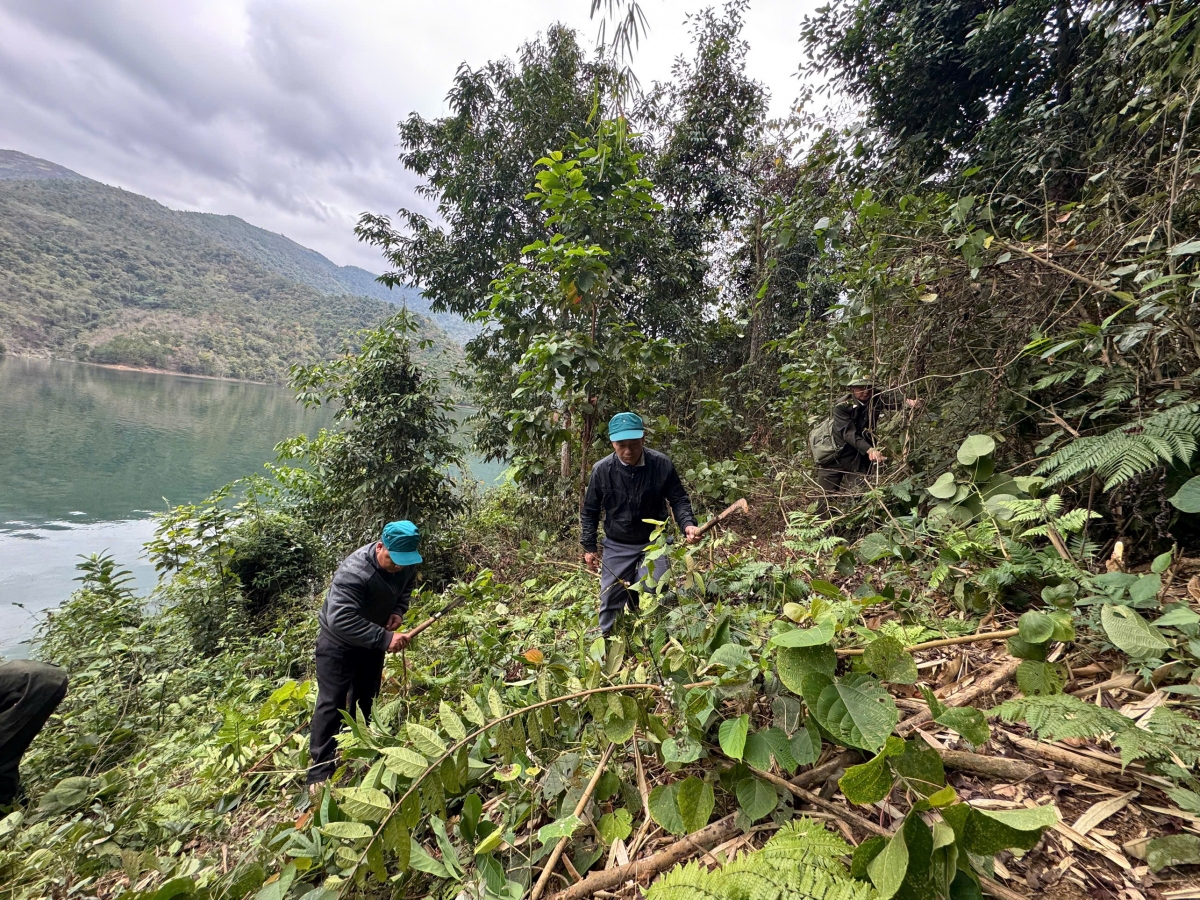
In the old-growth forests along the western border of Quang Ngai province, patrols are conducted every day. Community forest protection groups and the rangers of Chu Mom Ray National Park work side by side to safeguard forest biodiversity and sustain livelihoods. In the hills near Bar Gok village, Sa Thay commune, dense forest patches bordering farming areas are carefully protected by the villagers.
Every Monday morning, 39-year-old A Phu and members of the village forest protection team go on patrol. Motorbikes are left at the foot of the hill and they continue on foot along trails where the forest borders farmland to check the situation. Patrols consist of 2 or 3 people, each group taking duty one day per week. Although much of the route is through difficult terrain bordering Chu Mom Ray National Park, villagers have maintained this routine for over two years. A Phu says his team has not detected any cases of illegal logging.
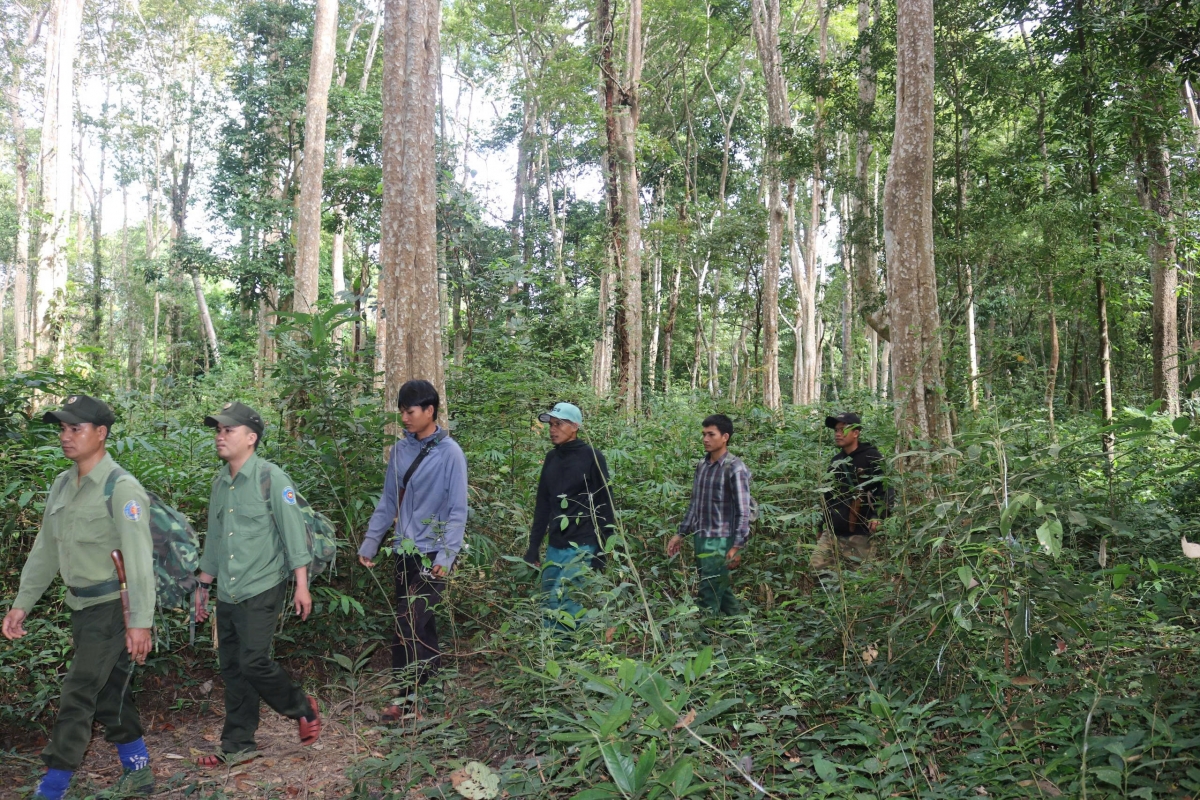
Some 30 households in Bar Gok village participate in community forest protection. They regularly remind each other not to cut down trees, especially in reforested areas near farmland.
Like the other households, A Phu’s family mainly farms cassava and rice. “Once a week, our team goes into the forest, mainly along the border of forest and fields to check for encroachment. We remind villagers not to cut down trees so the forest can be preserved for the future.”
Leaving Bar Gok village and heading deeper into the core zone of Chu Mom Ray National Park, forest rangers check for human impacts and monitor wildlife activity. Every anomaly is photographed and updated into the SMART mobile application for management purposes.
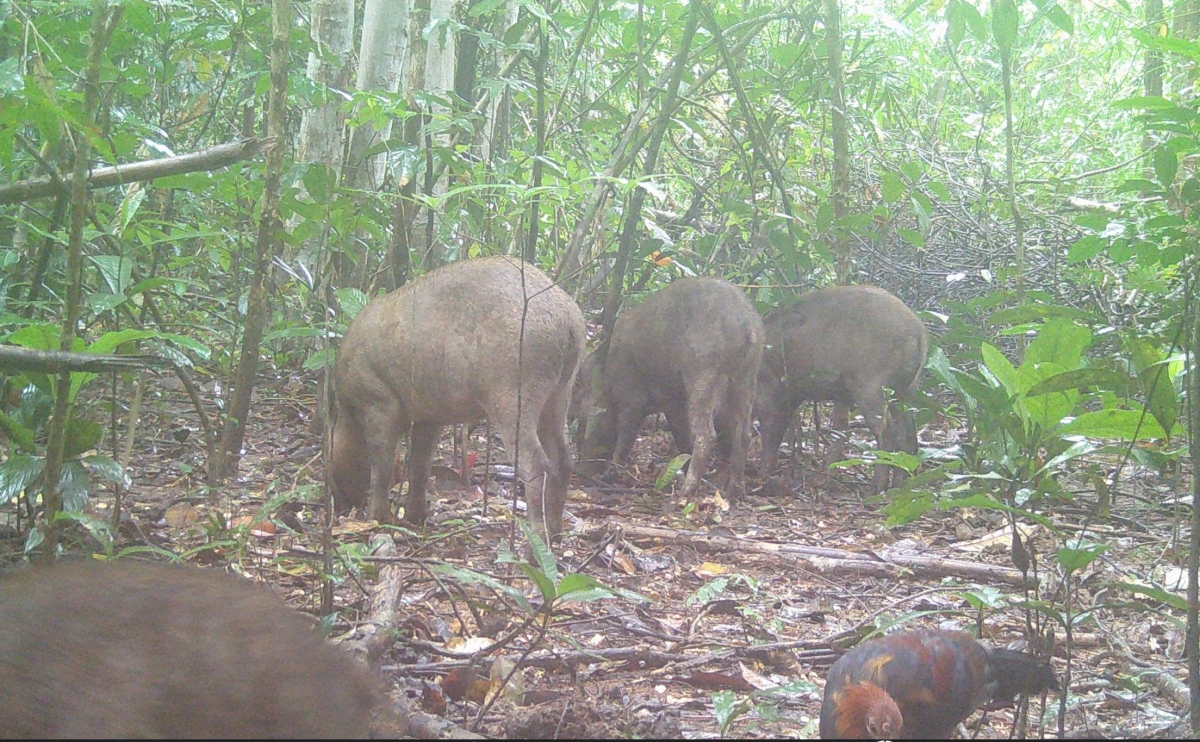
Camera traps are installed in various locations to record wildlife presence, such as junglefowl, deer, and wild boars. Patrols also remove animal traps set by locals and meet with locals to encourage them not to hunt or illegally exploit forest resources. Patrols can last all day or even several consecutive days. Rangers prepare their own food, and sometimes stay overnight in the forest.
With 14 years of experience, Pham Van Thang of the Mo Ray forest protection team is accustomed to long patrols. “We walk through the forest and observe any sign or trace of birds, animals, or humans, and record it on the SMART application. We use camera traps to monitor wildlife and human activities. If the route is far and we expect to return late or stay overnight, we pack food and other necessities. Each month we spend about 15 to 17 days in the forest.”
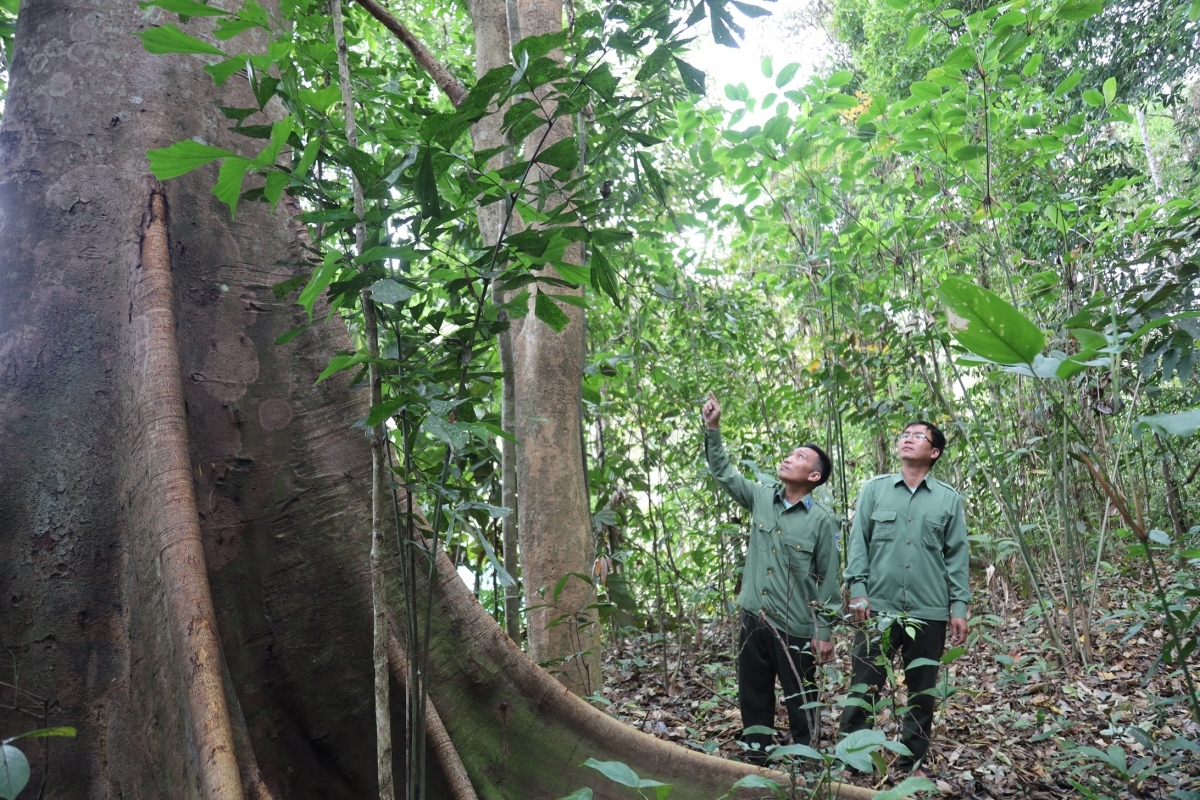
The Mo Ray ranger station sits along the dirt path at the edge of Chu Mom Ray National Park. During the day, locals pass by on their way to tend their fields, but at night the area turns quiet and dark except for a dim light from the station.
Thao Chuong, a Mo Ray ranger, said: “We’re stationed close to the farming areas, so we can monitor who comes in and out of the forest. Most people pass through to work in their fields. At night, some go frog hunting or set rat traps, which we allow. During the dry season, we regularly remind them to prevent forest fires. We’re on duty day and night. Everyone entering or leaving is recorded.”
Chu Mom Ray National Park on the western side of Quang Ngai province preserves a rich primary forest ecosystem and rare biodiversity covering 60,600 hectares of forest, including 56,000 hectares of special-use forest and 4,600 hectares of production forest. Surveys have recorded 1,895 plant species, including 182 rare and endangered species listed in the Vietnamese and World Red Books. The fauna is equally diverse, with over 1,000 species, including many rare animals requiring conservation.
Dao Xuan Thuy, Director of the Management Board of Chu Mom Ray National Park, says they have 10 specialized forest protection teams with about 70 members to monitor Sa Thay, Ro Koi, Mo Rai, Ya Ly, Sa Loong, and Bo Y commune. “We conduct regular patrols and forest protection measures, enhance communication to raise community awareness, and strengthen biodiversity research for better protection planning. We try to improve local livelihoods and incomes, so people will voluntarily protect the forests. We plan to promote eco-tourism to help generate jobs and revenue,” said Thuy.
From Son La in the north to Chu Mom Ray in the Central Highlands, these stories reveal a shared truth that forest protection depends on both people and persistence. Together, communities and rangers are safeguarding Vietnam’s natural heritage, for today, and for generations to come.