







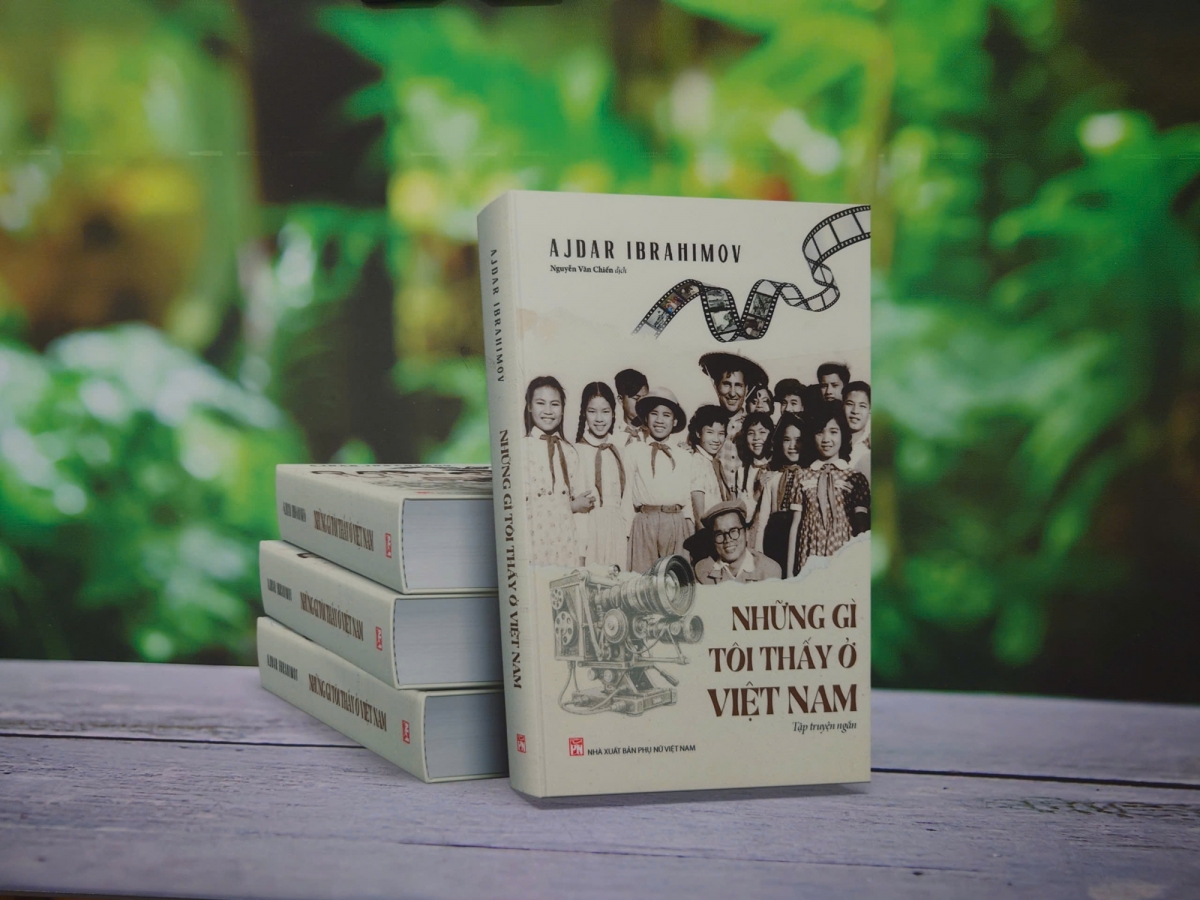
Deeply in love with Vietnam, the Azerbaijani writer wrote the short story collection “What I Saw in Vietnam”. Now available in Vietnamese, the book offers a poignant, firsthand look at the wartime resilience of the people, Ibrahimov’s awe at Vietnam's landscapes, and the profound solidarity between Vietnam and the former Soviet Union.
"Life, we love you." Those words seemed strangely out of place amid the roar of exploding bombs, the shriek of warplanes overhead, the cries of mothers, the ruins of shattered homes, the smoldering remains of villages, and the narrow trenches where makeshift school desks stood unsteadily. And yet, the sunlight still shone on the faces of the children as they sang, urging them to live. They were alive, and they would go on living. No bombs, no force on earth, could ever take the longing for life away from them,” recited journalist and teacher Ha Viet Anh, who opens the program with excerpts from "What I Saw in Vietnam".
Written by celebrated Azerbaijani filmmaker, screenwriter, and author Ajdar Ibrahimov, the book tells the story of a man who traveled thousands of miles and found a second home in Vietnam.
Some people are born to keep moving. The 2005 documentary about Ajdar Ibrahimov's life, Narahat Adam (The Restless Man), captured his restless spirit.
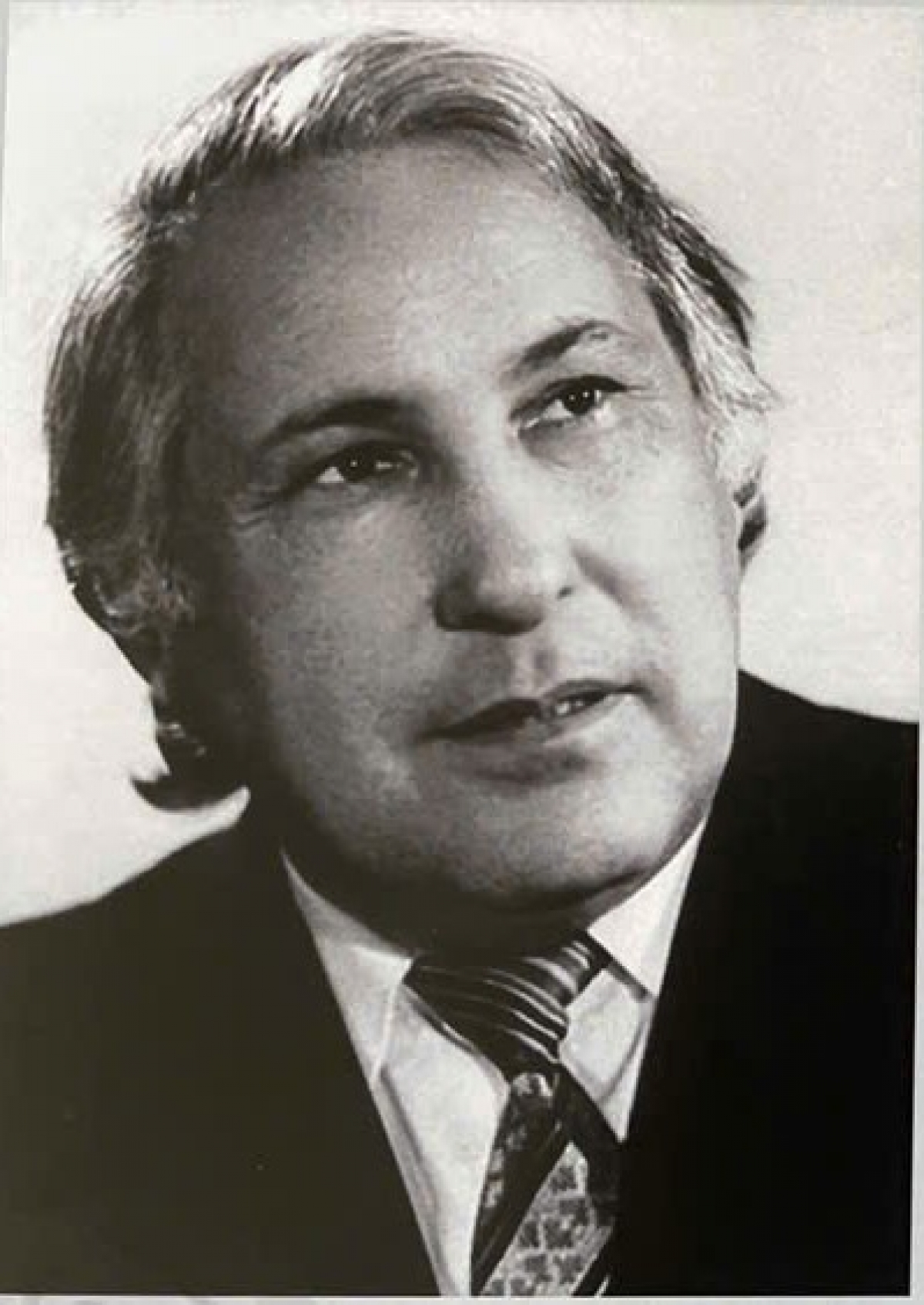
A celebrated People's Artist of the USSR and a towering figure in Soviet and Azerbaijani cinema, Ibrahimov left an enduring mark on the film industry through a remarkable body of work.
Throughout his distinguished career, he created films of great historical depth and humanistic vision. Among his most celebrated works are Two Lads from the Same Block (1957), His Great Heart (1958), On Distant Shores (1958), Twenty-Six Baku Commissars (1966), The Stars Do Not Fade (1971), Heart Stories (1973), My Love and My Sorrow (1978), The Strange Person (1979), and The Root of the Matter (1980). Together, these films cemented his reputation as one of the most influential filmmakers in Azerbaijani cinema and secured his legacy in Soviet filmmaking.
Ibrahimov was driven by more than artistic brilliance. He believed in building cultural bridges. Invited to help establish Vietnam's National Cinema School, he spent three years from 1959 to 1962 training the first generation of Vietnamese filmmakers. This assignment allowed him to travel extensively.
If Ajdar Ibrahimov arrived in Vietnam as a film director, he left as a writer carrying a treasure trove of memories. Upon returning to Azerbaijan, he wrote "What I Saw in Vietnam" as a tribute to the country that had defined some of the most profound years of his life. First published in the Soviet Union in 1968, the book was finally translated and introduced to Vietnamese readers in 2026. More than 60 years later, it still resonates.
It’s not a conventional memoir. It’s a collection of short stories, memoirs, and diary entries. The book is divided into two sections: The Tigers That Woke Me Up, highlighting the exotic, mysterious beauty of tropical nature and Vietnam’s rich cultural landscape, and The Bombs That Woke Me Up, confronting the harsh conditions during wartime.
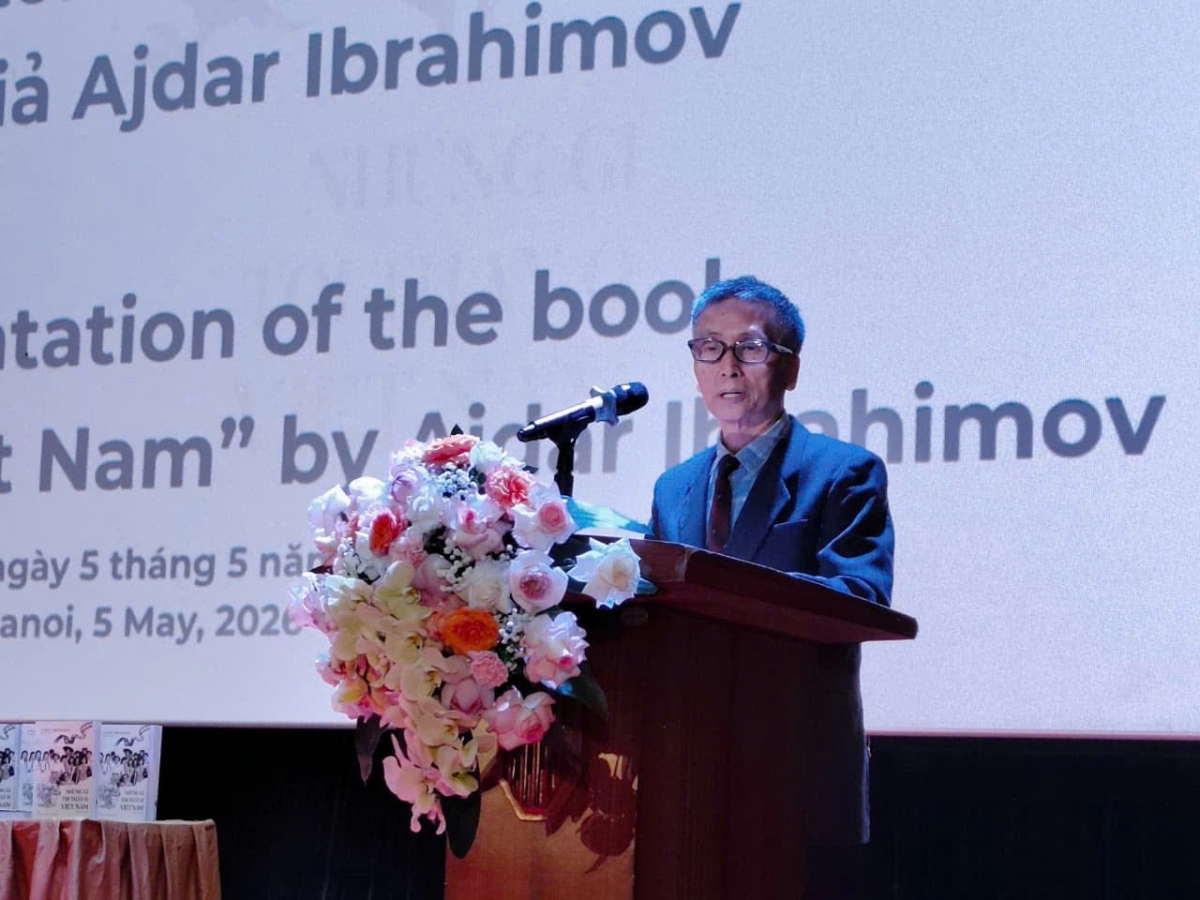
Nguyen Van Chien, who translated the book into Vietnamese, said these aren't just two historical phases, but two coexisting realities. Chien said Ibrahimov viewed Vietnam through a highly unique, tri-fold lens.
“"Ibrahimov saw Vietnam through three unique lenses. First, as an Azerbaijani, he came from a nation that had preserved its identity despite being surrounded by powerful civilizations, giving him a deep appreciation for resilience. Second, he recognized in the Vietnamese people values of compassion, hospitality, and respect for others. And finally, as a Soviet intellectual, he admired Vietnam's determination to build and defend the nation under extraordinary circumstances. Together, these perspectives gave him a distinctive understanding of Vietnam,” Chien said.
Because of these perspectives, Ibrahimov noticed things that even locals might overlook. And he recorded them not just as a writer, but as a master filmmaker looking through a camera's viewfinder.
He didn't just write sentences, he framed "shots." He captured evocative, slow-motion scenes of everyday life: elderly women quietly knitting on a front porch, children sleeping peacefully on an earthen floor, a street vendor hand-cranking a sugarcane press, the smoke of burning straw drifting across a harvested field, and a towering Gothic church standing in stark, beautiful contrast within a rustic northern village.
Through the eyes of a filmmaker, Ibrahimov shifts the spotlight away from the battlefield and onto the people who shaped Vietnam’s story. As he traveled across the country, he met President Ho Chi Minh, military commanders, soldiers, farmers, and ethnic villagers in the highlands. In every face and every encounter, he discovered remarkable courage, resilience, and humanity, qualities that defined the Vietnamese spirit.
Chien said: “Throughout his time in Vietnam, Ibrahimov met people from every walk of life: farmers, factory workers, students, soldiers, military officers, and statesmen. They all appear in his book, and despite their different backgrounds, they shared a deep love for their country, courage, resourcefulness, intelligence, and creativity."
"These qualities are reflected in every story he tells, from villagers catching snakes and confronting dangerous tigers to people finding their own ways to overcome hardship. Alongside figures like President Ho Chi Minh, pilot Tran Thanh, and revolutionary Nguyen Van Troi, Ibrahimov also celebrates countless ordinary men and women. For him, these everyday people were the true foundation of the Vietnamese nation,” said Chien.
In "What I Saw in Vietnam", Ajdar Ibrahimov marvels at the deeply rooted customs of Vietnam’s northern mountain communities. Beyond grand festivals, he was captivated by intimate, everyday traditions and customs.
Following the rhythmic sounds of drums and flutes, he discovered private spiritual ceremonies where families honored protective spirits in hidden corners of their homes. He was deeply moved by their unique culture, from the immense joy of celebrating a daughter’s birth to farmers singing self-composed melodies under the moonlight to escape the daytime heat.
Most enchanting of all was their tradition of courtship. Instead of words, a youth used a small bamboo flute, a lifelong companion gifted at birth. A young man would pour his heart into music outside his beloved's house in the dark. If she felt the same, she would silently join him, and they would walk together to the riverbank where the melody spoke for them until dawn.
“Ibrahimov viewed the Vietnamese people through multiple lenses - past, present, and future - rather than narrating a linear, anecdotal story. We can see him weaving all three dimensions of time throughout his work. For example, when speaking of the Xa ethnic people, he recounted a legend explaining why certain ethnic groups have spoken languages but no written scripts," said Chien.
"Looking to the future, when he bid farewell to everyone at the airport, he looked at a child and shared his hopes. He believed that as this child grew up, he will enjoy peace and happiness, rather than enduring the same hardships as his forefathers. Yet, with the inherent heroism and bravery running through their veins, he was certain they would overcome any obstacle,” Chien added.
In Ibrahimov's writing, nature shares the emotions of the Vietnamese people. His prose weaves together the sounds of exploding bombs, anti-aircraft fire, and grieving mothers in the stillness that follows battle. Yet beyond the devastation, Ibrahimov saw something greater: the resilience, optimism, and enduring humanity of the Vietnamese people.
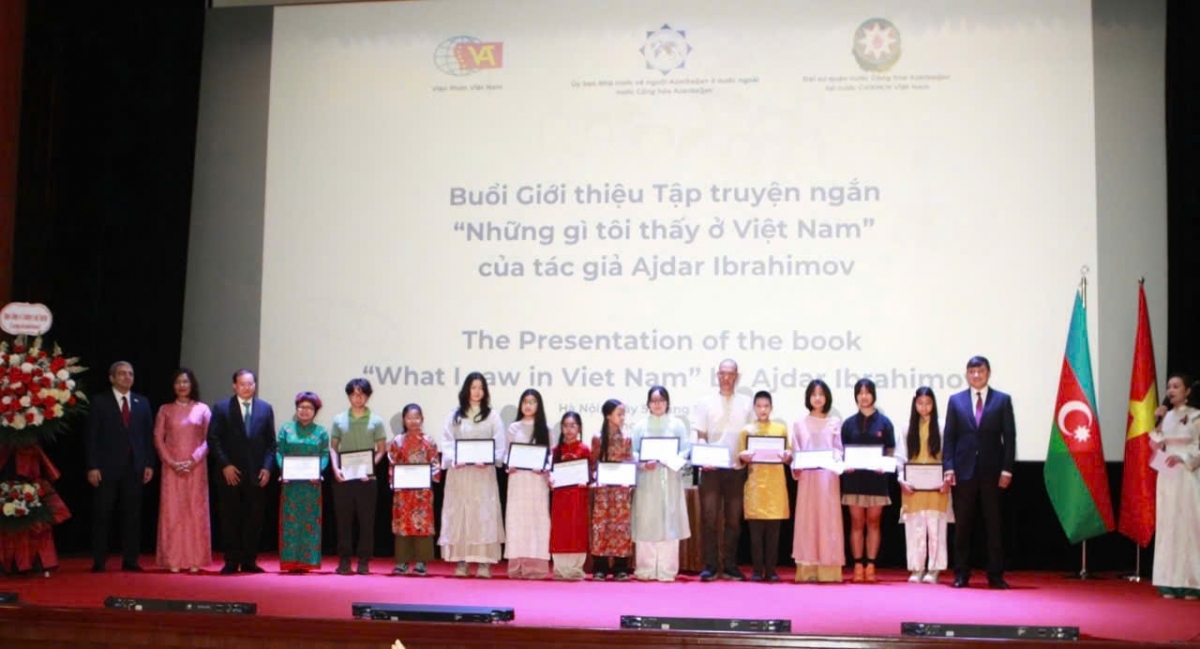
One of the most touching features of the Vietnamese edition of "What I Saw in Vietnam" is its illustrations, created by children from the Happy Literature Class. The idea brings together the observations of a foreign filmmaker in the 1960s with the imagination of Vietnamese children today. For journalist and teacher Ha Viet Anh, who has led the Happy Literature Class for more than a decade, the project became much more than an art assignment.
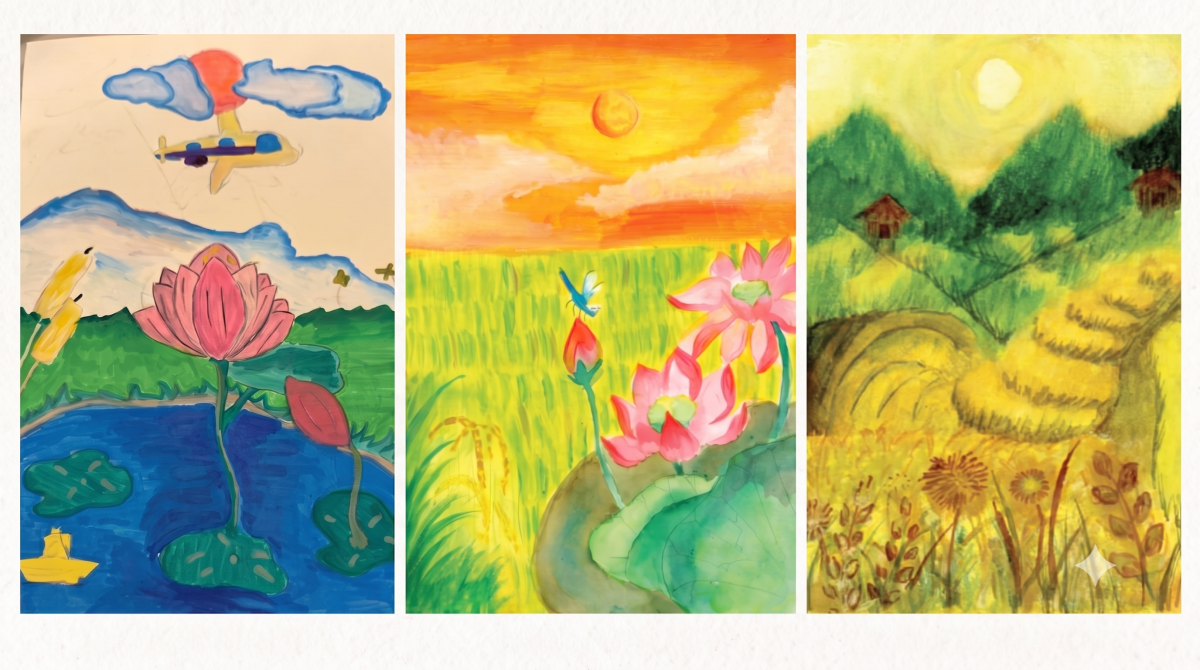
Viet Anh said: “"Through this project, the children connected with Vietnam's history, culture, and values through the eyes of an international friend. Every illustration reflects their imagination, emotions, and love for their country. What moved me most was their dedication. In a very short time, they completed 27 illustrations, each a heartfelt contribution to the book. They eagerly researched every detail, from the One Pillar Pagoda and Long Bien Bridge to terraced rice fields and the traditional buffalo fighting festival, to make their drawings as authentic as possible."
"In his book, Ibrahimov dreamed of a peaceful Vietnam, where children could not only go to school and help build their country, but also have the freedom to pursue their passion for painting, music, and cinema," Anh added.
More than a memoir of one man's journey through Vietnam, "What I Saw in Vietnam" builds a bridge across generations. It connects Ajdar Ibrahimov's experiences in the 1960s with today's readers, offering a fresh perspective on Vietnam's history through the eyes of a lifelong friend.
For those who remember the years of close ties between Vietnam, the former Soviet Union, and Azerbaijan, the book also rekindles memories of a friendship founded on solidarity, mutual support, and shared aspirations.
Among those who see the book as more than a historical account is Mr. Nghiem Vu Khai, former Vice Chairman of the Vietnam–Azerbaijan Friendship Association.
“This is a truly remarkable and deeply moving book. It vividly portrays one of the most challenging periods in Vietnam's history, when the country was rebuilding after the war against the French while continuing the struggle for national reunification. Reading it brings back memories of my own years studying in Azerbaijan before 1975, where I experienced firsthand the friendship and generosity of the Azerbaijani people. Above all, it renews my lasting gratitude for their solidarity and unwavering support for Vietnam during those difficult years,” said Mr. Khai.
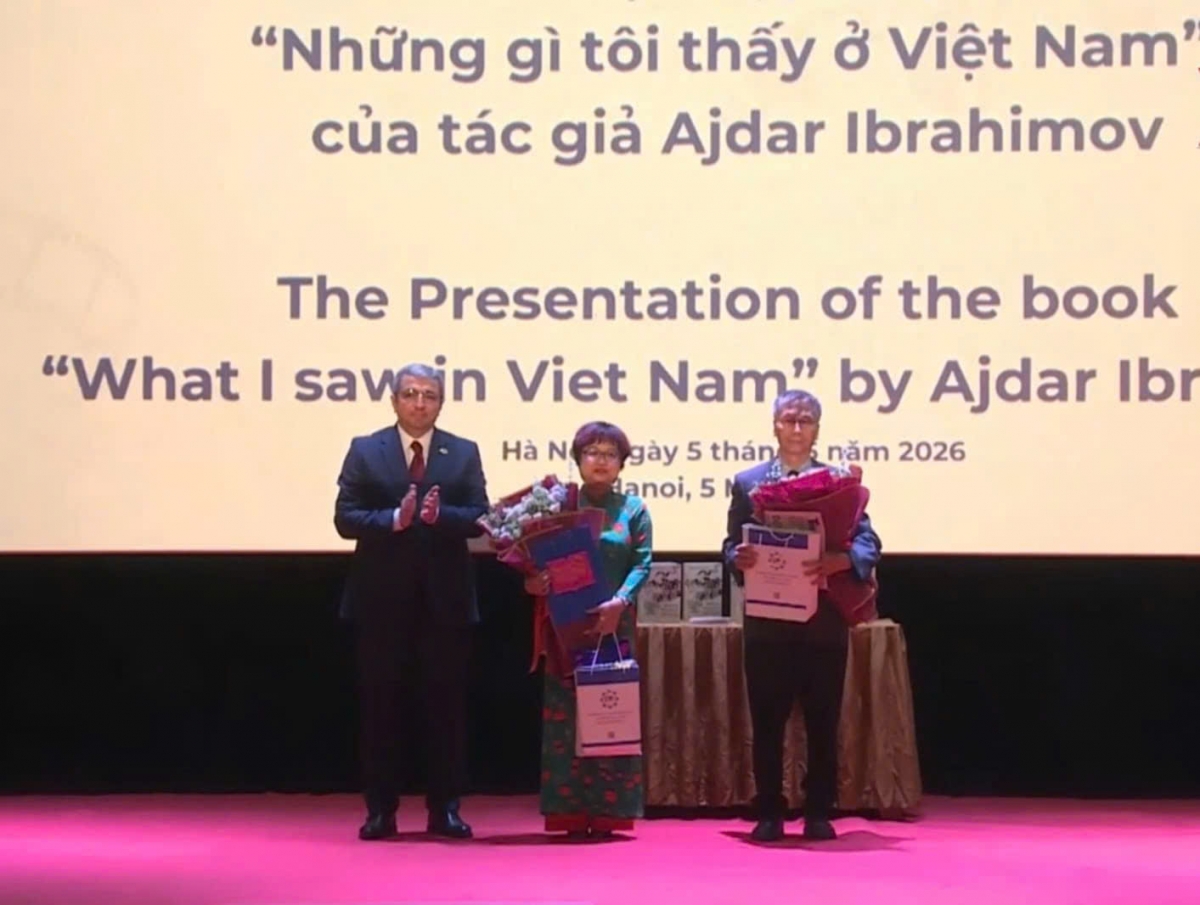
Echoing this sentiment, journalist and educator Ha Viet Anh, who holds a master's degree in Language and Literature from Lomonosov Moscow State University and founded the Happy Literature Class, said: “For our generation, those of us who studied in Azerbaijan and the former Soviet Union, this book brings back memories of the teachers who devoted themselves to educating us with both exceptional knowledge and boundless care. Thanks to their dedication, we returned home as well-trained professionals, ready to contribute to Vietnam's development."
"The book is also a wonderful opportunity for young people to understand the brutality of war, the courage and sacrifices of previous generations, and the invaluable friendship and support that Vietnam received from the international community during those difficult years,” said Ha Viet Anh.
The book is a heartfelt testimony to the enduring friendship between the people of Vietnam and Azerbaijan. For the Embassy of Azerbaijan in Vietnam, publishing the Vietnamese translation was a tribute to a shared history that continues to shape bilateral relations today.
Azerbaijani Ambassador Shovgi Kamal Oglu Mehdizade, said: “Vietnam is a very important historic friend of Azerbaijan. Our relations were founded by our national leaders, beginning with President Ho Chi Minh's historic visit to Azerbaijan in 1959 and Heydar Aliyev's visit to Vietnam in 1983. This great history motivates us to develop new areas of cooperation and to preserve our shared memories through books, films, and articles, inspiring younger generations to continue this friendship."
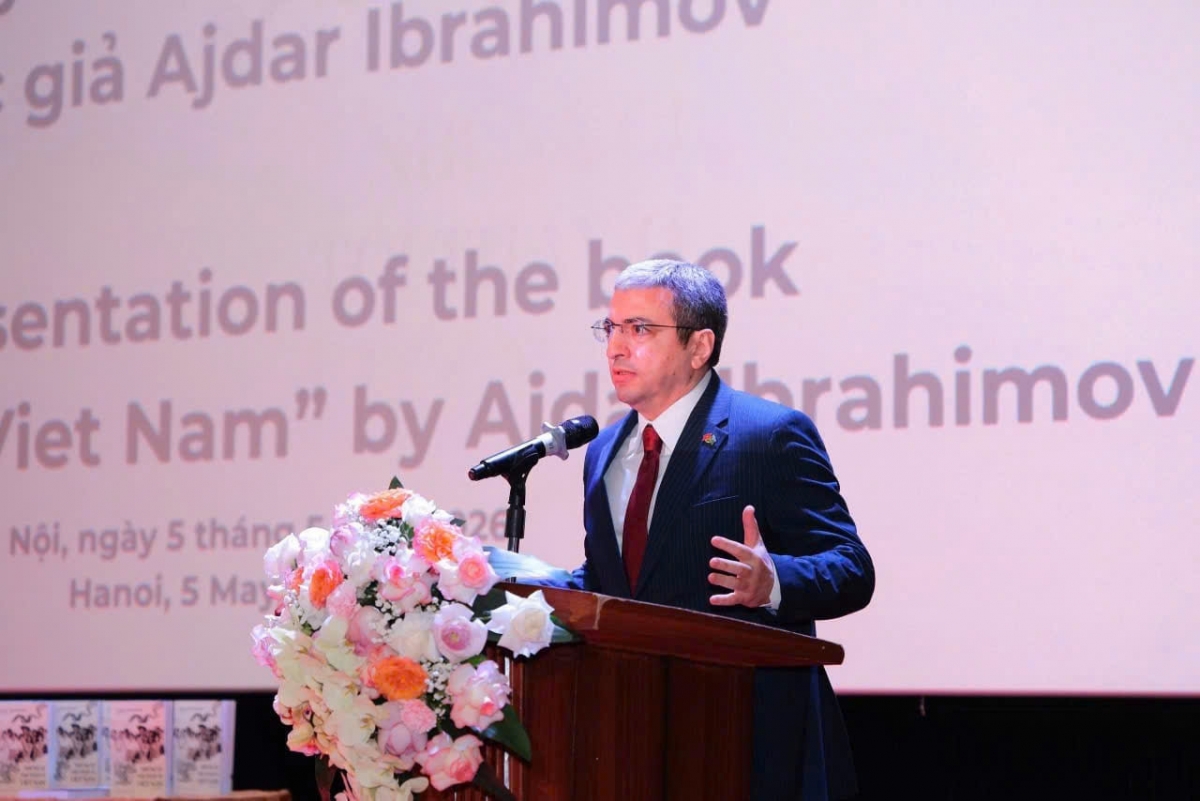
Ambassador Mehdizade says Ibrahimov's unwavering dedication reflected his deep love for Vietnam and his belief in its people and their future.
Ambassador Mehdizade said: "It was not easy to move to Vietnam and live here during wartime, Ajdar Ibrahimov remained in Vietnam until his first students graduated, working under the constant threat of bombing. He encouraged his students to be brave, self-confident, and determined. I felt how much love he had in his heart for Vietnam and the Vietnamese people. He wanted readers in Azerbaijan and the Soviet Union to see Vietnam not only as a country at war but as a nation of talented, creative, and resilient people."
"Today our relations are developing on a very solid foundation. This book is important not only for understanding our shared past but also for motivating the younger generation to pursue new cooperation projects," Ambassador Mehdizade said.
More than six decades on, "What I Saw in Vietnam" remains a powerful testament to the enduring friendship between Vietnam and Azerbaijan. As the two countries deepen cooperation in cinema, culture, and beyond, the story it tells will inspire new generations to carry this remarkable partnership into the future.


