



For a group of young volunteers known as Team Lee, every portrait they restore is far more than a photograph. It is a bridge that reconnects memory with the present.
A faded photo fills Tran Au Thanh Dat’s computer screen. Its edges are torn, the image blurred, and the face barely visible. After hours of carefully redrawing the image by hand, he reaches for his phone.
The call is to Major Phan Son Khai, an officer with the Political Affairs Division of the Ho Chi Minh City Police Department and Dat is one of about 20 volunteers from Team Lee, a charity group of young artists from across Vietnam dedicated to restoring portraits of fallen soldiers free of charge.
- Dat: Major Khai, I'm working on the last two portraits now. They're in such poor condition that I have to redraw them almost entirely by hand. I've just finished one. Only one more to go.
- Major Khai: I can imagine. Some of those photographs are barely recognisable. Finishing just one can take days.
- Dat: We'll finish them all. We can't leave any family behind. If some families receive a portrait while others don't, I'd feel terrible for those still waiting.
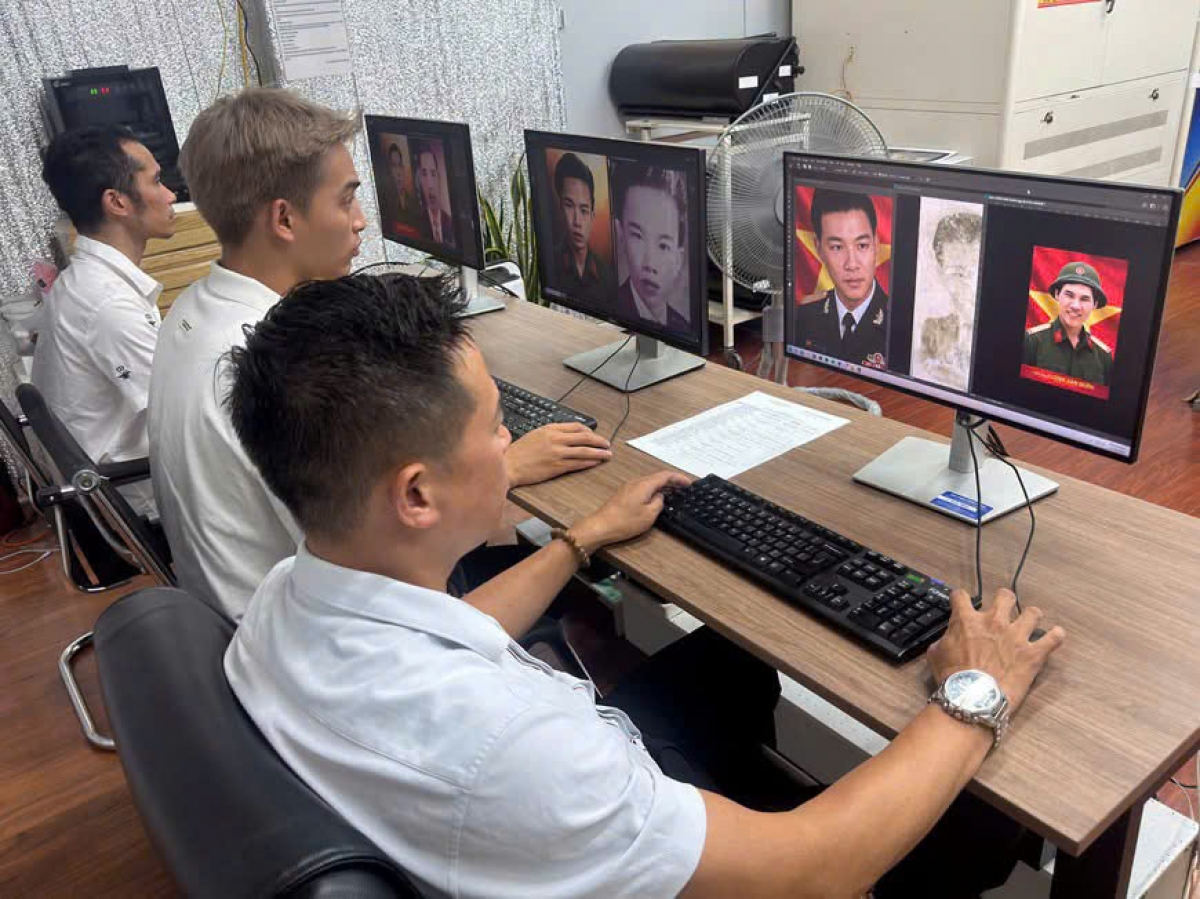
Major Khai and Team Lee have worked together on volunteer projects restoring portraits of fallen soldiers for several years.
As part of Ho Chi Minh City's 500-day campaign to accelerate the search for, recovery and identification of fallen soldiers' remains, the Ho Chi Minh City Police Department, in coordination with the city High Command and with support from Team Lee, began receiving requests from families for the restoration of martyrs' portraits. Since then, they have received nearly 300 restoration requests from families in the city.
While modern technology can restore damaged photographs in seconds, Khai believes true restoration depends on something AI can never replace - that is human memory.
"Today, AI can generate a much clearer version of an old photograph in just seconds. But that doesn't mean it's an accurate portrait of the person the family remembers. Only the people who knew him—a mother, a sibling, or the comrades who fought beside him—can recall the small details that made him who he was. One remembers the eyes, another the smile, someone else a particular expression. It's those memories, brought together, that allow us to recreate not just a face, but the likeness the family remembers and the emotion they still carry," said Major Khai.
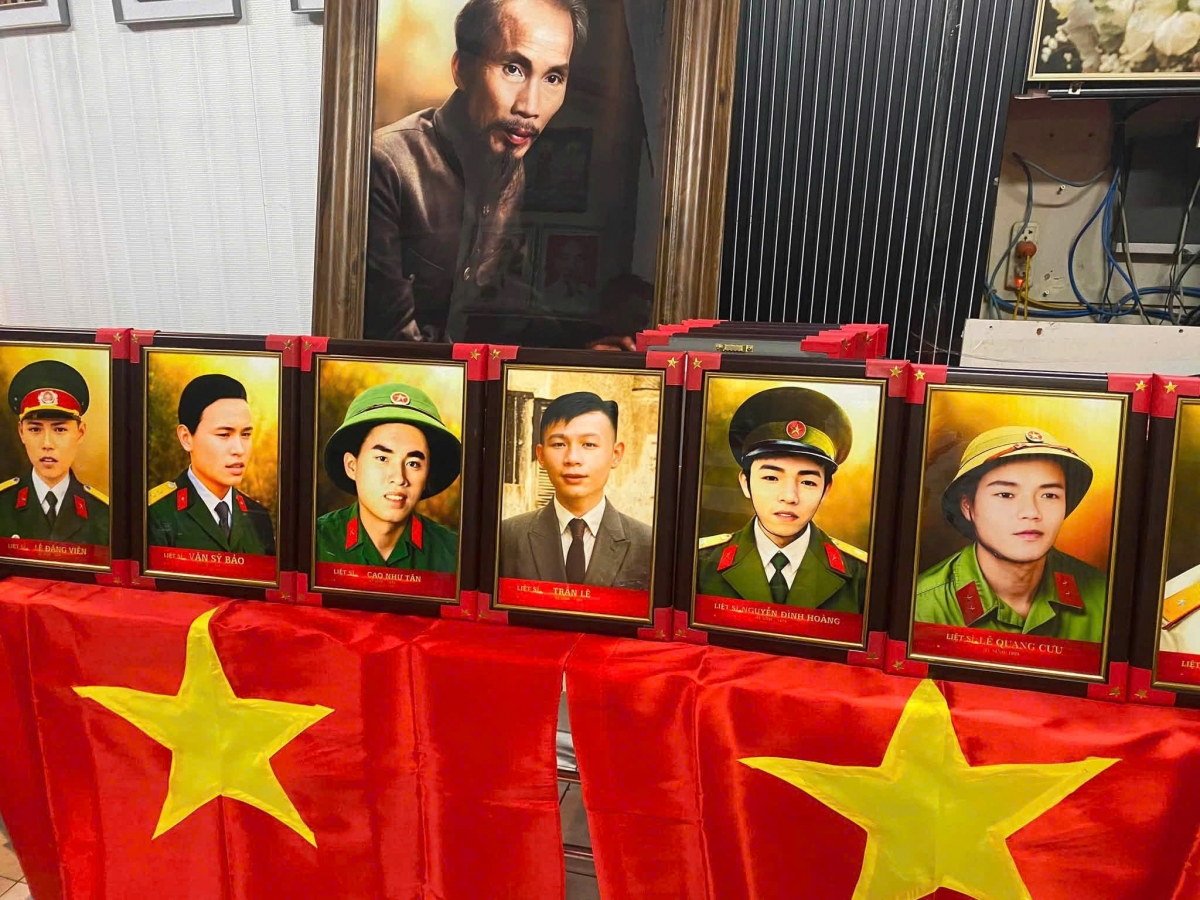
For Dat, every restored portrait carries a story. The 28-year-old volunteer from Can Tho city has been with Team Lee for years.Having a fallen soldier in his own family, he understands what these portraits mean to families who have waited for decades.
Dat said: "Many of the soldiers whose portraits we restore were only 17 or 18 years old. Others were just in their early twenties. They gave up the best years of their lives to protect the country. Behind every faded photograph is a life, a sacrifice and a family that has waited for decades. That's why we approach every restoration with the greatest care and respect."
Dat says that’s why he never rushes the process. Every completed portrait is first sent to the family for confirmation. If even the smallest detail doesn't feel right, he patiently revises it until relatives recognise the face they remember.
More than 100 restored portraits have already been returned to the families of fallen soldiers. For many, they are more than restored photographs. They are lasting reminders that while time may fade an image, it cannot erase memory, gratitude, or the sacrifice of those who gave their lives for the nation.