



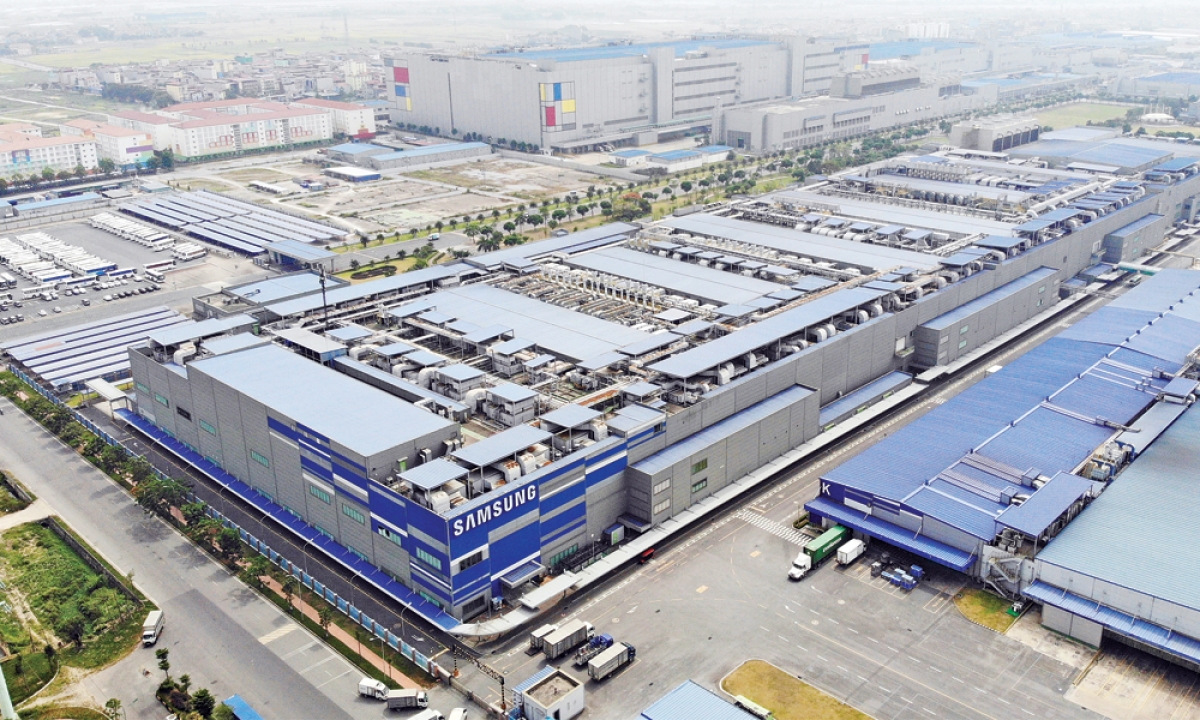
Bac Ninh’s growing appeal is seen in a sharp surge in foreign direct investment (FDI). Last month it attracted 3.8 billion USD, bringing total FDI in the first 8 months of the year to nearly 17.7 billion USD.
Its many new projects and capital expansions are concentrated in electronics, semiconductor components, and smart manufacturing technologies. Notable investments include Cooler Master Vietnam, which raised its investment capital at Gia Bình Industrial Park to 475 million USD; and Amphenol Highspeed IO Technology Vietnam, which added more than 188 million USD at Yên Phong II-C Industrial Park.
Other major projects are Fukang Technology, part of the Foxconn ecosystem, which injected an additional 167 million USD into its project at Quang Chau Industrial Park; and ITM Semiconductor Vietnam, which added 20 million USD at VSIP Bac Ninh, bringing its total investment capital to 258 million USD.
These figures underscore Bac Ninh’s emergence as a long-term investment destination for global technology corporations.
“Bac Ninh possesses outstanding advantages for industrial development and international investment, and is committed to creating a modern, transparent, and efficient investment ecosystem, and accompanying businesses throughout their investment, development, and success,” said Pham Van Thinh, Vice Chairman of the provincial People’s Committee.
To meet growing demand for production expansion, Bac Ninh is preparing clean land reserves and upgrading industrial park infrastructure. The local master plan envisions 70 industrial parks, 39 of which have already been established, covering more 11,300 hectares. The current land reserve of 600 hectares is projected to expand to 1,000 hectares by the first quarter of next year.
But for high-tech enterprises, land must be matched by efficient transport, logistics, digital infrastructure, and innovation systems.
Samsung Vietnam General Director Na Ki Hong said, “If investment is directed toward strategic infrastructure such as inter-regional transport, logistics, digital networks, high-tech industrial ecosystems, and expanded innovation centers, high-tech FDI companies like Samsung will be better positioned to optimize operational efficiency and expand R&D activities.”
“In the future, these investments are expected to attract top-tier talent and strengthen links with local universities, research institutes, and domestic suppliers of components and materials,” he noted.
This reflects the strategic direction Bac Ninh has chosen for its next phase of growth: prioritizing investment that brings advanced technology, high added value, and strong spillover effects throughout supply chains. Five core sectors have been identified: semiconductor chips and new materials; aviation, unmanned aerial vehicles (UAVs), smart logistics, robotics, AI, and smart manufacturing; pharmaceuticals, biomedicine, and advanced medical equipment; and green energy and smart electrical equipment.
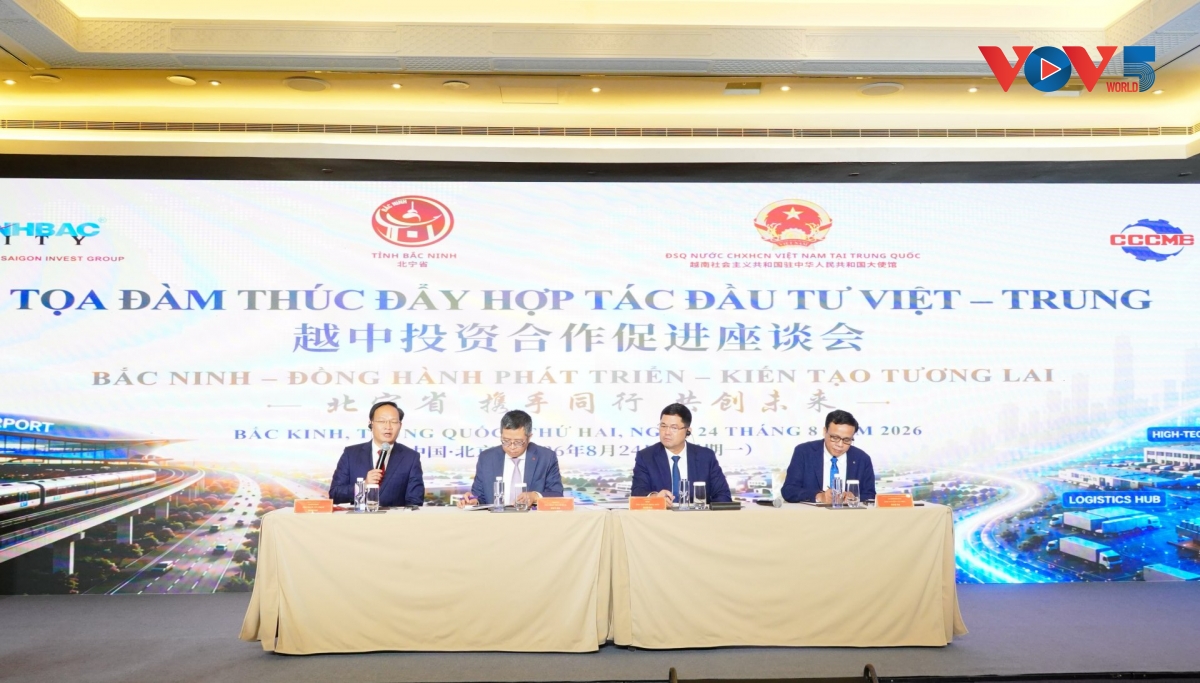
Tran Son Tung, Deputy Head of the Management Board of Bac Ninh Industrial Zones said that driven by a green, smart, sustainable development model, Bac Ninh prioritizes high-tech and environment-friendly projects that deliver high added value, strengthen supply chain integration, and foster long-term local commitment.
“Our approach is guided by the principles of zero pollution, minimal land use, reduced labor intensity, advanced technology, high capital efficiency, and superior economic returns,” said Tung.
Among the priority sectors, semiconductors are one of Bac Ninh’s biggest areas of ambition. The locality currently has 33 projects in semiconductors and supporting industries, with companies including Hana Micron Vina, Micro Commercial Components, Si Flex, Victory Giant Technology, and tech giants Foxconn and Goertek.
Bac Ninh aims to attract 3-5 major technology corporations by 2030 to establish manufacturing plants and R&D centers, with annual semiconductor sector revenue of at least 3 billion USD.
It is also accelerating semiconductor workforce training, encouraging universities to establish training facilities, and implementing “24-hour green lane” and “60% green channel” mechanisms to shorten administrative processing times for key high-tech projects.
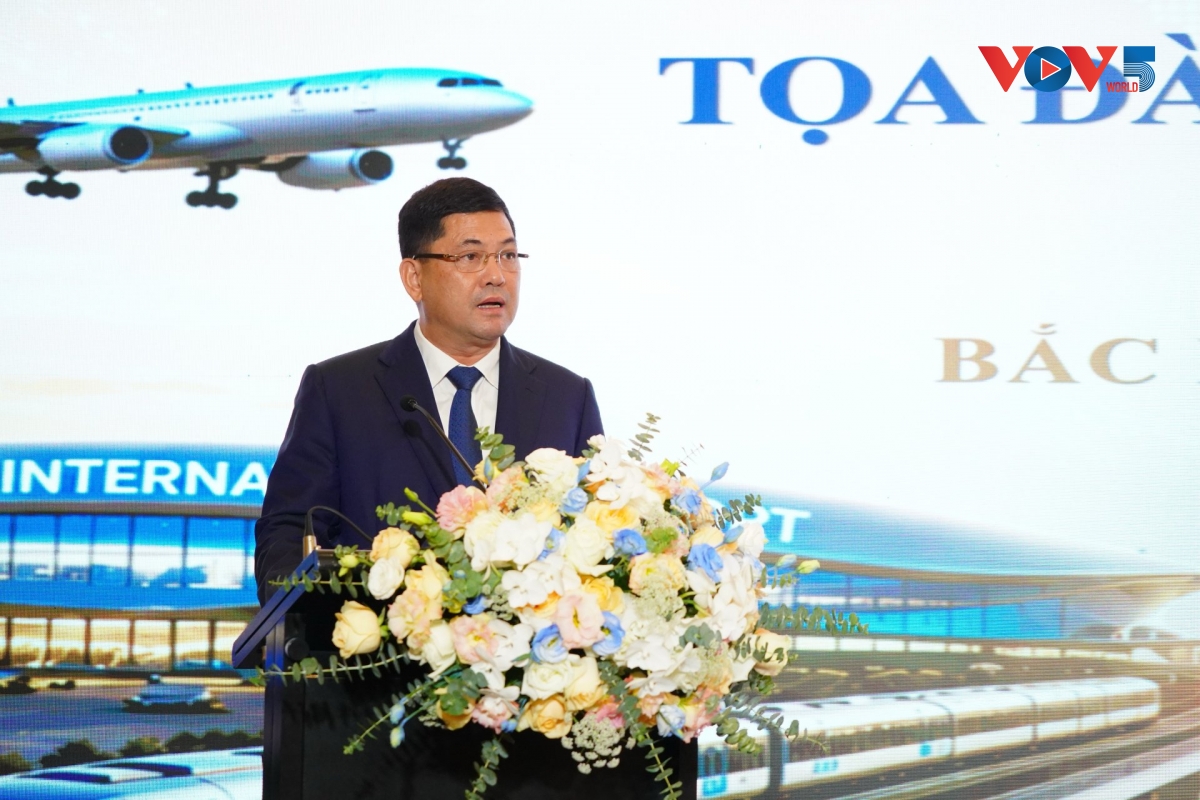
Secretary of the provincial Party Committee Nguyen Hong Thai reaffirmed Bac Ninh’s commitment to maintaining stability in its strategic development direction, standing by businesses, and making investor success a key benchmark for local leadership and governance.
“We will continue building a service-oriented administration, improving governance quality, listening to businesses, and promptly addressing bottlenecks so that enterprises can invest with confidence and thrive here over the long term,” he said.
Bac Ninh, already an electronics manufacturing hub, is seeking to become a convergence point for technology, capital, talent, and research and development. Its new development space will provide crucial advantages as it seeks to strengthen its position in regional high-tech value chains.