



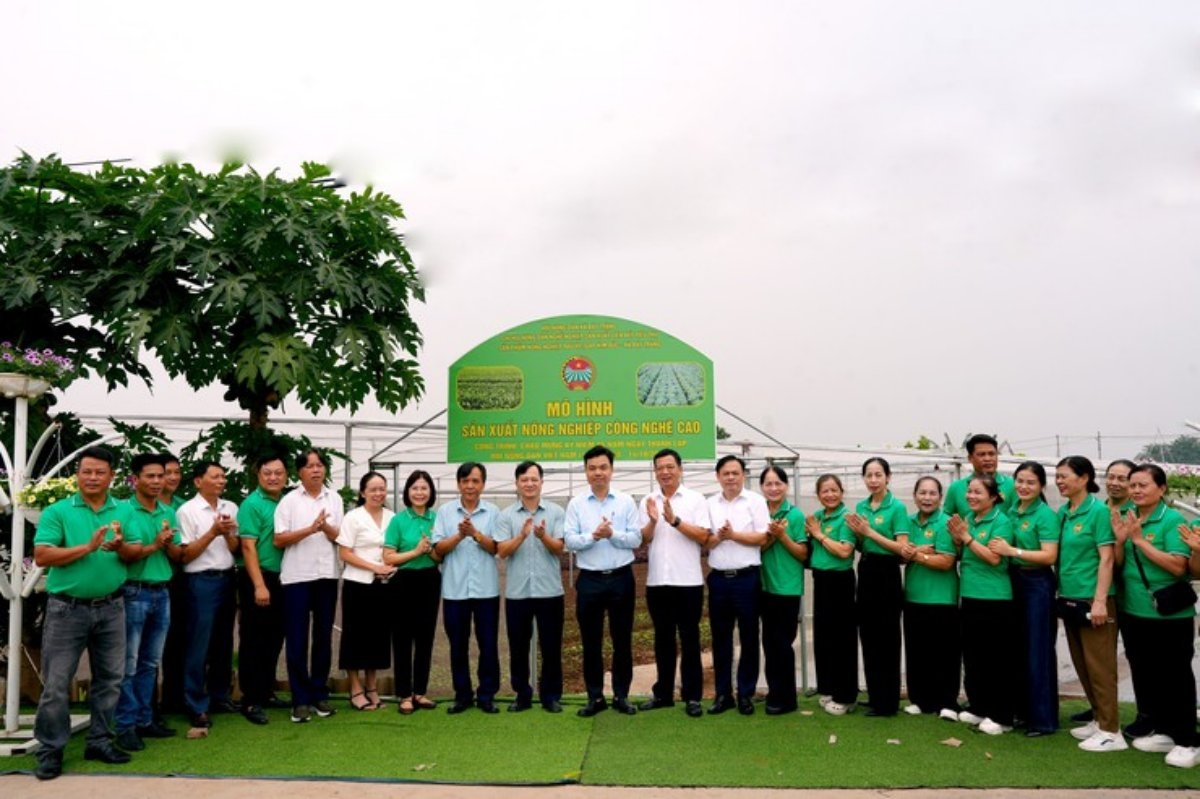
The high-tech strawberry growing model, jointly implemented by the commune Farmers’ Association and the Kim Duc Cooperative for Agricultural and Fishery Development, covers an area of 2,000 square meters.
The pilot is testing a new crop, improving land-use efficiency, and exploring opportunities for high-return agricultural production.
The project has a greenhouse – with automated irrigation and sensors to monitor temperature, humidity, and other environmental conditions – in which carefully selected strawberry varieties are grown in suitable substrates.
Relevant agencies are providing technical guidance on planting, crop care, nutrient management, biological pest and disease control, harvesting, and preservation.
“We’ve been growing fruit and vegetables in accordance with VietGAP standards for three to four years. This time, we’re pioneering a strawberry-growing model combined with experiential tourism. I learned the cultivation techniques and brought strawberry seedlings from Moc Chau (in Son La province),” Dao Van Chung, Director of the Kim Duc Cooperative, said.
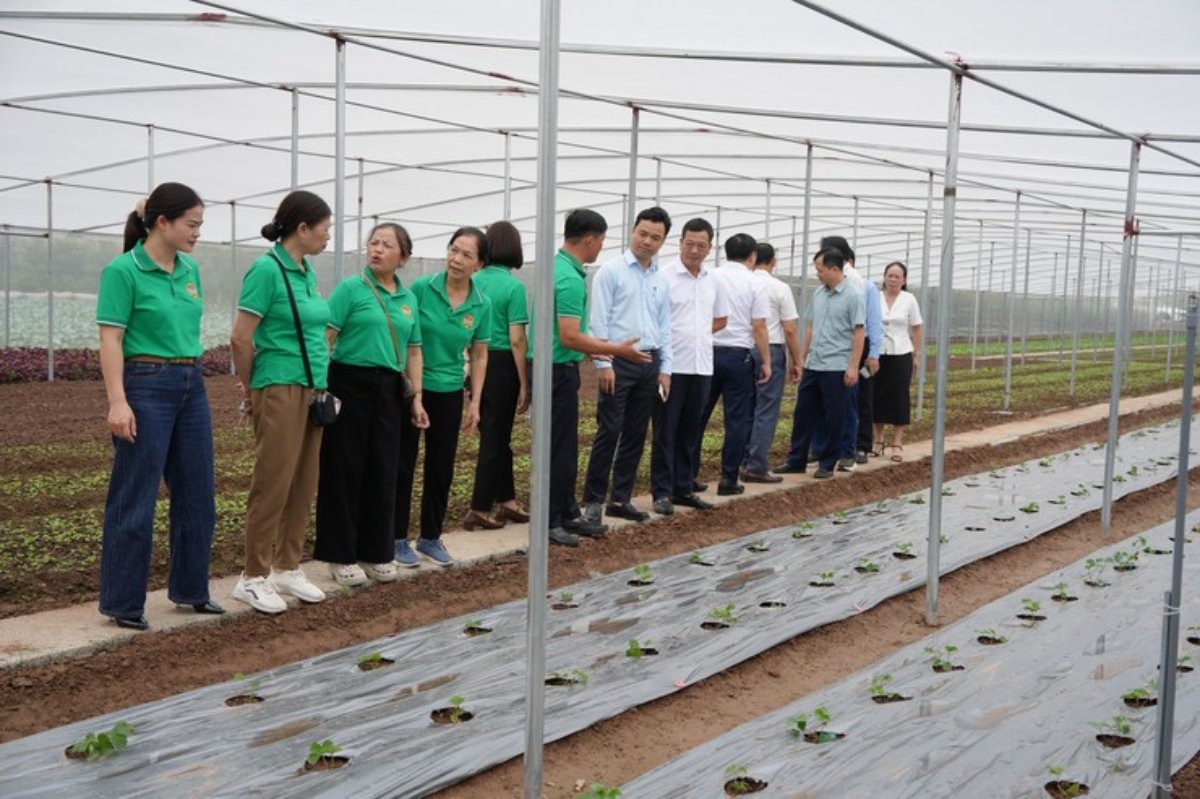
The Kim Duc Cooperative is among the first to trial strawberries, a crop that thrives in cooler climates, on land along the Red River. The initiative aims to increase yields, raise product value, and boost farmers’ incomes through high-tech applications and digital transformation.
“We initially planted 1,000 seedlings on an area of 1,400 square meters. If the trial proves successful, we’ll expand the model,” Director Chung said.
According to Tran Thi Hai, Chairwoman of the Bat Trang commune Farmers’ Association, the pilot program will assess how well the strawberries adapt to local growing conditions and help farmers adopt modern farming techniques. The model’s potential for wider adoption will be assessed based on plant growth, yield, quality, and economic efficiency.
“As agricultural land continues to shrink, we’re working to introduce new crops, new varieties, and new production models to increase agricultural value,” said Hai.
The high-tech strawberry-growing model is designed to support crop restructuring, improve land-use efficiency, and create new opportunities for sustainable agriculture in Bat Trang through the use of digital farming logs, product traceability, brand development, and online marketing.
In the long term, Bat Trang’s strawberry farm could become a destination for hands-on experiential tourism, diversifying the commune’s tourism attractions.
“Our commune is home to Bat Trang, Giang Cao, and Kim Lan pottery villages. We aim to develop a tourism cluster that combines craft village experiences with agricultural activities and spiritual tourism,” Chairwoman of the Bat Trang commune Farmers’ Association Hai said.
With its rich history and distinctive cultural heritage, Bat Trang already has great appeal as a tourist destination. Its strawberry farm will give visitors more ways to discover the area’s charm.