







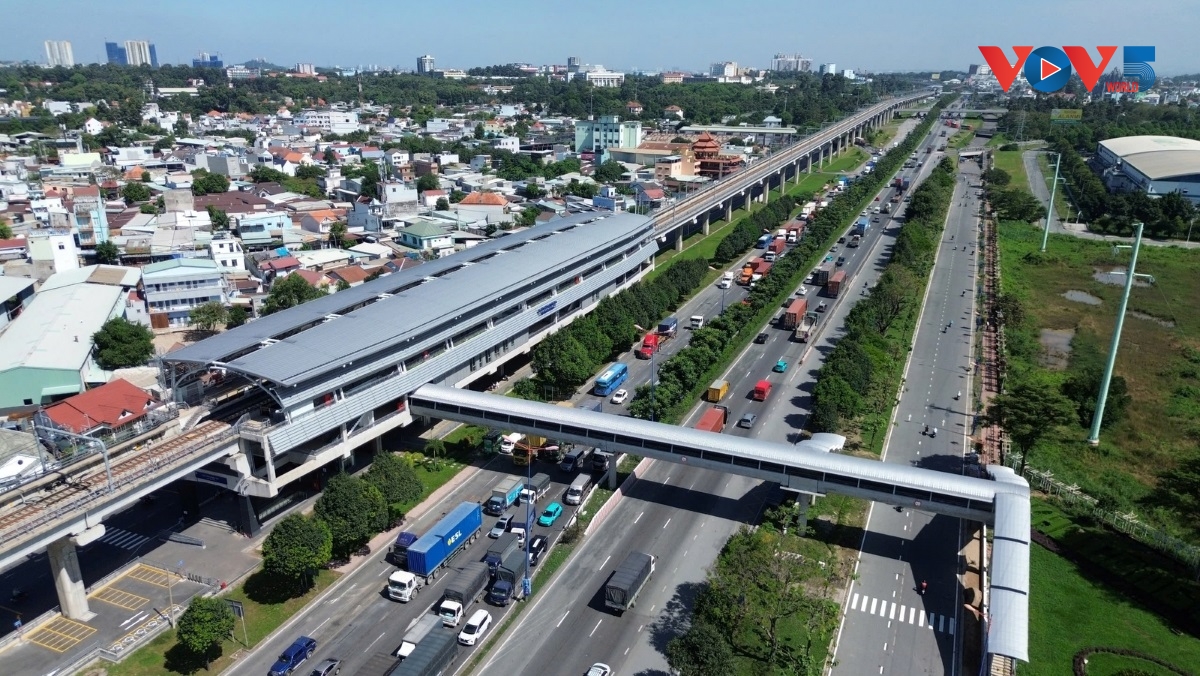
At 6:30 a.m., Thao Dien, Binh Thai, and Ben Thanh stations are already packed. Office workers, students, and tourists step onto the station concourses in steady streams. Some grab a coffee to go, others stop at vending machines for a bottle of water, many get a quick breakfast before boarding.
After a year of operation, Metro Line No. 1 linking Ben Thanh and Suoi Tien has a thriving service ecosystem surrounding its stations. The line has logged 33 million passenger trips, an average of 64,000 passengers a day, providing a stable customer base for commercial and service activities to flourish.
Nguyen Trung Hieu, a resident of Thanh My Tay ward, told VOV, "When I ride the metro, I usually grab a drink from the vending machines inside the station. When I get off, I often stop by Metro Coffee. As for food, I notice eateries right below the metro stations or near the parking areas nearby."
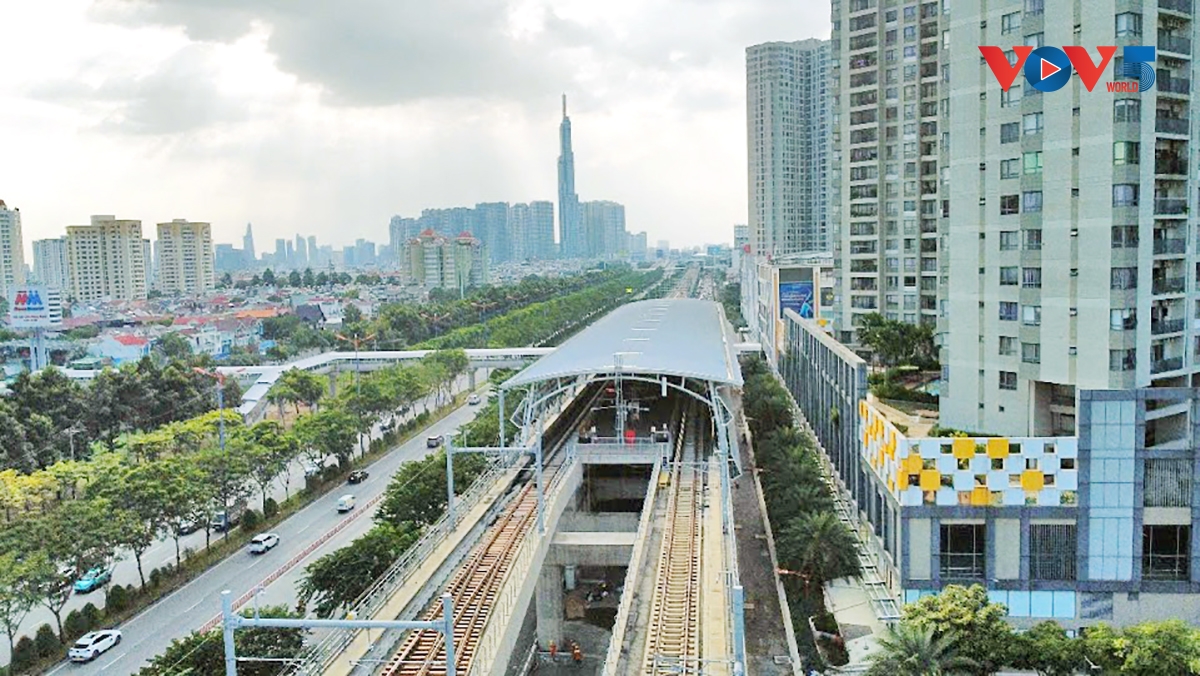
In the past, a station was just a place to board or alight from a train. Now every station has become a commercial and social space. People now are more likely to linger at a station to dine, shop, or rendezvous with friends before continuing their journey.
Local business owners are feeling these changes most directly. The Metro Coffee shop, whose clientele used to all be neighborhood residents, now serves a large daily influx of metro commuters. In the morning, they stop to pick up a takeaway coffee. In the evening or on the weekend, many stay to enjoy their coffee at a table.
Nguyen Thi Kieu Nga, the owner of Metro Coffee, said, "Business has improved steadily since the metro station started operating, and customer numbers have now stabilized. In the morning, they pop in to buy a cup of coffee or a drink to take with them on their way to work."
Ton That Hung, owner of Ba Dat Broken Rice, said, "Passenger numbers are highest on weekends and public holidays. Many people take the metro with their families and come here to eat, so we see a large number of customers."
According to urban planning experts, this is the cornerstone of the so-called "station economy", a model where public transport drives the growth of trade, services, and broader economic activity. Cities like Tokyo, Seoul, Singapore, and Hong Kong (China) have effectively leveraged this model for years, turning transit hubs into busy shopping centers, office spaces, and service nodes.
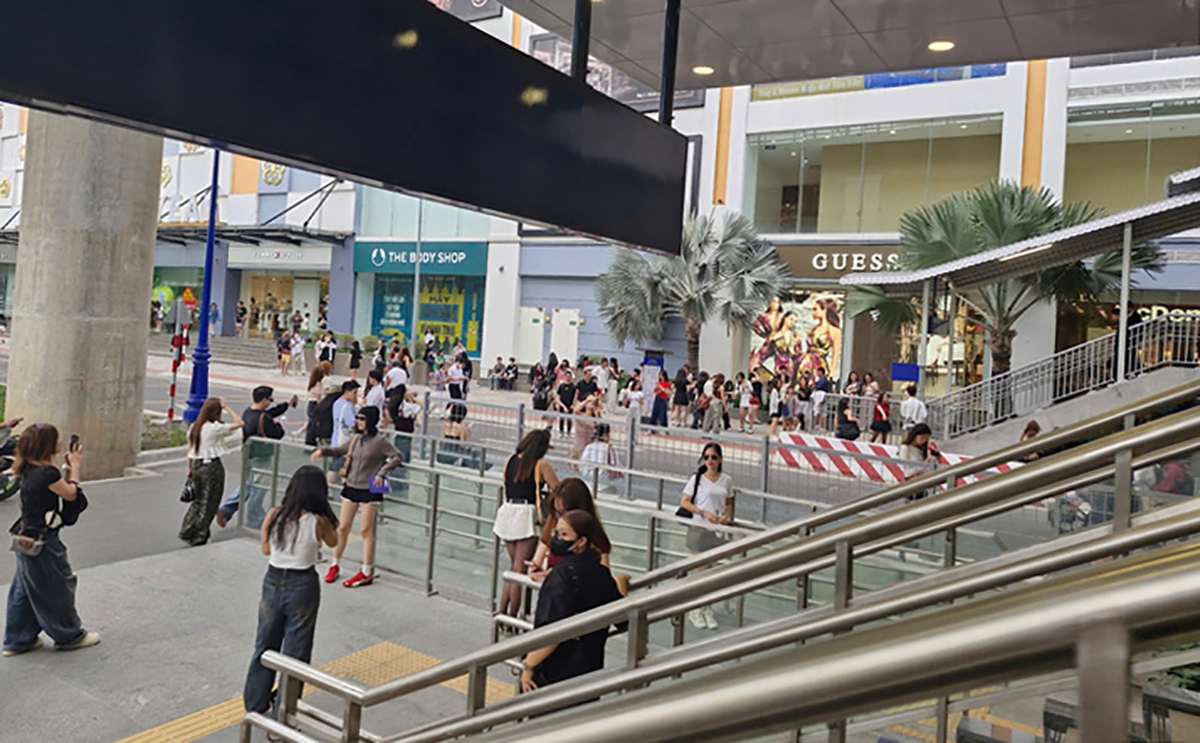
In Ho Chi Minh City, this development vision is being realized step by step through Transit-Oriented Development (TOD). As TOD areas are rolled out, metro stations will connect travelers with commercial and service chains, maximizing the value of the city’s transit infrastructure.
"The project will help diversify the services available at stations and enhance amenities for passengers using the urban railway system," said Tran Dang Thanh, Deputy Director of Urban Railway Company No. 1.
Takeaway coffee kiosks, fast-food shops, convenience stores, parking structures, and larger retail spaces are shaping a dynamic new ecosystem around metro stations. As the metro network expands and TOD areas take shape, stations will become new economic hubs for HCM City.


