



A 500-meter stretch of land along the Red River beneath Long Bien Bridge, once used as a dumping ground and largely avoided by residents, has been reborn as a cultural and creative destination that attracts widespread public interest.
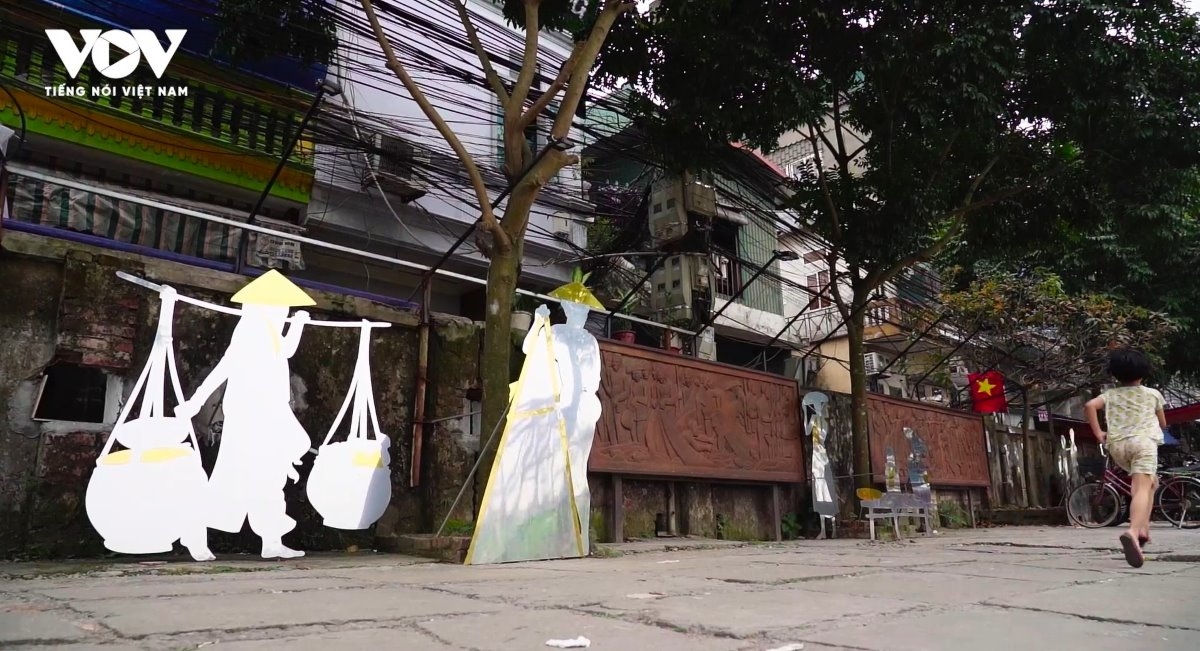
Along the weathered wall separating the residential neighborhood from the river, 16 domestic and international artists have created 16 inspiring public artworks using a variety of materials, completely transforming the streetscape.
Young artist Can Van An created Parallel Reflection, featuring a flood-prevention boat commonly used by riverside residents and decorated with 5,000 fragments of mirrors that reflect the image of Long Bien Bridge.
In his installation Broken History, artist Vuong Van Thao arranged 36 ceramic plates, each measuring 30 centimeters in diameter, to recount the story of Bát Tràng, the ancient pottery village on the riverbank.
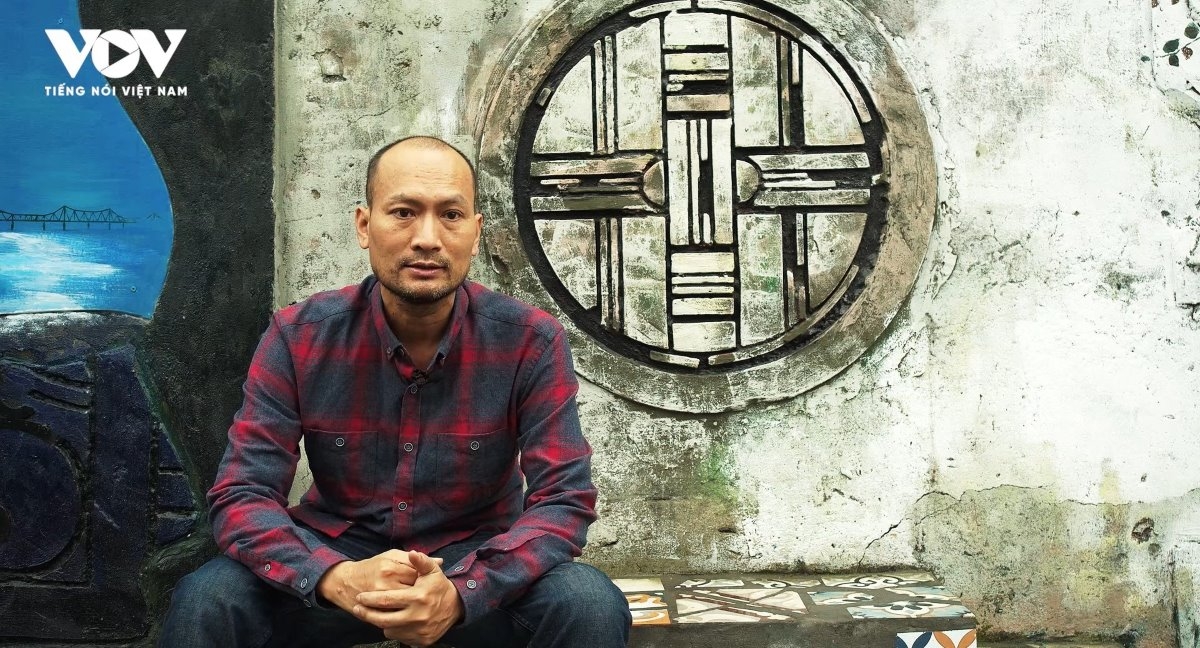
Fine arts researcher and visual artist Tran Hau Yen The contributed The Wall of Fame, a work that evokes memories of doors from homes that disappeared amid urban development.
According to The, this project brought together artists, local authorities, and residents to transform an area that was once dark and polluted.
“Although it is located in the heart of the city, this place had long been forgotten. We deliberately took a different approach from conventional public art projects, which are usually created on clean walls. Here, we did the opposite. The environment has become cleaner and residents have become more conscious of keeping the area tidy," said The.
The Phuc Tan public art project tells the stories of Phuc Tan, the Red River, and Hanoi's broader cultural and historical heritage. Many of the artworks were created from recycled materials, including glass bottles, tires, and chicken coops, making them both environmentally friendly and visually distinctive.
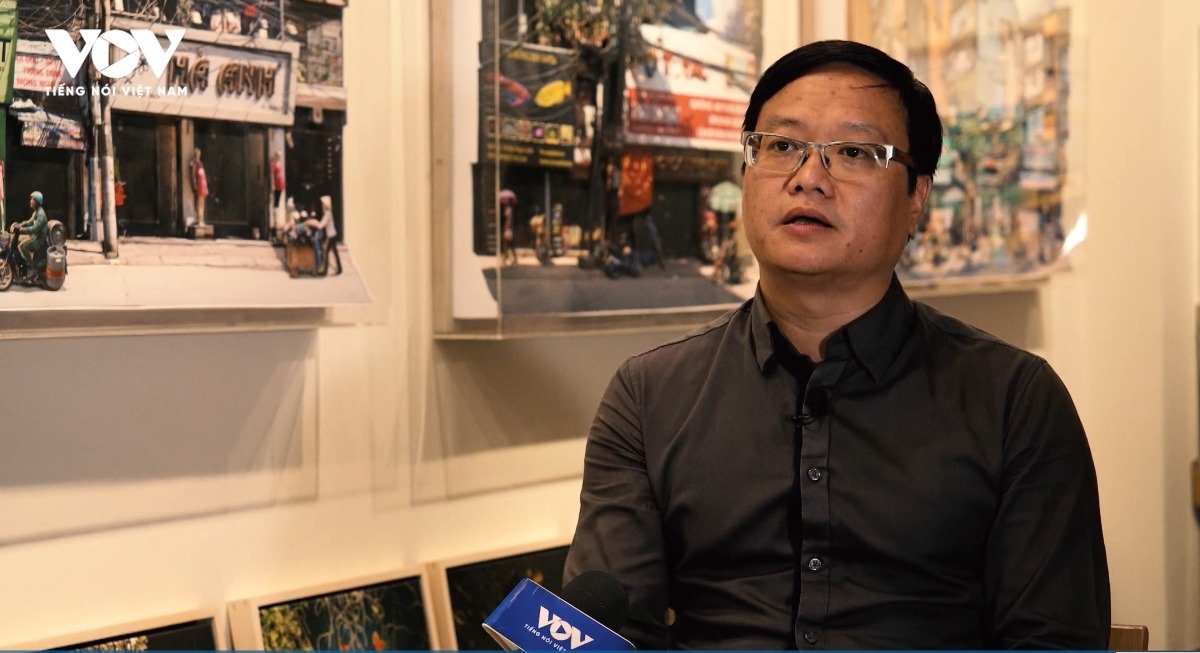
Using scrap iron and mirrored stainless steel, artist Nguyen The Son, the project's curator, created an installation depicting street vendors and laborers at the Red River wharf.
"The project has made local residents prouder of their neighborhood, encouraging them to care more for their surroundings and become more aware of environmental sanitation. It has also transformed the landscape of the area. The lighting integrated into the artworks has made the entire neighborhood brighter," Son noted.
Every afternoon and during weekends and holidays, crowds gather along Phuc Tan community art street to relax and enjoy the open space. The project has become woven into the daily life of local residents.
According to artist Son, the Phuc Tan project demonstrates how urban spaces can be completely transformed when reimagined through community cultural values. "It creates a dialogue with the local community, encouraging people to appreciate, explore, and discover the neighborhood. It has inspired other groups of artists to develop community-based public art projects."
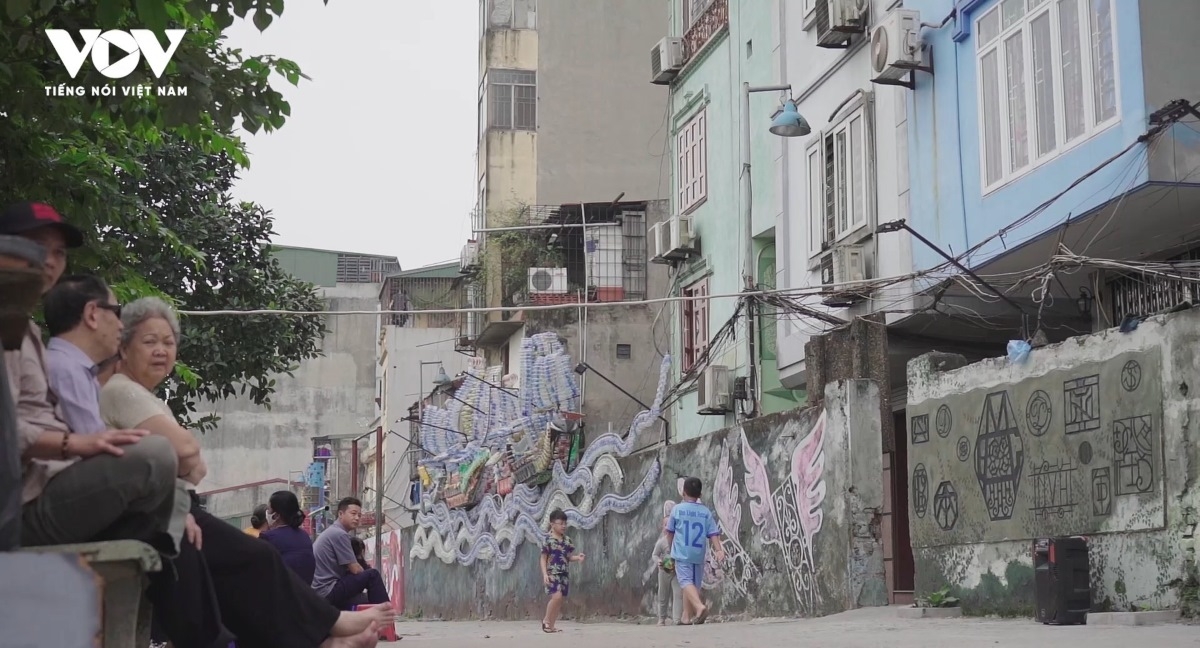
The Phuc Tan public art project has provided residents with a clean, green public space and become a symbol of community solidarity and creativity.
Its impact expanded even further two years ago with the inauguration of a public art project on the Tran Nhat Duat pedestrian bridge, which connects Hanoi's Old Quarter with the Phuc Tan neighborhood outside the Red River dyke. Together, these spaces have reinvigorated the urban landscape and offered residents and visitors new ways to discover Hanoi's rich cultural and artistic heritage.