



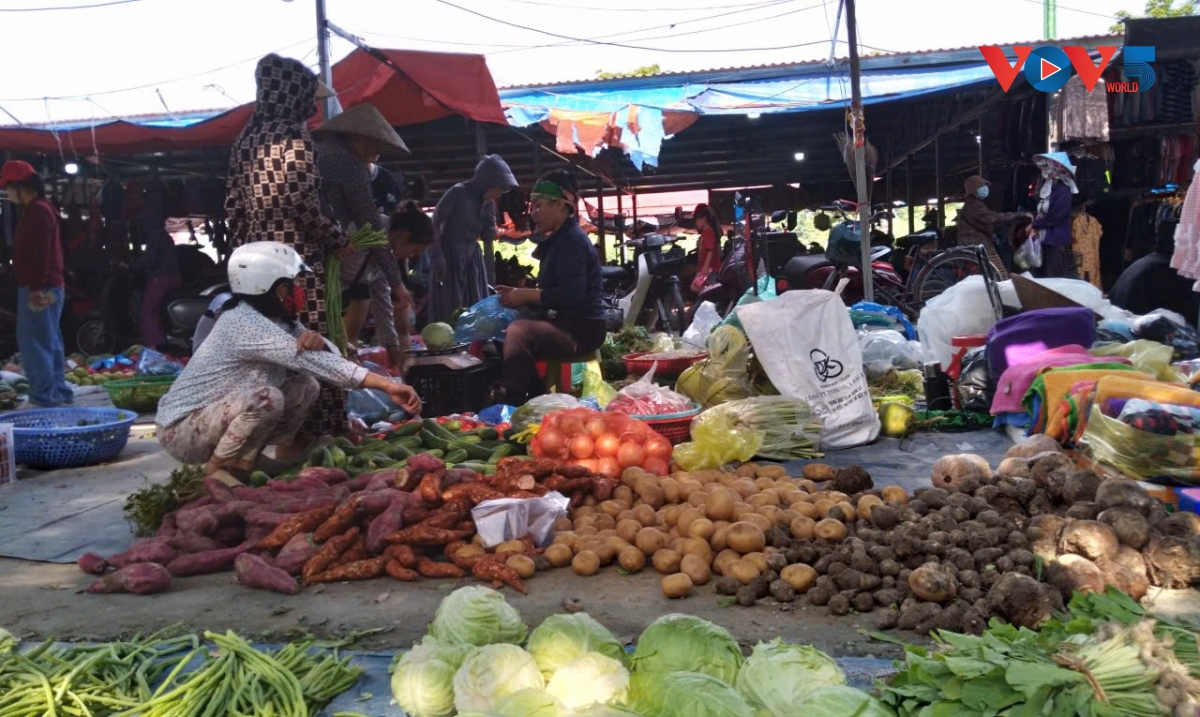
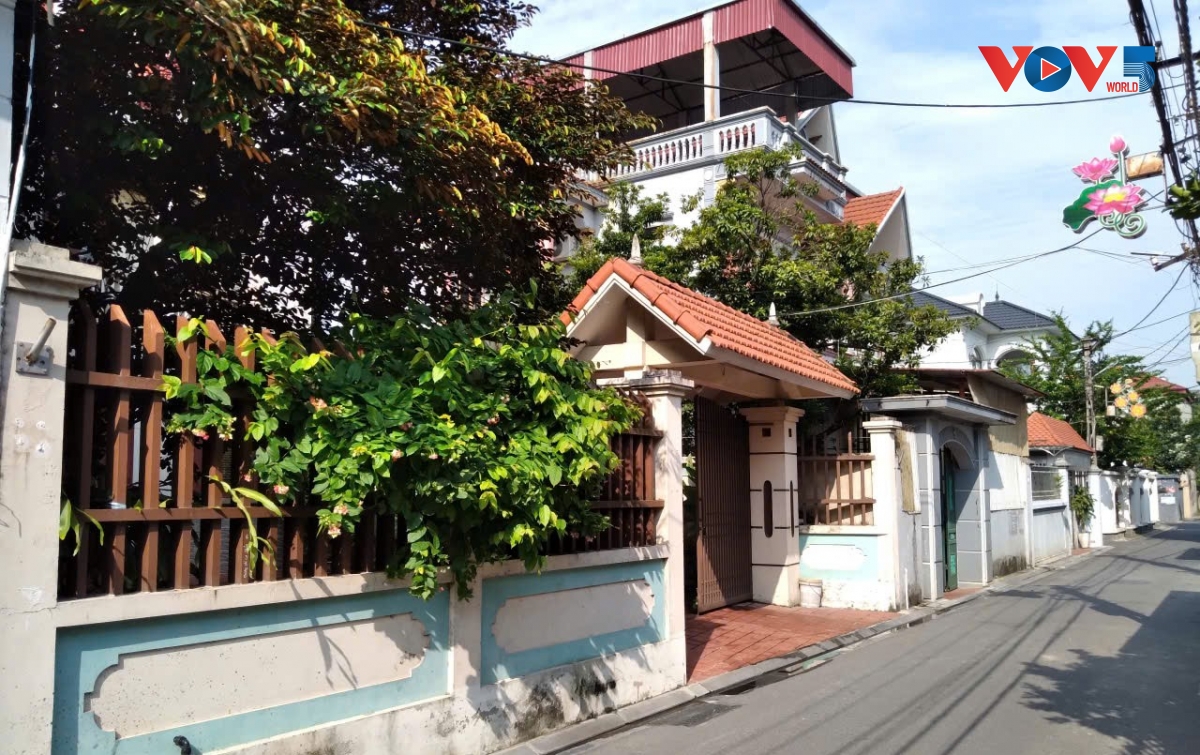
Visiting Thu Lam on an August morning, one of the first impressions is its fresh, clean atmosphere. From tending roadside flower beds and trees to restoring village ponds to maintaining cleanliness in public spaces, local efforts are aimed at creating a better living environment where culture is nurtured, ecosystems are maintained, and quality of life steadily improves.
Nguyen Thi Minh Nguyet, a Youth Union member in Dai Vi hamlet, said, “To build a green, clean, beautiful Thu Lam, we carry out Green Sunday campaigns, conduct environmental cleanups around memorial sites and historical monuments, and maintain road sections.”
The transformation of Thu Lam is reflected in the operation of its grassroots government apparatus. In the past, the locality’s performance was measured by economic growth, revenue collection, and the number of construction projects completed. Today, the commune has a different mindset – to be a government that serves the people, and public satisfaction and happiness are its ultimate benchmarks.
Holding a new set of land documents from the one-stop service department, Bui Van Duc of Lien Ha Hamlet 1 said, “Today I came to the Thu Lam People’s Committee to complete some land-related administrative procedures. The staff guided me enthusiastically and my issue was quickly resolved.”
Residents’ satisfaction depends on the efforts of young civil servants. Tran Thi Thoa, a specialist at Thu Lam’s public service support point, said, “We keep learning and applying popular AI tools, while doing our utmost to serve citizens thoughtfully, responsibly, and in strict accordance with procedures, so people do not have to make multiple trips.”
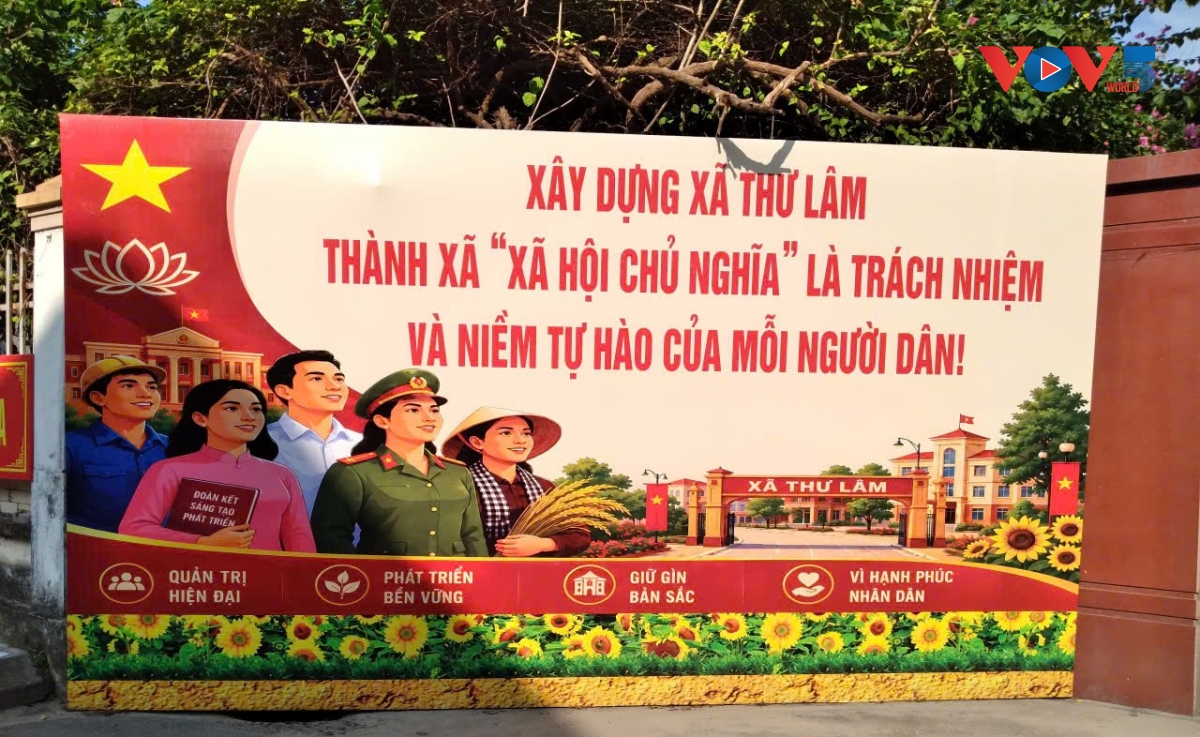
To implement the “socialist commune/ward” model, Thu Lam has developed a framework comprising 8 categories and 54 criteria, including the “Happiness Index” and the “Overall Satisfaction Level”. Under this framework, Thu Lam is promoting digital transformation, strengthening social welfare, preserving traditional culture, and expanding industrial and handicraft development.
According to Pham Trong La, Chairman of the Thu Lam People’s Committee, implementing the pilot model requires every task to be aligned with building a modern grassroots governance system.
“We’ve identified the key tasks outlined in the socio-economic development plan, structured around two pillars. One is the industrial growth axis centered on the Dong Anh Industrial Park and local industrial clusters. The other is the cultural resource development axis. The name Thu Lam itself embodies a rich cultural identity rooted in the Kinh Bac region. Our immediate priority is to create tangible changes, even small ones, that earn genuine recognition from the community,” said La.
Hanoi is entering a new stage of development, with growing demand for a streamlined, effective, efficient, service-oriented government. The decision by the Hanoi municipal Party Committee to issue a resolution piloting the “socialist commune/ward” model in Thu Lam highlights a strategic focus on quality of life and citizen satisfaction.
Nguyen Xuan Luu, Vice Chairman of the Hanoi People’s Committee, said that City leaders closely monitor and support Thu Lam, ready to make real-time adjustments based on circumstances to create the best conditions for the commune’s development.
“At the same time, the city is prepared to allocate the necessary resources, especially major investments with strong spillover effects, to support Thu Lam and Phuc Thinh,” Luu added.
Starting with Thu Lam and Phuc Thinh, Hanoi aims to establish a foundation for its “socialist communes/wards” model—building civilized, modern communities where residents’ happiness is the primary measure of development, where citizens enjoy a high quality of life, where government services are accessible, and where communities are closely connected.