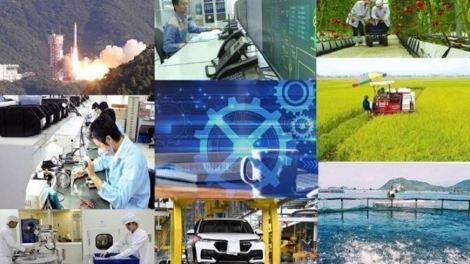




For the first time, science, technology, innovation, and digital transformation have become tasks of the entire political system, from central to local authorities, from the public sector to businesses, and from policymaking to implementation.
Change in policymaking
One of the most visible changes over the past year and a half is the institutional improvement. More than 400 legal and regulatory documents related to science, technology, innovation, and digital transformation have been submitted for approval.
There has been a notable shift in policymaking. Science management is moving from overseeing activities to building an innovation ecosystem. Breakthrough mechanisms have been introduced, including regulatory sandboxes, lump-sum funding for research, risk-tolerant policies for scientific projects, stronger intellectual property protection, commercialization of research outcomes, and talent attraction.
Vietnam's National Public Service Portal now integrates 3,475 administrative procedures. The 2026 "Digital Literacy for All" campaign has organized 105 online training courses and conducted more than 880,000 learning sessions. Vietnam also now operates 16 national key laboratories.
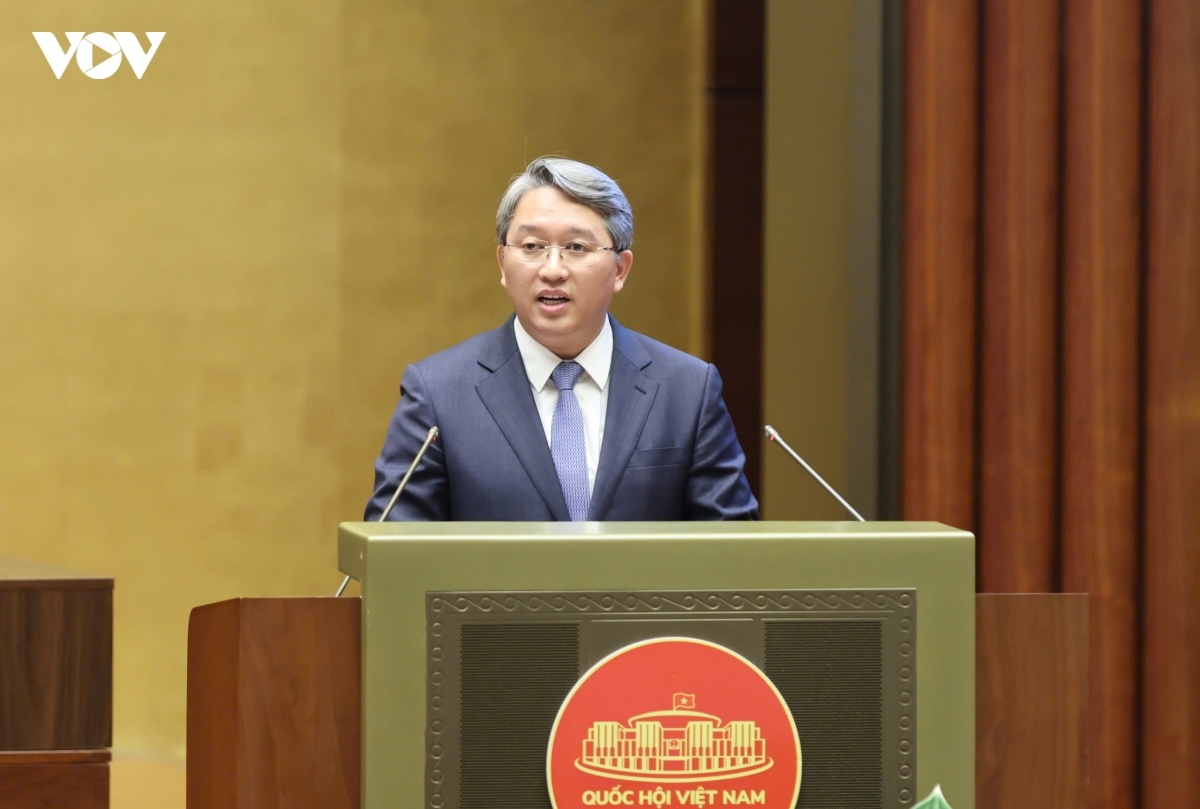
Nguyen Hai Ninh, Chief of the Office of the Communist Party of Vietnam Central Committee, said: "Resolution 57 is serving as a powerful engine for reform whose impact extends far beyond science and technology. Vietnam is actively participating in strategic fields such as artificial intelligence, semiconductors, data, digital technologies, and innovation."
Localities making science a development driver
Another aspect of Resolution 57's implementation is that provinces and cities are tailoring science and technology policies to their own competitive advantages and development needs. Advanced technologies are being integrated into agricultural production. Ca Mau province has expanded its low-water-exchange, super-intensive white-leg shrimp farming model to 1,500 hectares. Vinh Long has adopted unmanned aerial vehicles (UAVs), nano fertilizers, and disease-free embryo cultivation technologies to improve productivity.
Several localities are using technology to unlock indigenous resources. Lao Cai has used genetic technologies to conserve native crop varieties, while Quang Tri has mastered multiple biotechnology processes to develop high-tech agricultural products under the One Commune One Product (OCOP) program.
Technology is also transforming the service and tourism sectors. Ninh Binh is developing digital databases and artificial intelligence systems for heritage management and conservation. Tuyen Quang has introduced digital maps and AI-powered tour guides. Thai Nguyen has launched the "Tea Trace Thai Nguyen" platform, integrating product traceability, IoT-enabled digital maps of tea-growing areas, digital quality records, and e-commerce connectivity.
Hanoi has allocated more than 3 percent of its budget to science and technology, exceeding the national target. Ho Chi Minh City has established a venture capital fund with initial capital of 19 million USD, with plans to expand it to 190 million USD.
Nguyen Van Phong, Deputy Secretary of the Hanoi Party Committee, said: "Hanoi has established an Innovation Center under a joint-stock company model, operating flexibly according to market principles while maintaining state guidance. The new two-tier local government system, which is closer to citizens and more directly engaged with practical issues, provides valuable real-world solutions in areas such as land management, transportation, public security, the environment, healthcare, education, and culture. They are critical inputs for science, technology, and innovation."

Vietnam plans to accelerate digital transformation in businesses and society while ensuring that scientific advancement translates into practical value. Party General Secretary and State President To Lam said: "The core of science is creating new knowledge. The core of technology is turning knowledge into practical tools. The core of innovation is transforming those tools into new value for society. These three elements must come together in the country's development. Vietnam must concentrate resources on mastering and developing strategic technologies into commercially viable products, particularly in artificial intelligence, big data, robotics and automation, biotechnology and biomedicine, advanced materials and energy, semiconductor chips, cybersecurity, quantum technology, unmanned aerial systems, and marine and underground technologies.”
In 18 months of Resolution No. 57 implementation, a solid foundation has been laid. Science, technology, innovation, and digital transformation have become the primary engines of growth, replacing the traditional model of combining capital investment, natural resources, and low-cost labor.