







Ky Lua is cherished not only for its breathtaking scenery, but also for the stories that have been passed down through generations.
Amid the rhythm of a town that is constantly evolving, Ky Lua has managed to preserve its distinctive character: the morning bell of Thanh Pagoda, the gentle scent of incense drifting through Ta Phu Temple, a centuries-old marketplace, and the intricate embroidery adorning the traditional textiles of the Nung Phan Slinh people.
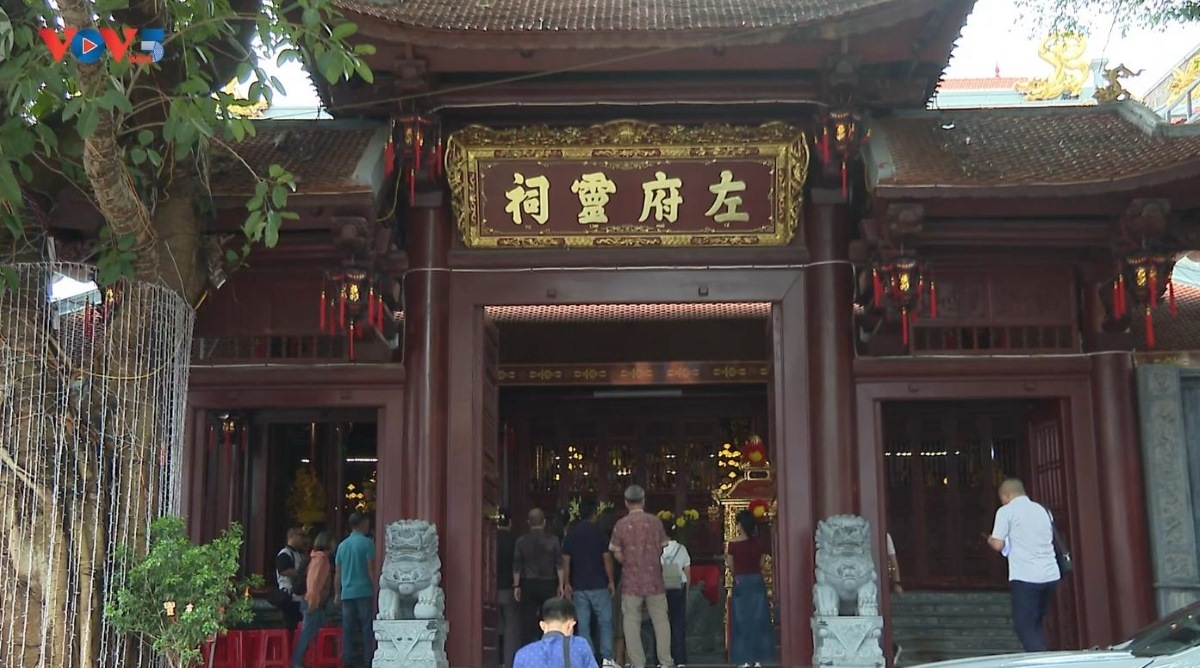
Ta Phu Temple stands in the heart of Ky Lua. For more than three centuries, it has remained a sacred place where local people gather at the beginning of each year to offer incense, pray for peace, and wish for prosperous harvests.
Visitors are drawn here because of the temple's ancient architecture, its well-preserved statues, and especially the story of Than Cong Tai, the distinguished mandarin who played a pivotal role in safeguarding the borderlands and developing Ky Lua into one of the region's busiest trading centers.
Dang Minh Thuan, a standing member of the management board of Ta Phu Temple, said: “The Ta Phu Temple does not worship a legendary figure but rather a real person engaging in a real event. During the time he was in Lang Son, his contributions were immense. He not only secured the borders of Lang Son at that time, but also mobilized people from his own side and from China to come and develop the dense forests and mountains into the Ky Lua market town in the 17th century.”
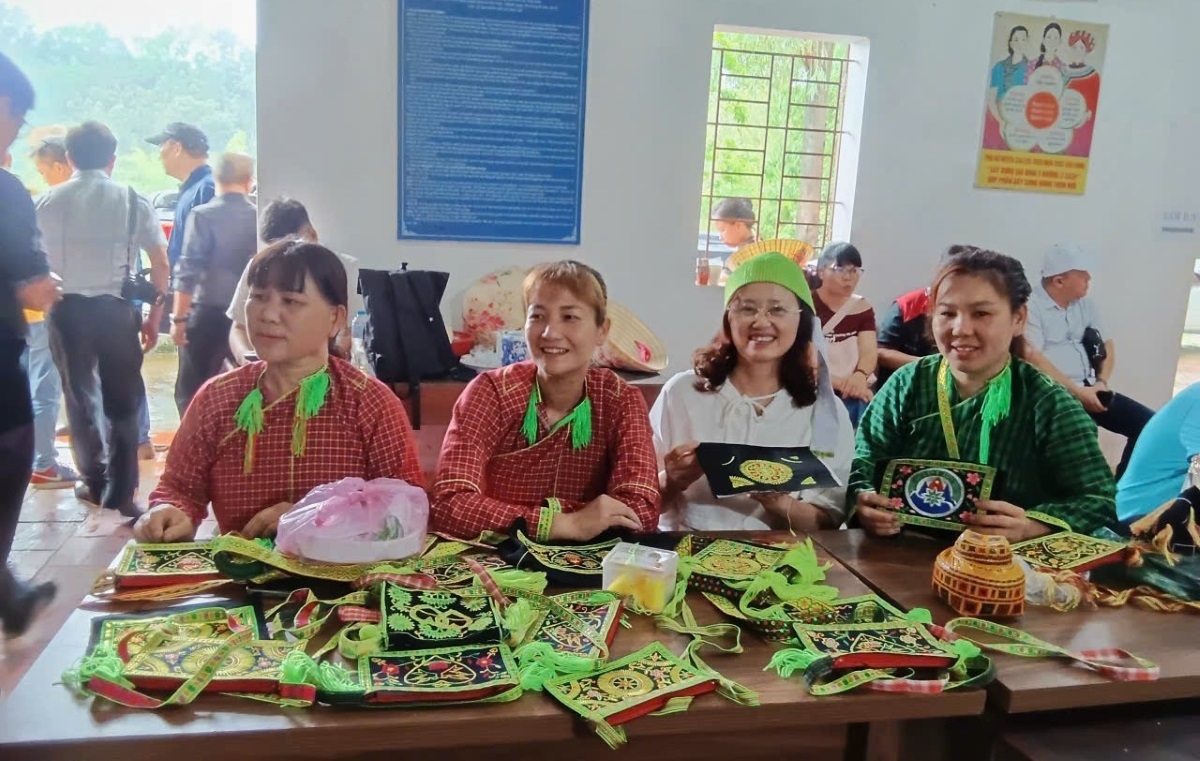
Local women of the Nung Phan Slinh ethnic group have preserved their traditional embroidery craft. Every pattern embroidered onto traditional clothing, scarves, and fabric bags is stitched entirely by hand.
Ha Thi Thom, an artisan from Hop Tan residential quarter, Ky Lua Ward, said: "This craft has been passed down by our ancestors for generations. I grew up watching my grandparents and parents grow cotton, weave cloth, and dye the fabric black to make traditional clothing. To make a bag, we cut pieces of black fabric and then embroider every detail entirely by hand."
Cultural researchers say Ky Lua's true value lies not in its individual historical sites, but in its living cultural landscape, where history, spiritual traditions, and community life continue to coexist and thrive.
Nguyen Quang Trung, an expert in spiritual tourism training and development in Vietnam, said: "Ky Lua needs a human resources system from monument managers, local people, and management agencies. They need to communicate, introduce, and guide tourists on the history and origins of the communal houses, temples, and pagodas, and instruct tourists on proper conduct in these sacred spaces. Spiritual tourism should be centered around festivals, as festivals bring many valuable benefits in terms of preservation and conservation."
The local authorities are developing tourism products that combine heritage conservation with the promotion of local identity, while continuing to improve the quality of tourism services.
Ho Thi To Uyen, Vice Chairwoman of the People's Committee of Ky Lua ward, said: "Local authorities will continue to invest in spiritual tourism. For example, Bac Nga Pagoda will be expanded while preserving its original character. In addition, visitors will also have the opportunity to experience the traditional hand-embroidery craft of the Nùng Phàn Slình people through hands-on workshops."
It is often said that a place is only captivating when it has a story to tell. Perhaps that's why everyone who leaves Ky Lua carries something with them. It's not just a trip, but a memory of a land that quietly preserves the cultural soul of Lang Son amidst the flow of modern life.


