




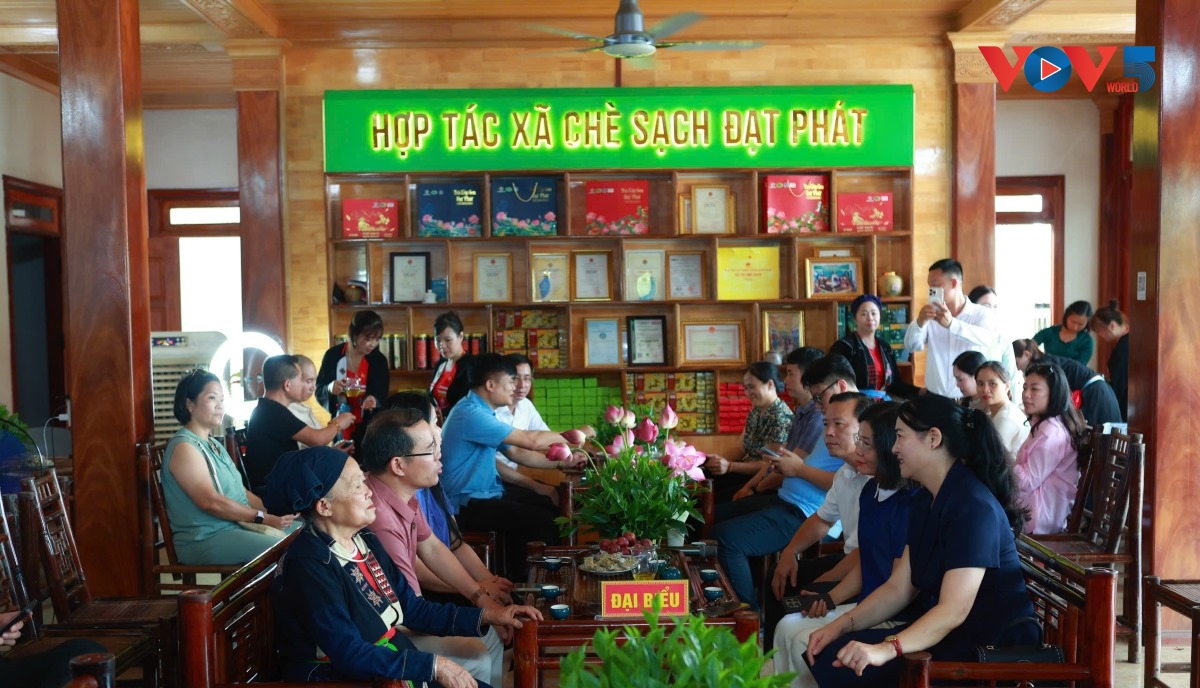
Vo Tranh, one of Thai Nguyen’s largest tea-growing areas, has 2,600 hectares of tea plantations, dozens of traditional tea craft villages, and one of the locality’s highest fresh tea bud outputs. In recent years, while steadily expanding its organic tea-growing areas, the commune has adopted Vietnamese Good Agricultural Practices (VietGAP) standards to satisfy the increasingly stringent requirements of domestic and international markets.
Organic tea production requires farmers to transform every stage of the process—from restoring soil health and using organic fertilizers to applying biological pest control and enforcing strict harvesting, processing, and traceability standards. Although the transition has required a large investment and a long conversion period, it has significantly improved both the economic value and the market competitiveness of the final product.
Bui Phuong Thao, Deputy Chairman of the People's Committee of Vo Tranh commune, said, "We’re focusing on developing agriculture and traditional handicrafts, with green agriculture and tea as our key sectors. The commune is investing in science and technology and strengthening promotional activities. To date, Vo Tranh has developed 15 OCOP (One Commune One Product)-certified tea products."
The government's development strategy has encouraged more tea growers to embrace organic farming. Whereas production volume was once the primary concern, quality, food safety, and sustainable development have now become the top priorities.
To ensure premium-quality organic tea, several cooperatives have invested in integrated production systems covering cultivation, processing, and tea tasting. These investments are laying the foundation for a complete value chain linking raw material areas with processing and marketing.
Vu Thanh Thom, Director of the Dat Phat Safe Tea Cooperative in Vo Tranh commune, said, "To produce the finest tea, we use the Kim Tuyen variety of black tea, and other varieties such as F1 hybrid tea, Dinh tea, and Tom Non tea.”
“Every stage—from cultivation to processing—must strictly follow rigorous standards to achieve the four-star OCOP certification. Our cooperative has welcomed many international visitors who have experienced our tea culture, highly praised the quality of our products, and purchased large quantities," Thom noted.
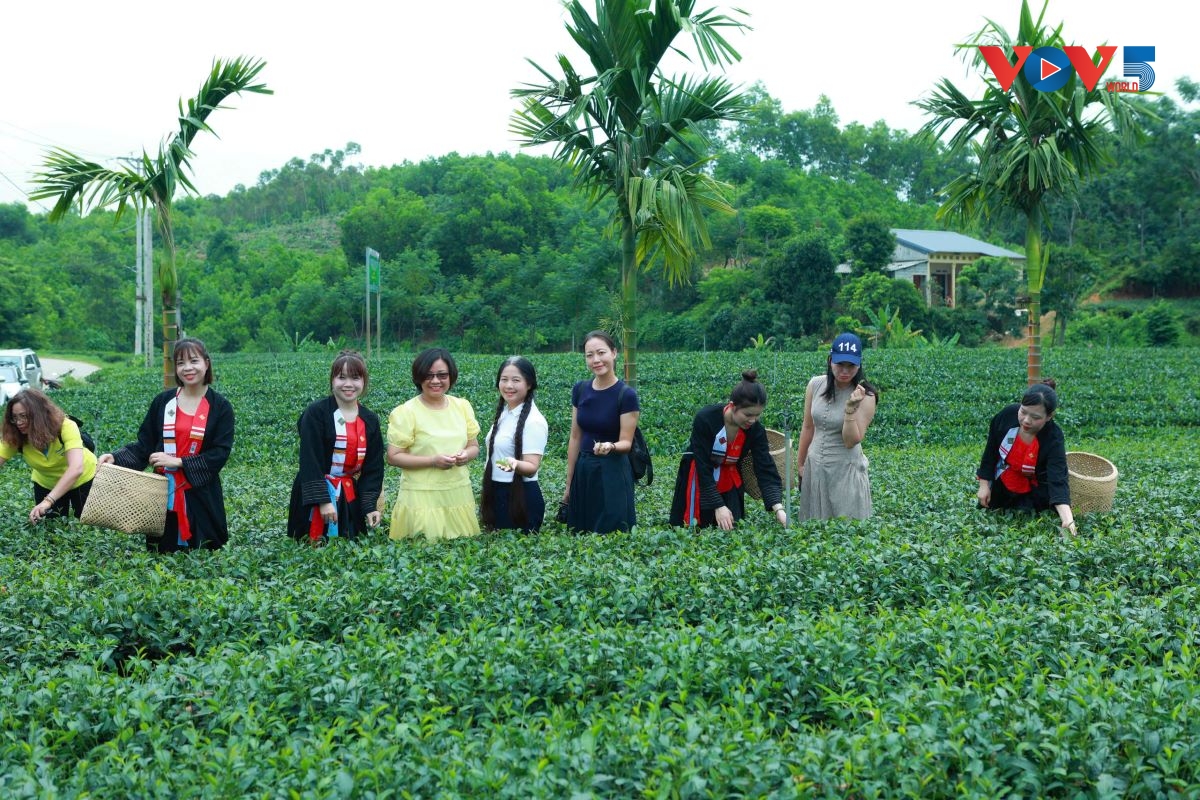
Vo Tranh’s lush tea hills are becoming a popular destination for tourists. Not content with looking at and buying the tea, many tourists now want a hands-on experience picking, roasting, and tasting the tea grown in Thai Nguyen.
Nguyen Hong Thang, a tourist from Lao Cai province, suggested, "Thai Nguyen tea is already famous. To further its reputation at home and abroad, we should attract more international visitors to Thai Nguyen so they can experience and help promote Vietnam’s tea culture."
According to Chu Thi Do, Deputy Director of the Thai Nguyen Tourism Promotion and Development Center, "Khe Coc tea in Vo Tranh commune is recognized as one of Thai Nguyen’s five finest tea-growing areas. Thai Nguyen province is developing community-based tourism centered on organic tea culture, while also showcasing our picturesque tea hills, orchards, and the cultural heritage of the San Chay ethnic community."
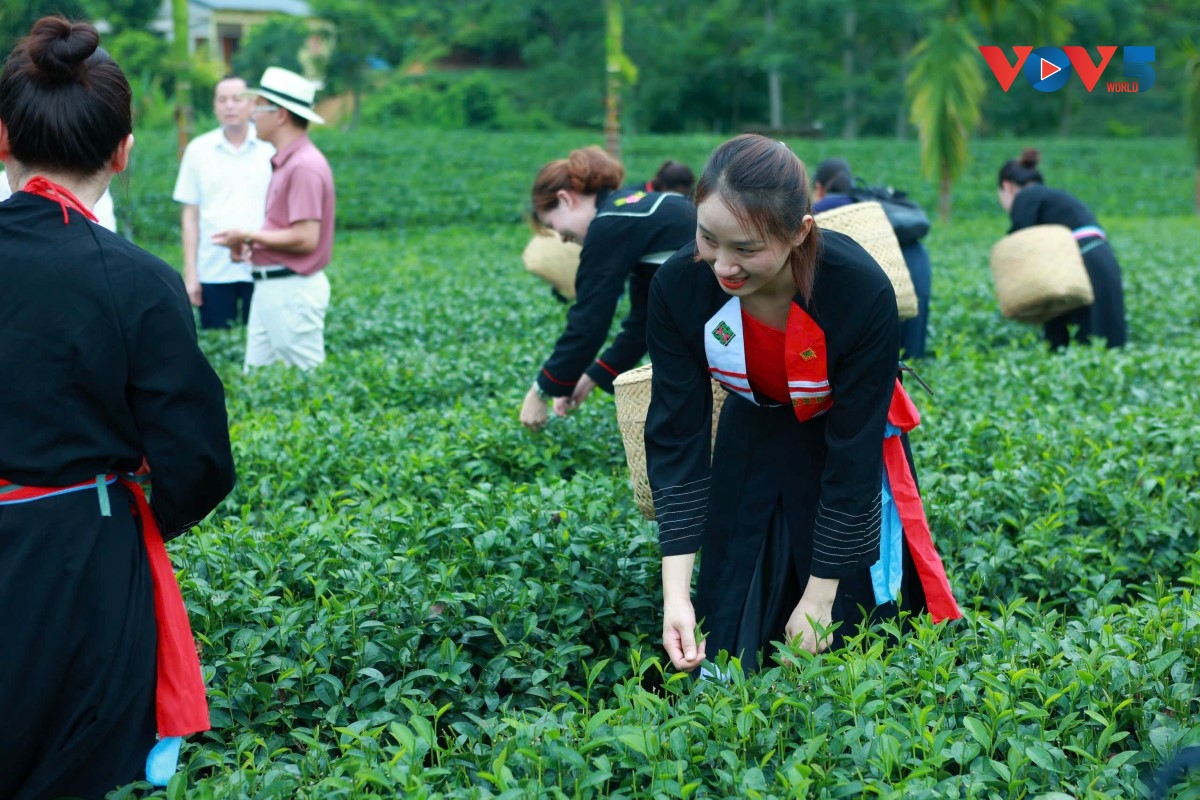
From the green tea buds cultivated in Vo Tranh, a new model of rural development is taking shape—one that combines sustainable agriculture with experiential tourism. As farmers adopt greener production practices, local authorities provide support, and businesses expand market access, organic tea is generating greater economic returns while preserving the region’s rich tea heritage.
In doing so, Vo Tranh is building its reputation as a place where organic tea cultivation and tourism go hand in hand, contributing to Thai Nguyen’s vision of green, sustainable development.