







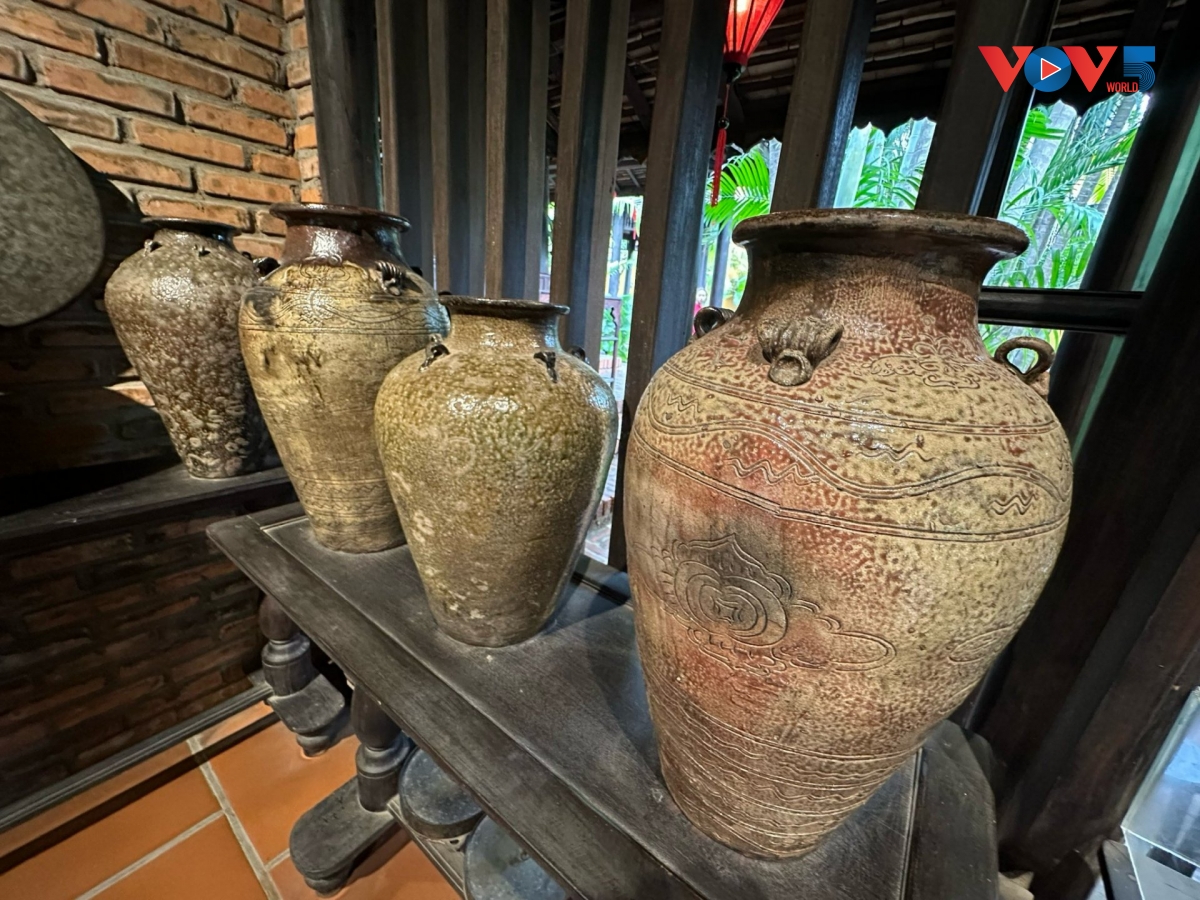
Quang Duc is an ancient village in the lower basin of the Cai River, founded during the exploration and expansion of the Phu Yen area in the late 16th and early 17th centuries. Its location made it easy for people to settle, trade, and develop silk weaving and pottery. That craft tradition survives today mainly in the memories of families whose ancestors produced pottery for generations.
“My grandmother told me that back in her day, everyone in the village made pottery—jars, basins, spoons, and many other things. Brothers, sisters, and relatives throughout the village—nearly every household made pottery,” a local villager said.
“For the first 20 years after liberation, we made spoons and all kinds of pots. People were still using them at the time, so production was high,” another villager has this to say.
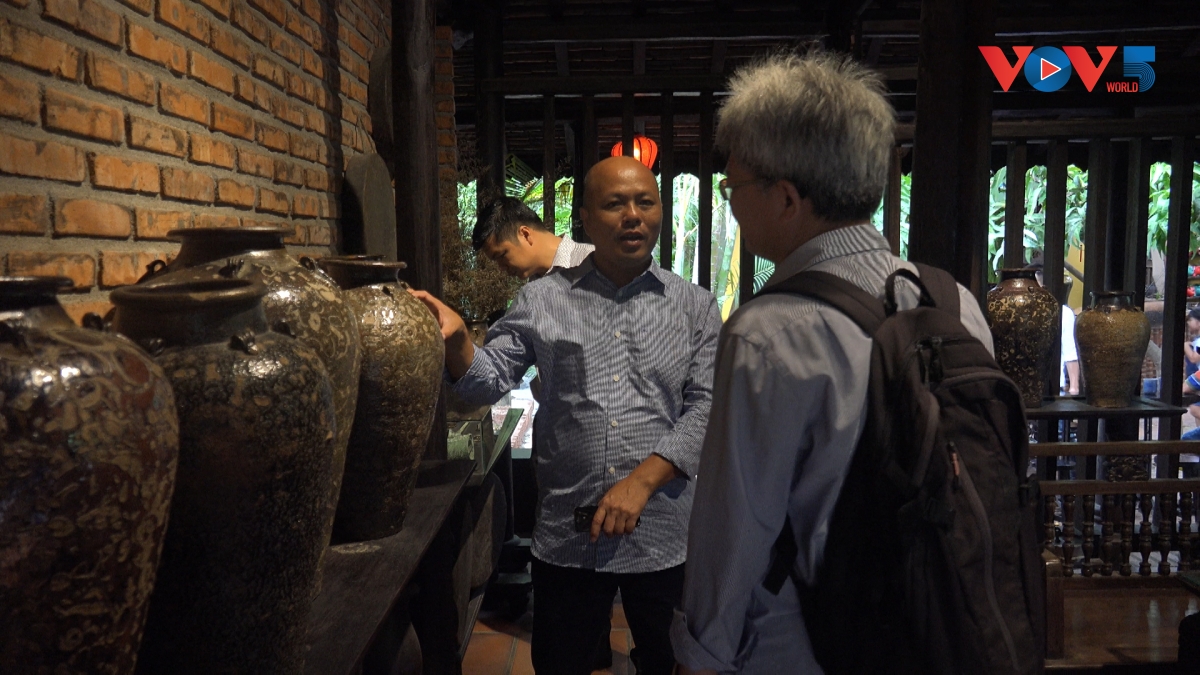
According to historical and archaeological studies, Quang Duc pottery was produced from the 17th century to the early 20th century. Evolving from a local handicraft, the ceramics were traded across central Vietnam, the Truong Son-Central Highlands region, and beyond. Some pieces have even been recovered from shipwrecks, providing further evidence of the trading networks linked to the Cai River ceramic tradition.
Historical and cultural researcher Nguyen Danh Hanh said, “Surveying Quang Duc village, we see numerous traces of a long-standing pottery tradition. There are extensive waste heaps of artifacts at the foot of the mountain. Between 10 and 15 years ago, during our field trips to Quang Duc, we still found traces of tortoise-shell-shaped kilns, an extremely ancient style of kiln.”
Ceramic waste dumps, kiln ruins, and product fragments buried beneath the earth have enabled researchers to trace the origins, development, and evolution of a craft closely tied to communities along the lower Cai River.
Professor Dr. Nguyen Van Kim, Deputy Chairman of the National Heritage Council, underlined a combination of indigenous raw materials and the creative ingenuity of local artisans. “The uniqueness of this ceramic line lies in its local characteristics and creativity, closely linked to the southern expansion of the Nguyễn Lords. It’s a masterful combination of native elements—from land, sea, fire, and wind—coupled with human craftsmanship that yielded these pieces. The deliberate use of blood cockle shells gives each item a distinct artistic value,” said Kim.
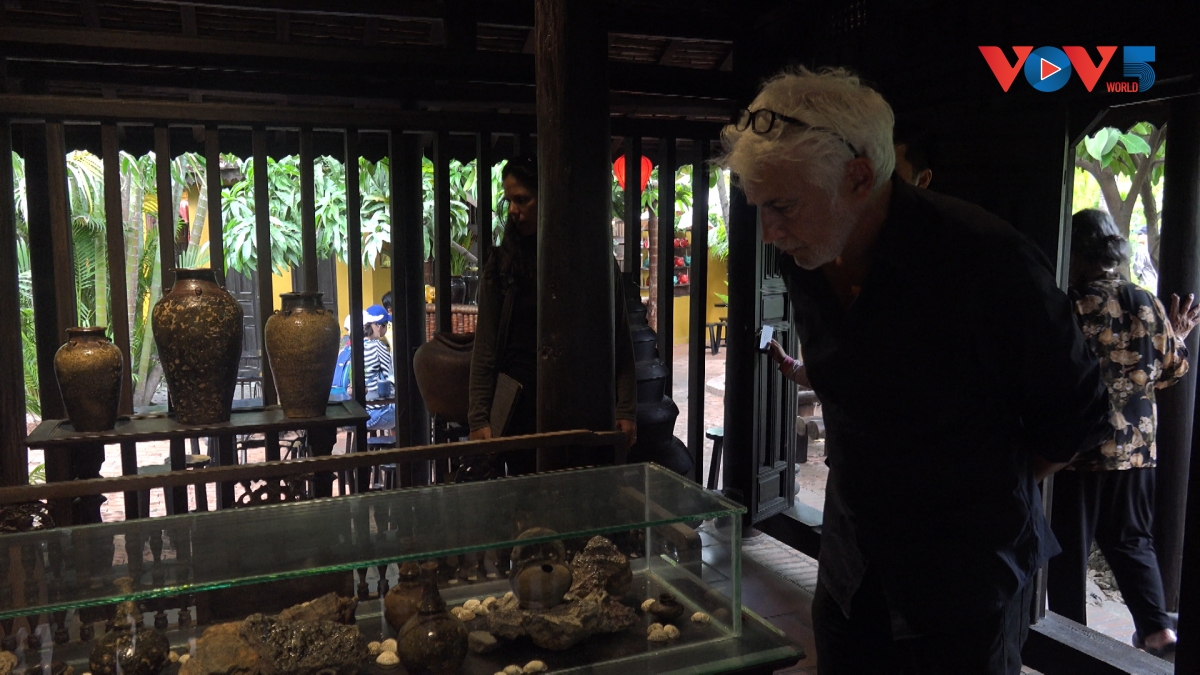
Associate Professor Dr. Dang Van Thang, Head of the Archaeology Faculty at the University of Social Sciences and Humanities, Vietnam National University Ho Chi Minh City, said further excavation and research are needed to determine the kiln site's chronology, production techniques, and raw material composition.
Thang recalls, “First, we must conduct meticulous surveys and excavations of the kiln area to determine its exact dates. Second, scientific techniques must be used to analyze how the blood cockle glaze was created and what type of clay was used, so that we can help the locals locate that clay again and revive the craft.”
Under a project to establish Phu Yen Geopark, which is seeking UNESCO Global Geopark designation, Quang Duc pottery has been proposed for inclusion in the area’s network of cultural heritage sites.
Born from earth, fire, and human hands, Quang Duc pottery is an indelible part of the collective memory of communities along the Cai River. The surviving traces of this craft preserve a chapter in the cultural history of ancient Phu Yen—a heritage now being rediscovered, protected, and passed on to future generations.


