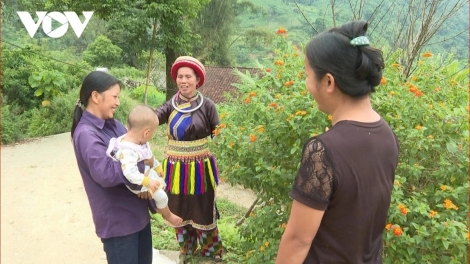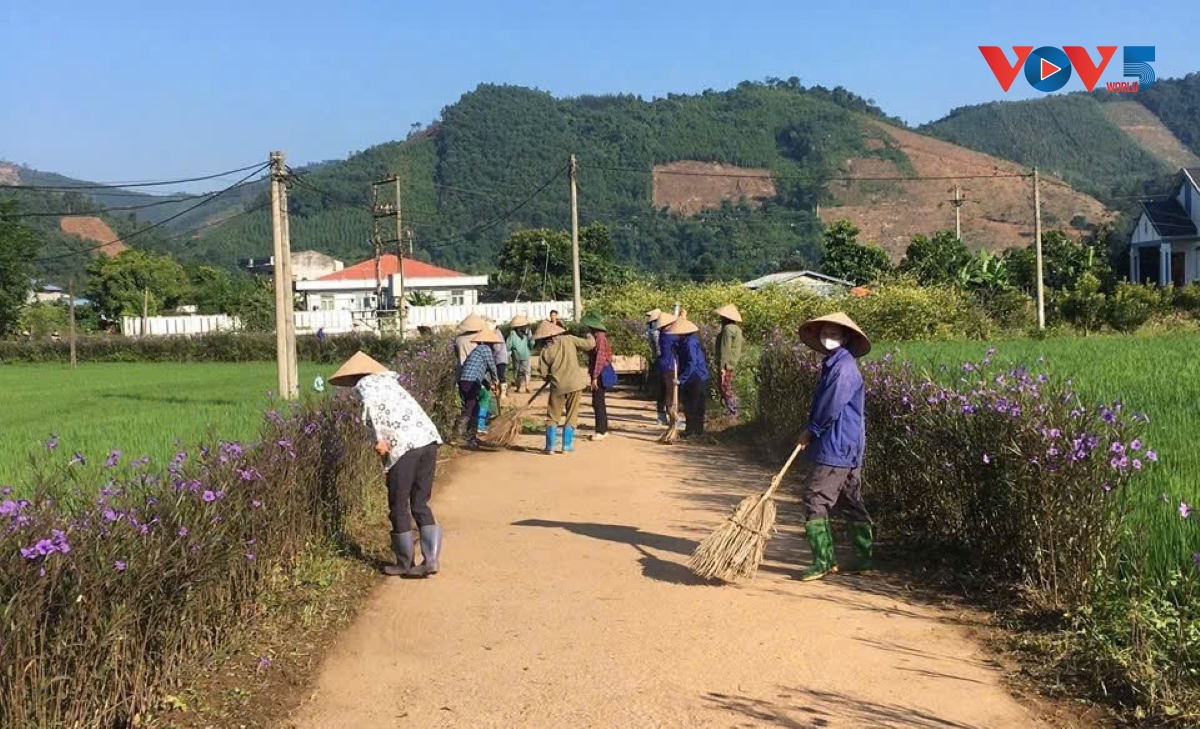
Bung hamlet in Phong Quang commune has 40 Dao ethnic minority households. Since May last year, the local women’s union has implemented the “Safe Village” model, mobilizing residents to join hands in creating a secure living environment. Villagers regularly clean up public spaces, plant trees, and help create a green, clean, beautiful landscape, while and installing lights in residential areas for public security and order.
Pham Thi Tuoi, secretary of the hamlet Party cell, said, “We regularly clear weeds around the community house and keep village roads and alleys clean. In addition, we encourage families to live harmoniously and in solidarity so as to keep domestic violence at bay.”
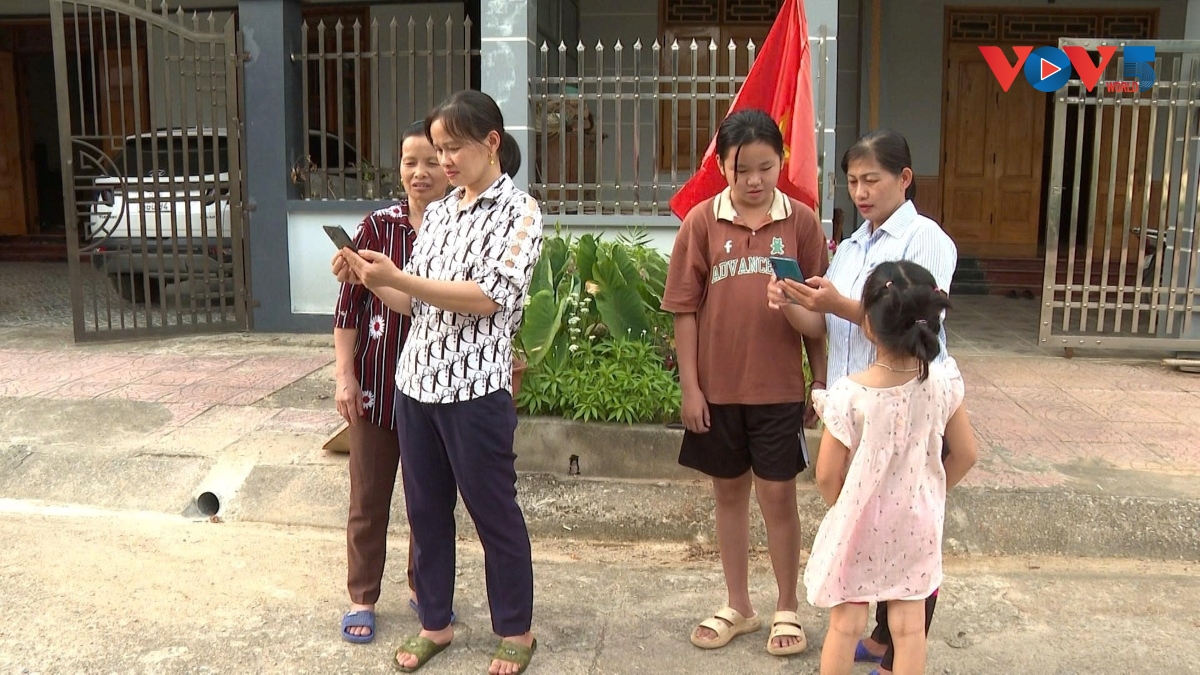
The model creates safer spaces for children through the construction of playgrounds and the organization of cultural, sports, summer, and life-skills activities to help them develop physically and mentally. The model’s management board places strong emphasis on safe social media use. Women and children are taught to recognize harmful content, avoid scams and abuse, and protect their personal data online.
“My parents remind me to carefully choose online learning content. I also limit my use of social media and avoid harmful information on the internet,” Ly Thu Huong, a resident of Bung hamlet, said.
The “Safe Village” and “Safe Residential Area” models have been expanded to many villages and hamlets in Thai Nguyen province. Women’s self-management teams, “happy family” groups, and “trusted community addresses” have been established. These groups provide support and timely intervention in cases of domestic violence or abuse against women and children. Grassroots mediation efforts have also been strengthened, helping to reduce conflicts within communities.
Hoang Thi Thuy, head of the “Safe Village” management board in Pho hamlet, Tan Ky commune, told VOV, “Since the model was introduced in our village, I’ve seen many positive changes. Women have gained a better understanding of the law, gender equality, and self-defense skills. Children are better protected from the risks of abuse and violence. The living environment has become safer and healthier, and social evils have declined significantly.”
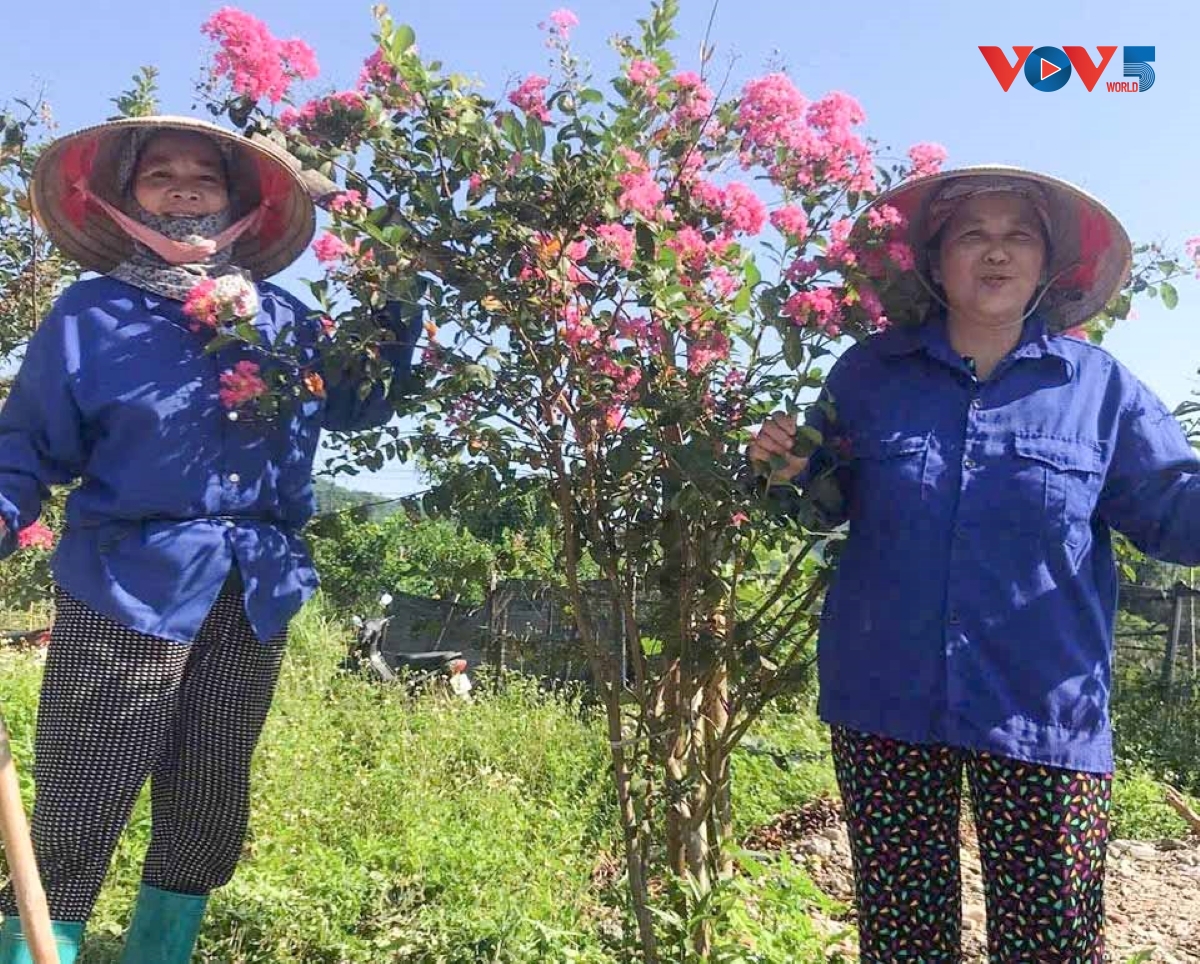
Communication campaigns and training programs for women are organized regularly in various forms, including women’s union meetings, mobile outreach campaigns, and village gatherings. They focus on legal knowledge, self-protection skills, reproductive healthcare, parenting, and gender equality.
Nguyen Thi Lan, head of the “Safe Residential Area” management board in Residential Group 3, Duc Xuan ward, said, “Our neighborhood has set up a management board to organize communication and training activities for residents. People realize the benefits of a safe residential area for women, children, and the wider community. Children here are well cared for and receive a full education, and no child has dropped out of school.”
The “Safe Village” and “Safe Residential Area” models in Thai Nguyen province are proving very effective. Residents have become more proactive in preventing domestic violence, and women are growing more confident and active in community affairs. Family ties and neighborhood solidarity have also been strengthened, contributing to richer cultural life in residential areas.