







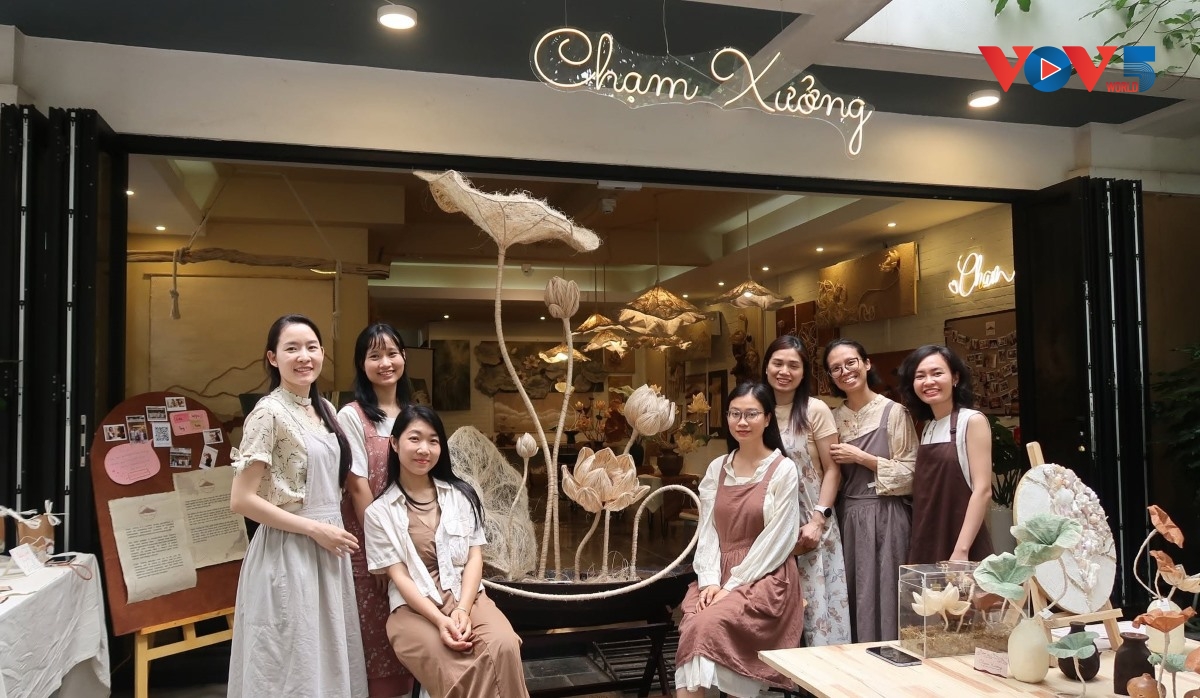
The team at Cham Workshop spent years searching for natural materials used in traditional craft villages before choosing banana fiber for its durability, delicate texture, natural resistance to moisture and mold, and eco-friendly qualities. Banana fiber is a premium product made from banana sheath after it has been carefully stripped, cleaned, and dried. Although banana fiber is abundant in many parts of Vietnam, it has been little-used in fine-art handicrafts.
Workshop founder Tran Thu Trang said, "The banana sheath is the largest part of the plant, yet after each harvest it usually becomes agricultural waste with very little value. As a designer focused on practical applications, I kept asking myself: 'What can I create from banana sheaths?' I wanted to turn this agricultural by-product into something more valuable by shaping and sculpting it into works of art."
The "Regenerated Fiber Lotus" project embodies Chạm Workshop's vision of green art. Banana fiber is crafted into lotus vases, lotus pond paintings, lotus leaf lampshades, and other decorative pieces.
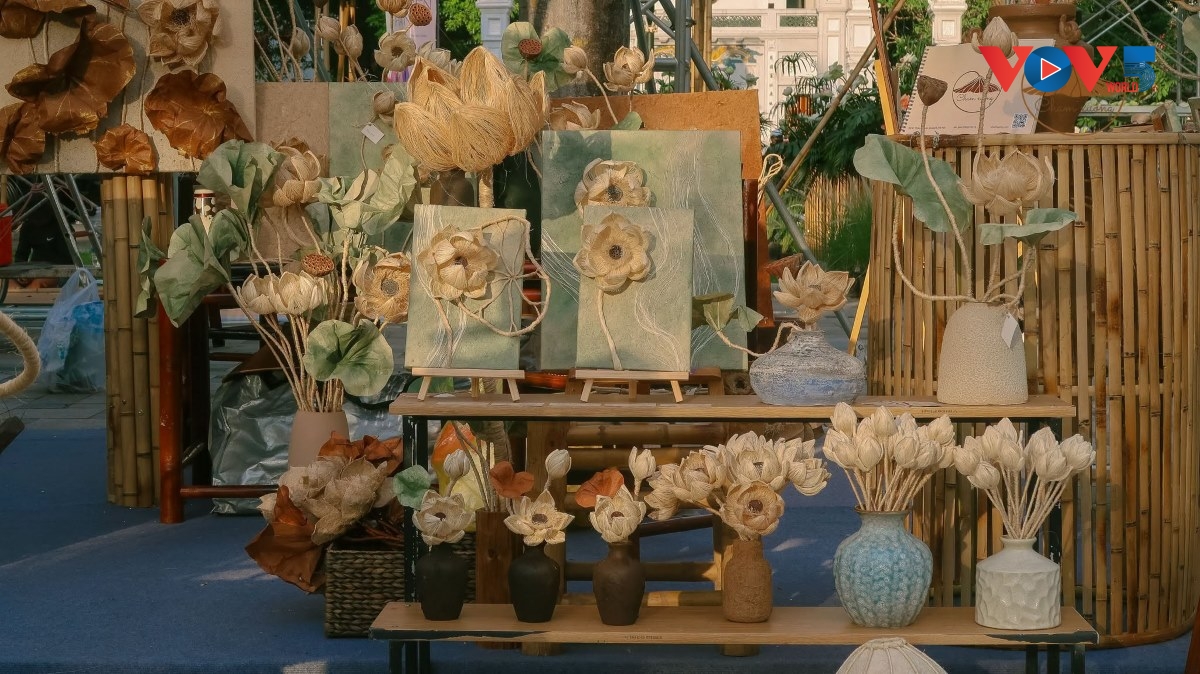
If the lotus rising from the mud symbolizes the resilience of the Vietnamese people, the lotus reborn from banana fiber represents renewal—breathing new life into a material once regarded as waste. Today, these creations decorate homes, hotels, and restaurants, Trang said.
"From the very beginning, we’ve been committed to using Vietnamese agricultural materials. We use banana fiber to create the lotus petals. Once the flowers fully bloom, lotus pedestal are sun-dried and soaked in lime water to prevent mold. The lotus leaves are made from traditional handmade papers, including dó paper, giang paper, and banana paper. Banana paper is one of my favorite materials because it’s strong and durable, and has a distinctive natural texture," Trang added.
Through skilled craftsmanship, the young artisans transform banana fiber into elegant lotus blossoms that reflect Vietnamese culture. The natural colors of banana fiber and handmade paper provide their own aesthetic appeal, resist dust and mold, and allow the artists to preserve the materials' original character with minimal processing. Every piece tells a story of discarded waste becoming treasured artwork, of raw agricultural material becoming an object of beauty.
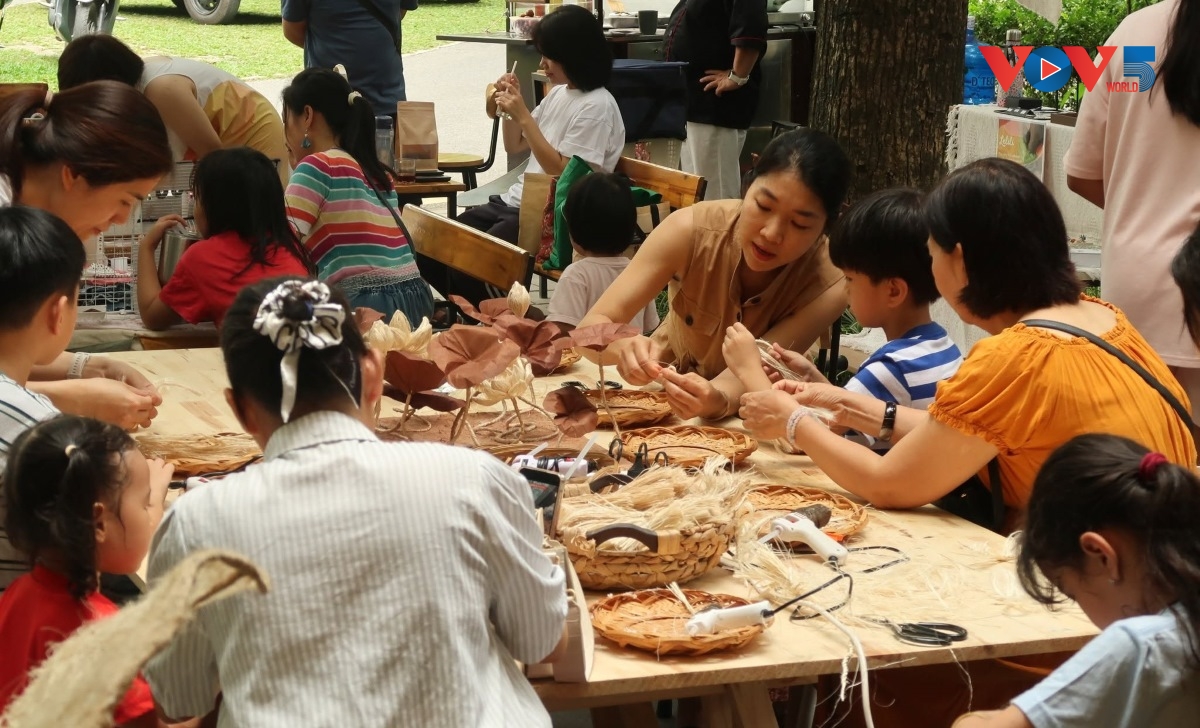
Nguyen Thi Ngoc Anh, production manager at Cham Workshop, said, "For our summer lotus pond painting, we use banana fibers to create wave-like effects as highlights. Every lotus petal is handmade. We first comb the fibers, then shape steel wire frames to form the petals and stems. We use the real lotus pedestals. After preparing each component, we assemble them into a lotus flower that looks as natural as the real thing."
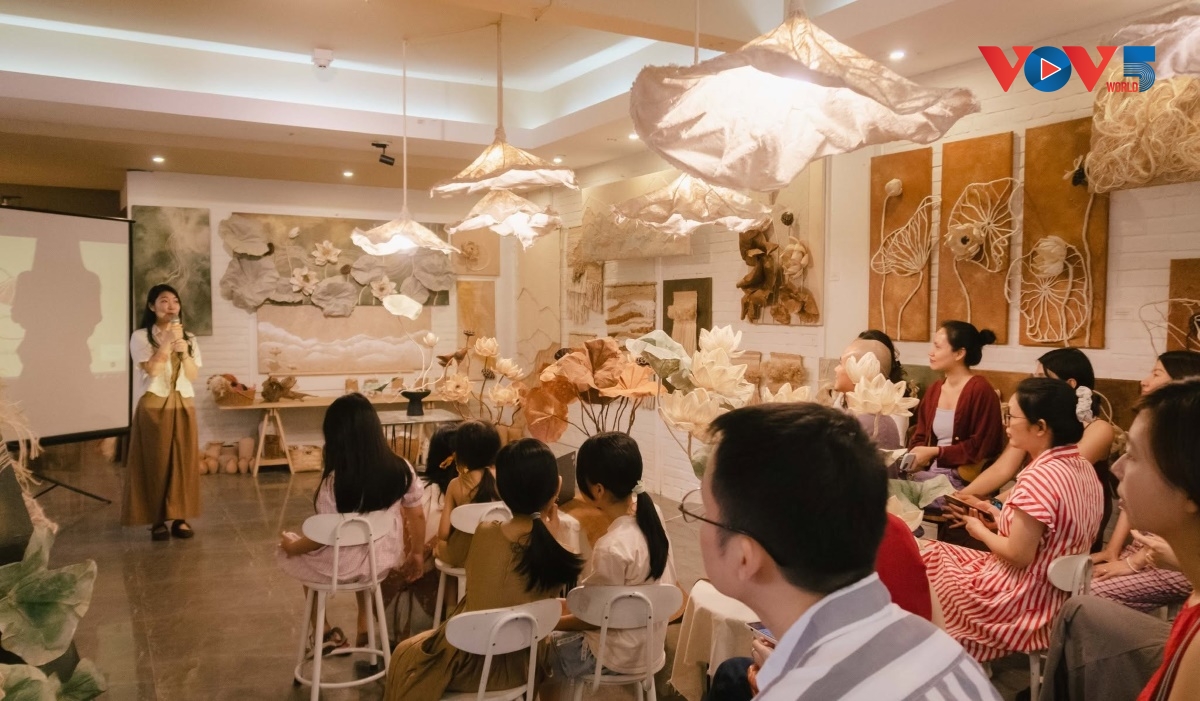
Cham Workshop also uses handmade paper made from plant fibers and other recycled materials to produce decorative items in a simple, nature-inspired style. The workshop regularly hosts classes and exhibitions, encouraging people to embrace recycling and sustainable consumption.
According to Bui Thanh Hue, communications manager at Cham Workshop, "Our workshop and store are designed as an open creative space for everyone. Every month, we organize fairs and hands-on workshops. We provide subtitles for foreign visitors.” “Rather than assuming that overseas customers want lotus-themed products only, we inquire about their preferences. In the future, we plan to create smaller items, such as bracelets made from lotus flowers and banana fiber," said Hue.
Cham Workshop provides employment for hundreds of local workers and cooperatives in raw-material-producing regions. Its products have earned widespread appreciation from customers. A number of customers has this to say: "The Vietnamese lotus is an elegant flower, and these young people have recreated it using natural materials. Their flowers look remarkably lifelike and have a unique beauty of their own. They’re also durable because they're made from natural materials."
"I was amazed to learn that these paintings, lotus vases, and other products are made from banana trunk—an agricultural by-product. Their creativity is really impressive, and each work is deeply rooted in Vietnamese culture."
With the message "From Green Art to Green Hearts," the young team at Cham Workshop hope to inspire people to live in harmony with nature and value the resources around them. They believe protecting the environment begins with small choices like repurposing discarded materials and appreciating handcrafted products.


