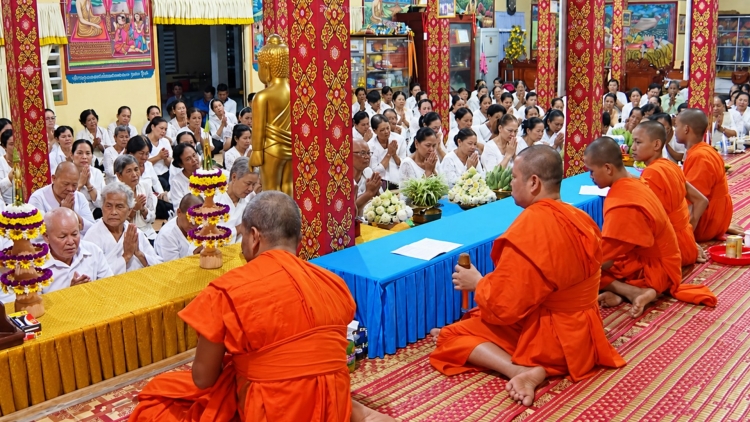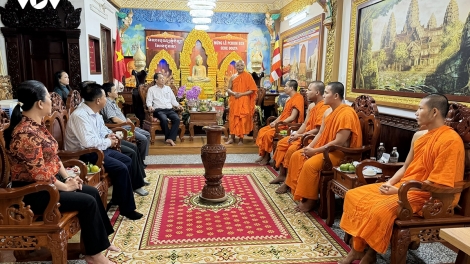




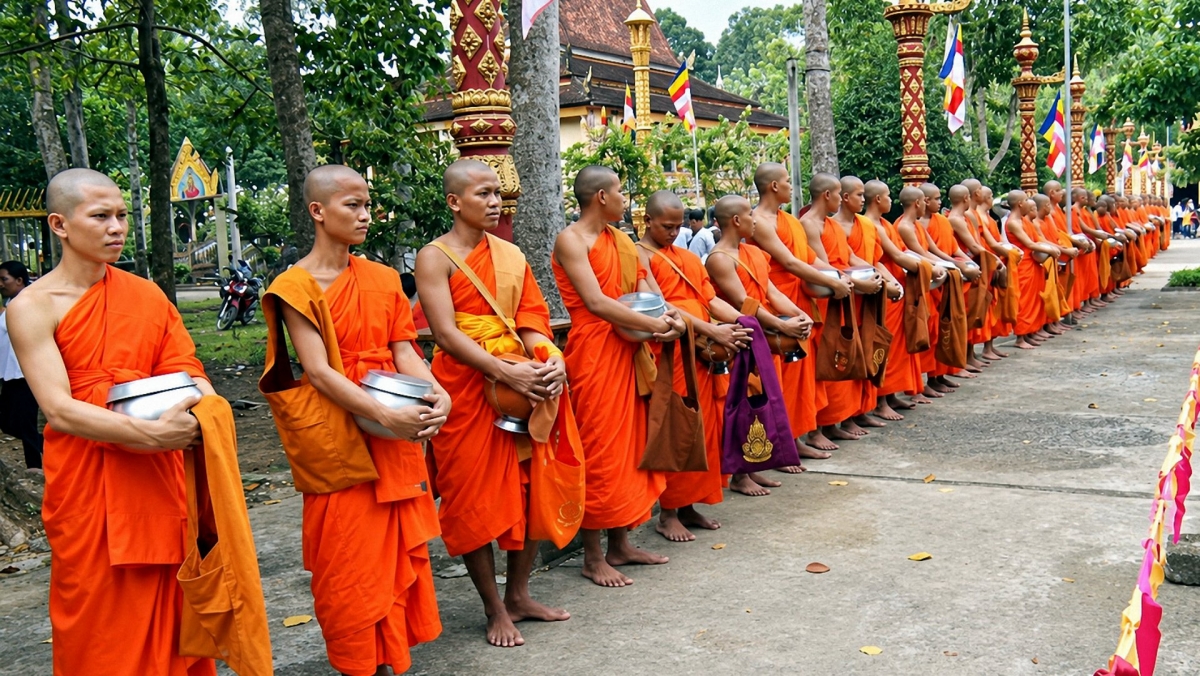
“The alms-bowl offering ceremony has existed for thousands of years to the time when the Buddha was alive. Following the Buddha’s teachings, people are encouraged to organize these offerings whenever circumstances permit. The most suitable occasions are festivals, including the Sene Dolta. Some pagodas hold the Sene Dolta ceremony for the whole month, while Somrong Ek Pagoda holds it for 15 days to dedicate the accumulated merit to our parents and ancestors,” said Achar Thach Chia, a traditional lay religious officiant in Nguyet Hoa Ward.
He explained that the alms-bowl offering ceremony includes paying homage to the Buddha and taking refuge in the Three Jewels, listening to Buddhist teachings, chanting sutras for peace and well-being, and praying for the deceased.
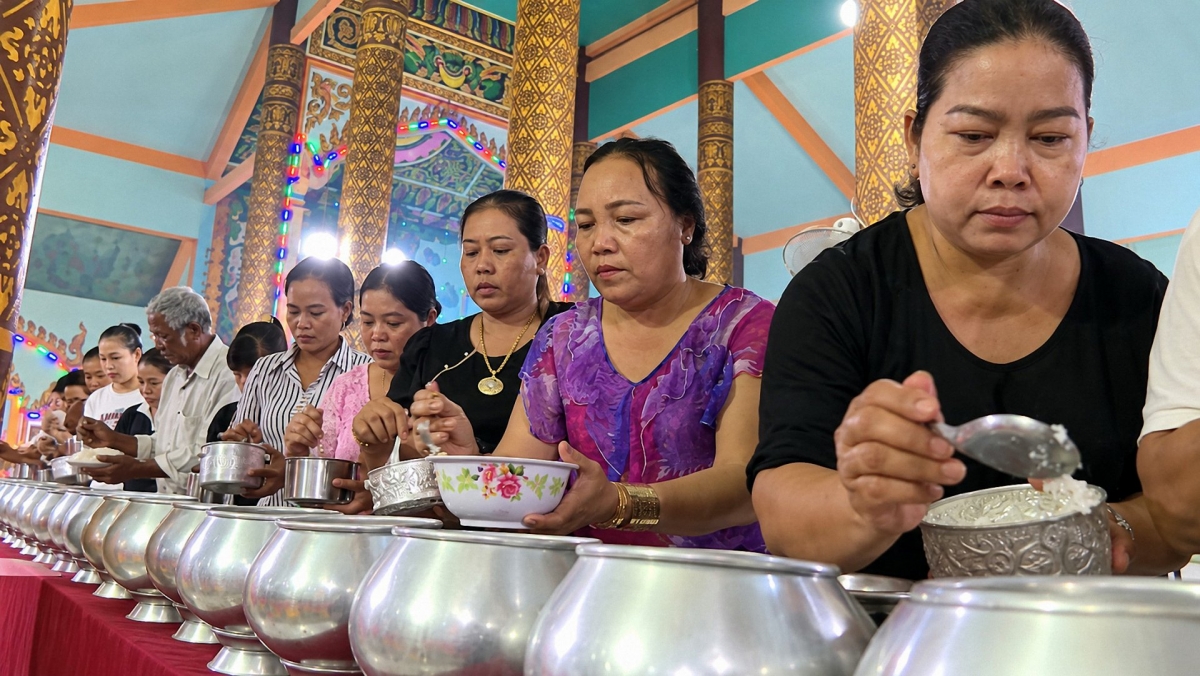
Venerable Kim Ba, the head monk of Somrong Ek Pagoda, said, “In the Khmer tradition, Buddhist-followers make alms-bowl offerings during major festivals and religious occasions such as Chol Chnam Thmay, Ok Om Bok, and the Kathina robe-offering ceremony. During the Sene Dolta festival, the ceremony runs from the 16th to the 30th day of the eighth lunar month. It is held over an extended period because, according to Khmer beliefs, the spirits of the deceased could return home and visit pagodas to receive the merit their descendants have accumulated.”
The alms-bowl offering ceremony has roots in stories from the Buddha’s time, when the Buddha and his monastic disciples went on alms rounds and local people willingly offered them food. In Theravada Buddhism, collecting alms is an important practice. Monks do not seek alms out of poverty. They practice nonattachment to material possessions while giving others an opportunity to cultivate merit.
When people respectfully place a spoonful of rice or cakes into a monk’s alms bowl, they are doing more than sharing food. The act gives them an opportunity to let go of greed and cultivate merit for themselves and their families.
In preparation for the festival, families often arrange offerings and set aside funds in advance. Some share responsibilities among family members, taking turns visiting the pagoda to make offerings throughout the ceremony.
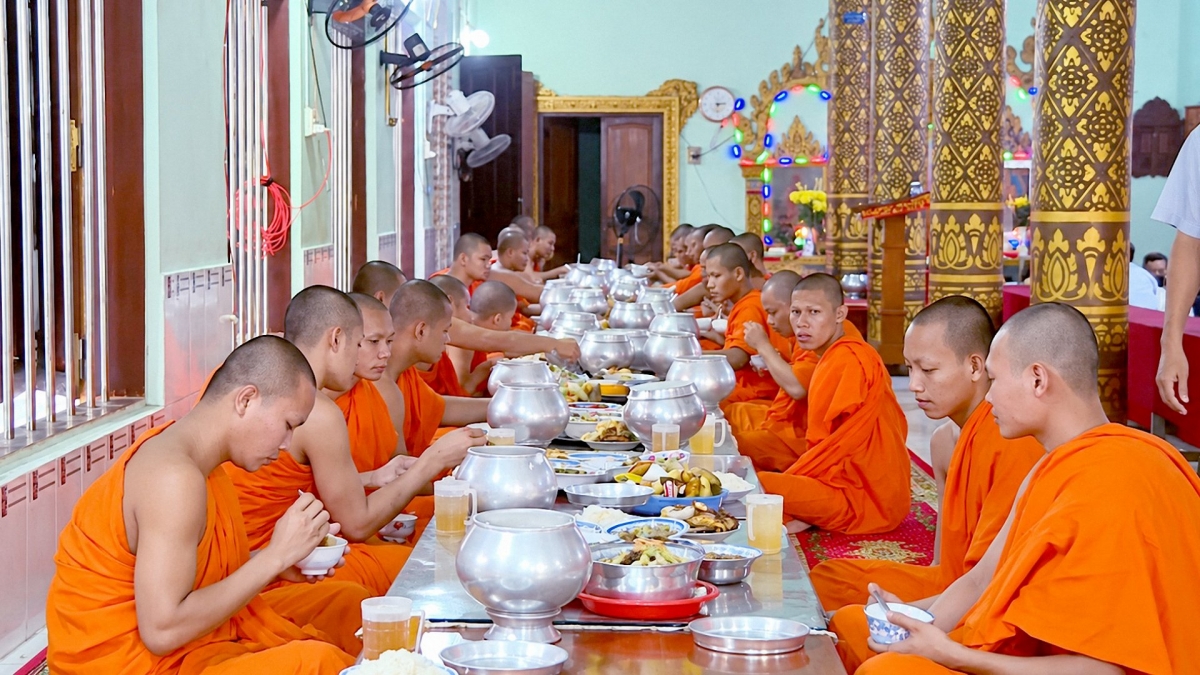
“For the past two weeks, we have come to the pagoda to make alms-bowl offerings every day. We prepare the food in advance. Since this ceremony takes place every year, it has become part of our routine. We believe that the spirits of the deceased could return to the earthly realm during this period. The alms-bowl offering ceremony is one way for monks to dedicate merit to our ancestors,” Thach Suon of Nguyet Hoa Ward said.
After devotees present their food offerings, the monks gather in the dining hall to chant prayers and offer blessings for the living while dedicating merit to the deceased. The food is then shared equally, regardless of each person’s contribution. Participants eat together and catch up on one another’s lives.
“I am very happy to see so many Buddhist followers coming to make offerings every day. The ceremony reflects solidarity in the community,” Achar Thach Chia said.
Through food offerings and shared meals, gratitude to past generations, filial devotion, respect for ancestors, and community solidarity are passed down from one generation to the next.