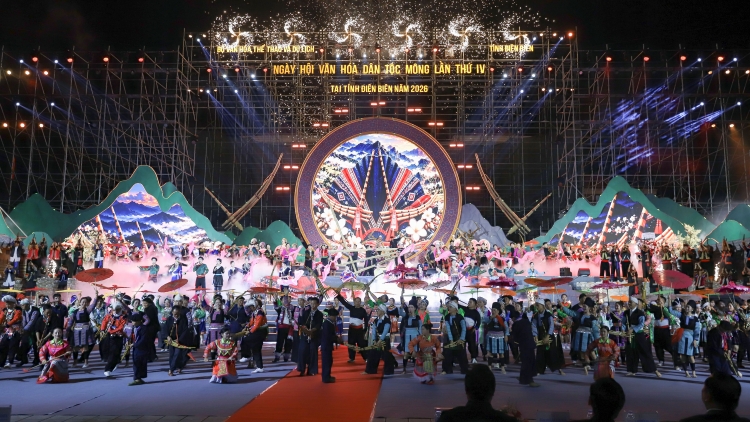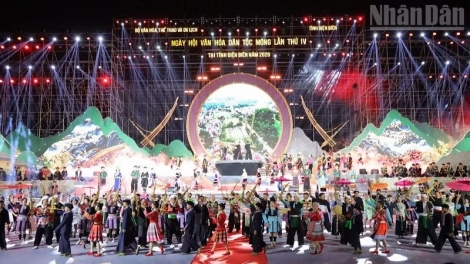




When the drums and gongs sound, Cong women dressed in traditional costumes begin to dance. Standing side by side in a circle, they move to the rhythm, raising and lowering their hands to mimic actions such as sowing seeds and harvesting rice. The pace shifts from slow and graceful to lively and energetic, drawing spectators into the festive atmosphere.
For generations, the Cong have lived mainly in high mountainous areas near rivers and streams. They farm and raise animals for their livelihoods. Their way of life and working environment have shaped folk dances that reflect the community’s cultural identity.
Ly Van Tam, Secretary of the Party Cell of Nam Ke Village, said: “We are committed to preserving our cultural identity, including our traditional dances and other cultural practices and rituals, and passing them on to future generations.”
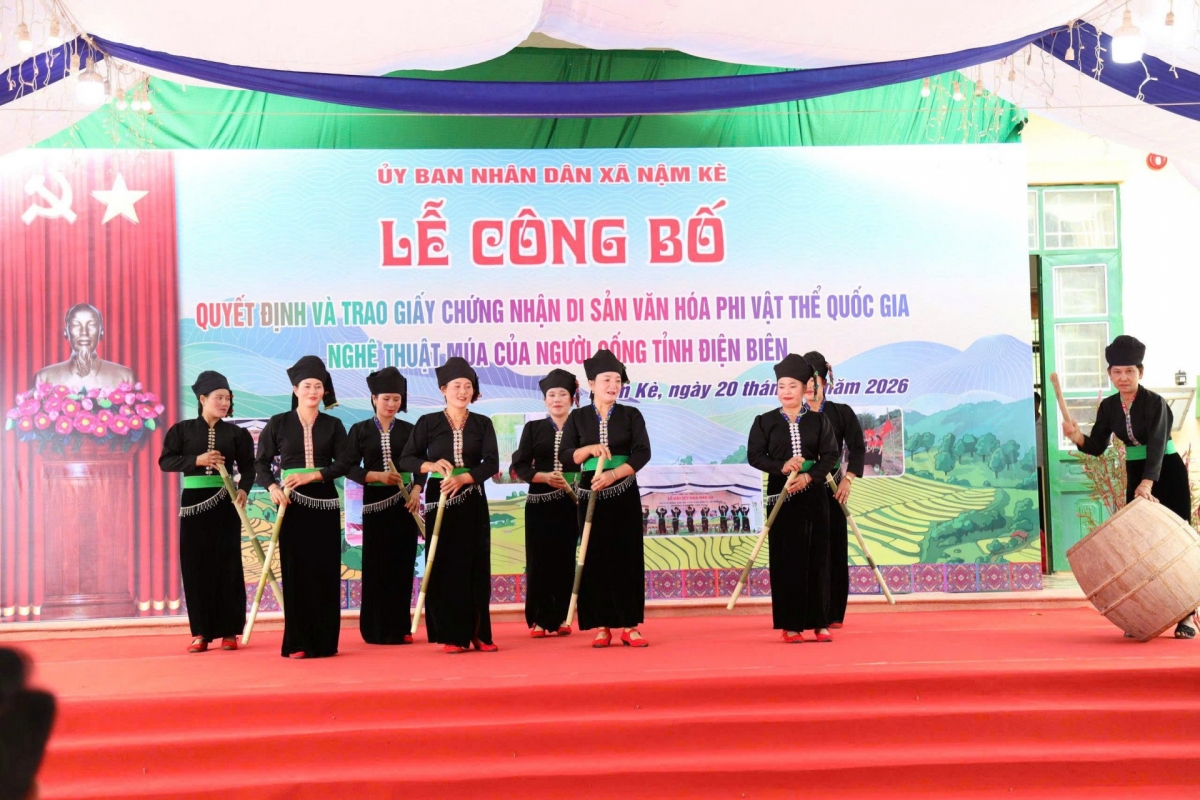
One fascinating aspect of Cong dance is the way familiar everyday activities are transformed into graceful hand gestures, rhythmic steps, and coordinated movements. The props are equally familiar: bamboo baskets, flat woven trays, mortars, and wooden pestles. On important occasions, these dances become an integral part of community rituals and celebrations.
Local resident Lu Thi Diem Quynh said: “I always take part in performances organized by the local administration and my school to help preserve our traditional dance.”
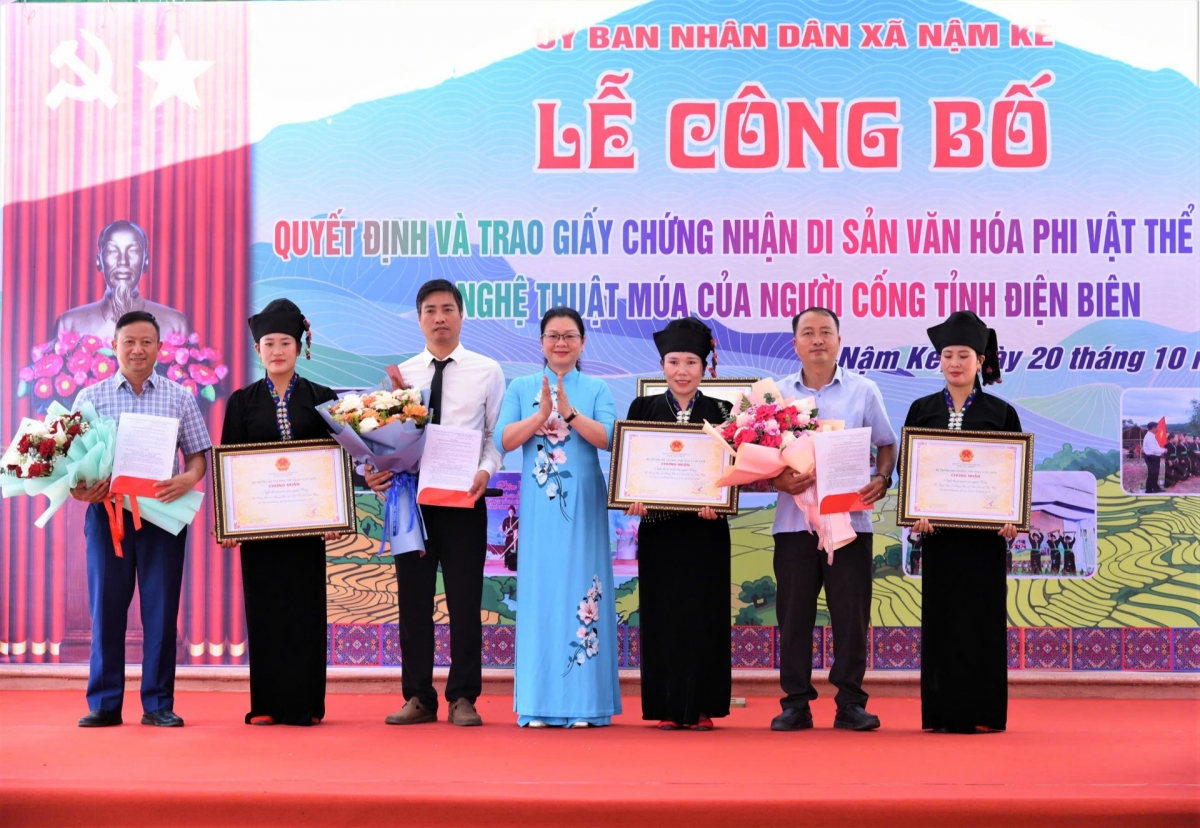
In March this year, the Ministry of Culture, Sports and Tourism added “The traditional dance of the Cong” to the National List of Intangible Cultural Heritage.
Nguyen Thi Thanh Chuyen, Deputy Director of the Dien Bien Department of Culture, Sports and Tourism, said: “To preserve this heritage after its recognition, we need to make it part of everyday life. The Cong people should see how their cultural values can be shared, preserved, and passed down within the community, while also being promoted as a tourism product.”
Through a shared commitment, traditional Cong dances remain an important part of community life, connecting generations and carrying the community’s cultural identity into the future.